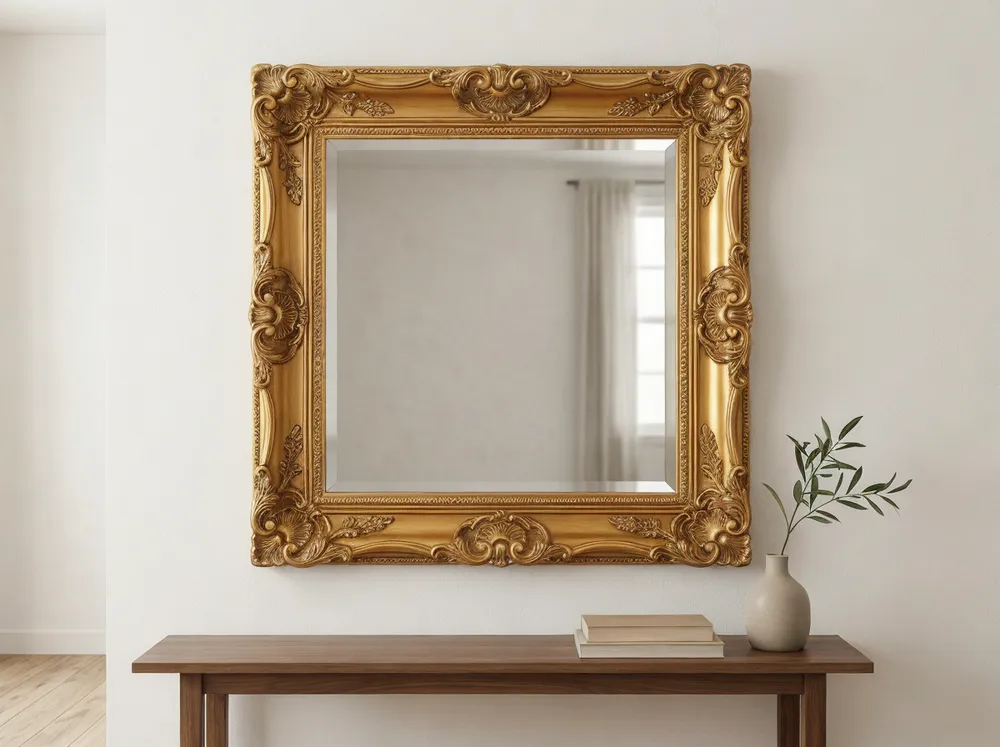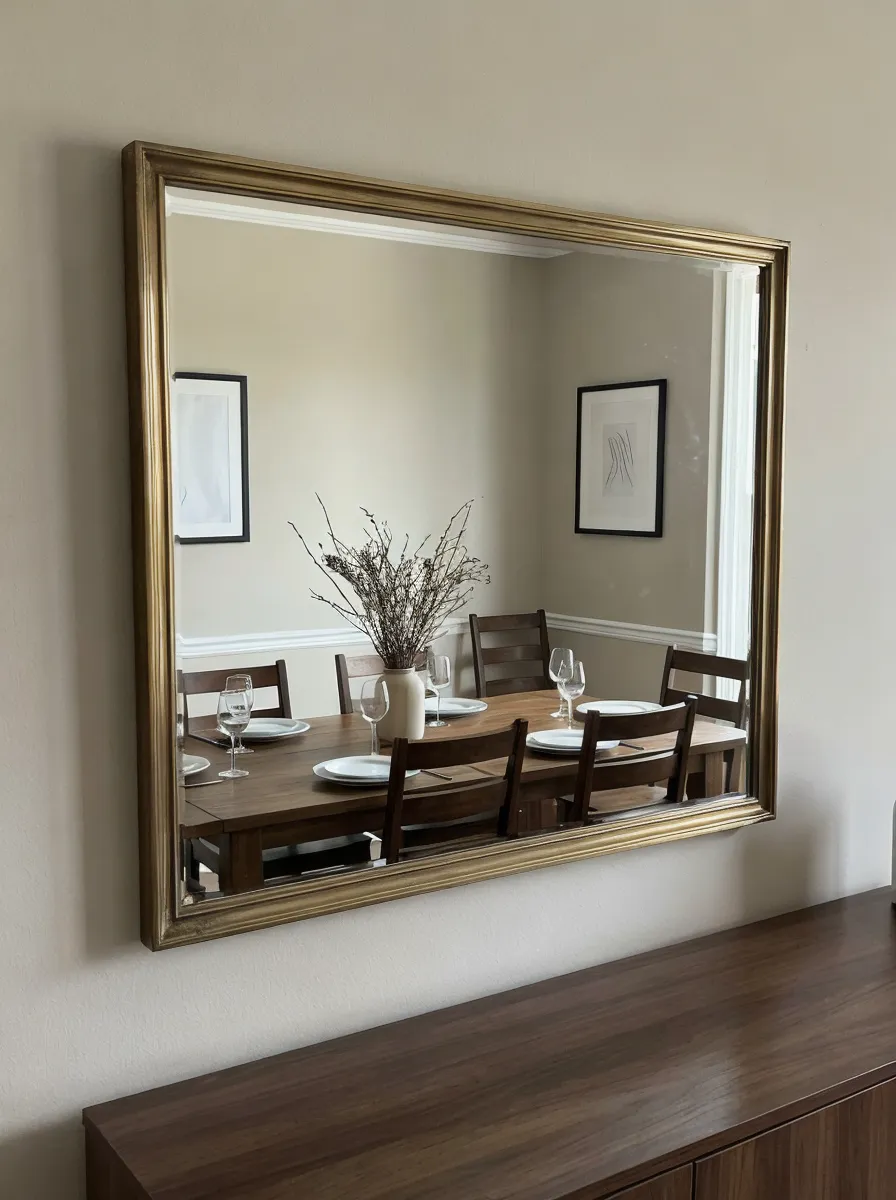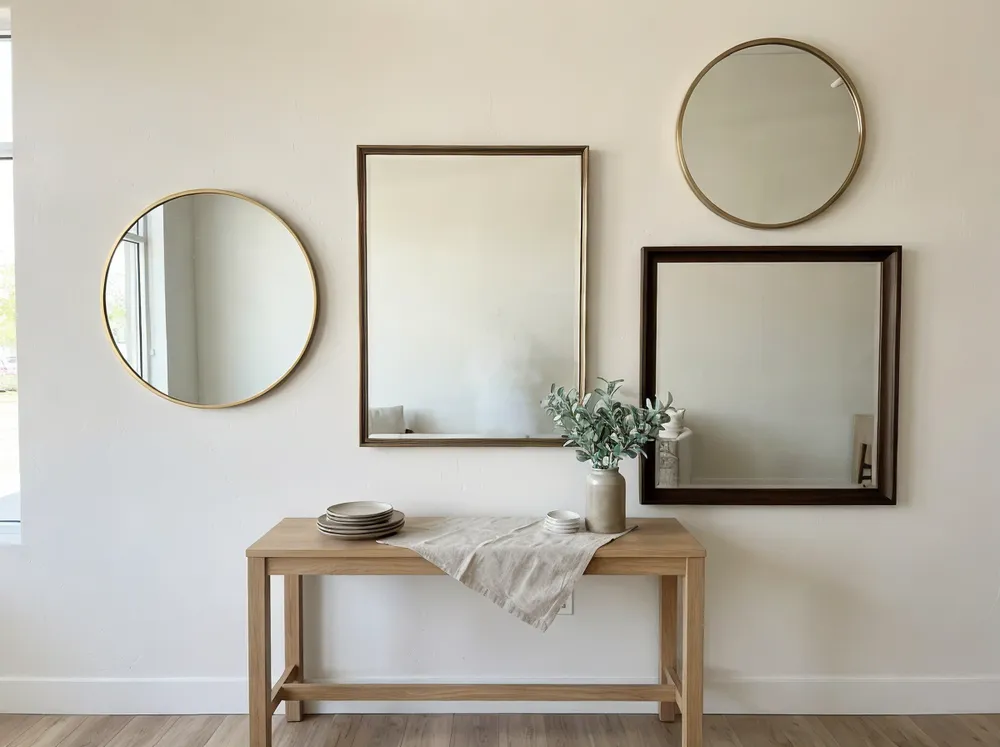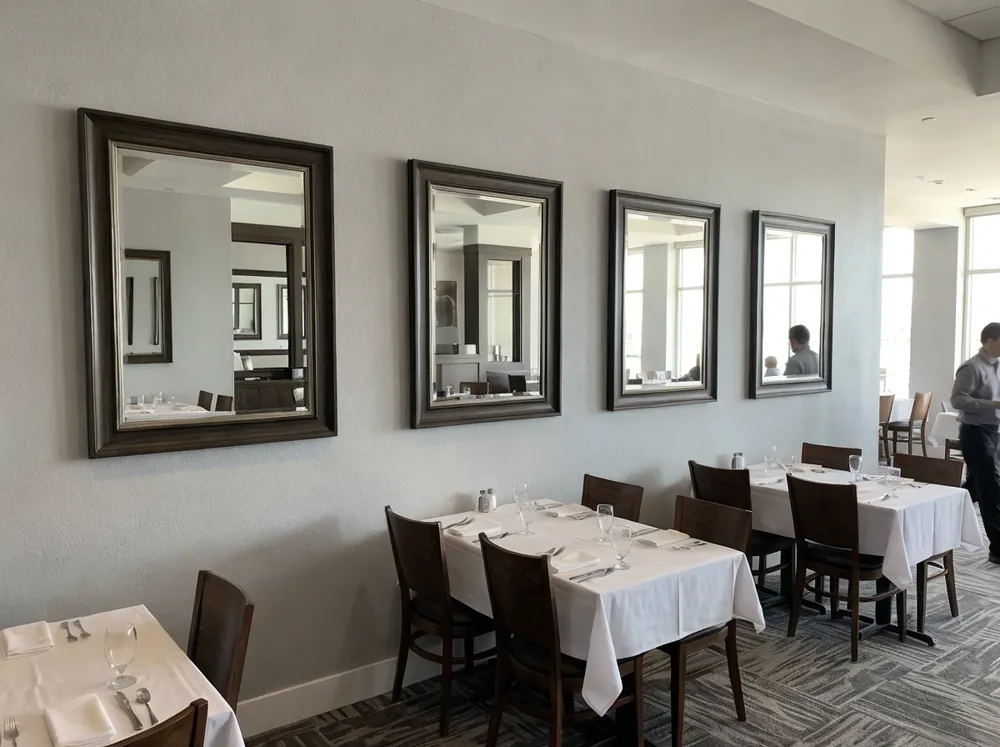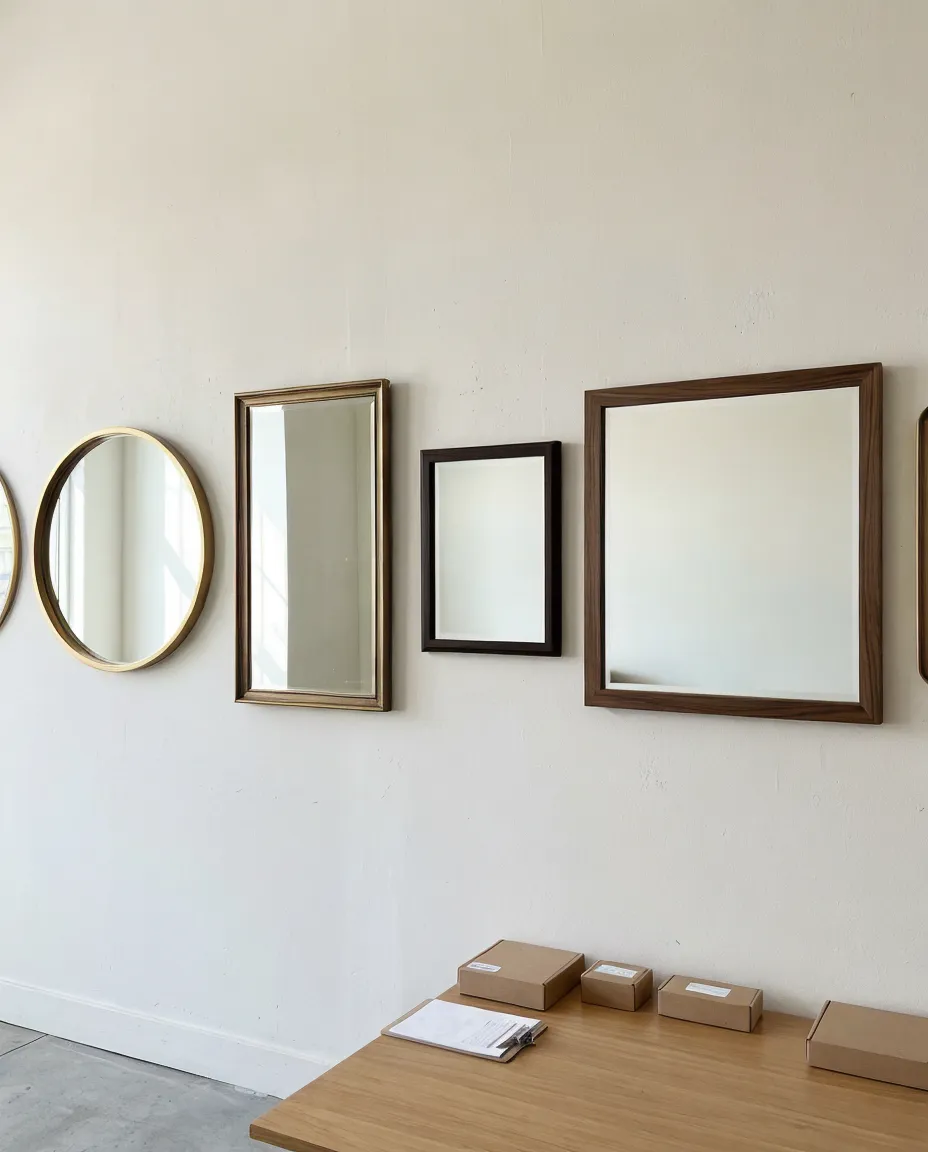
Decorative dining room mirrors with beveled glass and ornate frame profiles, manufactured and shipped direct from our facility in Vietnam.
Mid-to-large format mirrors (30"–42") in gold, antique brass, and dark wood finishes — built for distributors, retailers, and hospitality buyers sourcing dining room decor mirrors at wholesale volume.
Dining room decor mirrors occupy a specific commercial position in the decorative mirror market. They sit in the mid-to-large size range — typically 30" to 42" — and the frame does most of the selling. Unlike bathroom mirrors where moisture specs dominate the conversation, or bedroom mirrors where slim profiles and light weight matter most, dining room mirrors compete on visual presence. Your end customer is placing this on a wall surrounded by furniture, lighting, and tableware, which means the frame finish and profile complexity set the perceived value — and your retail price ceiling.
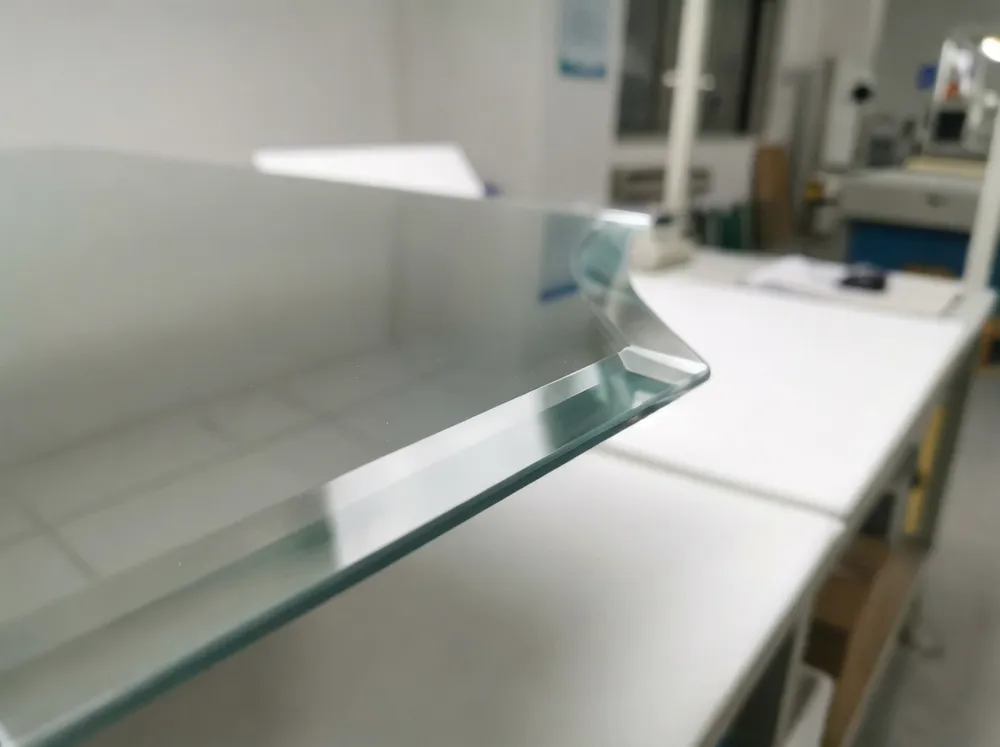
Beveled glass edges are standard in this category — we run beveling in-house with calibrated angle and width consistency across production runs, so unit 3,000 matches unit 1. Frame finishes skew toward gold, antique brass, champagne, and dark wood tones because those are what moves in dining room retail and hospitality channels.
We track finish trends across our distributor base — gold and antique brass have held steady for three years running, while matte black is gaining in contemporary dining room lines.
If you're building or expanding a dining room mirror assortment, this page covers the specs, frame options, market segments, and customization parameters you need to evaluate whether our product fits your business.
These are the standard specifications for our dining room mirror line. Every parameter below is a production-ready value, not a category range — you can drop these directly into a procurement comparison sheet.
| Parameter | Specification |
|---|---|
| Mirror sizes | 30" × 30", 30" × 36", 36" × 36", 36" × 42", 42" × 42" (round and rectangular; custom sizes available) |
| Glass thickness | 4mm float glass (standard); 5mm available for mirrors above 36" |
| Edge finishing | Beveled (1" bevel width, consistent angle across run), polished, or straight-edge |
| Silvering | Copper-free, multi-layer protective coating (meets EU environmental requirements) |
| Frame materials | MDF, solid wood, metal (iron/aluminum), cast resin |
| Frame width | 2"–5" depending on profile design |
| Popular finishes | Gold leaf, antique brass, champagne gold, dark walnut, espresso, matte black, distressed white |
| Hanging hardware | D-ring (standard), French cleat (for mirrors above 15 lbs), wire — all rated to actual mirror weight |
| Mirror weight range | 8–25 lbs depending on size and frame material |
| Packaging | Individual carton with foam corner protection; retail-ready or bulk palletized |
Glass thickness defaults to 4mm for dining room mirrors in the 30"–36" range. For 42" and above, we recommend 5mm — the added rigidity prevents flex during shipping and wall mounting, which reduces your damage claim rate on larger units.
We switched our 42" standard to 5mm two years ago after tracking transit damage data across several container shipments. The per-unit cost increase is marginal; the reduction in breakage claims paid for itself immediately.
Request detailed specifications for your exact dining room mirror requirements.
In dining room mirrors, the production details that drive your retail margin are concentrated in two areas: the glass edge and the frame finish. These are the elements your downstream customer sees and touches, and they're where we invest the most process control.
Beveling is standard on our dining room mirrors. We run a 1" bevel width at a consistent angle across the full production run — the grinding and polishing stations are calibrated before each batch and spot-checked every 200 units. Consistent bevel width matters because dining room mirrors often hang in pairs or groups, and visible variation between units generates returns.
Our rejection rate on bevel inconsistency runs under 1.5% at the QC station, and those units get reworked before they reach packaging.
You can also specify polished or straight-edge finishing if your product line targets a more contemporary look. But for the dining room category specifically, beveled edges account for roughly 70% of our orders — your customers expect them, and they support a higher price point.
Frame finish is where dining room mirrors diverge most from other room categories. Living room mirrors can get away with bold, simple finishes. Dining room frames need to read as refined — they sit alongside wood furniture, upholstered chairs, and warm lighting.
Our finishing process for dining room frames runs 3–5 coats depending on the effect:
Base coat, metallic application, and a protective clear coat with optional antiquing wash for depth.
Stain-and-seal process that mimics solid wood grain at a lower cost per unit — useful for mid-range retail where the look matters but the price point needs to stay competitive.
Sanded, stained, and sealed with the grain visible.
Hand-applied finish detailing — the most labor-intensive option, but it produces the carved, antique-look frames that command the highest retail prices in the dining room category.
Quality Standard: Every finished frame goes through visual inspection under standardized lighting before assembly. We check for finish uniformity, drip marks, and color consistency against the approved sample. Your approved production sample is the reference standard — we hold it on the factory floor for the duration of your production run.
Dining room decor mirrors sell into specific commercial channels. These are the segments where our distributors and project buyers generate repeat orders — each one represents a market you can build a predictable revenue stream around.
This is the primary channel. Dining room mirrors listed on Amazon, Wayfair, or your own e-commerce store perform well because consumers search by room placement — "dining room mirror" is a purchase-intent keyword, not a browsing keyword. Your listing converts better when the product is explicitly positioned for dining room use rather than filed under generic "wall mirrors."
We supply several e-commerce sellers in this category and build packaging to meet FBA prep requirements, including scannable barcodes and ship-ready cartons that eliminate repackaging at your fulfillment center.
A typical e-commerce distributor starts with 3–5 SKUs covering the core size and finish combinations (gold round 30", antique brass rectangle 30" × 36", dark wood 36" × 36") and expands based on sell-through data.
Restaurants, hotel dining rooms, and banquet facilities specify dining room mirrors as part of their FF&E packages. A single restaurant project can pull 6–20 identical mirrors depending on the dining room layout, and hotel chains replicate the same spec across properties.
This segment values finish consistency across large batches — our production process holds color and finish uniformity because every unit in a hospitality order runs through the same finishing line with the same batch of coating material.
Hospitality orders typically run 200–500 pieces per project, with reorders when new properties open or existing locations renovate.
Design firms and staging companies source dining room mirrors as high-impact, cost-effective pieces that elevate a space quickly. Mirrors make rooms appear larger and reflect light — designers know this, and dining rooms are one of the top placements.
This segment orders in smaller quantities (often at our 100-piece MOQ for standard models) but reorders frequently across multiple projects.
Frame finish variety matters here — designers want options, so carrying 6–8 finish variations in the dining room category gives you a competitive catalog for this buyer.
Brick-and-mortar furniture stores merchandise dining room mirrors alongside dining tables and buffets. The mirror becomes an add-on sale that increases the store's average transaction value.
Retailers in this channel prefer shelf-ready packaging with retail-facing graphics and UPC labels — we produce both configurations.
Frame finishes that coordinate with popular furniture wood tones (walnut, espresso, oak) move fastest in this channel.
We'll recommend a starter SKU mix based on what's moving for our existing distributors.
Our 12-engineer OEM/ODM team handles custom dining room mirror development in-house. Here's exactly what you can customize, what the constraints are, and how it affects your order.
One option worth noting for the dining room category specifically: antiqued or vintage-effect glass. We produce this by hand-applying a chemical treatment that creates the mottled, aged appearance popular in farmhouse and traditional dining room designs. It adds cost, but mirrors with antiqued glass consistently command 30–40% higher retail prices than clear glass equivalents in the same frame — your margin per unit improves even though your cost per unit rises.
Custom development timeline runs 15–25 days from approved drawing to production samples — resin and MDF frame molds sit at the shorter end, metal tooling at the longer end. Once you approve the sample, production follows our standard 30–45 day lead time.
| Customization Dimension | Options | Constraints |
|---|---|---|
| Mirror size | Custom dimensions up to 48" × 60" | Minimum 14" on shortest side for dining room category |
| Mirror shape | Round, oval, rectangle, arch, irregular/custom cut | Complex shapes require cutting template approval; add 5–7 days to sample timeline |
| Frame profile | Custom mold development (MDF, resin, metal); custom machined cross-section (wood) | New resin/MDF molds: 10–15 day tooling lead time; metal tooling: 15–20 days |
| Frame finish | Any RAL or Pantone color match, gold/silver leaf, antique patina, distressed effects, custom electroplating | Metallic leaf finishes require approved color swatch for matching |
| Glass type | Clear, tinted (bronze, grey), antiqued/vintage effect | Antiqued glass is hand-processed; adds 15–20% to glass cost |
| Packaging | Private label with your branding, retail-ready with custom inserts, bulk palletized | Custom printed cartons: MOQ 500 per design |
| Hanging hardware | D-ring, French cleat, wire, custom bracket | Hardware rated to actual mirror weight; we specify based on your final unit weight |
Send us a design concept, competitor sample, or sketch — our engineering team will quote the custom development and send back a detailed proposal.
Mirrors are fragile and heavy relative to their size, which makes packaging a margin issue, not just a logistics detail. A single cracked mirror in transit costs you the unit, the return shipping, and the replacement — on a $60 retail mirror, one damage claim can wipe the profit on 3–4 units.
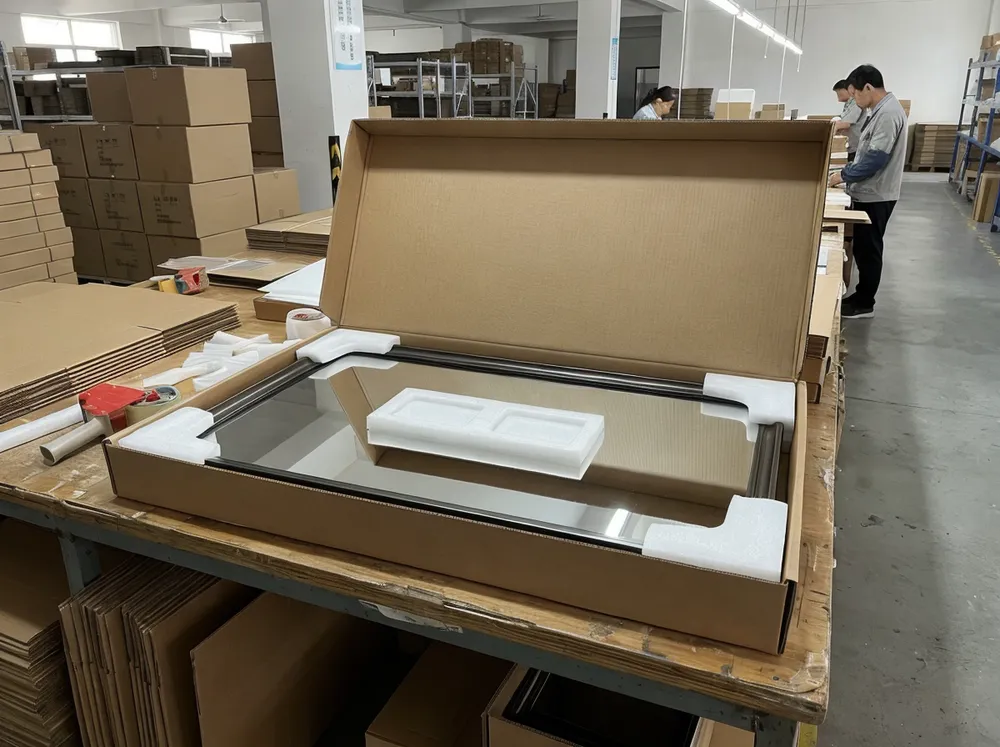
We pack each dining room mirror in an individual carton with molded foam corner protection and a center support insert. The carton is designed to absorb impact at the corners and edges — the two points where mirrors break most often during carrier handling.
Container loading for dining room mirrors in the 30"–42" range: a standard 40HQ container holds approximately 400–600 pieces depending on frame depth and carton dimensions. We provide a container load plan with exact quantities before you confirm your order, so you can optimize your per-unit freight cost.
On mixed orders — say, dining room mirrors combined with smaller hallway or table mirrors — we can arrange carton sizes to fill container gaps and improve your loading efficiency.
Shipping documentation, packing lists, and commercial invoices follow the format your freight forwarder and customs broker expect. Country-of-origin marking and care instructions in the languages your market requires.
We handle EDI integration for Walmart and Wayfair vendor programs and produce retail-compliant labeling including all required compliance documentation.
If you're building a room-by-room mirror assortment, here's how dining room mirrors sit relative to the sibling categories we produce. This helps you decide which categories to prioritize based on your channel and margin targets.
| Dimension | Dining Room | Living Room | Bedroom | Bathroom |
|---|---|---|---|---|
| Typical size range | 30"–42" | 28"–48" | 14" × 50" to 24" × 30" | 20"–36" |
| Frame complexity | High (ornate, multi-coat) | Highest (statement pieces) | Moderate (clean lines) | Low-moderate (moisture-resistant) |
| Dominant finishes | Gold, antique brass, dark wood | Sunburst, geometric, carved | Modern, minimalist, soft vintage | Chrome, brushed nickel, sealed MDF |
| Beveled glass | Standard (70%+ of orders) | Common | Less common | Less common |
| Moisture resistance required | No | No | No | Yes (copper-free silvering + sealed frames) |
| Typical retail price range | Mid-to-high | Highest | Mid | Mid |
| Best-fit channels | Furniture retail, hospitality, e-commerce | Home decor retail, e-commerce | Furniture retail, e-commerce | Home improvement, hospitality |
Dining room mirrors sit in a productive middle ground: frame complexity is high enough to support strong retail margins, but production cost stays below living room statement pieces. If you're entering the decorative mirror category and want to start with a segment that balances margin and volume, dining room is a solid first move.
Go with 5mm float glass. At 36" and above, 4mm glass can flex slightly during wall mounting and is more vulnerable to transit stress.
The cost difference between 4mm and 5mm is small per unit — typically under $1.50 — but the reduction in breakage claims during shipping and handling makes it the better commercial choice for larger formats. We default to 5mm on all dining room mirrors above 36" unless you specify otherwise.
Beveled edges outsell polished in the dining room category by a wide margin — roughly 70% of our dining room mirror orders specify beveled glass. The 1" bevel catches light and adds perceived value, which supports a higher retail price.
Polished edges work for contemporary and minimalist dining room designs, but if you're building a general dining room assortment, weight your SKU mix toward beveled. You can always add a polished-edge option as a secondary SKU once your beveled models establish sell-through.
Involves applying thin metallic sheets over a prepared base coat, then sealing with a protective clear coat. Produces a richer, more dimensional finish with natural variation that reads as high-end.
A single-coat metallic application — faster to produce, lower cost, but flatter in appearance.
Gold leaf frames typically retail at 25–35% higher than gold-painted equivalents. If your target retail price supports it, gold leaf is the stronger SKU for dining room placement. We produce both, so you can carry each at different price tiers.
Yes. We produce antiqued glass using a hand-applied chemical treatment that creates the mottled, aged appearance.
It adds 15–20% to the glass cost compared to standard clear, but antiqued-glass dining room mirrors consistently command higher retail prices — the finish reads as artisanal and pairs well with farmhouse, traditional, and transitional dining room styles.
MOQ for antiqued glass mirrors follows our standard custom MOQ of 300 pieces per SKU.
From approved drawing
After sample approval
First contact to shipment
Sample development runs 15–25 days from approved drawing, depending on frame complexity. Metal frame tooling sits at the longer end; MDF and resin profiles where we modify existing molds are faster.
Reorders on the same spec ship faster — 30–35 days — because tooling and samples are already approved.
It depends on your target price point and retail positioning:
Multi-coat finishing offers the best cost-to-appearance ratio — they look like painted wood at a lower unit cost, making them ideal for mid-range retail and e-commerce.
Carry a higher cost but appeal to buyers who market natural materials.
The choice for ornate, carved profiles that would be prohibitively expensive to produce in wood — they support the highest retail prices in the dining room category.
We can quote all three materials for the same mirror design so you can compare landed cost against your target margin.
Most buyers in this category start with a 3–5 SKU assortment covering the core size and finish combinations — a gold round, an antique brass rectangle, and a dark wood option give you coverage across the dominant dining room styles.