allenliu@livewellcraft.com +86 182 2840 2575 Mon–Sat: 9:00 AM – 6:00 PM (GMT+7)
18+ Years Manufacturing · ISO 9001:2015

Abstract Canvas Wall Arts Hand-Textured Production

The wall art category where your margin comes from visible craftsmanship, not print resolution. Each piece carries tactile depth that machine-printed canvas cannot replicate, so your product line stands above commodity wall decor.

  • Gel medium & palette knife work
  • Metallic leaf accents
  • 12,000 m² Dong Nai facility
  • Production scale capability
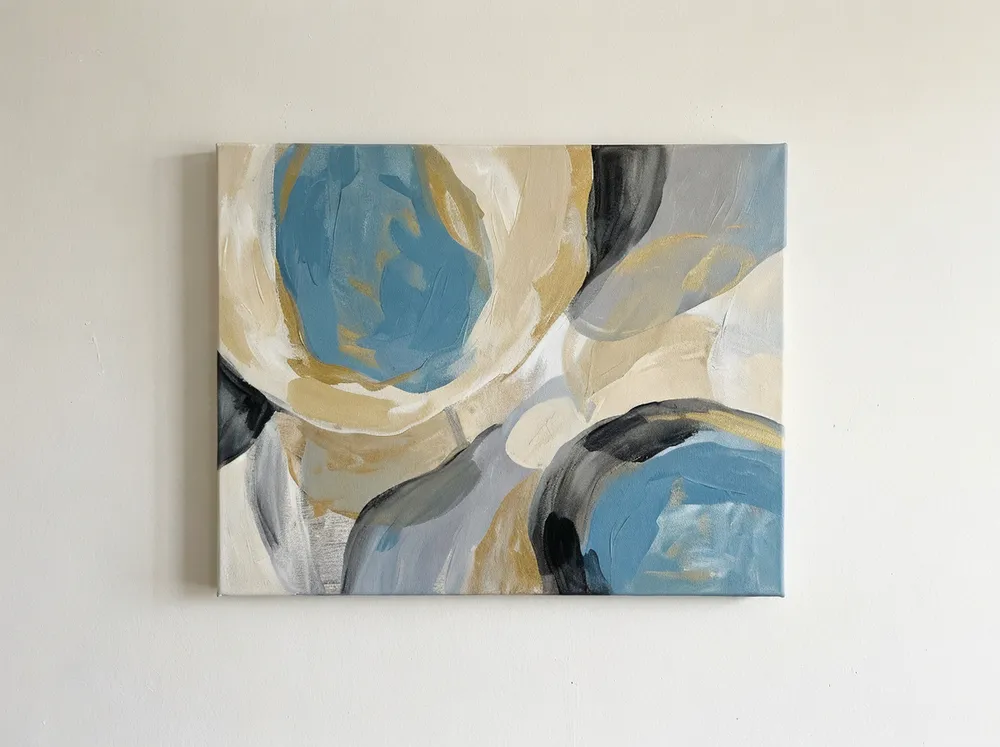
Hand-textured abstract canvas wall art with gel medium and metallic leaf accents

What Abstract Canvas Wall Arts Are — and What They're Not

Abstract canvas wall arts are hand-textured compositions on stretched canvas — gel medium, palette knife strokes, metallic leaf accents — produced by our painting team in Dong Nai, Vietnam. They sit in a different commercial lane than standard printed canvas wall art. A printed canvas is a commodity: any factory with a wide-format printer and a stretcher bar jig can produce one. Abstract canvas wall arts carry visible, tactile surface texture that a buyer can see from across a showroom and feel with a fingertip. That texture is what lets you price these pieces 3–5× above printed canvas in the same frame size, and it's what keeps them out of the price-race that erodes margin on flat-print products.

The distinction matters for your sourcing because it changes your competitive position. If you're already carrying printed canvas, adding abstract canvas wall arts gives you a premium tier without switching material categories — same hanging hardware, same wall placement, same end-buyer demographic, but a higher ticket and stronger perceived value. If you're entering the wall art category for the first time, abstract canvas is the segment where a smaller order quantity still generates meaningful revenue per unit.

We produce these on the same 12,000 m² facility where we manufacture decorative mirrors and standard canvas wall art. The difference is the production workflow: abstract canvas pieces route through our hand-finishing stations instead of the print line, which means each unit involves manual labor from trained painters rather than machine output. That's the trade-off — higher per-unit cost, lower maximum throughput, but a product your downstream buyers can't replicate by ordering prints from a catalog.

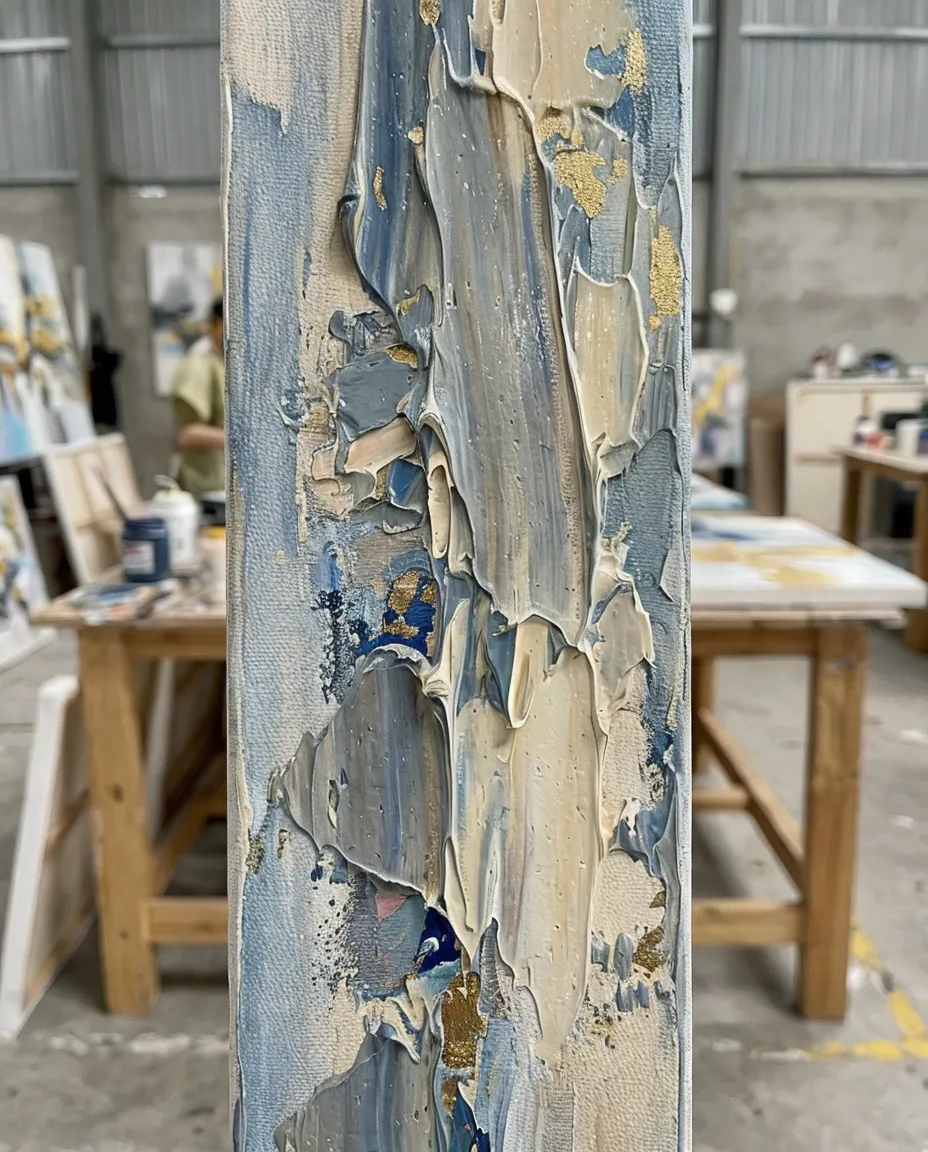
Close-up of palette knife texture on abstract canvas showing 2-8mm depth

Tactile Surface Texture

Visible from across a showroom, felt with a fingertip. This is what separates premium wall art from commodity prints.

Premium Tier Addition

Same hanging hardware, same wall placement, same buyer demographic — but higher ticket and stronger perceived value.

Competition Protection

A product your downstream buyers can't replicate by ordering prints from a catalog. Manual labor from trained painters, not machine output.

Ready to add a premium tier to your wall art line?

Request pricing for abstract canvas wall arts with your specifications.

Request Pricing

Technical Specifications for Abstract Canvas Wall Arts

These are the exact specs for our abstract canvas line — not category-wide ranges. Use them directly in your comparison sheets or project proposals.

Parameter Specification
Canvas material 380–420 gsm poly-cotton blend (65/35 cotton-polyester)
Texture medium Acrylic gel medium (heavy body), modeling paste, metallic leaf (gold, silver, copper)
Application method Hand-applied: palette knife, trowel, brush layering
Stretcher bar Kiln-dried pine, 3.5 cm depth (gallery wrap), finger-jointed for dimensional stability
Standard sizes 40×40 cm, 50×70 cm, 60×90 cm, 80×120 cm, 90×120 cm, 100×150 cm
Custom sizing Any dimension up to 120×180 cm; pieces over 90 cm on any side get a center cross-brace
Texture height 2–8 mm above canvas surface, depending on design
Finish coat UV-resistant matte or satin varnish, applied after texture cures
Weight per piece 0.8–4.5 kg (varies by size and texture density)
Hanging hardware D-ring with wire (standard), sawtooth hanger, or French cleat for pieces over 5 kg
Panel configurations Single panel, 2-panel diptych, 3-panel triptych, 4-panel or 5-panel sets

Multi-Panel Sets

For multi-panel sets, we paint across all panels as a continuous composition before cutting the design into individual stretcher frames — this keeps the visual flow consistent across the set, which matters when your buyer hangs them with 2–3 cm gaps.

Canvas Weight Rationale

The 380–420 gsm canvas weight is deliberate. Lighter canvas sags under heavy gel medium within 6–12 months, especially in humid climates. We tested down to 300 gsm early on and saw canvas distortion on pieces shipped to Southeast Asian and Middle Eastern markets. The heavier blend holds texture without deformation, so your after-sales claims stay near zero.

Need specs for a specific design or size configuration?

Send your requirements — we'll confirm exact specs and pricing.

Send Requirements

How Hand-Applied Texture Builds Your Retail Margin

The commercial case for abstract canvas wall arts comes down to one thing: perceived value per square centimeter. A 60×90 cm printed canvas wholesales at $8–15 and retails at $25–50 depending on your channel. A 60×90 cm hand-textured abstract canvas wholesales at $25–45 and retails at $80–200+. The margin gap exists because end buyers perceive texture as craftsmanship, and craftsmanship justifies premium pricing in ways that print resolution never will.

This isn't theoretical. We ship abstract canvas wall arts to distributors supplying boutique home decor retailers in North America and Europe, and to hospitality procurement firms furnishing hotel rooms and restaurant interiors across the Middle East and Australia. The consistent feedback: textured pieces sell through faster at higher price points than flat prints in the same display. Your end buyer picks up the piece, feels the ridges, and the purchase decision shifts from "do I need wall art" to "I want this specific piece." That tactile interaction is your margin advantage, and it's the one thing a competitor sourcing printed canvas cannot replicate without changing their entire supply chain.

Close-up of hand-applied texture on abstract canvas showing palette knife ridges and gel medium depth
$8–15
Printed Canvas Wholesale (60×90 cm)
Retail: $25–50
$25–45
Hand-Textured Wholesale (60×90 cm)
Retail: $80–200+
3–4×
Higher Retail Price Point
Improved margin percentage

Higher Per-Unit Margin

Higher per-unit wholesale cost is offset by higher retail markup — your margin percentage actually improves compared to printed canvas.

Lower Inventory Risk

Abstract designs don't date as quickly as trend-driven photographic or botanical prints, so your inventory turnover risk drops. A geometric texture in neutral tones sells across seasons; a trendy print peaks and then sits on your shelf.

Market Segments Where Abstract Canvas Delivers Volume

Every application scenario below is a market segment where our existing buyers generate repeat orders. We're describing commercial opportunities, not decorating ideas.

Boutique and Independent Home Decor Retail

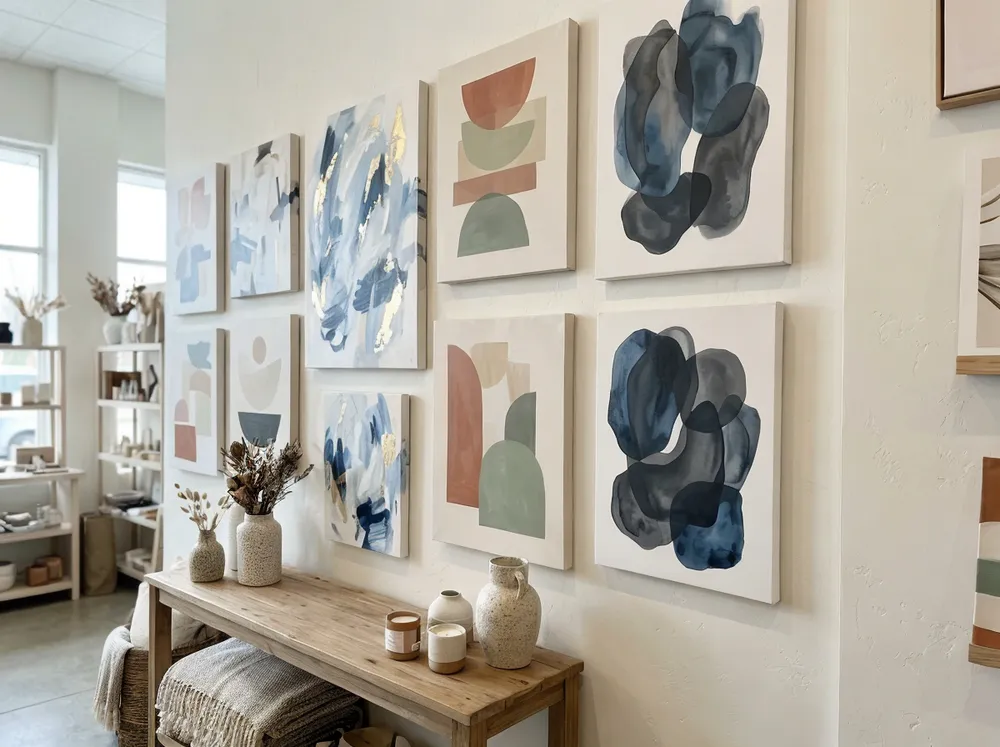
Independent retailers and small chains need products that differentiate their shelves from big-box stores. Abstract canvas wall arts give them exclusive-feeling inventory without the cost of commissioning original artwork.

Typical order pattern: 50–200 pieces across 8–12 designs, reordered quarterly as designs rotate. Your sell-through data from the first order tells you which colorways and sizes move in your specific market, and we adjust the next production run accordingly.

Key insight: This segment rewards variety — buyers want 10 designs at 20 units each, not 1 design at 200 units.

Abstract canvas wall arts displayed in boutique home decor retail setting
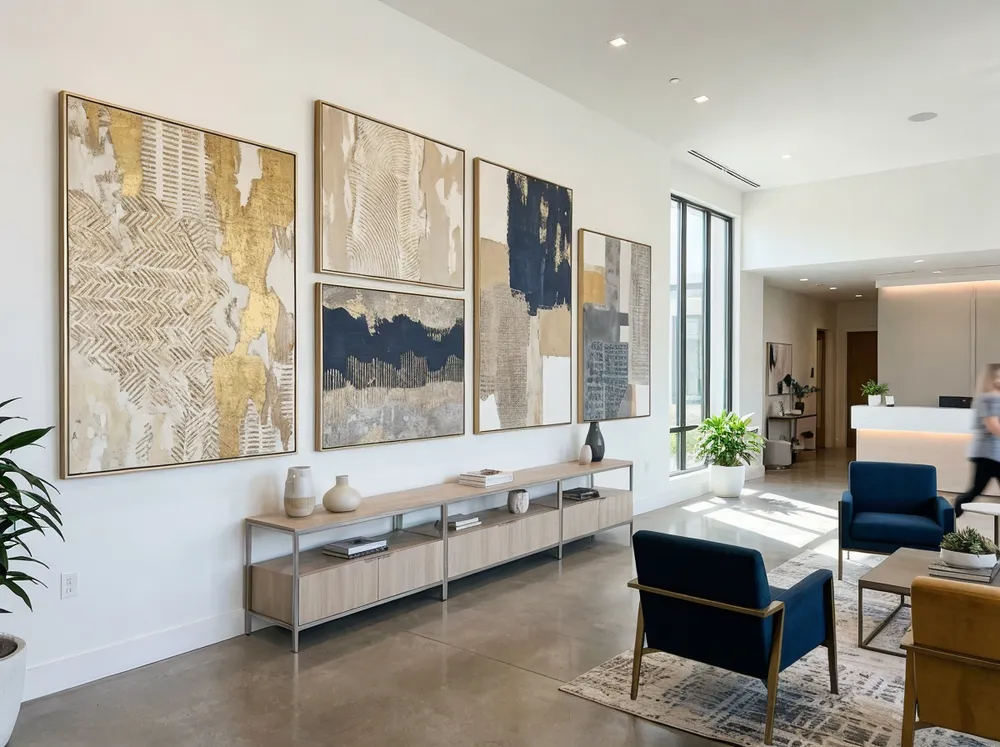
Abstract canvas wall art in hotel lobby interior design project

Hospitality and Commercial Interior Projects

Hotels, restaurants, corporate lobbies, and co-working spaces need wall art that reads as curated without the budget for original commissions. Abstract canvas is the go-to because it's style-neutral — a textured gold-and-cream composition works in a boutique hotel in Dubai and a corporate reception in Melbourne.

Project orders: Typically run 200–1,000 pieces with 3–5 coordinated designs across a color palette specified by the interior designer. We produce to Pantone or NCS color references, so the artwork matches the project's material board exactly.

(We've learned to request the full material board upfront — matching a single swatch without context leads to revision rounds that delay everyone.)

E-Commerce and Online Marketplace Sellers

Abstract canvas photographs well for product listings — the texture catches light and creates visual depth that flat prints can't match in a thumbnail. Sellers on Amazon, Wayfair, Etsy, and independent Shopify stores use textured canvas as their premium tier.

Packaging focus: Your product needs to survive last-mile delivery without corner damage. We pack each piece in individual poly bags with foam corner protectors inside a reinforced carton rated for parcel shipping, not just container stacking. If you're running FBA, we label to Amazon's FNSKU and carton content requirements.

Abstract canvas wall art product photography for e-commerce listing
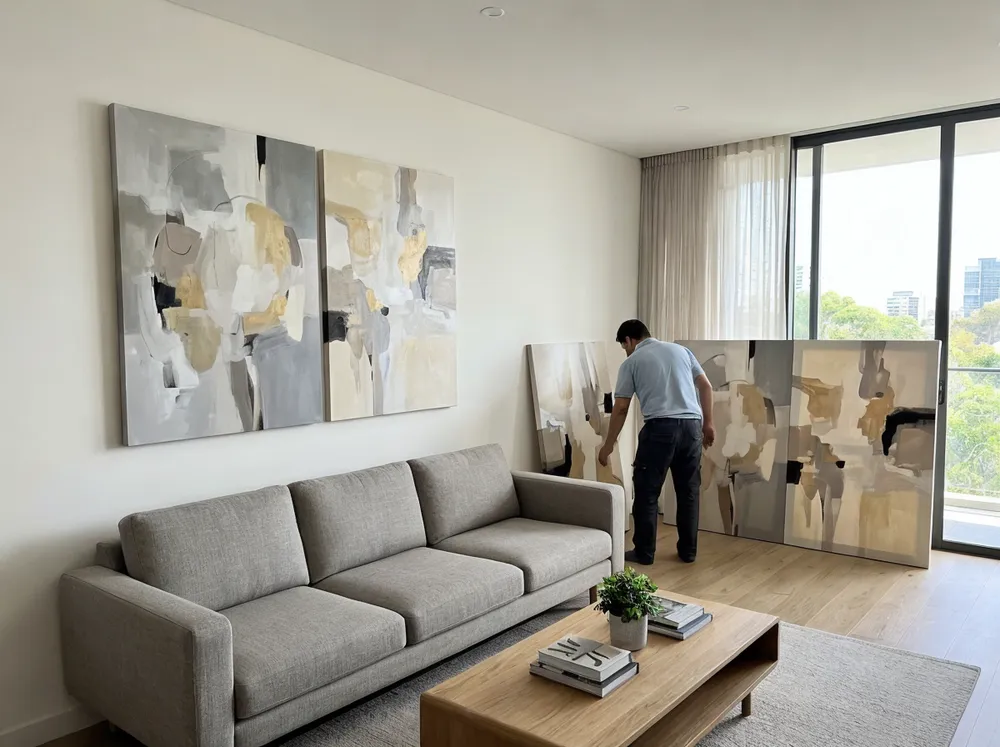
Abstract canvas wall art used in real estate property staging

Staging and Real Estate

Property staging companies order abstract canvas in neutral palettes — grays, creams, muted golds — in large formats (80×120 cm and above). These pieces get reused across 20–30 staging projects before replacement, so durability matters.

Built for reuse: Our UV-resistant varnish coat and heavy-gauge stretcher bars mean the piece holds up through repeated handling, transport, and rehang cycles.

Order volumes: Smaller per buyer (30–80 pieces), but reorder frequency is high because staging inventory wears out and design trends shift.

Exploring a New Segment?

Tell us your target market and volume — we'll recommend a starter SKU mix based on what moves for our existing distributors.

Get SKU Recommendations

Customization: What You Can Specify and Where the Limits Are

We run OEM/ODM on abstract canvas wall arts through the same 12-person engineering team that handles our custom mirror programs. Here's what's adjustable and what's fixed.

What You Control

  • Color palette: Any combination. Provide Pantone, NCS, RAL references, or a physical sample — our painters mix to match. Most buyers specify 3–5 dominant colors per design to coordinate with their product line's seasonal palette.
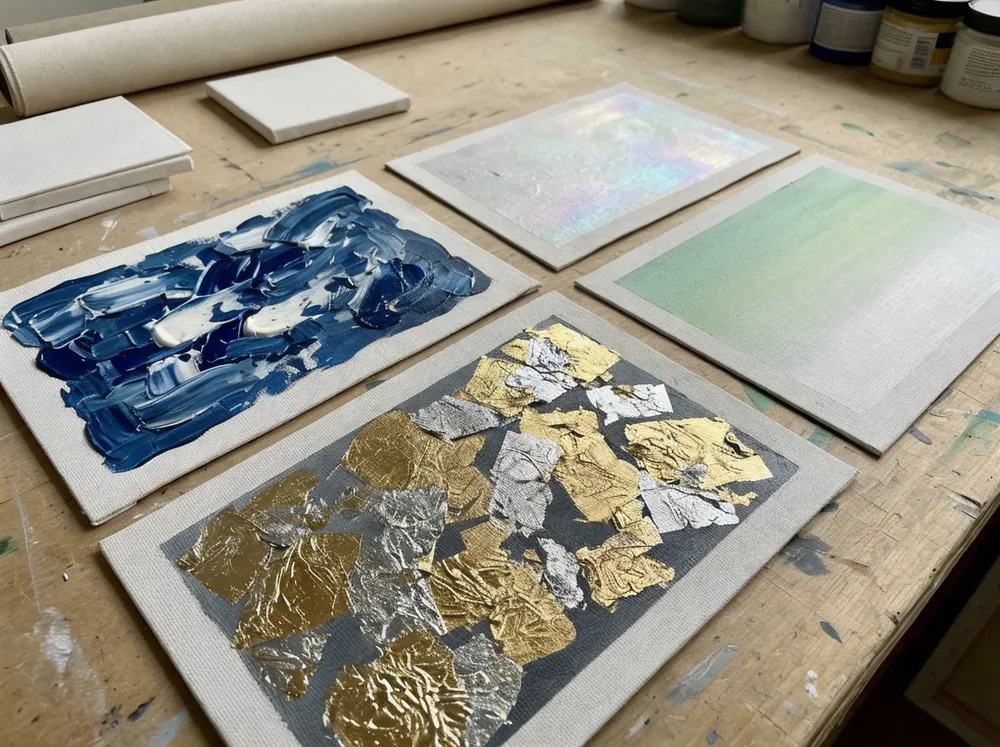
  • Texture style: Heavy impasto (5–8 mm relief), light texture (2–3 mm), mixed media with metallic leaf, sand-embedded texture, or smooth gradient with minimal surface variation. Send reference images and we'll replicate the technique.
  • Size and format: Any dimension up to 120×180 cm per panel. Multi-panel sets (diptych, triptych, 5-panel) in any size combination.
  • Stretcher bar depth: 2.5 cm (slim profile) or 3.5 cm (standard gallery wrap). Deeper bars available on request for pieces intended for unframed display.
  • Frame addition: Gallery-wrapped (no frame) is standard. We can add float frames in wood or metal — produced on our own frame molding lines, so there's no third-party coordination.
  • Hanging hardware: D-ring, sawtooth, French cleat, or keyhole — specified per your market's wall type and weight requirements.
  • Packaging and labeling: Retail shelf-ready with your branding, UPC/EAN barcodes, and insert cards, or bulk-packed for project delivery. White-label and private-label programs supported.

What's Fixed

  • Minimum texture cure time: 48–72 hours depending on texture thickness before varnish application. We can't compress this without risking adhesion failure on the topcoat. It's the main factor in our lead time for textured pieces.
  • Canvas weight: We don't go below 380 gsm for textured work. Lighter canvas won't hold heavy gel medium long-term.
  • Maximum single-panel dimension: 120×180 cm. Beyond that, stretcher bar flex becomes a problem during shipping — we recommend splitting into multi-panel sets instead.
Various texture samples showing impasto, metallic leaf, and smooth gradient techniques on abstract canvas

MOQ and Lead Time by Customization Level

Customization Level MOQ Typical Lead Time
Existing design, standard size 100 pieces 20–25 days
Existing design, custom size 150 pieces 25–30 days
Custom color palette on existing texture style 200 pieces 25–30 days
Fully custom design (new composition + colors) 300 pieces 30–40 days (includes sample approval)
Mixed-media with metallic leaf or embedded elements 200 pieces 30–35 days

If you're testing a new market and 300 pieces feels like a large commitment for a fully custom design, we can produce a 5-unit sample run first. Most buyers approve samples within a week and then place the production order — it adds about 10 days to the total timeline but eliminates the risk of a full run on an unapproved design.

Send Your Custom Design Brief

Our team will confirm feasibility, MOQ, and pricing within 48 hours

How We Produce Abstract Canvas Wall Arts — Process Details That Affect Your Product

The parent category page covers our general wall art manufacturing setup — see the full material-by-material overview. Here, we'll walk through what's specific to abstract canvas production, because the process directly affects the consistency, durability, and lead time of your order.

01

Canvas Preparation

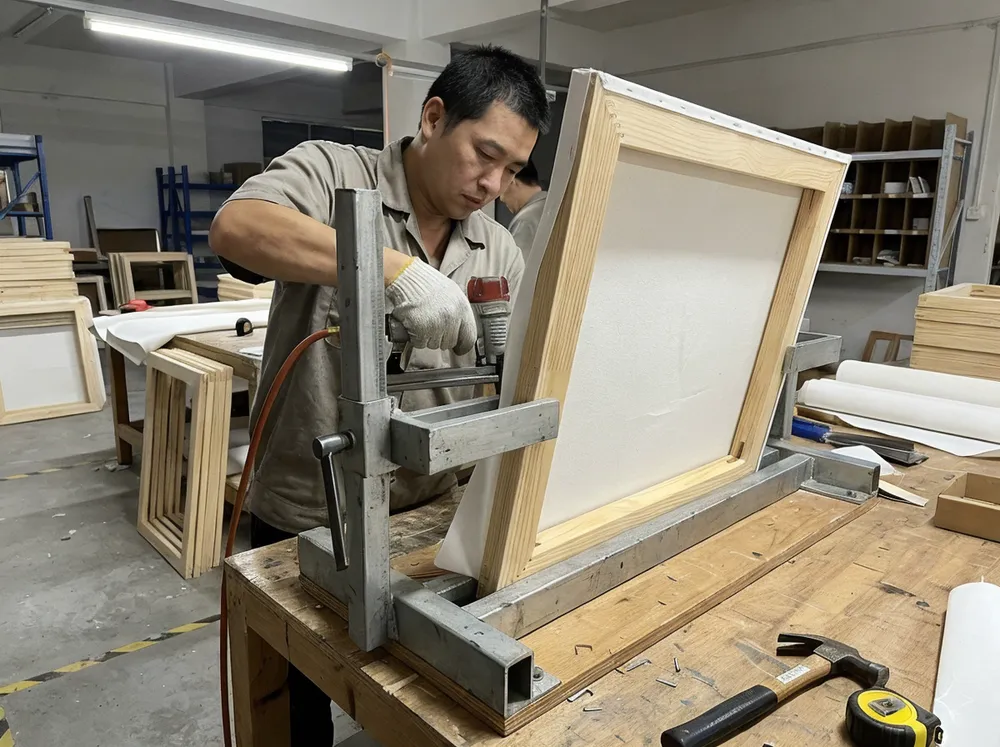
We start with pre-primed 380–420 gsm poly-cotton canvas, stretched and stapled onto kiln-dried pine stretcher bars. The stretcher bars are finger-jointed — that joint style resists warping better than butt joints, which matters when the finished piece sits in a warehouse or retail environment with fluctuating humidity. Every frame gets squared on a jig before stapling to ensure the canvas tension is even across the surface. Uneven tension shows up as ripples after texture application, and by that point the piece is scrap.

02

Hand-Texture Application

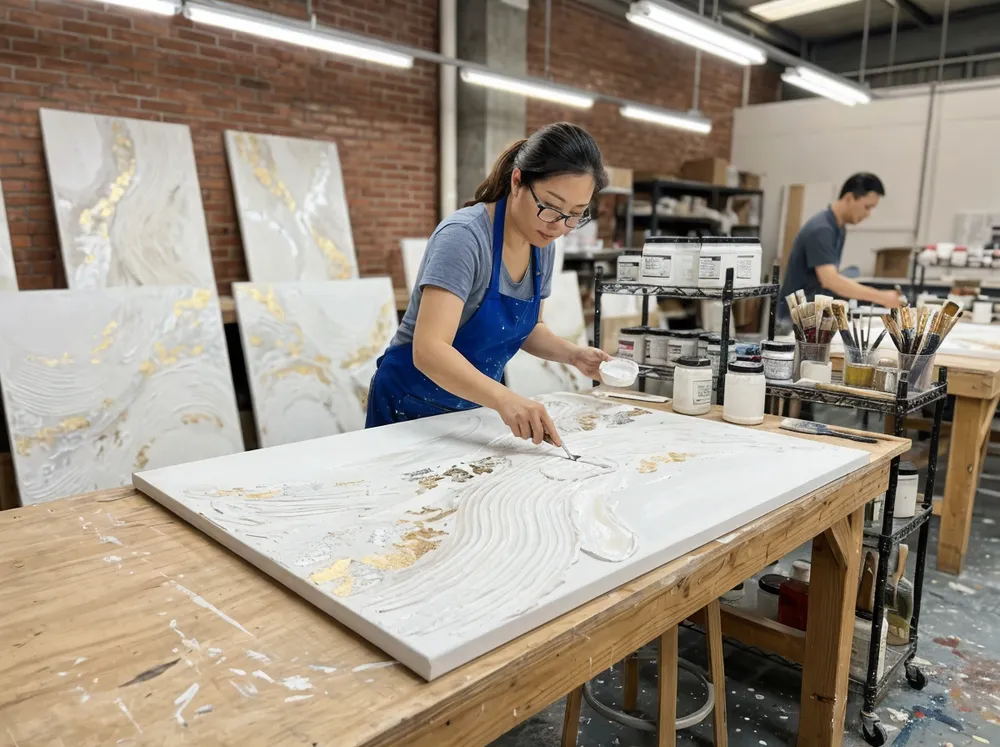
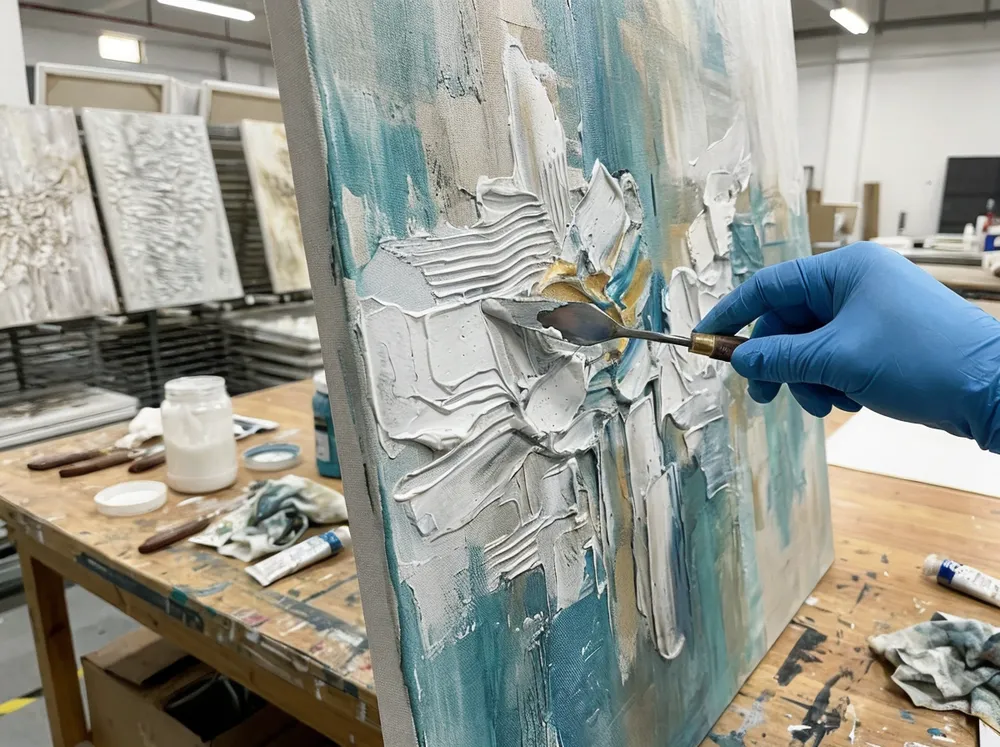
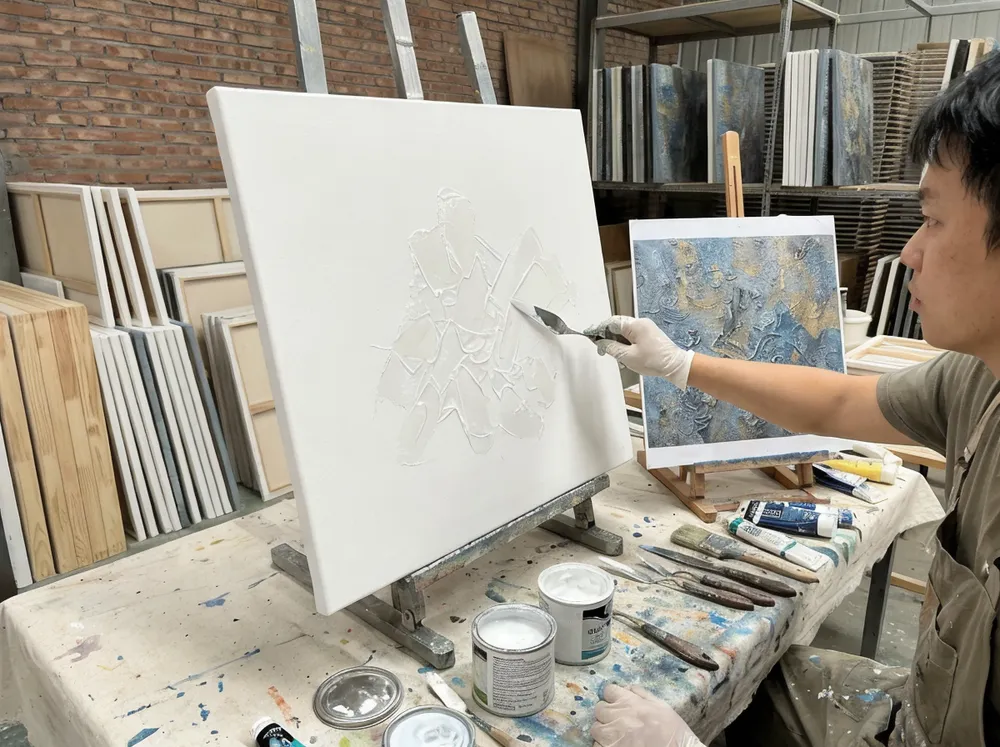
This is where abstract canvas wall arts diverge from everything else on our floor. Each piece goes to a painter who applies acrylic gel medium, modeling paste, or metallic leaf by hand using palette knives, trowels, and brushes. We work from a master reference piece — the first approved sample becomes the production standard, and every painter on the run references it for stroke direction, texture height, and color distribution.

Consistency across a 500-piece run is the challenge. We manage it by assigning no more than 2–3 painters per design and running daily spot-checks against the reference. Texture height tolerance is ±1 mm from the reference — tighter than most buyers expect, but we've found that visible inconsistency between units in the same shipment generates complaints even when each individual piece looks fine on its own.

Canvas being stretched and stapled onto kiln-dried pine stretcher bars on a squaring jig
Painter applying acrylic gel medium with palette knife while referencing master sample
03

Drying and Curing

Textured pieces cure for 48–72 hours in a climate-controlled drying area — 22–26°C, 45–55% relative humidity. We don't use heat acceleration because rapid drying causes micro-cracking in thick gel medium layers.

This curing stage is the bottleneck in our abstract canvas production. It's also non-negotiable. We tried shortening it early on and ended up with a batch where the varnish coat peeled away from under-cured texture after three months in a buyer's warehouse. That was an expensive lesson.

04

Varnish and Finish

After curing, each piece gets a UV-resistant varnish coat — matte or satin per your spec.

The varnish serves two purposes: it protects the acrylic medium from UV yellowing (critical for pieces displayed near windows or under commercial lighting), and it unifies the surface sheen across different texture materials. Without varnish, gel medium and metallic leaf reflect light differently, which looks inconsistent under retail display lighting.

05

Quality Inspection

Every abstract canvas piece gets 100% visual inspection before packaging. We check for:

  • Texture consistency against reference
  • Color accuracy against approved sample
  • Canvas tension and bar squareness
  • Varnish coverage uniformity
  • Hardware installation
3–4%
Rejection Rate

Rejection rate on our abstract canvas line runs about 3–4% — higher than our printed canvas line (under 1%) because hand-applied work has inherent variability. Rejected pieces get reworked or scrapped depending on the defect type. We absorb that cost, not you.

Packaging and Shipping: Protecting Texture in Transit

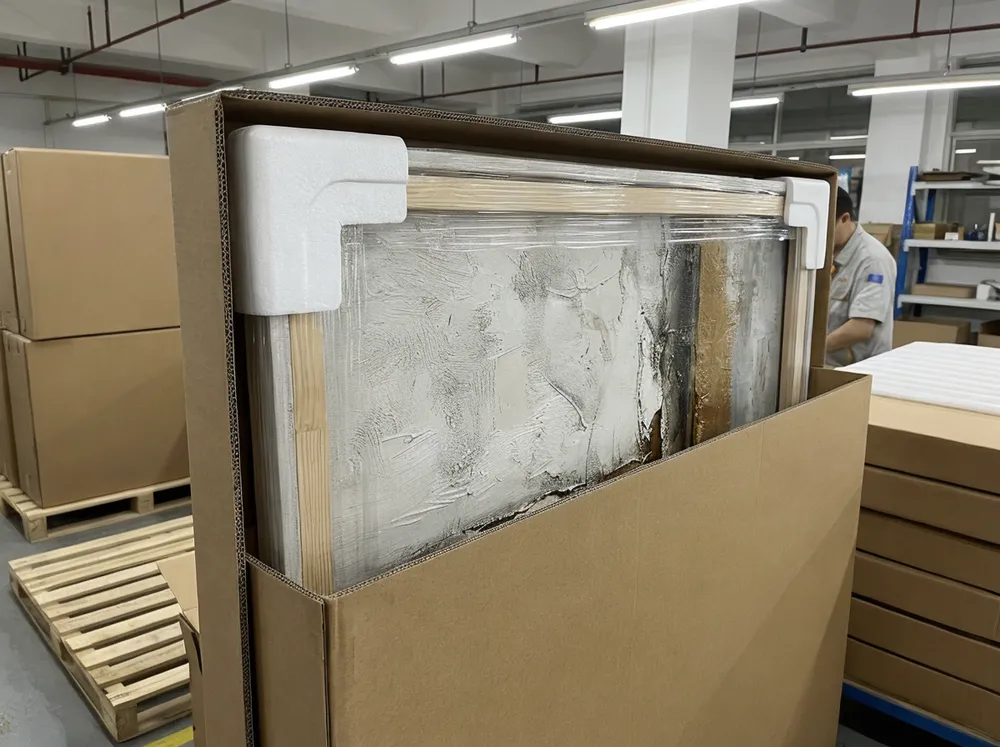
Textured canvas is more fragile than flat-print canvas because the raised surface is vulnerable to compression damage. A dented texture ridge is visible and unfixable — the piece is a loss. Our packaging is engineered specifically for this risk.

Each piece gets a PE film face cover to prevent surface contact, foam corner protectors on all four corners, and a cardboard spacer frame that holds the piece away from the carton walls. For multi-panel sets, panels are separated by foam dividers. Master cartons are double-wall corrugated, rated for stacking compression during container loading.

Container Loading Capacity

Container Type 60×90 cm Singles 80×120 cm Singles
20GP 600–750 pieces 350–450 pieces
40HQ 1,400–1,700 pieces 800–1,000 pieces

Loading density is lower than printed canvas because the spacer frames add volume per unit. Plan your container cost accordingly — the per-unit freight is higher, but so is your per-unit margin, so the ratio typically works in your favor.

For e-commerce sellers shipping individual pieces via parcel carriers, we can configure inner packaging rated for parcel-grade handling — drop-tested to ISTA 3A standards. Your damage claim rate stays below 1%.

Get a Shipping Quote
Multi-layer packaging protection for textured canvas showing PE film, foam corners, and spacer frame
Damage Rate
<1%
ISTA 3A Tested
Carton Grade
Double-Wall
Stack Rated

Frequently Asked Questions About Abstract Canvas Wall Arts

Technical and commercial details for wholesale buyers evaluating textured canvas as a product category.

Standard printed canvas is produced on a wide-format inkjet printer — the image is flat, the surface is smooth, and any factory with the equipment can produce identical output. Abstract canvas wall arts are hand-textured with acrylic gel medium, palette knife strokes, and often metallic leaf or modeling paste. The surface has 2–8 mm of physical relief that you can see and feel.

For your business, the difference is positioning: printed canvas competes on price, abstract canvas competes on perceived value. You can't sell a printed canvas at $120 retail — you can sell a textured abstract at that price point without resistance.

Yes. Send us a photo, a digital file, or a physical sample. Our painting team will produce a reference piece matching your design's color palette, texture style, and composition. You approve the reference piece (we ship it or send high-resolution photos with macro detail shots), and that becomes the production standard. Turnaround on the reference piece is typically 7–10 days.

We hold texture height to ±1 mm and color to ΔE < 3 (visually indistinguishable under normal lighting) across a production run. Each run is assigned to 2–3 painters working from the same approved reference piece, with daily spot-checks by our QC team. Pieces that fall outside tolerance get reworked or rejected. You won't see unit-to-unit variation that your end buyers would notice.

100 pieces for existing designs in standard sizes. 200–300 pieces for custom designs or custom color palettes. We can produce a 5-unit sample run before you commit to a full production order — most buyers use this to test market response before scaling.

The acrylic gel medium and varnish we use are inherently low-flammability, but if your project requires specific fire rating certification (Class A or Class B per ASTM E84, or BS 476 for UK projects), we can apply a fire-retardant topcoat that meets the standard. Specify the requirement at the quoting stage so we can factor it into pricing and lead time. We'll provide the test certificate with your shipment.

Store flat or upright in the original packaging, in a climate-controlled environment — 15–30°C, below 65% relative humidity. Avoid stacking more than 6 cartons high. The texture is fully cured before shipping, so it won't deform under normal storage conditions. We've had buyers store inventory for 12+ months without degradation, as long as the packaging stays intact and the environment stays dry.

Start Sourcing Abstract Canvas Wall Arts

If you're adding textured abstract canvas to your product line or sourcing for a specific project, send us your brief: target designs (reference images work), sizes, quantities, and your target market. If you're not sure where to start, tell us your retail price point and channel — we'll recommend a design and size mix based on what's performing for our current distributors in your region.

Sample Evaluation

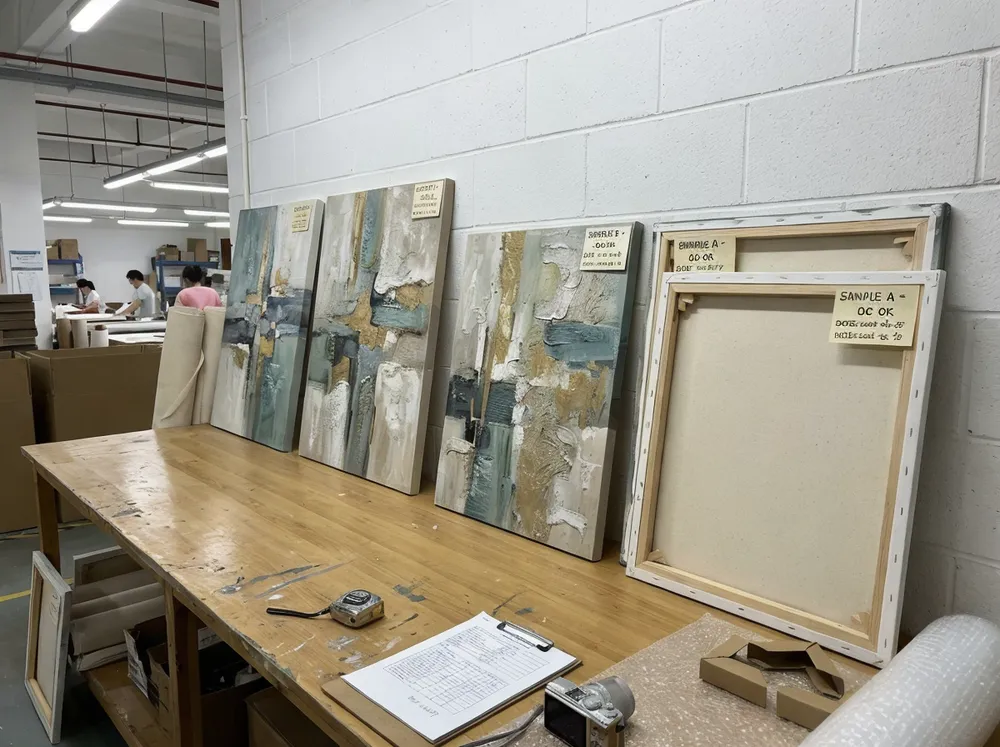
Most new buyers in this category start with a 5-unit sample set to evaluate texture quality and color accuracy firsthand. We can ship samples within 10 days of design confirmation.

Textured abstract canvas wall art samples ready for evaluation
10 Days
Sample Shipping
Livewellcraft

Decorative mirror and wall art manufacturer, Dong Nai, Vietnam

12,000 m² integrated facility
6 production lines
ISO 9001:2015 certified
Learn more about our factory