allenliu@livewellcraft.com +86 182 2840 2575 Mon–Sat: 9:00 AM – 6:00 PM (GMT+7)
Factory-Direct from Dong Nai, Vietnam

Wall Arts by Medium & Material — Five Categories, One Factory

Canvas, metal, wood, acrylic, and abstract canvas wall arts — each produced on dedicated lines with material-specific QC, ready for your retail shelves or project installs.

  • 18+ years manufacturing experience
  • 5 material categories
  • 12,000 m² production facility
  • Exported to 30+ countries
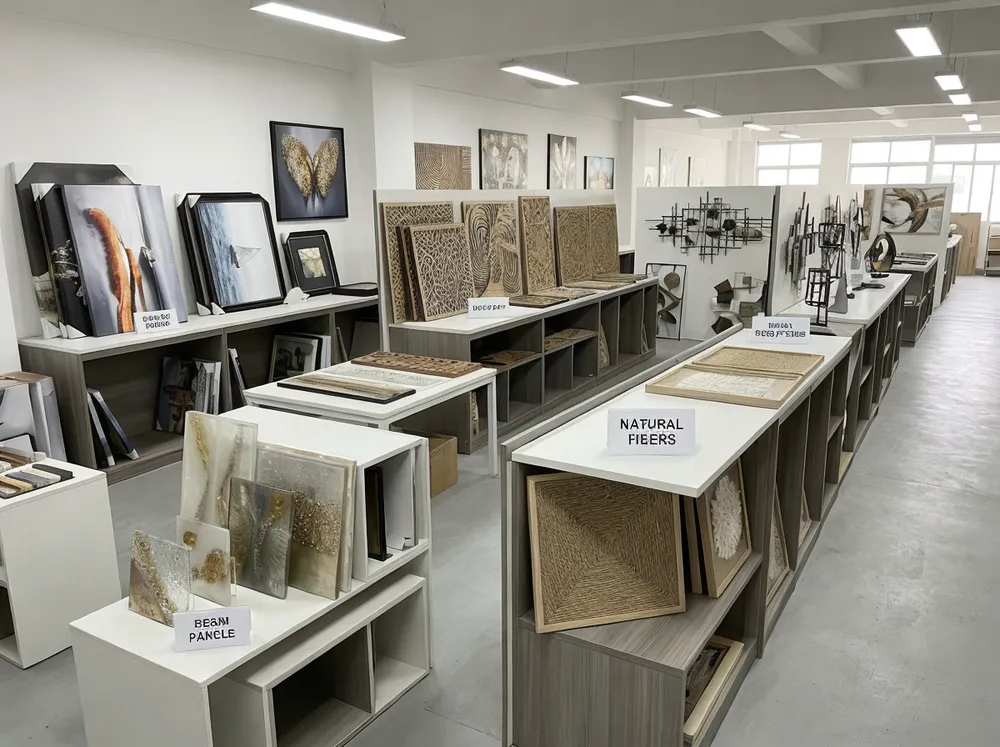
Five wall art material categories displayed in factory showroom

What "By Medium & Material" Means for Your Sourcing

When you source wall arts by medium and material, you're making a decision that affects your landed cost, your return rate, and which retail or project segments you can sell into. A canvas piece and a metal piece don't just look different — they ship differently, they hang differently, and they attract different end buyers at different price points.

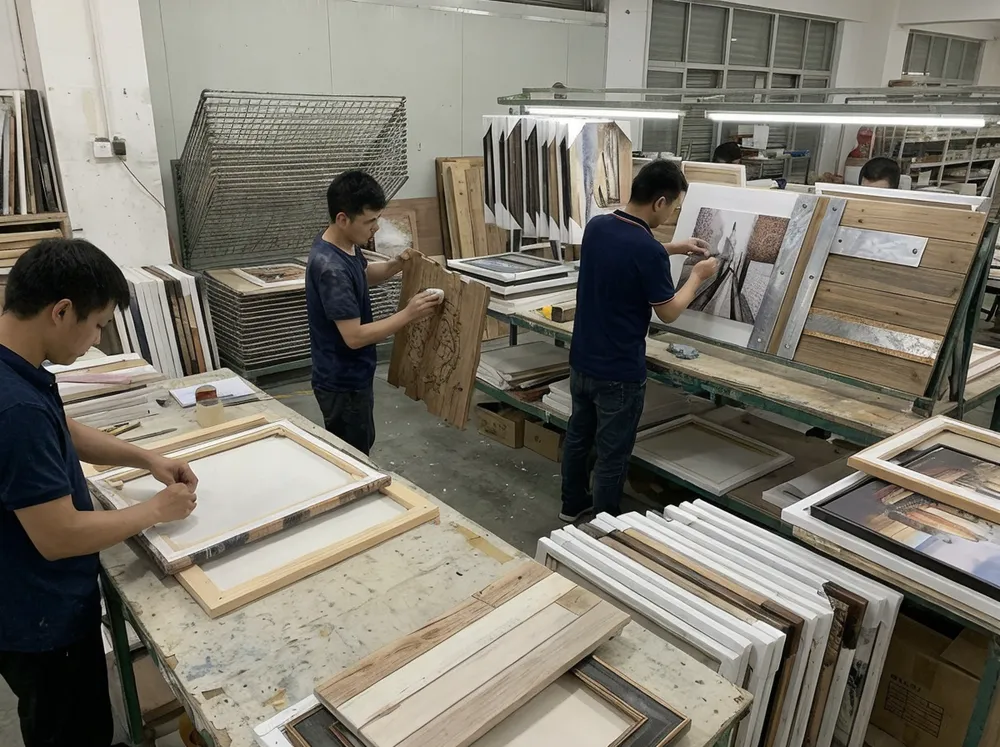
We manufacture wall art across five material categories on our 12,000 m² facility in Dong Nai, Vietnam. The same factory that has been producing decorative mirrors since 2008 — with glass cutting, frame molding, finishing, and assembly all in-house — runs parallel lines for canvas stretching, metal fabrication, wood panel finishing, and acrylic mounting. Our 150-person team and 6 production lines push roughly 400,000 pieces a year across all product categories, so your wall art order runs alongside our mirror production without competing for capacity.

The practical advantage for you: one purchase order, one factory contact, mixed-material containers. If your product line spans canvas prints for mass retail and metal sculptures for hospitality projects, you consolidate with a single supplier instead of managing three.

Sourcing Consolidation Benefits

  • Single Purchase Order
    One PO covers canvas, metal, wood, and acrylic — no split orders across vendors
  • One Factory Contact
    Streamlined communication instead of coordinating with multiple suppliers
  • Mixed-Material Containers
    Combine different material types in a single shipment to optimize freight
  • Parallel Production Lines
    Wall art runs alongside mirror production without capacity conflicts
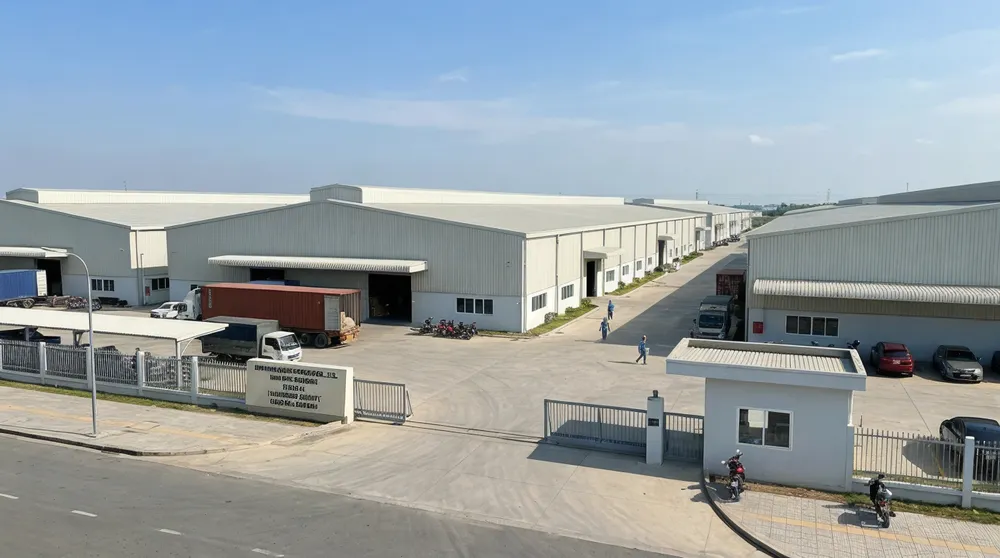
Livewellcraft 12,000 m² production facility in Dong Nai, Vietnam

Full Product Line by Material

We produce wall arts in five material categories. Each one runs on its own production workflow with material-specific finishing and QC checkpoints. Here's what's available and where each fits in your product mix.

Canvas wall art stretched over wooden stretcher bars
Highest Volume

Canvas Wall Arts

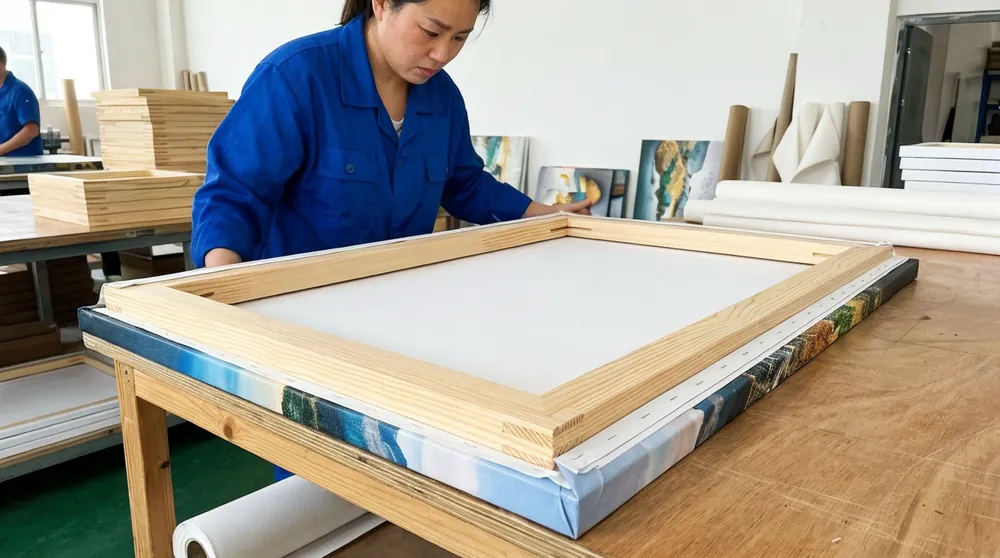
Printed or hand-embellished canvas stretched over kiln-dried wooden stretcher bars, available gallery-wrapped or framed. Canvas is our highest-volume wall art category — lightweight, cost-effective to ship, and the broadest retail appeal across price tiers.

Lightweight Cost-Effective Shipping Broad Retail Appeal
View Canvas Wall Arts
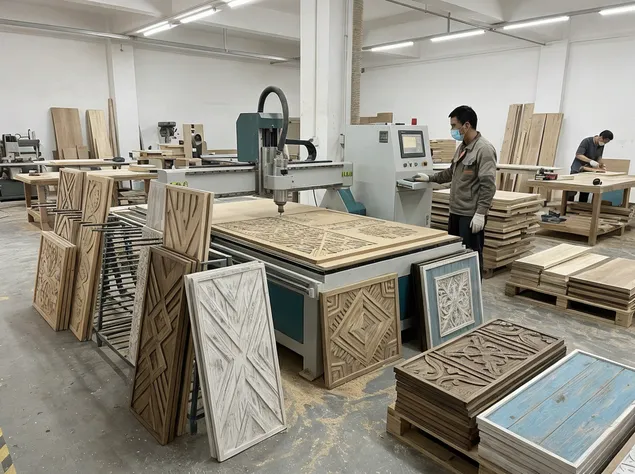
Carved and CNC-routed wood wall art panels
Higher Markup

Wood Wall Arts

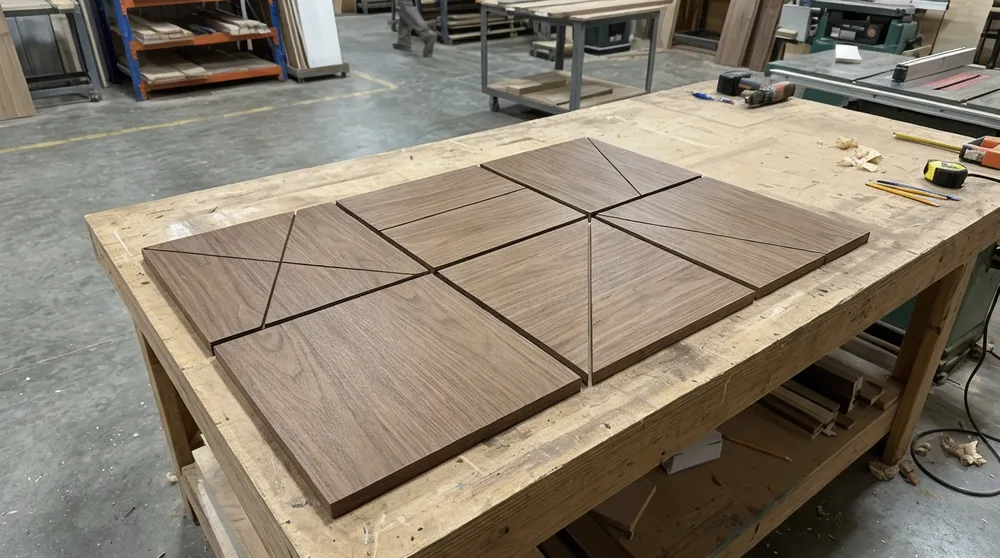
Carved, CNC-routed, or layered wood panels in MDF, pine, and paulownia. Stained, painted, or left with natural grain depending on your design brief. Wood wall art carries a higher perceived value at retail, so your markup potential is stronger than canvas — particularly in the farmhouse, rustic, and coastal style segments.

MDF / Pine / Paulownia Farmhouse & Rustic
View Wood Wall Arts
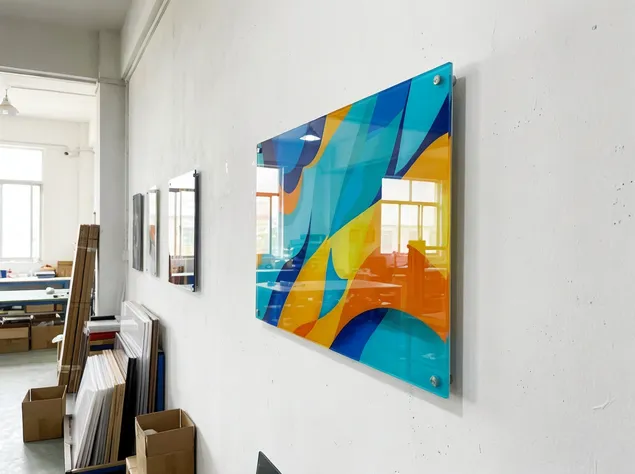
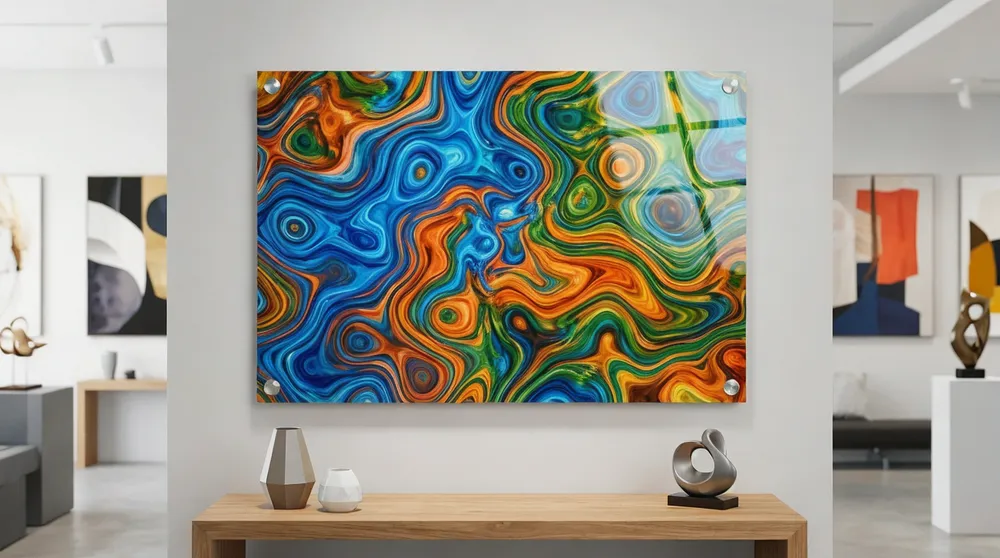
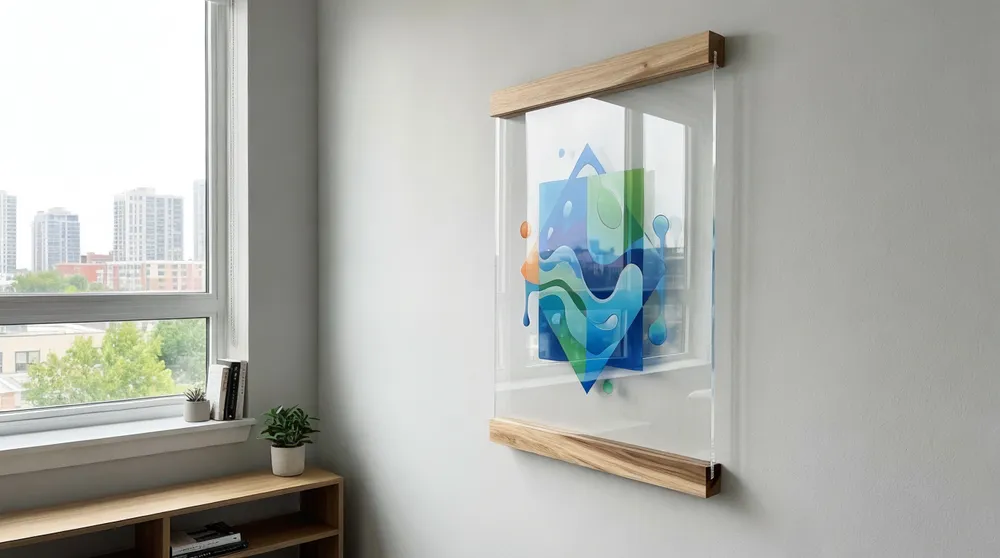
UV-printed acrylic wall art with high-gloss finish
E-Commerce Ready

Acrylic Wall Arts

UV-printed or reverse-mounted artwork on cast acrylic panels, typically 3mm to 5mm thickness. Acrylic gives you a modern, high-gloss presentation that photographs well for e-commerce listings. Lighter than glass-mounted alternatives, so your freight cost per unit drops and breakage during shipping is essentially zero.

3mm–5mm Thickness Zero Breakage
View Acrylic Wall Arts
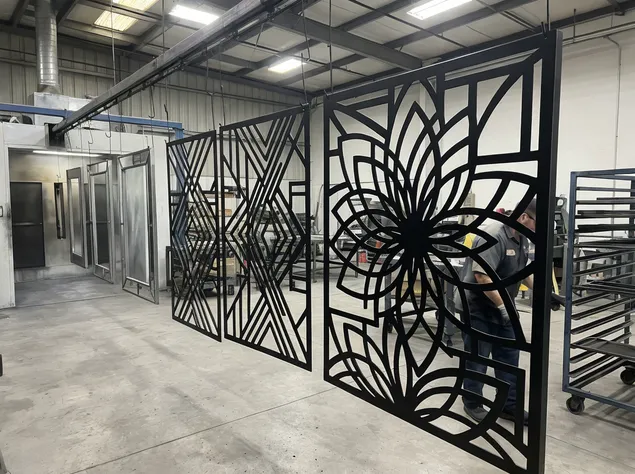
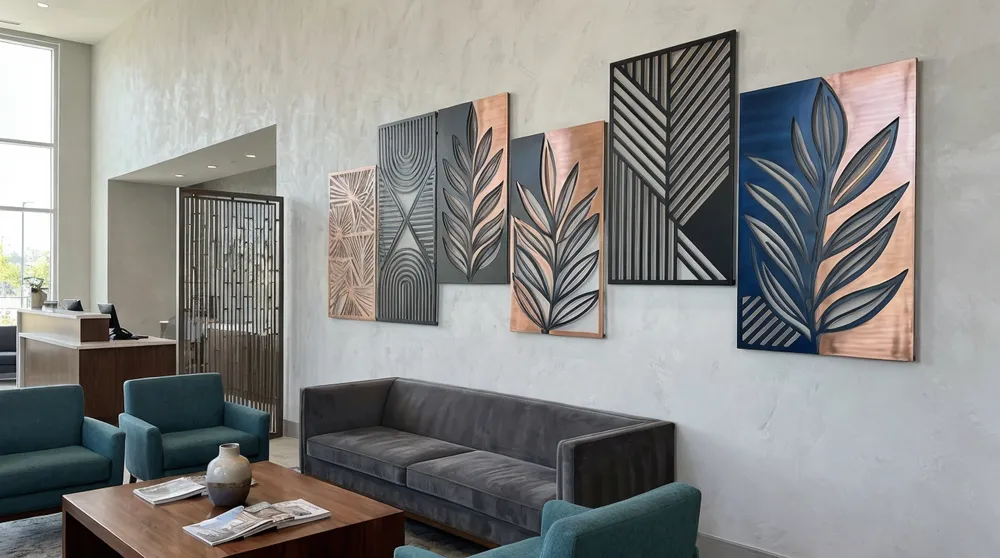
Laser-cut and powder-coated metal wall art
Mid-to-Premium

Metal Wall Arts

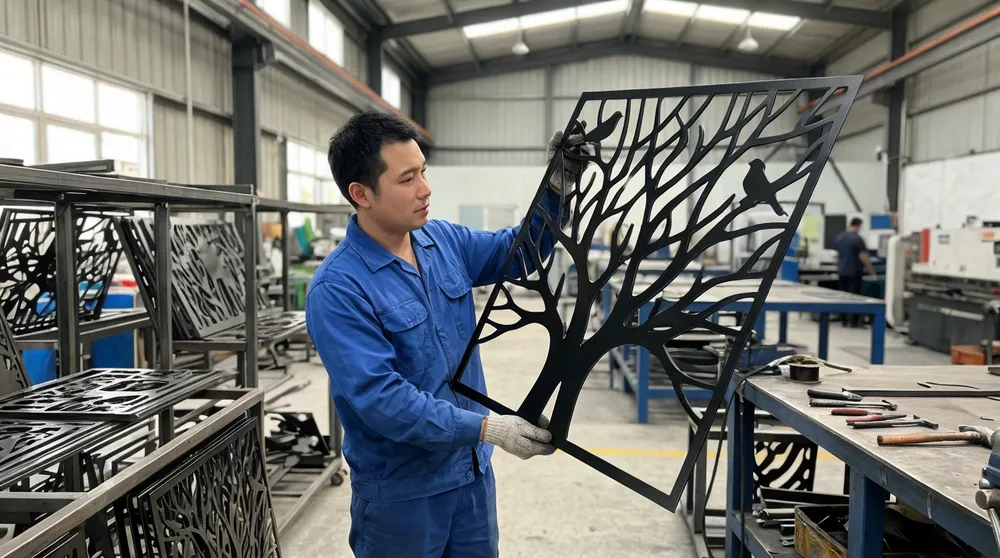
Laser-cut or stamped iron and aluminum designs, powder-coated or hand-painted. Metal wall art targets the mid-to-premium tier — hospitality projects, design-forward retail, and commercial interiors. We run these through the same powder coating line we use for our metal mirror frames, so the finish consistency and durability testing are already built into the process.

Iron & Aluminum Hospitality Grade
View Metal Wall Arts
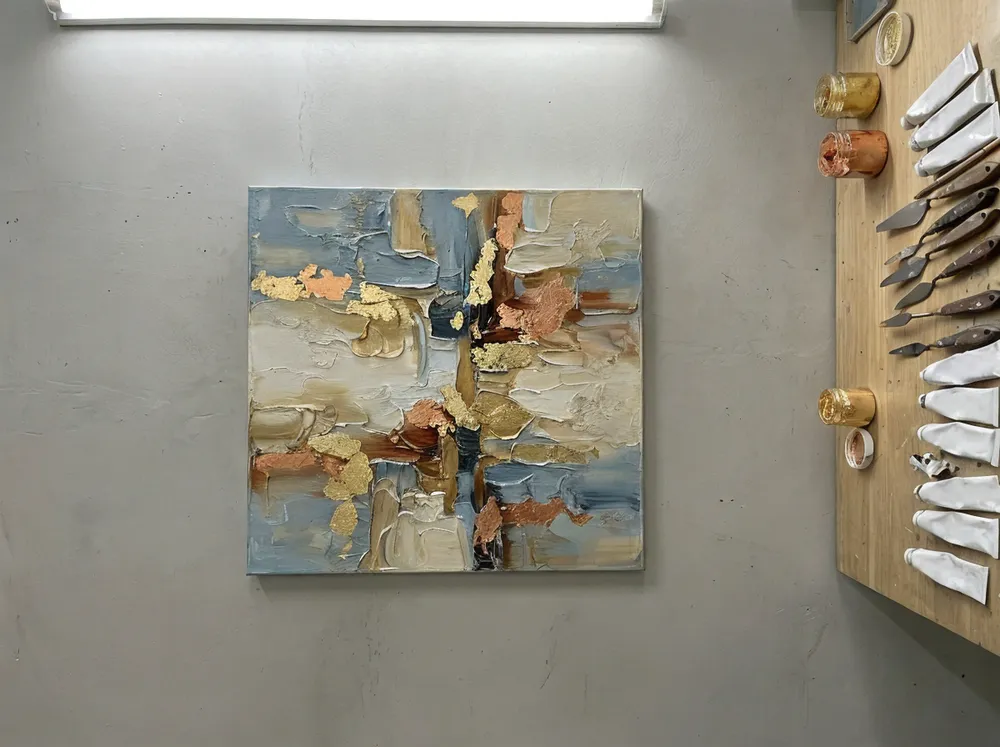
Hand-painted abstract canvas with heavy texture and metallic accents
Boutique & Gallery

Abstract Canvas Wall Arts

Hand-painted or textured abstract compositions on canvas — heavy gel medium, palette knife work, metallic leaf accents. This is the category where your product stands apart from mass-printed competition. Each piece carries visible texture that buyers can feel, which translates to higher retail pricing and stronger sell-through in boutique and gallery channels.

Hand-Painted Visible Texture Metallic Leaf
View Abstract Canvas Wall Arts

Not sure which material fits your market?

Send us your target retail price point and channel — we'll recommend the material and finish combination that protects your margin.

Material-by-Material Manufacturing Specs

Every material runs through a different production sequence on our floor. Here's what we control at each stage and the spec ranges available across the category.

Parameter Canvas Wood Acrylic Metal
Base material 360–420 gsm poly-cotton blend MDF, pine, paulownia 3–5 mm cast acrylic 0.8–1.5 mm iron / aluminum
Frame/substrate Kiln-dried pine stretcher bars Solid panel or layered assembly Aluminum standoff or flush mount Welded or riveted steel frame
Surface finish Giclee print, hand-embellished texture coat Stain, lacquer, multi-coat paint UV print, reverse-mount lamination Powder coat, electroplate, hand-paint
Standard sizes 20×20 cm to 120×180 cm 20×30 cm to 100×150 cm 20×30 cm to 90×120 cm 30×30 cm to 120×120 cm
Weight range (per piece) 0.3–2.5 kg 0.8–6 kg 0.4–3 kg 1.5–12 kg
Custom sizing Yes — any dimension within stretcher bar stock Yes — CNC routing to spec Yes — laser cut to spec Yes — laser cut to spec

For canvas pieces over 90 cm on any side, we reinforce the stretcher bar with a center cross-brace — it adds negligible cost but prevents warping during transit and in humid retail environments.

These are category-level ranges. Each sub-product page carries the exact specs, finish options, and tolerance details for that material type.

How Material Choice Drives Your Commercial Outcome

Choosing a wall art material isn't an aesthetic decision for you — it's a margin decision, a logistics decision, and a market-positioning decision. Here's how we think about it when advising buyers, based on 18 years of shipping wall decor to distributors and retailers across five continents.

Canvas

Volume Retail and E-Commerce
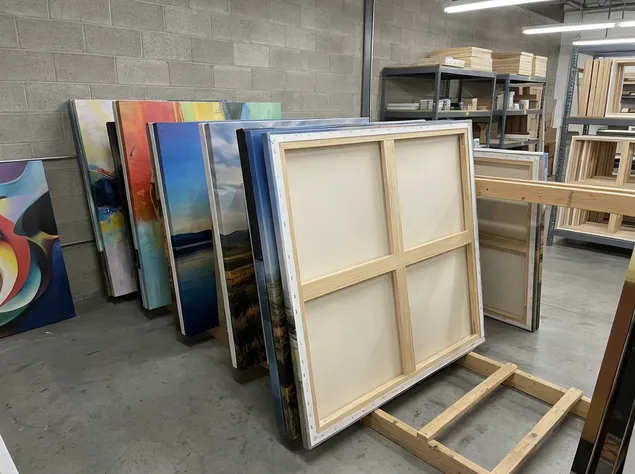
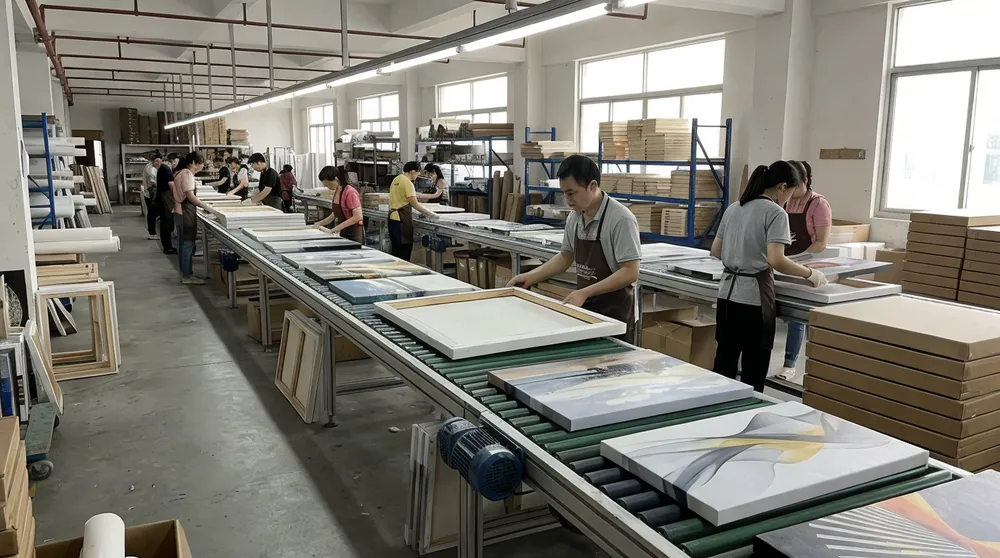
Canvas wall art production line showing gallery-wrapped pieces

Canvas wall art has the lowest per-unit production cost and the best container loading density of any material in this category. A 40HQ container holds roughly 2,800–3,200 gallery-wrapped canvas pieces (depending on size mix), compared to about 800–1,000 metal pieces of equivalent dimensions.

Your landed cost per unit is significantly lower, which matters when you're competing on price in Amazon or big-box retail channels. We supply canvas wall art to buyers running Walmart and Wayfair programs — the packaging already meets their drop-test and labeling requirements.

View Canvas Wall Arts

Metal

Hospitality, Commercial Interiors, and Premium Retail
Metal wall art installed in commercial hospitality setting

Metal wall art commands a higher wholesale price, but the margin percentage is also higher because end buyers perceive metal as a premium material. Our hospitality buyers — hotels, restaurant groups, corporate office fit-outs — order metal wall art in project quantities of 200–500 pieces with custom colorways matched to their interior palette.

We powder-coat on the same automated line we use for metal mirror frames, so the finish passes 500-hour salt spray testing. Your downstream buyer gets durability they can spec into commercial environments without worrying about warranty claims.

(This segment has been our fastest-growing wall art category over the past three years — worth considering if you're expanding beyond canvas.)

View Metal Wall Arts

Wood

Farmhouse, Rustic, and Specialty Retail
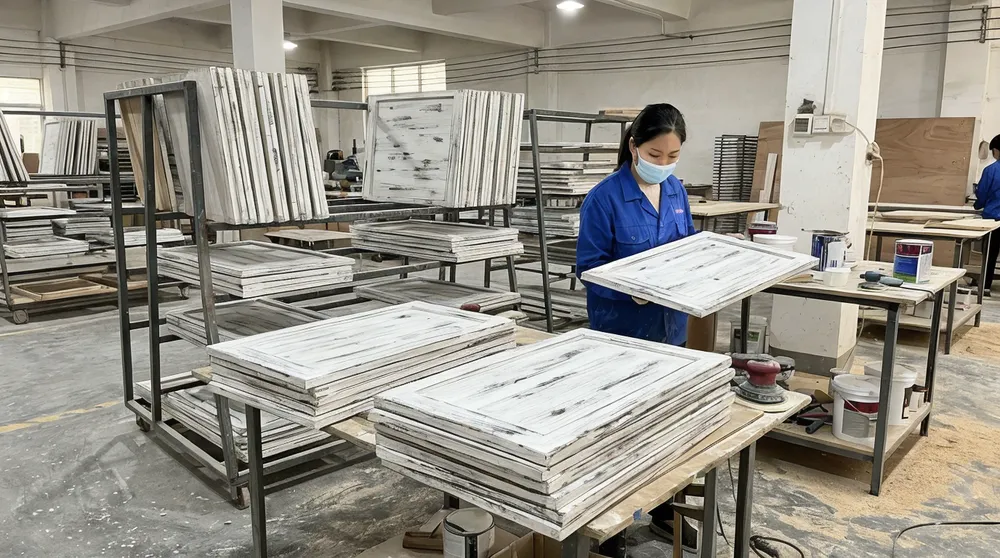
Wood wall art with farmhouse distressed finish

Wood wall art sits in a middle price tier but carries strong perceived value — the weight, the grain, the tactile quality all signal "handcrafted" to end consumers. We produce in MDF for cost-controlled programs and in solid pine or paulownia when your market demands real wood.

Our sanding and finishing line runs multi-coat sequences — primer, base color, distress pass, topcoat — so the farmhouse and vintage looks that move well in North American retail come off the line consistent across a 3,000-piece run. Wood is heavier than canvas, so your freight cost per unit is higher, but the retail price point absorbs it.

View Wood Wall Arts

Acrylic

Modern Retail and E-Commerce Photography
High-gloss acrylic wall art with vibrant UV print

Acrylic wall art is the lightest rigid-substrate option we produce, and it ships with near-zero breakage risk — no glass to crack. The high-gloss surface photographs exceptionally well under studio lighting, which gives your e-commerce listings a visual edge.

We UV-print directly onto the acrylic surface at 1440 dpi resolution, so color vibrancy and detail hold up even on large-format pieces. For buyers building a modern or minimalist product line, acrylic lets you offer a premium look at a mid-tier price point.

View Acrylic Wall Arts
Custom Development

OEM/ODM: Custom Wall Art Development from Your Concept

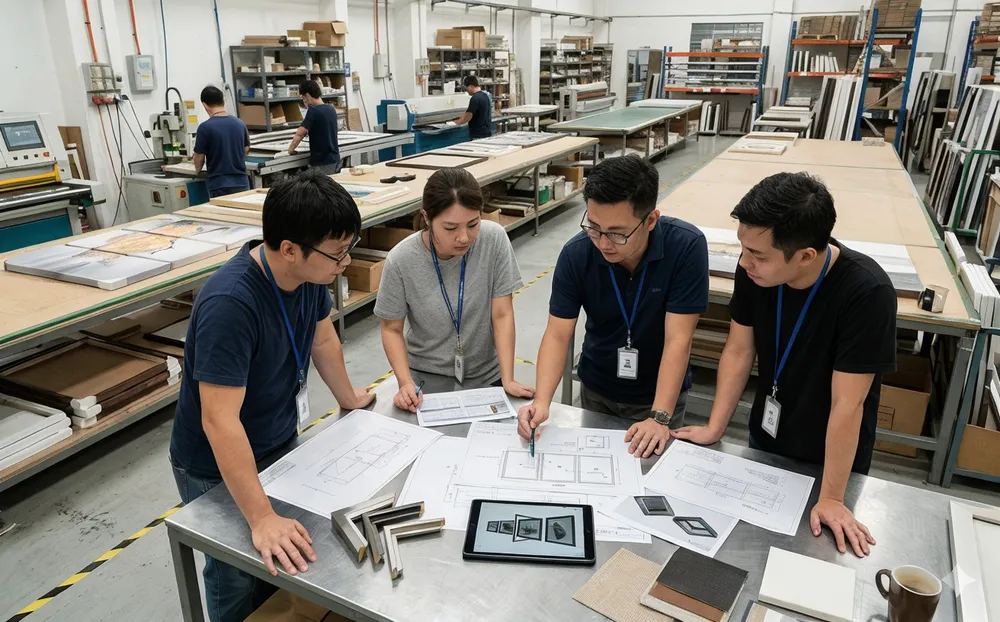
Our 12-person engineering team handles custom wall art development the same way we handle custom mirror profiles — you send a concept, we turn it into a production-ready spec. The difference between us and a trading company quoting you wall art is that our engineers sit 30 meters from the production lines. When they spec a frame profile or a mounting system, they already know what our machines can hold tolerance on and what will cause problems at volume.

Engineering team reviewing wall art specifications near production lines

What We Customize at the Category Level

Dimensions

Any size within the material's structural limits — we'll advise if your requested size needs reinforcement or a different substrate thickness

Surface Finish

Color matching to Pantone or RAL, custom texture profiles, mixed-media combinations (e.g., metal elements on a canvas base)

Mounting Hardware

Sawtooth, D-ring, French cleat, or aluminum standoff — configured for your market's wall type and weight requirements

Packaging and Branding

Custom inner cartons, branded inserts, retail-ready shelf packaging with your UPC and branding, or plain export cartons for white-label programs

Design Services

If you have a trend direction but not finished artwork, our in-house design team develops original compositions. We currently maintain a library of over 500 original designs across all material categories that are available for exclusive or non-exclusive licensing

Standard Materials
MOQ 100

pieces per design on standard materials

New Molds / Tooling
MOQ 300

pieces to amortize tooling cost across your first order

Have a design concept or a competitor sample you want us to develop?

Send photos and your target quantity — our engineering team will come back with a technical proposal and pricing within 48 hours.

Start a Custom Project
Quality Assurance

Quality Control Across All Material Types

We run 100% visual inspection on every wall art piece before it packs — the same standard we hold on our mirror production. But wall art QC has its own checkpoints because the failure modes are different from mirrors.

Canvas QC

  • Print color consistency against approved proof
  • Stretcher bar tension (loose canvas sags within weeks on retail shelf)
  • Corner fold neatness on gallery-wrapped pieces

Metal QC

  • Powder coat adhesion test — cross-hatch blade scoring
  • Adhesive tape pull test on scored surface
  • Any coating lift = strip and re-coat (reject)

Wood QC

  • Finish uniformity across the batch
  • Stain absorption consistency check
  • Color matching for multi-piece sets (side-by-side comparison)

Acrylic QC

  • Print registration accuracy
  • Edge polish quality inspection
  • Any micro-chipping on acrylic edge = reject

Key Insight from Our QC Data

We learned early on that wall art return rates in retail are driven almost entirely by two things: visible damage from poor packaging and color inconsistency between units in a set. Our QC process targets both specifically.

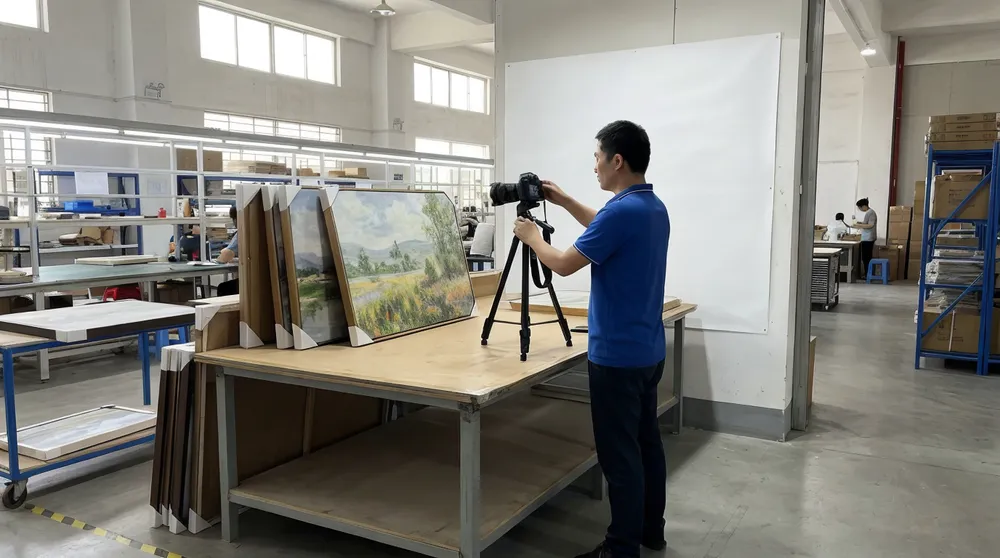
Quality control inspection station with photography setup for pre-shipment approval

Pre-Shipment Photo Approval

All production runs are photographed at the inspection station and images are shared with you before container loading, so you approve the finished product before it ships.

Certifications Covering Wall Art Lines

Certified
ISO 9001:2015
Verified
SGS Certified

ISO 9001:2015 and SGS certification cover our full facility, including the wall art lines.

Logistics & Packaging

Shipping Wall Art Without Breakage or Margin Erosion

Wall art is a high-volume, low-density product — you're shipping surface area, not weight. That means container utilization is your biggest lever on landed cost, and packaging design is your biggest lever on damage claims.

Packaging Configuration by Material Type

We configure packaging by material type and by your shipping method:

Material Packaging Method Approx. Loading (40HQ) Breakage Risk
Canvas (gallery-wrapped) Individual poly bag + corner protectors, stacked flat in master carton 2,800–3,200 pcs Very Low
Canvas (framed) Foam corner protectors + shrink wrap, vertical stacking in master carton 1,800–2,200 pcs Low
Wood Bubble wrap + foam edge guards, horizontal stacking 1,200–1,600 pcs Low
Acrylic PE film surface protection + foam dividers, vertical slot packing 2,000–2,600 pcs Very Low
Metal Foam wrap + cardboard dividers, vertical or horizontal depending on geometry 800–1,200 pcs Low (dent risk managed)

Retail Channel Packaging

Shelf-Ready Solutions

For retail channels, we pack shelf-ready: individual carton with UPC barcode, hanging hardware pre-installed, care card and any required inserts included. Your receiving team scans and shelves — no repackaging labor on your end.

Project Buyer Packaging

Job Site Delivery

For project buyers shipping to job sites, we palletize by zone or room designation if your project requires it, with protective corner boards and stretch wrap rated for ocean freight handling.

Export Documentation

We handle export documentation — commercial invoices, packing lists, certificates of origin — in the format your freight forwarder and customs broker expect.

  • CE marking for European markets
  • BSCI compliance documentation available on request

Mixed-Material Containers

Mixed-material containers are standard for us. If your order includes 1,500 canvas pieces, 400 metal pieces, and 300 wood pieces, we load them in a single container with material-specific packaging for each, so you receive one shipment instead of coordinating three.

Buyer Guidance

Sourcing Wall Art by Material: Common Pitfalls and How to Avoid Them

We've shipped wall art to buyers in over 30 countries since 2008. The problems that come back to us — and the problems we've engineered out of our process — tend to follow patterns. Here are the ones worth knowing before you place your order.

Canvas wall art with drum-tight surface showing proper stretcher bar construction
Canvas

Canvas Sagging After 3–6 Months

The Problem

This is the most common complaint in retail canvas wall art, and it almost always traces back to two causes: stretcher bars made from green (unseasoned) wood that shrinks as it dries, or insufficient staple tension during the stretching process.

Our Solution

We use kiln-dried pine for all stretcher bars — moisture content below 12% — and our stretching stations apply consistent pneumatic tension across the canvas face. The result is a drum-tight surface that holds through humidity swings in warehouses and retail environments.

Metal wall art with durable three-stage powder coat finish
Metal

Powder Coat Chipping on Metal Wall Art

The Problem

Cheap metal wall art often uses a single-coat powder application with no pre-treatment. The coating looks fine out of the box but chips at edges and mounting points within months — and your customer sends it back.

Our Solution

We run a three-stage pre-treatment (degrease, phosphate conversion, rinse) before powder application at 60–80 μm thickness, then cure at 200°C. The adhesion test we run on every batch confirms the coating bonds to the substrate, not just sits on top of it.

Wood wall art set showing uniform stain color across multiple pieces
Wood

Color Inconsistency Across Wood Batches

The Problem

Natural wood absorbs stain differently depending on grain density, which means two pieces from the same production run can look noticeably different. For programs where color consistency matters — sets of three, gallery walls, hospitality projects with 200 identical pieces — this creates real problems.

Our Solution

We either use MDF (perfectly uniform absorption) or apply a tinted primer coat on solid wood before the stain layer. The primer evens out the absorption rate so your end buyer sees a consistent color across every piece in the set.

UV-stabilized acrylic wall art maintaining optical clarity near window
Acrylic

Acrylic Yellowing from UV Exposure

The Problem

Low-grade acrylic panels yellow within 12–18 months of sun exposure, which is a problem for any piece hung near a window.

Our Solution

We use cast acrylic with UV-stabilized formulation as standard — it maintains optical clarity for 5+ years under normal indoor conditions. The cost difference between UV-stabilized and non-stabilized acrylic is marginal per unit, but the difference in return rates is significant.

18+ Years of Problem-Solving Built Into Every Order

These aren't theoretical issues — they're patterns we've identified and engineered solutions for across thousands of shipments. When you source from Livewellcraft, you benefit from processes refined over nearly two decades of B2B wall art production.

Buyer Questions Answered

Frequently Asked Questions — Wall Arts by Medium & Material

100 pieces per design on standard materials and existing molds. For custom OEM designs requiring new tooling (custom metal shapes, new stretcher bar dimensions), the MOQ is typically 300 pieces per design to cover tooling amortization.

You can mix materials within a single order and ship in one container.

Both perform well in e-commerce, but they target different price tiers. Canvas is your volume play — lower unit cost, lighter shipping weight, and the broadest consumer appeal. Acrylic targets the modern/minimalist buyer willing to pay more for a high-gloss, frameless look.

Acrylic also photographs better for product listings because of its reflective surface.

If you're building a new wall art line for Amazon or Wayfair, most of our buyers start with canvas to establish volume, then add acrylic SKUs to capture the premium segment.

For standard residential and light commercial use, 0.8 mm iron is sufficient and keeps your unit cost down.

For hospitality and high-traffic commercial interiors where pieces may be bumped or need to support their own weight at larger dimensions (over 80 cm), we recommend 1.2–1.5 mm.

Aluminum is an option when weight is a concern — it's roughly one-third the weight of iron at equivalent thickness, which matters for large-format pieces and reduces your freight cost per unit.

It depends on the material:

  • Canvas: We calibrate our printers against an approved color proof at the start of every run and pull spot-check prints every 200 units.
  • Wood: We apply a tinted primer before staining to normalize absorption across grain variations.
  • Metal: Our powder coating line uses automated thickness monitoring — 60–80 μm across the batch — and we color-match to Pantone or RAL references.
  • Acrylic: UV printing at 1440 dpi with ICC color profiles ensures consistency from the first piece to the last.

Yes. Mixed-media wall art is produced by running each material component through its own finishing line, then assembling at our final station. We've produced metal-on-canvas, wood-and-metal combinations, and acrylic-with-metal-frame configurations.

The engineering team specs the mounting and joining method based on the material combination and the piece's weight — rivets, industrial adhesive, or mechanical fasteners depending on what the design requires.

MOQ for mixed-media pieces is typically 200 units because the assembly process involves more manual labor.

Each material gets packaging engineered for its specific risk profile:

  • Canvas pieces: Corner protectors, stacked flat to prevent stretcher bar stress.
  • Metal pieces: Individually foam-wrapped with cardboard dividers to prevent surface-to-surface contact and dent damage.
  • Acrylic: PE film on both faces plus foam dividers in vertical slot packing.

All master cartons are rated for stacking compression during container loading. We've maintained a sub-0.5% transit damage rate across our wall art shipments over the past three years.

Get Started Today

Start Sourcing Wall Art by Material

Tell us which material categories you're interested in, your target quantities, and your market channel. If you have reference images or competitor samples, send those too — our engineering team will spec the closest match from our production capabilities and come back with pricing, lead time, and sample options within 48 hours.

Livewellcraft

Decorative mirror and wall art manufacturer, Dong Nai, Vietnam. 12,000 m² integrated facility, 6 production lines, ISO 9001:2015 certified.

Livewellcraft wall art production facility showcasing multi-material manufacturing capabilities
48h
Quote Turnaround
100+
MOQ Per Design