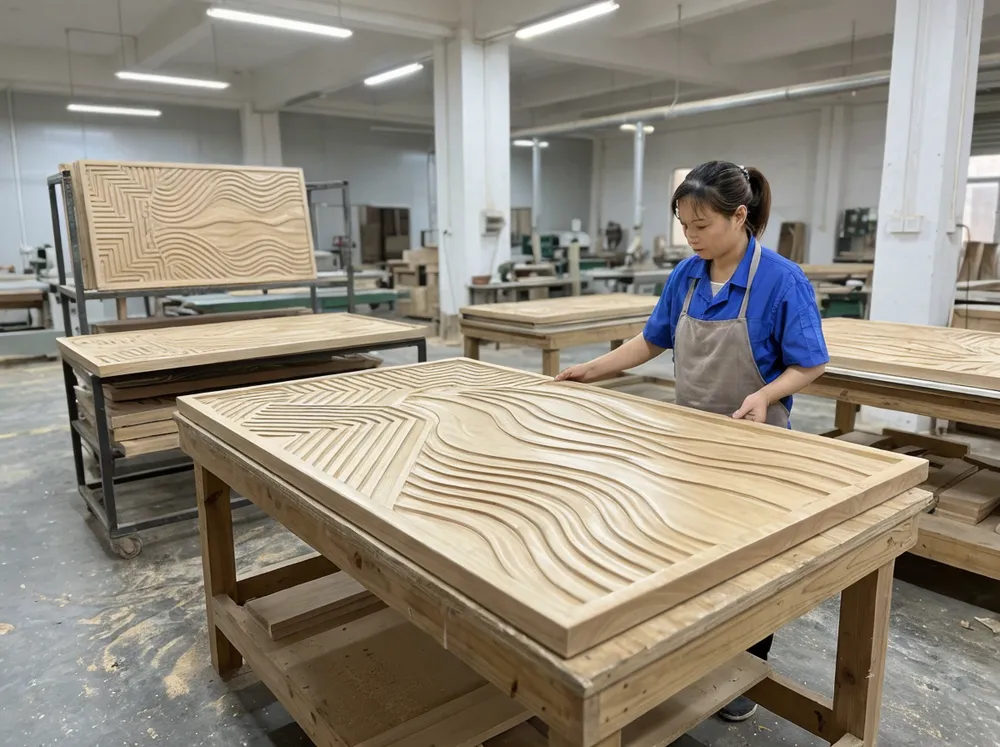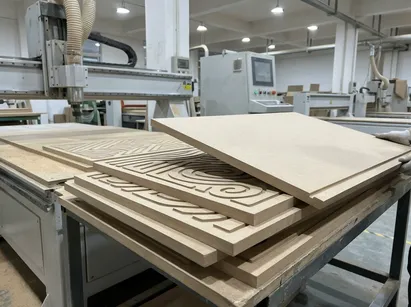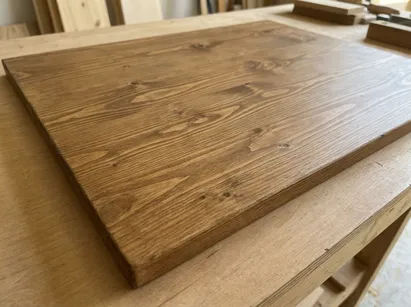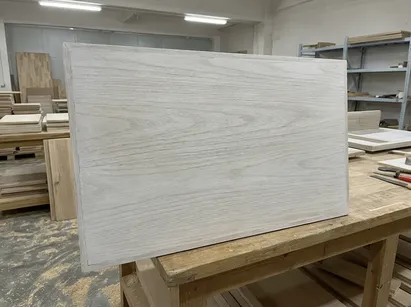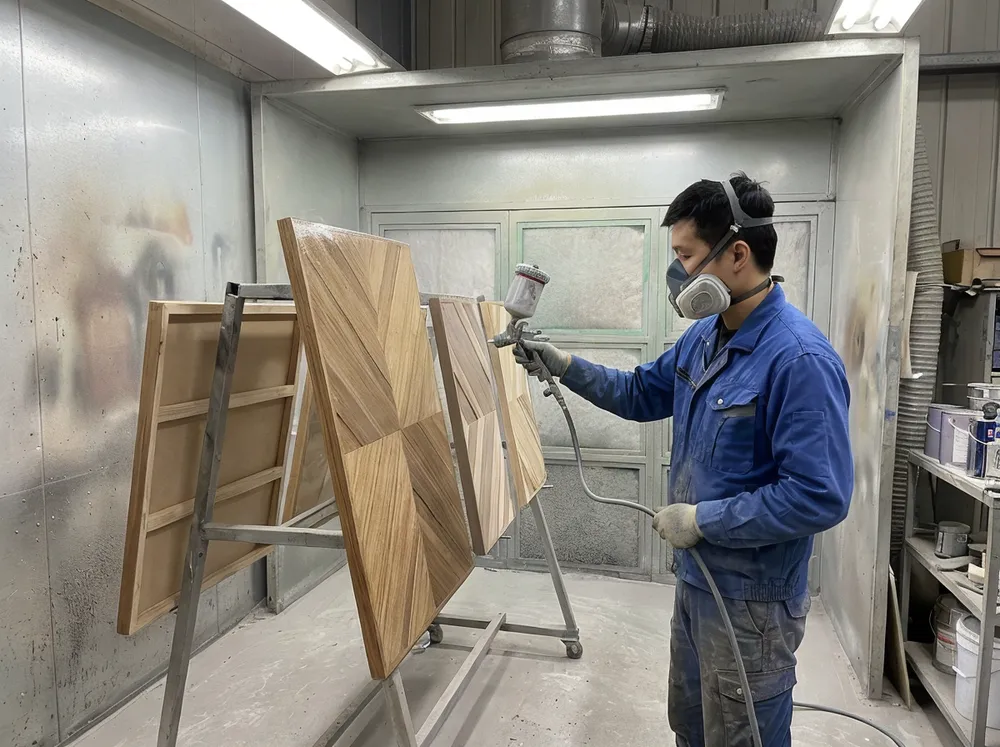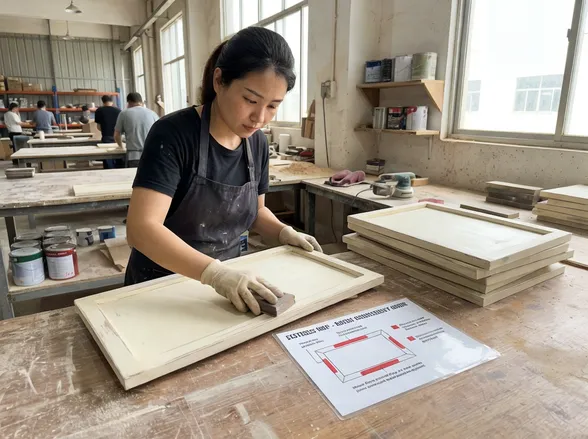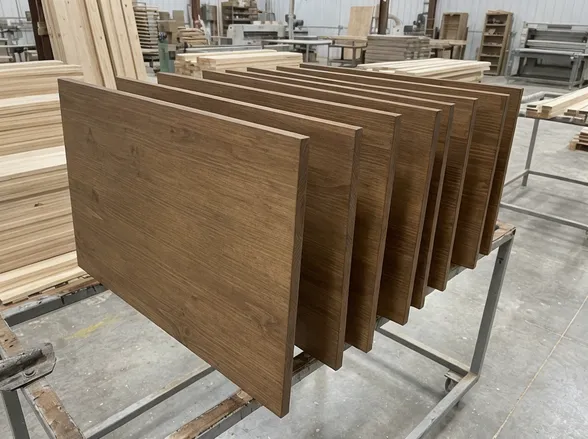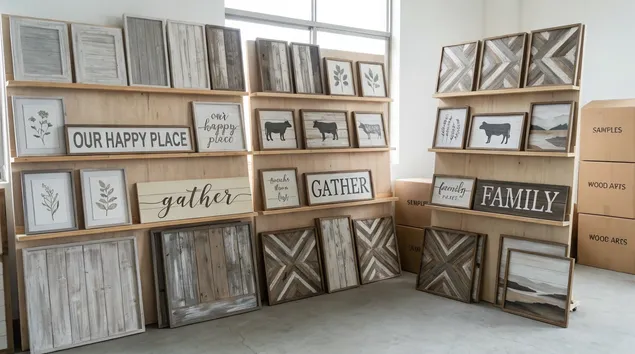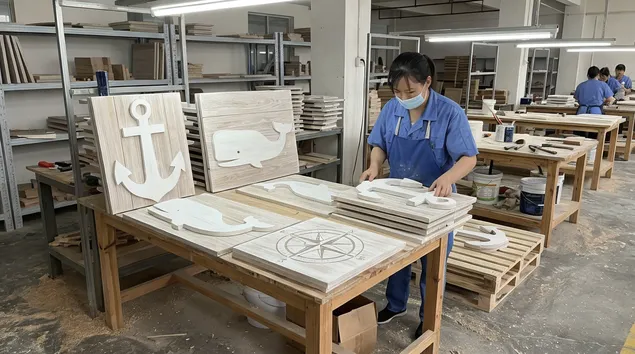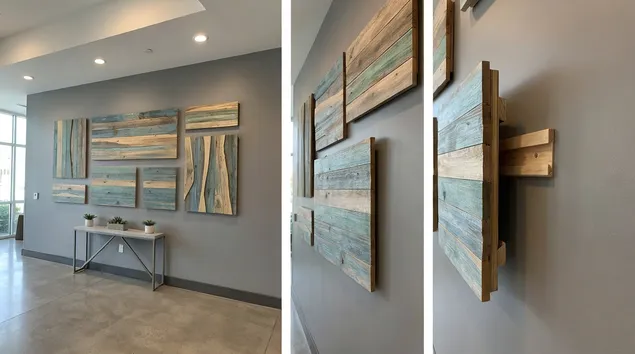
MDF, pine, and paulownia panels finished and packed on our 12,000 m² floor. Multi-coat finishing for farmhouse, rustic, coastal, and contemporary retail segments. Your design or ours, from 100 pieces.
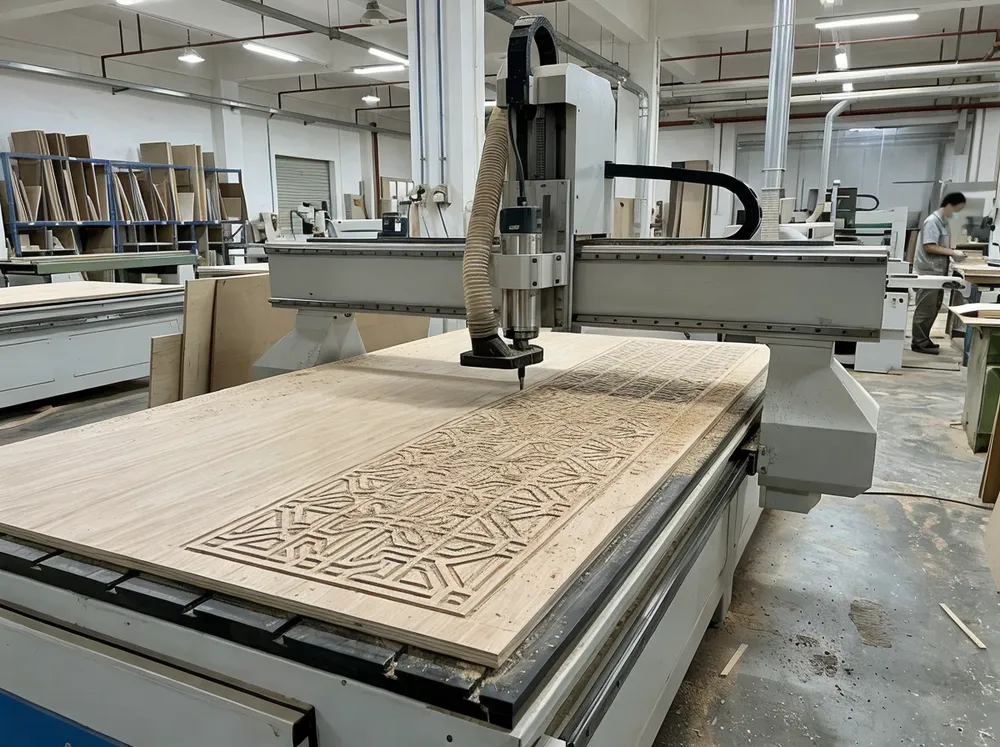
Wood wall arts are carved, CNC-routed, or layered wood panels — produced in MDF, pine, or paulownia and finished with stain, paint, lacquer, or deliberate distressing to match a target aesthetic. We manufacture them on the same 12,000 m² facility in Dong Nai where we produce our decorative mirrors and other wall art materials, using dedicated sanding and finishing lines that run multi-coat sequences tuned to each style.
The commercial case for wood wall art is straightforward: perceived value outpaces production cost. End consumers read wood as handcrafted, substantial, and premium — the weight in their hands, the visible grain, the tactile finish all justify a retail price point that canvas and printed alternatives can't reach. For you, that translates to stronger per-unit margins.
Our wholesale wood wall arts ship at a middle production cost tier, but your retail markup potential sits closer to metal wall art territory. The farmhouse, rustic, and coastal style segments that drive most wood wall art demand have shown consistent year-over-year growth across our North American and European buyer base. (We've seen our wood wall art volume roughly double since 2021 — it's no longer a niche add-on for most of our distributors.)
If you're already sourcing canvas wall arts for volume retail, wood is the natural next tier to build out your product line without jumping to the higher price point of metal wall arts.
The substrate you choose determines your production cost, your freight cost, and which retail tier your product lands in. We produce wood wall arts in three substrates, and most buyers carry at least two to cover different channels.
The workhorse for painted designs. Uniform density means zero grain telegraphing through your finish — what you see on piece 1 is what you see on piece 3,000.
Visible grain character that end consumers associate with "real wood" at a moderate cost. Ideal for farmhouse and rustic lines.
The lightest solid wood we work with. A 100×150 cm paulownia panel weighs roughly half what the same piece in MDF would — freight cost per unit drops meaningfully on oversized SKUs.
| Parameter | MDF | Pine | Paulownia |
|---|---|---|---|
| Thickness range | 9–18 mm | 12–20 mm | 10–18 mm |
| Density | High — heaviest option | Medium | Low — lightest solid wood |
| Finish compatibility | Paint, lacquer, vinyl wrap — takes any opaque finish uniformly | Stain, paint, distress — visible grain adds character | Stain, whitewash, natural seal — prominent grain, light color |
| Best for | Cost-controlled retail programs, painted designs, intricate CNC detail | Mid-tier retail, farmhouse/rustic lines, stained finishes | Premium positioning, lightweight large-format pieces, natural-look lines |
| Typical wholesale price tier | Entry | Mid | Mid-to-Premium |
| Weight (60×90 cm panel) | ~3.2 kg | ~2.4 kg | ~1.6 kg |
| CNC routing precision | Excellent — uniform density means clean edges | Good — requires grain-direction awareness | Good — soft wood, fast routing, slight edge fuzz requires sanding pass |
Send us your target retail price and style direction — we'll recommend the substrate and finish combination that protects your margin.
The substrate is the structure. The finish is where your product's retail value gets built — and where most quality problems originate if the process isn't controlled. We run wood wall art through a dedicated sanding and finishing line that handles multi-coat sequences, and this is the part of our operation worth understanding in detail because it directly affects your return rate and your downstream customer's perception of quality.
Every wood panel starts with machine sanding at 180-grit, then 240-grit for pieces receiving stain or natural finishes. MDF panels get a sealer coat first to prevent moisture absorption from water-based paints — skip this step and you get swelling at the edges within six months in a humid retail environment. We learned that early and it's been non-negotiable since.
For painted finishes, the sequence runs: sealer, primer, base color (sprayed in our booth with controlled humidity), then topcoat. This controlled environment ensures consistent color application and prevents common defects like orange peel texture or dust inclusions.
Final topcoat is a clear lacquer — matte, satin, or gloss depending on your spec — applied in two passes with a light sanding between coats. The lacquer protects the finish from handling damage during retail display and gives the surface a consistent sheen across the batch.
MDF's porous edges absorb water-based paints unevenly. Without a sealer coat, moisture penetrates the substrate and causes edge swelling within six months in humid retail environments. This single step eliminates one of the most common return causes in wood wall art.
Approximately 60% of wood wall art orders
For distressed and farmhouse looks — which account for roughly 60% of our wood wall art orders — we add a distress pass between the base color and topcoat. Our finishing team hand-sands edges and raised surfaces to expose the primer or bare wood underneath, following a distress map that we develop for each design.
The distress map is the key to batch consistency: instead of each worker interpreting "rustic" differently, they follow a visual guide that specifies which edges get sanded, how much primer shows through, and where the wear pattern falls. Your 2,000-piece order looks intentionally aged, not randomly scuffed.
Pine and paulownia substrates
Stained finishes on pine and paulownia require a different approach because natural grain variation causes uneven stain absorption. We pre-condition the wood with a diluted sealer that evens out porosity before the stain goes on.
Without this step, you get pieces in the same batch that range from light honey to dark amber — fine for a one-off artisan piece, unacceptable when your customer buys a set of three and hangs them side by side.
Production note: This pre-conditioning step adds about half a day to the production cycle, but it eliminates the single biggest source of wood wall art returns in retail.
Each segment below represents a repeatable order pattern we see from our existing wood wall arts buyers. These aren't decorating suggestions — they're market channels where wood wall art generates consistent reorder volume.
The largest single segment for wholesale wood wall arts. Distressed finishes, barn-wood aesthetics, typography and quote designs on painted panels. This style has maintained strong sell-through in North American mass retail and e-commerce for over five years now, and our buyers in this segment typically reorder quarterly.
The set format increases your average transaction value at retail and gives you a built-in upsell.
Whitewashed paulownia, driftwood-effect finishes, marine motifs. Coastal wall art targets resort gift shops, beach-town boutiques, and seasonal home decor retailers. Order volumes per design are smaller — typically 200–500 pieces — but the retail price point is higher and the segment is less price-competitive than farmhouse.
If you distribute to coastal markets in these regions, this is a high-margin niche.
Hotels, restaurants, and corporate offices order wood wall art in project quantities — 100–400 pieces per property, custom-sized and color-matched to the interior palette. These are one-time orders, but the per-unit value is high and the buyer is less price-sensitive than retail.
We produce hospitality wood wall art with French cleat mounting as standard because maintenance staff need to remove and rehang pieces without tools. Hospitality buyers also tend to request fire-retardant topcoat — we can apply it, and it's worth asking about if you're bidding on commercial projects.
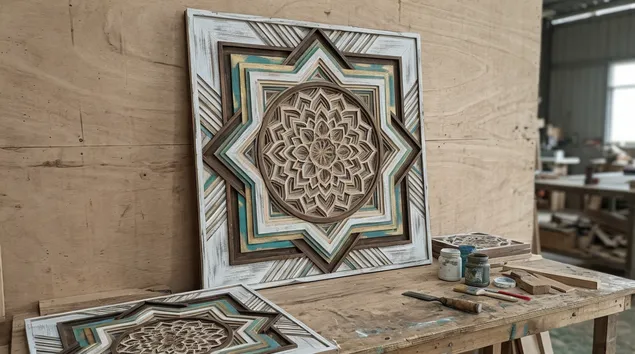
Layered wood assemblies, mixed-finish panels, carved mandala and geometric designs. This segment targets independent boutiques and online marketplaces where "handmade look" commands a premium. CNC routing handles the precision work, but the finishing is deliberately imperfect — visible brush strokes, uneven distressing, hand-applied metallic accents.
Order volumes are smaller, but your margin per piece is the highest in the wood wall art category.
Tell us your market and we'll spec a starter SKU mix based on what's moving for our existing distributors in that region.
We produce wood wall arts as OEM/ODM, so customization is the default, not the exception. Here's what you can specify and where the constraints sit.
| Customization Dimension | Options | Constraints / Cost Impact |
|---|---|---|
| Substrate | MDF, pine, paulownia, or combination (layered assembly) | No constraint on standard substrates; exotic woods quoted case-by-case |
| Dimensions | Any size from 15×15 cm to 150×200 cm (single panel) | Panels over 100 cm on any side require cross-brace or multi-panel assembly — we'll advise during quoting |
| Thickness | 9–25 mm depending on substrate | Thicker panels increase weight and freight cost; we recommend the minimum structurally sound thickness for your size |
| Surface Finish | Paint (any RAL/Pantone), stain, lacquer, whitewash, distress, metallic leaf, hand-painted accents | Standard finishes at base price; hand-applied accents (metallic leaf, multi-color distress) add 15–25% to unit cost |
| CNC Design | Your artwork file or our in-house design team develops original compositions | New CNC toolpath programming included at no charge for orders over 300 pieces; under 300, a one-time setup fee applies |
| Mounting Hardware | Sawtooth, D-ring, French cleat, keyhole slot | French cleat adds ~$0.30–0.50/unit; others included at base price |
| Packaging | Retail-ready (custom carton, branded insert, UPC label), bulk export, or white-label | Retail-ready packaging quoted per-design based on carton dimensions and insert complexity |
100 pieces per design for standard substrates and finishes. New CNC tooling (custom shapes, new routing patterns) starts at 300 pieces to amortize the programming and test-run cost.
25–35 days for standard production, 35–45 days when new tooling is involved.
Send a sketch, a competitor sample photo, or even a Pinterest board — we'll come back with a production-ready spec, material recommendation, and pricing within 48 hours.
Start a Custom Wood Wall Art ProjectWood wall art is denser than canvas but lighter than metal, which puts it in a middle zone for container loading. Here's the math you need for landed cost planning.
Per 40HQ container in 40×60 cm to 60×90 cm range
Equivalent dimensions per 40HQ container
Your per-unit freight cost sits between canvas and metal, which is consistent with wood's middle price positioning.
Over the past three years
The main risk with wood is moisture — not breakage. We shrink-wrap pallets and include desiccant packs in master cartons for shipments to humid destinations.
If you're importing into Southeast Asia or the Gulf, mention it when you order — we'll add extra moisture protection at minimal cost.
Wood wall art covers a specific commercial niche. If your requirements point elsewhere, here's where to look within our product line:
Canvas wall arts ship at roughly double the loading density of wood and cost less to produce — the right choice for high-volume, price-competitive retail channels.
Explore Canvas OptionsMetal wall arts command higher retail pricing and pass 500-hour salt spray testing for commercial durability.
Explore Metal OptionsAcrylic wall arts photograph exceptionally well and ship with near-zero breakage risk.
Explore Acrylic OptionsAbstract canvas wall arts carry visible brushwork and palette knife texture that justifies premium pricing.
Explore Abstract CanvasNot sure which material fits your market?
Send us your target retail price point and channel — we'll recommend the right material and finish combination.
100 pieces per design on standard substrates and finishes. You can mix multiple designs in a single order — most buyers order 3–5 designs per shipment to test which styles move in their market. New CNC tooling (custom cut shapes) requires 300 pieces per design minimum.
It depends on your price tier and finish type. MDF is the better choice for painted designs because the uniform density produces flawless opaque finishes with no grain show-through — and it costs less.
Solid pine or paulownia is the right call when your market values visible wood grain: stained, whitewashed, or natural-sealed finishes where the grain is the aesthetic.
Most of our buyers who sell across multiple retail tiers carry MDF for their entry-level painted line and solid wood for their mid-to-premium stained line.
We pre-condition solid wood panels with a diluted sealer before staining. This evens out the porosity across the panel surface so stain absorption is uniform. Without pre-conditioning, grain density variation causes color differences that are invisible on a single piece but obvious when a customer hangs a matched set.
We also batch-sort wood panels by grain density before finishing — tighter grain and looser grain panels run through the stain line in separate groups with adjusted application parameters.
150×200 cm on MDF, 120×180 cm on solid pine or paulownia.
Beyond those dimensions, we recommend multi-panel designs (diptych or triptych format) because single-panel warping risk increases with size, especially in climates with seasonal humidity swings. Multi-panel format also improves your packaging and freight efficiency — two 60×90 cm panels pack more densely than one 120×90 cm panel.
We apply fire-retardant topcoat on request, which brings the product to Class B fire rating (ASTM E84) suitable for most commercial interior applications in North America and Europe.
The fire-retardant topcoat adds a slight matte effect to the finish and approximately 10% to the unit cost. If your project requires specific fire certification documentation, let us know the applicable standard when you inquire and we'll confirm compliance before production.
Most new buyers in this category start with a 2–3 design sample order to test finishes and construction quality with their own hands before committing to production volume.
Livewellcraft
Decorative mirror and wall art manufacturer, Dong Nai, Vietnam.
12,000 m² integrated facility, 6 production lines, ISO 9001:2015 certified.