A bathroom mirror and a living room mirror share a factory — but almost nothing else in the spec sheet.
That gap is where buyers lose money. Not on the first order, usually. On the second, when the bathroom units start showing black edge creep at month four, or the MDF frames swell and the finish cracks before the retail season ends. By then you've already paid for the goods, absorbed the freight, and fielded the complaints.
We run both specs here at Livewellcraft — bathroom-grade and living-room-grade — on the same production floor, through the same silvering line, with the same QC team signing off. That position gives us a clear view of exactly where the two diverge, what those differences cost, and what happens when a supplier quotes you the wrong one.
Here's the direct answer before we get into the detail: if your mirrors are going into bathrooms, you need copper-free silvering, a minimum of two protective paint coats over the silver, moisture-rated backing, and a frame material that won't absorb humidity. Living room specs can relax on all four of those dimensions — and that relaxation translates to a lower unit cost. The mistake is letting a supplier apply living-room specs to a bathroom placement because they didn't ask, or because you didn't specify.
The rest of this article shows you exactly what to specify, why each dimension matters commercially, and how to write an RFQ that gets you the right quote the first time.
—
The Spec Matrix: Where Bathroom and Living Room Mirrors Actually Diverge
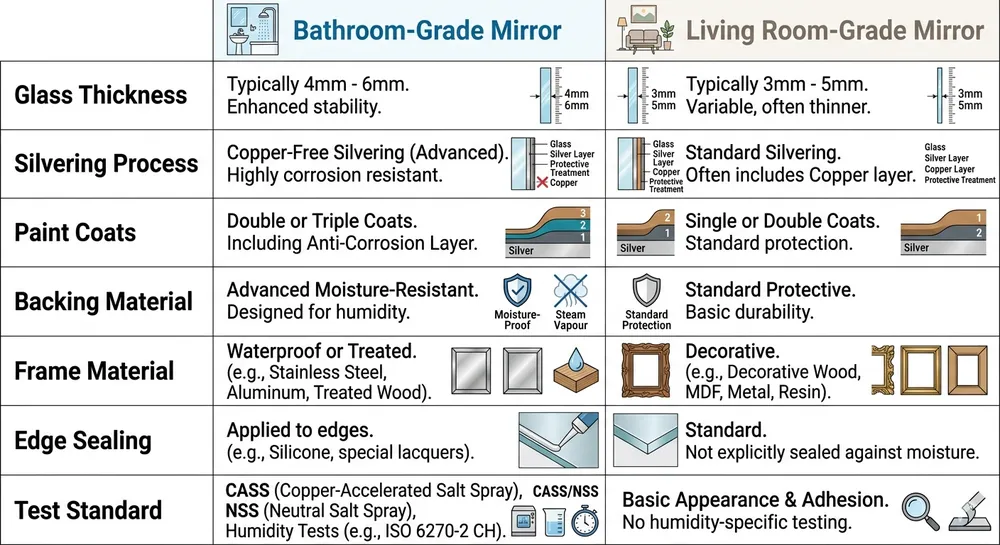
Before the cost discussion, here's the full side-by-side. These are the dimensions that matter at the manufacturing level — not style, not size, not finish color.
| Spec Dimension | Bathroom-Grade | Living Room-Grade |
|---|---|---|
| Glass thickness | 4–5 mm float glass | 3–5 mm float glass (3 mm common for lightweight frames) |
| Silvering process | Copper-free silver coating | Standard silver coating (copper-backed acceptable) |
| Protective paint coats | 2 coats minimum (some specs require 3) | 1 coat standard |
| Backing material | Moisture-resistant board or aluminum composite | Standard MDF or cardboard backing acceptable |
| Frame material | Metal, resin, or sealed hardwood only | MDF, PS foam, metal, resin, wood — full range |
| Edge sealing | Full perimeter seal required | Partial or no edge seal acceptable |
| Salt-spray test standard | 96–240 hours depending on market | 24–48 hours typical |
| Adhesion cross-cut test | Required pre-shipment | Optional / market-dependent |
| Unit cost premium | +15–30% over living room equivalent | Baseline |
—
Silvering Chemistry: The Dimension Most Buyers Don't Ask About
This is the one that causes the most field failures, and it's the one that almost never appears in a standard RFQ.
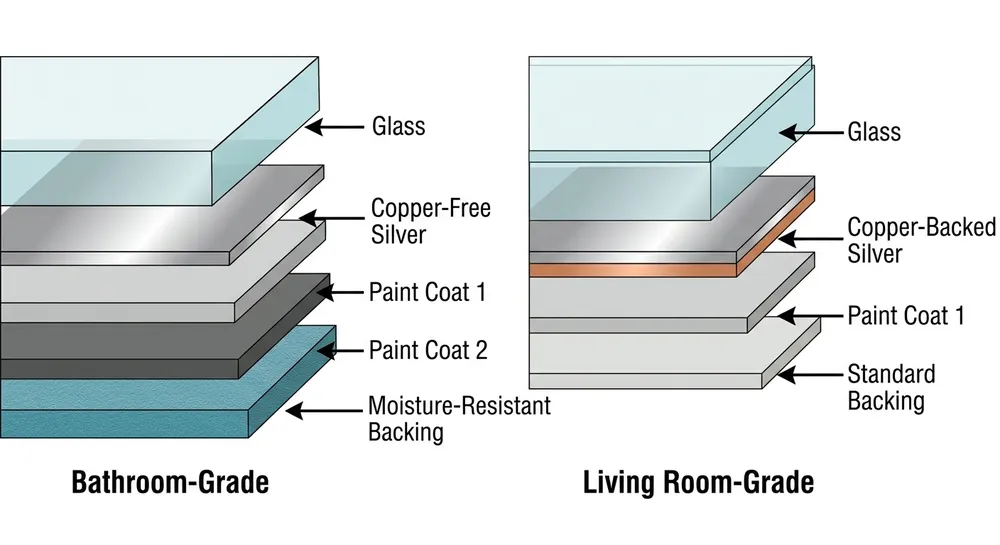
Standard mirror silvering uses a silver layer deposited over a copper layer. The copper acts as an adhesion promoter and provides some corrosion resistance. In a dry interior environment — a living room, a hallway, a retail display — that copper layer performs fine for years. The problem is humidity. Copper oxidizes in sustained moisture exposure, and once oxidation starts at the edge of the mirror, it migrates inward. That's the black edge creep you see on bathroom mirrors that weren't spec'd correctly. It's not a glass defect. It's a chemistry failure.
Copper-free silvering replaces the copper layer with an alternative adhesion chemistry — typically a tin sensitizer followed by a direct silver deposit, then sealed with two coats of protective paint. We run copper-free as our default on all bathroom-grade orders. The silver layer itself is more stable in humid environments, and without the copper oxidation pathway, edge creep is effectively eliminated when the coating and edge seal are applied correctly.
(We switched our bathroom line to copper-free as standard around 2016 after seeing consistent edge-creep warranty claims from a North American hospitality buyer — the mirrors were in hotel bathrooms running hot showers daily. The fix wasn't the glass or the frame. It was the silvering chemistry.)
The cost difference between copper-free and standard silvering is real but not dramatic — roughly 8–12% on the mirror component alone, which translates to a smaller percentage of total unit cost once frame and packaging are included. For bathroom placement, it's not optional. For living room placement, standard silvering is perfectly adequate and the cost saving is legitimate.
—
Protective Coating Layers: One Coat Is Not Enough for Bathrooms
Over the silver layer — whether copper-free or standard — goes a protective paint system. This is what physically seals the silver from moisture, cleaning chemicals, and mechanical contact during installation.
Living room mirrors typically ship with one coat of protective paint. That's sufficient for the environment: low humidity, no direct water contact, no cleaning spray landing on the mirror back. One coat passes the standard 24–48 hour salt-spray test that most living room mirror specs require.
Bathroom mirrors need two coats minimum. Some export markets — particularly Germany and Scandinavia — specify three coats for bathroom applications. The second coat closes pinholes that can form in the first coat during application, and it adds meaningful thickness to the barrier. We run our bathroom-grade line at two coats standard, with a third coat available on request for markets with stricter requirements or for steam-room and spa applications where humidity is extreme.
The adhesion cross-cut test (ISO 2409 or equivalent) is how you verify the coating is actually bonded to the silver, not just sitting on top of it. A coating that passes visual inspection but fails cross-cut will delaminate in a humid environment within months. We run cross-cut testing on bathroom-grade production as a standard pre-shipment check. For living room orders, we run it on request — it's not typically required by the market, but buyers sourcing for high-humidity climates (Southeast Asia, Middle East coastal) sometimes ask for it regardless of room placement.

—
Frame Material: Where Humidity Failures Are Most Visible
The silvering failure is invisible until it's advanced. The frame failure is immediate and obvious — and it's the one that generates the most retail returns.
MDF is the most common decorative mirror frame material in the living room segment. It machines cleanly, takes paint and veneer well, and costs less than solid wood or metal. In a dry environment, MDF frames perform fine for years. In a bathroom, MDF absorbs moisture through any unsealed edge or joint, swells, and eventually causes the finish to crack or delaminate. We've seen MDF bathroom frames fail in under six months in high-humidity climates.
For bathroom placement, the viable frame materials are:
- Metal (aluminum, iron with powder coat or electroplating) — the most durable option, zero moisture absorption, suitable for all bathroom environments including steam rooms
- Resin / PS foam — moisture-inert, takes decorative finishes well, lighter than metal, good for ornate profiles
- Sealed solid wood or hardwood composite — acceptable if all edges and joints are fully sealed, but requires more QC attention and is less forgiving in extreme humidity
- MDF with full encapsulation — technically possible but not something we recommend; the encapsulation adds cost and the failure risk if any seal is compromised is high
Living room frames have no humidity constraint, so the full material range is available. MDF is the cost-efficient default for most decorative profiles. Metal and resin are available for buyers who want a premium positioning or a frame profile that also works across room categories.
(The frame material question matters most when a buyer is building a mixed-room product line — bathroom and living room SKUs in the same PO. We always flag this during order review because the frame spec difference affects both unit cost and production scheduling.)
—
Glass Thickness and Backing: The Dimensions Buyers Most Often Underspecify
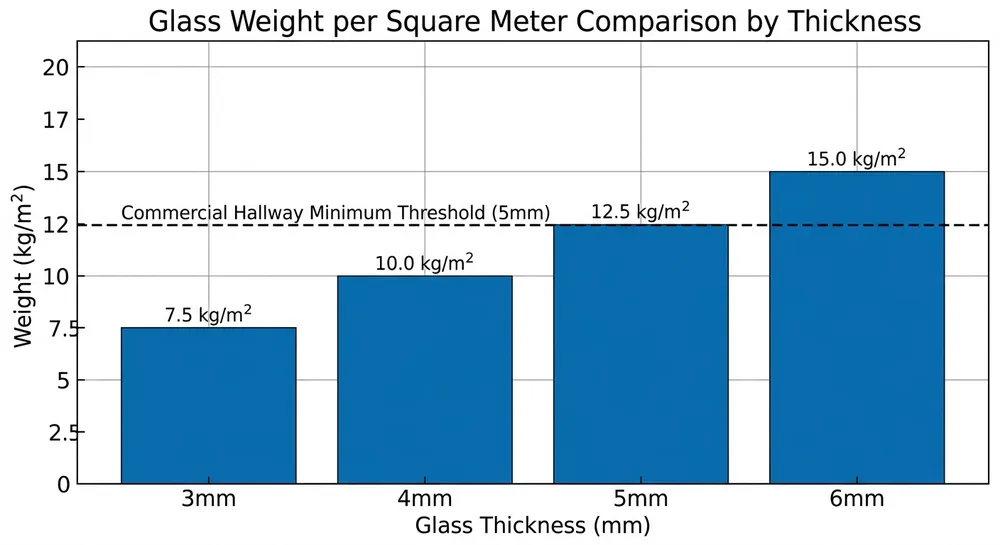
Glass thickness for decorative mirrors typically runs 3 mm to 6 mm depending on size and application. For living room mirrors, 3 mm is common on smaller decorative pieces — it keeps weight down and cost low. For bathroom mirrors, we recommend 4 mm minimum for two reasons: first, bathroom mirrors are typically wall-mounted in a higher-traffic, higher-humidity environment where glass integrity matters more; second, thicker glass provides a more stable substrate for the silvering and coating system, reducing the risk of micro-flex cracking the coating over time.
For large-format bathroom mirrors (above 800 mm on the long dimension), 5 mm is our standard recommendation. The weight increase is manageable, and the rigidity improvement is meaningful for both coating durability and installation safety.
Backing material is the other underspecified dimension. Standard decorative mirrors often ship with a cardboard or thin MDF backing — adequate for living room use where the backing's only job is to protect the silver during transit and installation. In a bathroom, the backing is in a sustained humidity environment. Cardboard absorbs moisture and can transfer it directly to the mirror coating. We use moisture-resistant board (similar to the substrate used in bathroom cabinetry) or aluminum composite backing on all bathroom-grade production. The cost difference is minor — typically under $0.50 per unit on standard sizes — but the performance difference in a bathroom environment is significant.
—
What Bathroom-Grade Specs Actually Cost: The Unit Price Reality
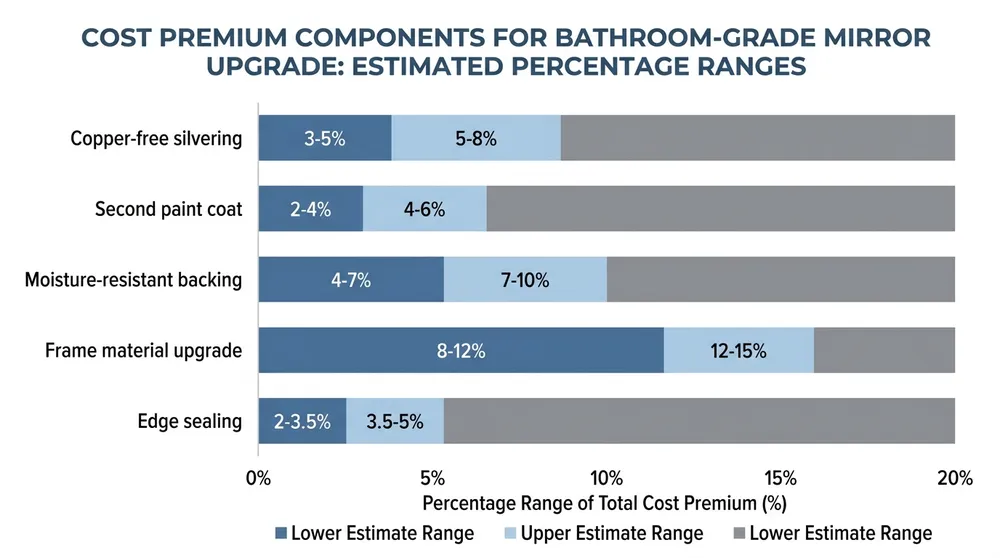
The honest answer is that bathroom-grade mirrors cost more than living room equivalents, and the premium is predictable enough that you can plan for it.
Breaking down the cost drivers:
- Copper-free silvering vs standard: +8–12% on the mirror component
- Second protective paint coat: +3–5% on the mirror component
- Moisture-resistant backing vs standard: +$0.30–0.80 per unit depending on size
- Metal or resin frame vs MDF: varies significantly by profile complexity, but typically +20–40% on the frame component for equivalent decorative complexity
- Edge sealing: +$0.20–0.50 per unit depending on perimeter length
On a typical mid-size decorative bathroom mirror (600 × 800 mm, metal frame, copper-free silver, two-coat backing), the total bathroom-grade premium over a comparable living room spec runs 15–30% on unit cost. On a resin-frame ornate piece, the gap narrows because resin is already moisture-inert and the frame cost difference disappears.
The commercial implication: if you're building a room-based product line for retail or hospitality, the bathroom SKUs need to be priced and margined separately from living room SKUs. Buyers who try to use a single blended price across room categories either overprice their living room units or underprice their bathroom units — both outcomes hurt sell-through or margin.
—
Three Sourcing Scenarios — and Which Spec Wins Each One
Scenario 1: Hospitality Buyer, Mixed Hotel Room and Bathroom Placement
You're supplying mirrors for a hotel renovation — some units go above bathroom vanities, some go in guest room corridors and living areas. Same PO, same supplier, different specs required.
Bathroom units: copper-free silver, two-coat backing, metal or resin frame, moisture-resistant backing, full edge seal. No exceptions — hotel bathrooms run hot showers daily and the humidity load is sustained.
Corridor/living area units: standard silver, one-coat backing, MDF frame acceptable, standard backing. The cost saving on the living area units partially offsets the bathroom-grade premium, so your blended PO cost is manageable.
The mistake we see most often in this scenario: the buyer sends one spec sheet for the whole order and the factory quotes everything to the lower spec. You don't find out until the bathroom units start failing.
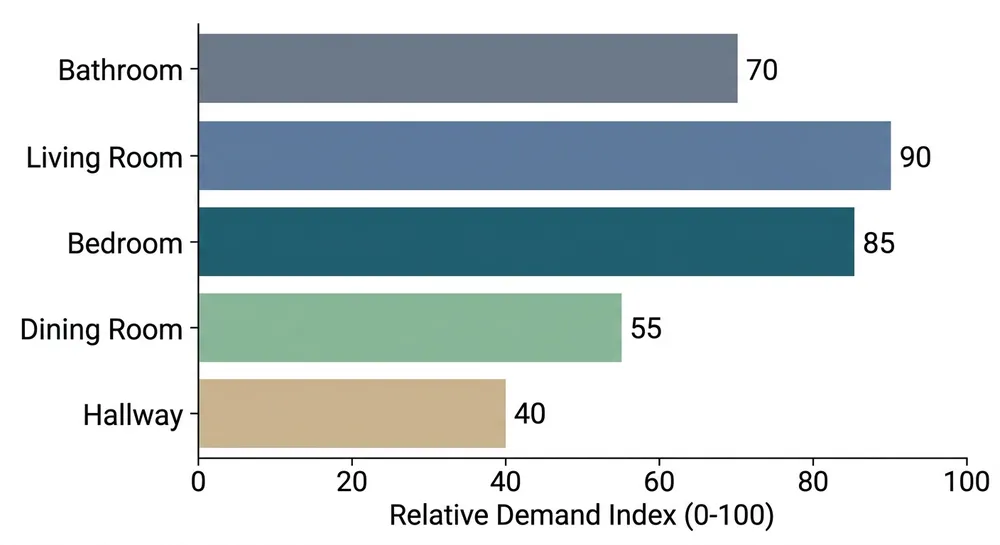
Scenario 2: Retail Distributor Building a Room-Based Mirror Line
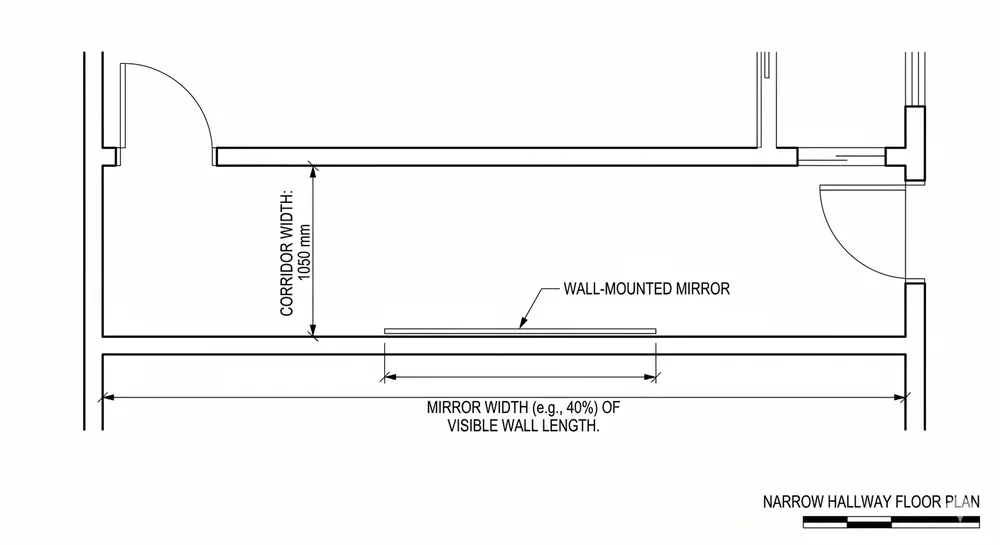
You're building a product line across bathroom, living room, and hallway categories for retail placement. You need consistent decorative aesthetics across rooms but different underlying specs.
This is exactly the scenario where frame material selection matters most. If you want the same ornate profile across all three room categories, resin or metal frames give you that consistency without the humidity risk in bathrooms. MDF frames can carry the living room and hallway SKUs at lower cost.
We handle this regularly for retail buyers — same frame profile tooled in both resin and MDF, different backing and silvering specs by room category. The MOQ for each variant is 100 pieces on standard profiles, so you can build a room-based line without committing to large runs on each SKU.
Scenario 3: Single-Room Bathroom Mirror Order, Volume Sourcing
You're sourcing bathroom mirrors only — 500 to 2,000 units, standard rectangular or simple arched profiles, for a retail chain or hospitality group.
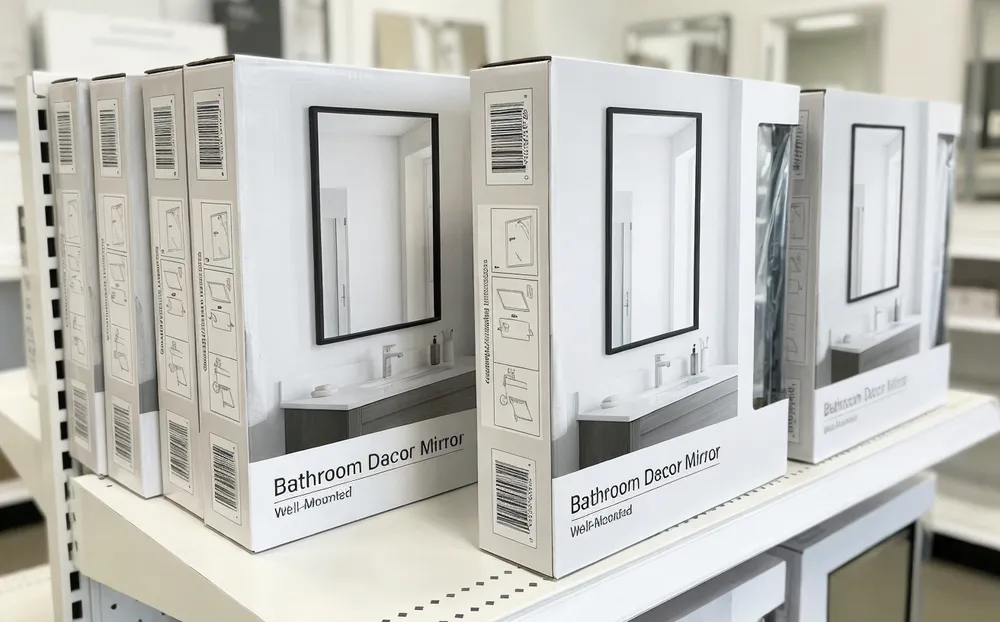
Here the spec is straightforward: copper-free silver, two-coat protective paint, 4 mm glass minimum, moisture-resistant backing, metal or resin frame. The only variable is frame material choice based on your target price point and aesthetic.
Lead time on bathroom-grade production runs 35–45 days for standard profiles at this volume. The copper-free silvering line runs on a fixed schedule — we batch bathroom-grade orders to maintain coating consistency, so order timing relative to our production schedule affects lead time more than order size does.
—
Common Sourcing Mistakes That Cost Buyers Money
Ordering by aesthetics, not by room spec. The most common error. A buyer selects a mirror based on frame style and size, doesn't specify room placement, and the factory quotes standard living room specs. The mirrors look identical on arrival. The failure shows up in the field.
Assuming "waterproof" means bathroom-grade. Some suppliers describe mirrors as "waterproof" without specifying what that means at the coating level. Waterproof glass is not the same as a copper-free silvered, two-coat protected mirror with moisture-resistant backing. Ask for the specific silvering process and coating layer count, not a marketing descriptor.
Ignoring frame material in the RFQ. Frame material is often left to supplier discretion in RFQs that focus on mirror size and finish. In a bathroom application, that discretion can result in MDF frames that fail within a season. Specify frame material category (metal, resin, sealed wood) explicitly.
Mixing bathroom and living room specs in a single line item. If your PO has both bathroom and living room mirrors, they need to be separate line items with separate specs. A single line item with a note like "some for bathrooms" will not reliably produce bathroom-grade output.
Not requesting test documentation. Salt-spray test results and adhesion cross-cut results are standard documentation for bathroom-grade production. If your supplier can't provide them, the spec may not have been applied.
—
How to Write an RFQ That Gets You the Right Quote
The spec differences above translate directly into RFQ language. Here's what to include for each room category:
For bathroom mirrors, specify:
- Silvering process: copper-free silver coating required
- Protective paint: minimum 2 coats over silver layer
- Glass thickness: 4 mm minimum (5 mm for pieces over 800 mm long dimension)
- Backing: moisture-resistant board or aluminum composite
- Frame material: metal, resin, or sealed hardwood only — MDF not acceptable
- Edge seal: full perimeter seal required
- Test documentation required: salt-spray test (minimum 96 hours), adhesion cross-cut test per ISO 2409
For living room mirrors, specify:
- Silvering process: standard silver coating acceptable
- Protective paint: 1 coat minimum
- Glass thickness: 3–5 mm per size and weight requirements
- Backing: standard MDF or cardboard acceptable
- Frame material: full range acceptable
- Test documentation: salt-spray test (24–48 hours) on request
If you're ordering both in the same PO, list them as separate line items with separate spec blocks. A supplier who quotes both at the same unit price without acknowledging the spec difference is either not reading your RFQ or not running bathroom-grade production.
We quote bathroom-grade and living room-grade specs separately as standard practice — the cost difference is real and your pricing decisions downstream depend on knowing it accurately before you commit.
—
Frequently Asked Questions
Can I use the same mirror in both a bathroom and a living room? Only if it's built to bathroom-grade spec. A bathroom-grade mirror (copper-free silver, two-coat backing, moisture-resistant frame) will perform fine in a living room — you're just paying for protection you don't need in that environment. A living room-grade mirror in a bathroom will eventually fail. The direction of substitution only works one way.
What salt-spray test hours should I require for bathroom mirrors? For standard residential bathroom placement, 96 hours is the minimum worth specifying. For hospitality (hotel bathrooms with daily shower use), 168–240 hours is more appropriate. For steam rooms or spa environments, ask for 240 hours minimum and specify copper-free silvering explicitly — standard silvering won't hold at that humidity load regardless of paint coat count.
Does copper-free silvering affect mirror clarity or reflectivity? No. The optical performance of the mirror — reflectivity, color accuracy, distortion — is determined by the silver layer thickness and glass quality, not by whether copper is present in the backing chemistry. Copper-free silvering produces the same visual result with better moisture resistance.
What's the MOQ difference between bathroom-grade and living room-grade orders? At Livewellcraft, MOQ starts at 100 pieces for standard profiles on both specs. Custom frame profiles or non-standard sizes may require higher minimums depending on tooling. There's no MOQ premium for bathroom-grade — the spec upgrade affects unit cost, not minimum order quantity.
How do I verify a supplier is actually running copper-free silvering? Ask for the material safety data sheet (MSDS) for their silvering chemicals — copper-free formulations will not list copper compounds as ingredients. Also request the salt-spray test certificate for a recent bathroom-grade production batch. A supplier running genuine copper-free silvering will have both documents readily available.
—
Explore the full Decor Mirrors by Room category for room-specific product lines, or go directly to Bathroom Decor Mirrors and Living Room Decor Mirrors to see current specs and available profiles. If you're building a mixed-room order, send your room list and target quantities to Request Quote — we'll quote bathroom-grade and living room-grade specs as separate line items so you have accurate cost data before you commit.