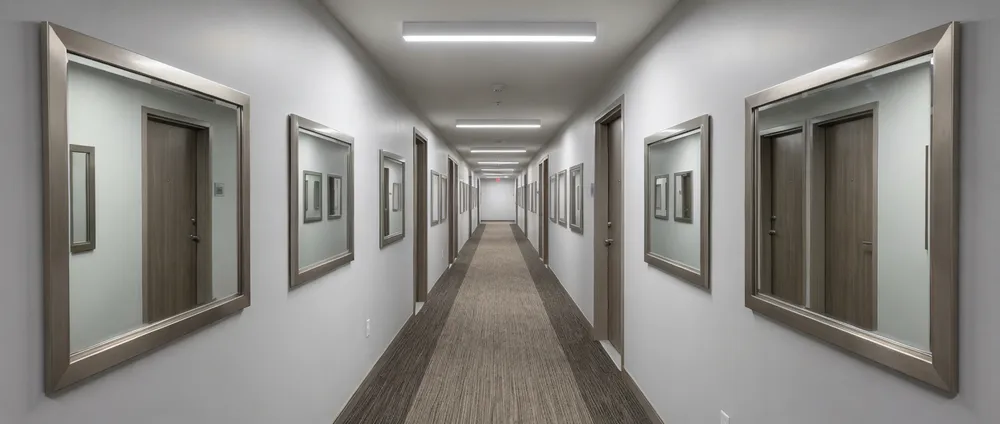
Hallway mirrors are one of the most frequently mis-specced SKUs we see in wholesale orders. The buyer pulls a standard 60×80 cm mirror from the catalog, it arrives on site, and the corridor is 90 cm wide. The mirror looks like it was installed by accident. The project manager calls. Nobody wins.
The problem isn't the mirror — it's that hallway sizing follows different rules than every other room type, and most sourcing guides don't address that. This article gives you the dimension logic, the spec table, the frame and glass considerations, and the ordering guidance you need to get hallway mirrors right across a full project or product line.
Why Hallway Mirror Sizing Isn't Just "Smaller Living Room Mirror"
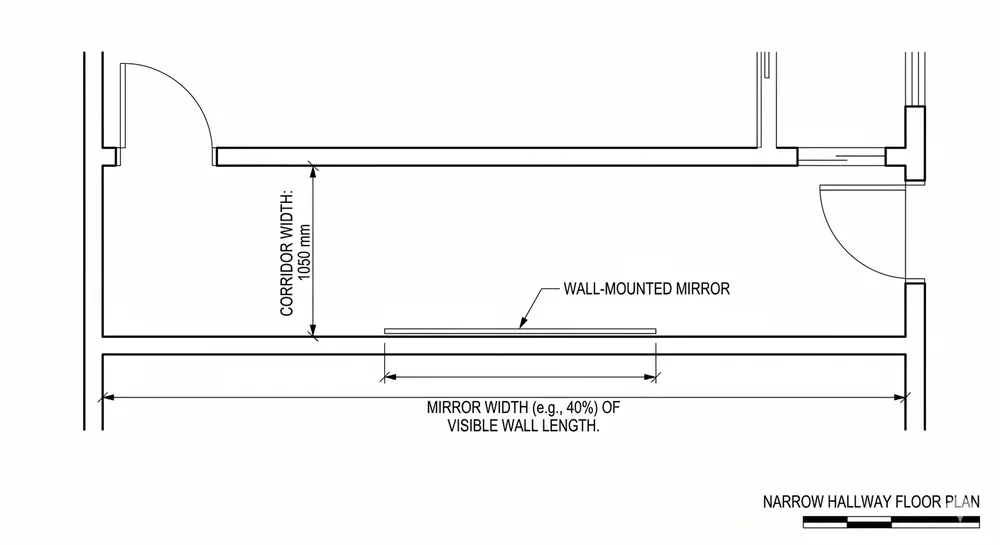
In a living room or bedroom, mirror sizing is mostly aesthetic — you have wall space, you choose proportions. In a hallway, the corridor width is a hard constraint. A mirror that's too wide creates a visual block and, in narrow corridors, a genuine safety hazard when doors swing open. A mirror that's too narrow looks like an afterthought.
The standard rule we use across hospitality and residential projects: mirror width should be 40–60% of the corridor width, and height should be proportional to ceiling height, typically 90–150 cm for standard 240–280 cm ceilings.
That ratio matters more in bulk orders than in single-unit installs. When you're speccing 80 mirrors for a hotel corridor program, a 5 cm width error across the whole order means 80 remounts or 80 returns. Getting the ratio right at the spec stage is the only way to protect your project margin.
There's also a depth consideration that gets overlooked. Hallway frames need to sit flush or close to flush against the wall — a frame profile that protrudes 4–5 cm is fine in a living room, but in a 90 cm corridor it reduces effective passage width and creates a corner-catch hazard. We typically recommend frame profiles under 3 cm depth for any corridor under 110 cm wide.

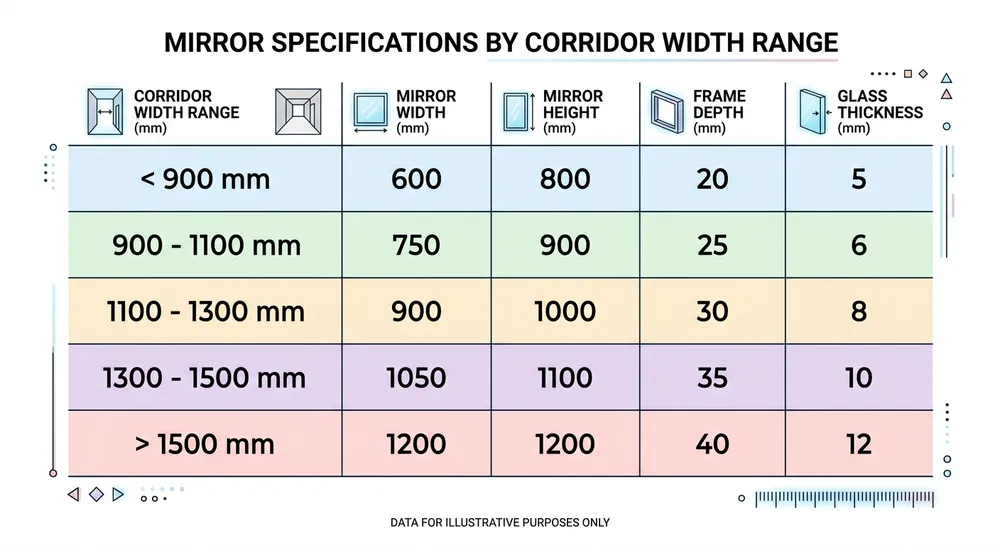
Dimension Reference Table — Hallway Width to Mirror Size
This is the table most sourcing guides don't provide. We built it from real project specs across hotel corridor programs, apartment building common areas, and retail fit-outs.
| Corridor Width | Recommended Mirror Width | Recommended Mirror Height | Frame Depth (max) | Glass Thickness |
|---|---|---|---|---|
| 80–90 cm | 35–45 cm | 90–120 cm | 2.5 cm | 4 mm |
| 90–100 cm | 40–50 cm | 100–130 cm | 3.0 cm | 4 mm |
| 100–110 cm | 45–55 cm | 110–140 cm | 3.0 cm | 4–5 mm |
| 110–120 cm | 50–65 cm | 120–150 cm | 3.5 cm | 5 mm |
| 120–150 cm | 60–80 cm | 130–160 cm | 4.0 cm | 5 mm |
A few notes on how to read this table:
Mirror height is the range that works for standard ceiling heights (240–280 cm). For hospitality projects with higher ceilings — boutique hotels often run 300–320 cm — you can push height to 160–180 cm without losing proportion, but glass weight increases and mounting hardware specs need to follow.
Glass thickness at 4 mm is standard for mirrors under 50 cm wide. Once you cross 50 cm width or 130 cm height, we move to 5 mm as a default — the deflection risk on thinner glass at those dimensions is real, especially in high-traffic corridors where vibration from foot traffic and door slams is constant. (We've seen 4 mm glass develop stress fractures in hotel corridors within 18 months — not a warranty conversation anyone wants to have.)
Frame depth is the full protrusion from wall face to front of frame. This is the spec most buyers forget to ask about until the mirrors are on-site.
Frame Profile and Material Specs for Narrow-Format Mirrors
Frame selection for hallway mirrors is a different calculation than for living room or bathroom mirrors. Three factors drive it: depth, weight, and edge durability.
Depth and profile width
In corridors under 110 cm, a chunky frame profile — say, 6–8 cm wide face — makes the mirror look like it's eating the wall. We typically spec 2–4 cm face-width profiles for narrow hallway formats. That's achievable in MDF, metal, and resin, but each material handles it differently.
MDF profiles at 2–3 cm face width are structurally fine for mirrors up to 50×120 cm. Above that, the frame needs internal corner reinforcement — without it, the joint stress from a tall narrow mirror flexing during transport or mounting can crack the miter. We add a metal corner bracket inside the frame on any MDF piece over 120 cm tall. It adds maybe 80 grams to the unit weight, but it's the difference between a mirror that survives a hotel renovation install and one that doesn't.
Metal frames — typically aluminum or iron — handle narrow profiles better than MDF at taller heights. A 2 cm wide iron frame on a 40×150 cm mirror is structurally sound and looks intentional. The trade-off is weight: iron frames at that height run 3.5–5 kg total, which affects both shipping cost and wall anchor requirements.
Resin frames give you the most profile flexibility for decorative shapes, but resin at narrow widths (under 3 cm) can be brittle at corners. For high-traffic corridors — hotel hallways, apartment building lobbies — we steer buyers toward MDF or metal over resin for anything under 3 cm profile width.
Weight and mounting load
This matters for bulk orders because it affects both freight cost and the hardware spec you need to communicate to your installation team or end customer. A rough guide:
| Frame Material | Typical Weight (40×120 cm mirror) | Wall Anchor Requirement |
|---|---|---|
| MDF + glass | 4.5–6 kg | 2× M6 anchor bolts or D-ring + picture rail |
| Aluminum + glass | 3.5–4.5 kg | 2× M5 anchor bolts or keyhole bracket |
| Iron + glass | 5.5–7.5 kg | 2× M8 anchor bolts, stud-mount preferred |
| Resin + glass | 4–5.5 kg | 2× M6 anchor bolts |
For hospitality projects, we include a hardware spec sheet with every order. Your installation contractor needs to know the anchor load before they're on-site — not after.
Glass Spec Considerations for High-Traffic Corridors
Standard float glass works fine for residential hallway mirrors. For hospitality and commercial corridor applications, the spec conversation gets more specific.
Tempered vs. standard glass: Tempered glass is 4–5× stronger under impact and, critically, breaks into small blunt fragments rather than sharp shards. For hotel corridors, apartment building common areas, and any installation where the mirror is at shoulder or head height in a narrow passage, tempered glass is the right call. It adds cost — typically 15–25% over standard glass at equivalent thickness — but the liability reduction for your hospitality buyer is the real value.
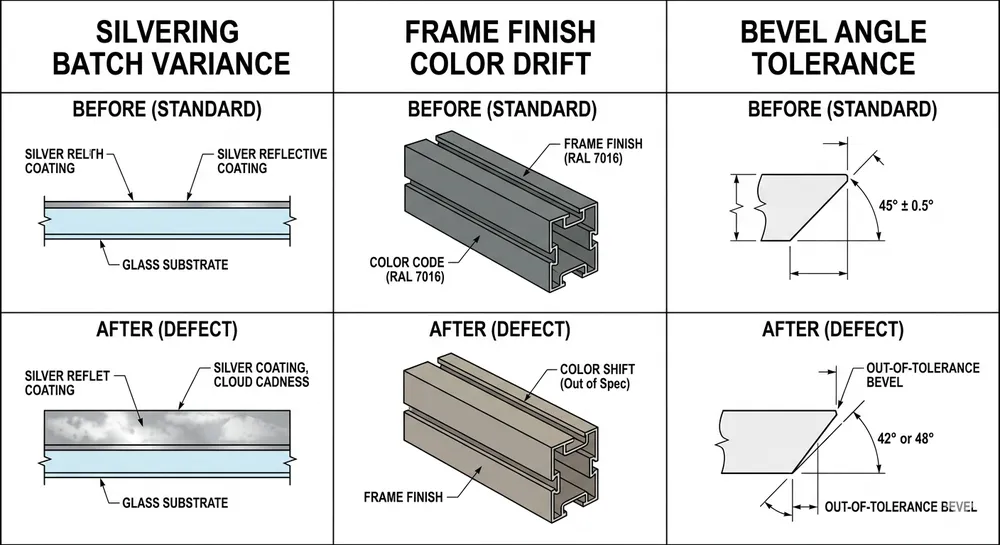
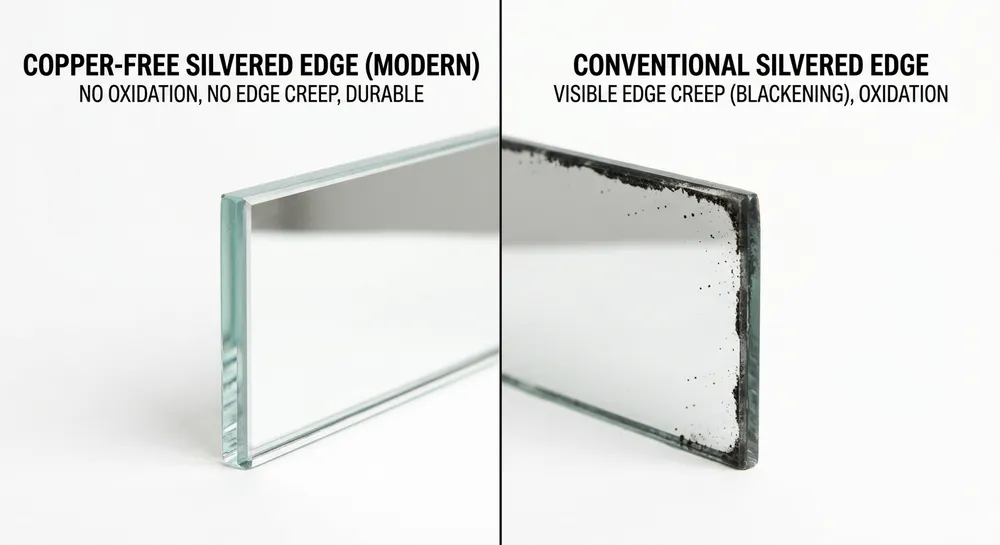
We run copper-free silvering as standard on all our mirrors. In hallway applications specifically, this matters more than buyers often realize. Corridor environments — especially in coastal properties, basement-level hotel floors, or high-humidity apartment buildings — expose mirror backing to more ambient moisture than a bedroom wall. Copper-free silver coating resists edge oxidation significantly better than conventional silvering. The black edge creep you see on older hotel mirrors is almost always a silvering failure, not a glass failure. (We switched our entire production to copper-free silvering in 2017 after seeing too many warranty claims from Gulf region buyers — the humidity there accelerates conventional silver degradation faster than most specs anticipate.)
Mirror backing: For corridor installations, we recommend a full-coverage safety backing film on any mirror over 100 cm tall. If the glass breaks, the film holds the fragments in place. This is standard in most European hospitality specs and increasingly required in North American commercial building codes.
For your Hallway Decor Mirrors sourcing, confirm with us whether your destination market requires tempered glass — some markets mandate it for commercial corridor installations, others leave it to the specifier.
Where Buyers Lose Money on Hallway Mirror Orders
Most sourcing mistakes on hallway mirrors fall into three categories, and all three are avoidable at the spec stage.
Ordering standard sizes for non-standard corridors. Most catalog mirrors are sized for living rooms — 60×80 cm, 70×90 cm, 80×100 cm. These proportions look wrong in a 90 cm corridor. Buyers who don't spec to corridor width end up with mirrors that either get returned or get installed anyway and generate complaints from the end customer. The fix is simple: get corridor width measurements before you finalize the PO.
Under-speccing glass thickness on tall formats. A 40×150 cm mirror in 4 mm glass is a liability. At that aspect ratio, the glass deflects under its own weight over time, and vibration stress in a busy corridor accelerates the risk. We won't ship tall narrow formats in 4 mm glass without a written acknowledgment from the buyer — it's not a spec we're comfortable with for commercial applications.
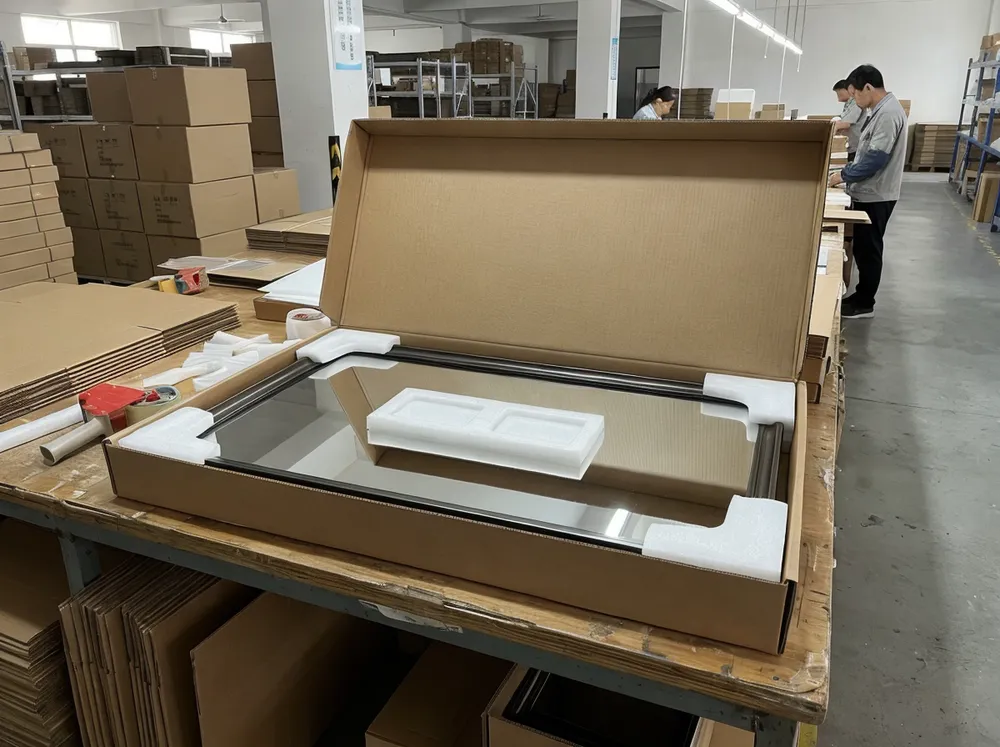
Ignoring packaging for tall narrow formats. A 40×150 cm mirror is awkward to pack. Standard carton dimensions don't accommodate it well, and if the packing isn't designed for the format, corner damage rates go up significantly. We use custom inner foam profiles for tall narrow mirrors — the foam is cut to the exact mirror dimensions, not adapted from a standard template. This adds a small cost per unit but eliminates the corner chip claims that eat into your margin on arrival.
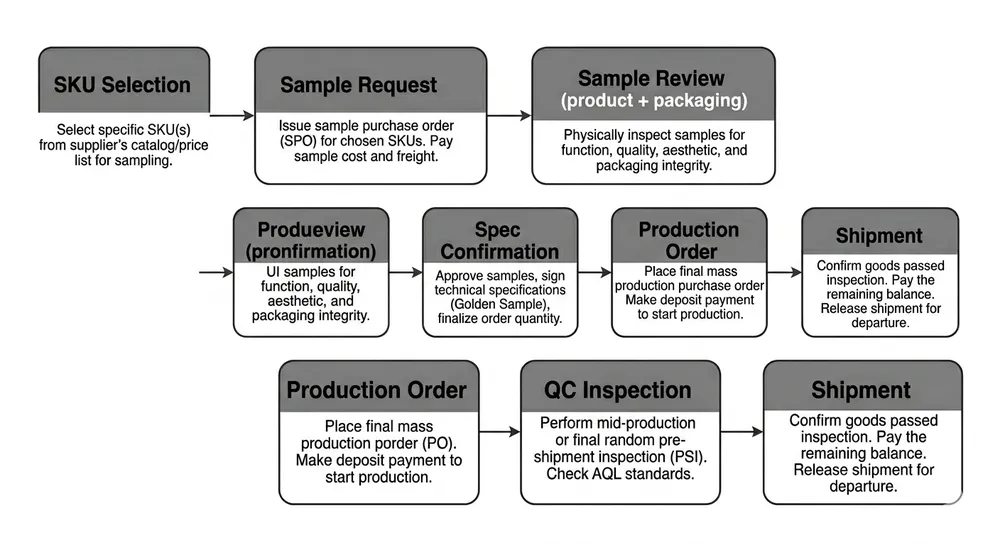
For non-standard dimensions, lead time is also a real consideration. Standard catalog sizes ship from stock or within 25–30 days. Custom dimensions — anything outside our standard size matrix — typically add 10–15 days for frame tooling setup on first orders. Repeat orders of the same custom size run on the same timeline as standard production. If you're planning a hospitality project with a fixed installation date, build that buffer in.
See our Hallway Mirror Mounting & Safety guide for the full hardware and installation spec — it covers anchor types, load ratings, and the backing requirements that affect your installation contractor's work.
MOQ, Lead Time, and Ordering Logic for Non-Standard Hallway Sizes
This is where B2B hallway mirror sourcing diverges most sharply from consumer buying, and where most guides go silent.
Our standard MOQ for hallway mirrors is 100 pieces per SKU. That's low enough to let you test a new narrow-format size with your retail accounts or run a pilot for a hospitality project before committing to a full container. Most of our buyers in this category start with a 100–200 piece trial on a new dimension, confirm sell-through or installation performance, then move to 500–1,000 piece reorders.
For custom dimensions — sizes outside our standard matrix — the 100-piece MOQ still applies, but the first order carries a one-time frame tooling cost. That cost varies by profile complexity: a simple flat MDF profile in a custom width is minimal; a decorative resin profile with a new mold is more significant. We quote tooling separately so you can see exactly what you're paying for.
Container loading efficiency is worth thinking about at the ordering stage. Tall narrow mirrors (40×150 cm and similar) load differently than square-format mirrors. A standard 20-foot container holds roughly 300–350 units of a 40×150 cm mirror depending on packing configuration. A 40-foot container gets you to 650–700 units. If your project or order volume doesn't fill a container, we can consolidate with other SKUs — but it's worth knowing the loading math before you finalize quantities, because partial containers affect your landed cost per unit.
We've shipped hallway mirror programs to hotel groups in Southeast Asia, apartment developers in Australia, and retail distributors across North America. The dimension conversations are always the same: get the corridor width, confirm the frame depth tolerance, decide on glass spec, then lock the PO. The buyers who skip step one are the ones who call us after delivery.
For a broader view of how hallway mirrors fit into a room-by-room product line, the Room Mirror Sizing Guide covers the full spec logic across bathroom, bedroom, living room, and entryway applications — useful if you're building a multi-room assortment.
Speccing Hallway Mirrors for Hospitality Projects: What the Dimension Table Doesn't Tell You
The table above handles standard corridor programs. Hospitality projects add a few layers that are worth addressing directly.
Consistency across units. A hotel with 120 rooms and a standard corridor layout needs 120 mirrors that look identical — same dimensions, same frame finish, same glass clarity. That sounds obvious, but it's where multi-supplier sourcing falls apart. If you're splitting an order across two factories, you'll get two slightly different silver tones, two slightly different frame finishes, and two slightly different glass thicknesses. We run all units from a single project on the same production batch to eliminate that variation.
Finish durability in corridor environments. Hotel corridors get luggage trolleys, housekeeping carts, and constant foot traffic. Frame finishes that look fine in a showroom can chip or scuff within months in that environment. For hospitality, we recommend either a brushed metal frame (aluminum or iron) or a high-density MDF frame with a lacquer topcoat rather than a foil wrap — foil edges lift in humid environments and look worn fast.
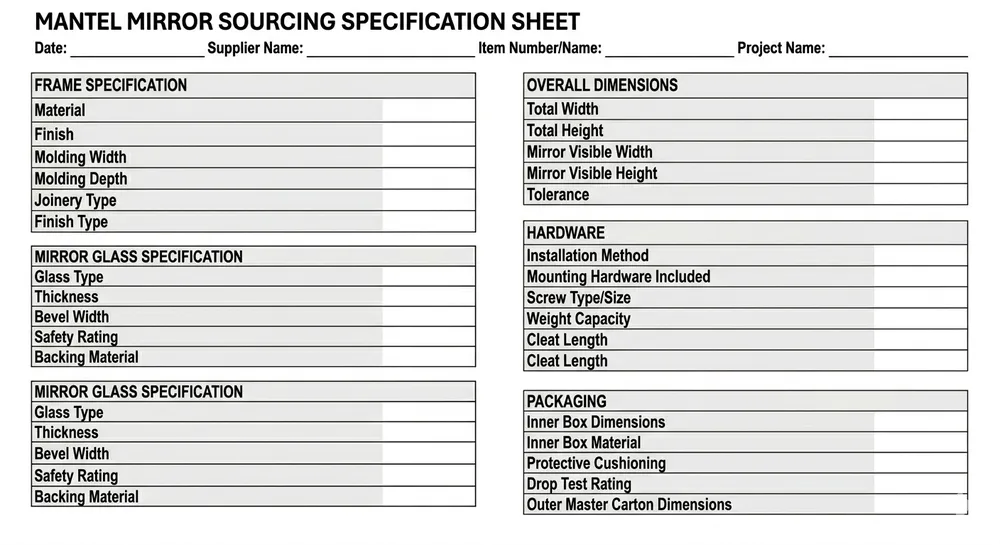
Fire and safety compliance. Some markets require mirrors in commercial corridors to meet specific fire-rating or safety glazing standards. This varies by country and building type. We can provide SGS test reports and CE documentation for our glass specs — if your project has specific compliance requirements, send them to us at the RFQ stage and we'll confirm which of our standard specs meet them or what modifications are needed.
Delivery sequencing for phased projects. Large hotel renovations often install in phases — floors 1–5 first, then 6–10. We can hold finished inventory and ship in batches against a master PO. This keeps your storage costs down and ensures the mirrors for phase two match phase one exactly, since they're from the same production run.
Browse our full Decor Mirrors by Room range to see how hallway mirrors fit alongside bathroom, bedroom, and living room programs — useful if you're building a complete room-by-room sourcing package for a hospitality client.
Frequently Asked Questions
What is the standard hallway mirror size for wholesale orders?
There's no single standard — it depends on corridor width. The most common sizes we ship for hallway applications are 40×100 cm, 45×120 cm, and 50×130 cm. These cover the 90–120 cm corridor range that's most common in residential and mid-range hospitality projects. If your corridors are narrower or wider, use the dimension table above to find the right proportions.
What size mirror for a narrow hallway under 90 cm wide?
For corridors 80–90 cm wide, keep mirror width at 35–45 cm. Height can go up to 120 cm without looking out of proportion. Use 4 mm glass and keep frame depth under 2.5 cm. At this corridor width, frame profile matters as much as mirror face dimensions — a bulky frame in a tight corridor is a safety issue, not just an aesthetic one.
Does hallway mirror glass need to be tempered for commercial projects?
For residential installations, standard float glass is generally acceptable. For commercial corridor applications — hotels, apartment building common areas, office lobbies — tempered glass is the right spec. It's stronger under impact and breaks safely. Some markets mandate it for commercial use; others leave it to the specifier. Confirm your destination market's requirements before finalizing the glass spec.
What's the MOQ for custom hallway mirror dimensions?
100 pieces per SKU. Custom dimensions outside our standard size matrix carry a one-time frame tooling cost on the first order, quoted separately. Repeat orders of the same custom size run at standard production pricing.
How does copper-free silvering affect hallway mirror longevity?
Copper-free silvering resists edge oxidation significantly better than conventional silvering in humid environments. For corridor installations — especially in coastal properties or high-humidity climates — it's the spec that prevents the black edge creep that makes mirrors look aged within a few years. We run copper-free silvering as standard on all production.
What packaging is used for tall narrow hallway mirrors?
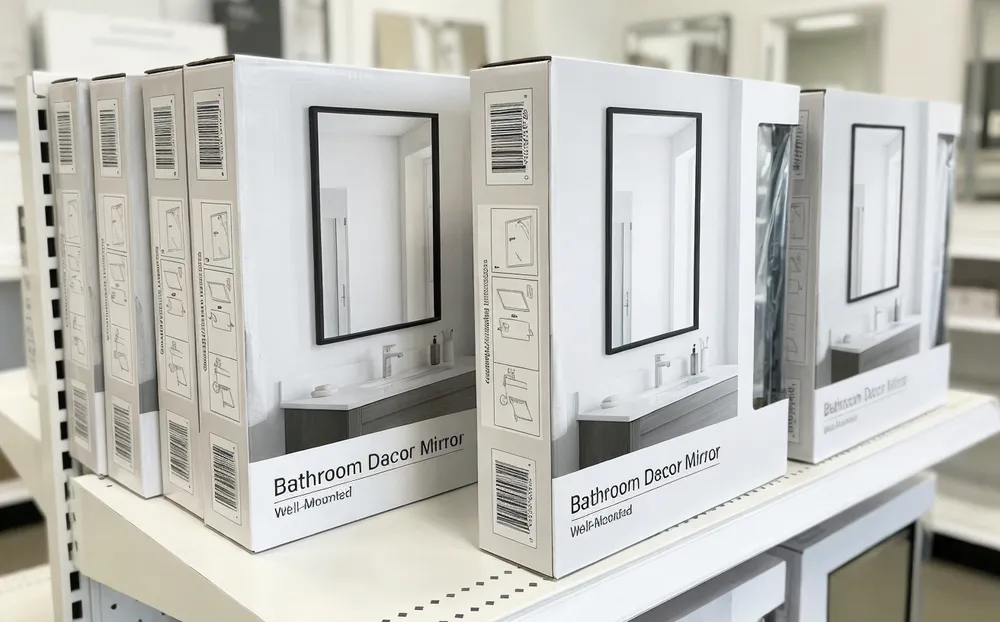
Tall narrow formats (40×150 cm and similar) use custom-cut inner foam profiles sized to the exact mirror dimensions. Standard foam templates don't protect the corners adequately on these aspect ratios. Each unit is individually wrapped and packed in a double-wall carton. For container shipments, we provide a packing list with exact carton dimensions and loading configuration.
Ready to spec your hallway mirror program? Send your corridor dimensions, target quantities, and finish preferences to our team via the Request Quote page — we'll return a sizing recommendation with pricing and lead time within 48 hours.