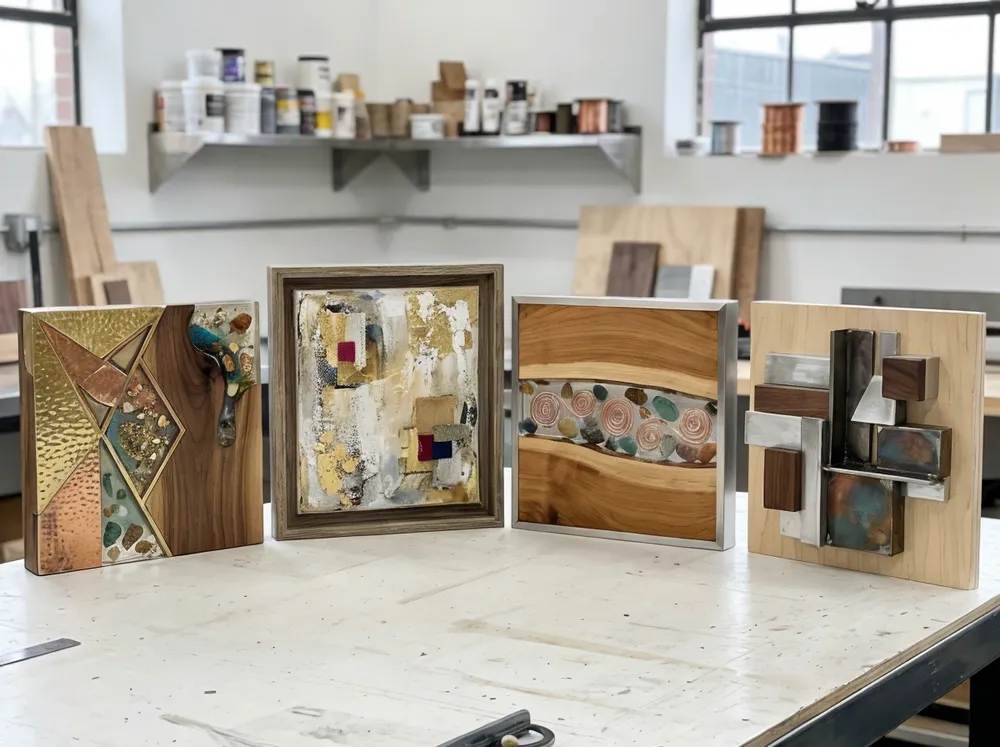
You have shelf space or catalog budget for one new wall art line. Two styles keep surfacing in your research: modern — clean geometry, muted tones, minimal composition — and graffiti — bold color, street-art energy, layered texture. Both sell. But they sell to different people, through different channels, at different margins, with different production risks behind them.
I've spent over twelve years developing both styles on our production floor. We run modern and graffiti wall art through the same facility, same QC team, same container logistics. That gives me a position most suppliers can't offer: an honest side-by-side with no incentive to push you toward one over the other.
Quick verdict: Modern wall art is the safer volume play — broader demographic appeal, simpler production, lower IP risk, and consistent reorder patterns. Graffiti wall art delivers higher per-unit margin when you match it to the right channel, but it carries more production complexity, faster trend rotation, and real licensing exposure if your artwork sources aren't clean.
What Separates These Two Styles on the Production Floor
Before we talk margins, you need to understand what actually differs when these pieces move through manufacturing. The style distinction isn't just aesthetic — it drives substrate choice, print method, finish layers, and QC checkpoints.
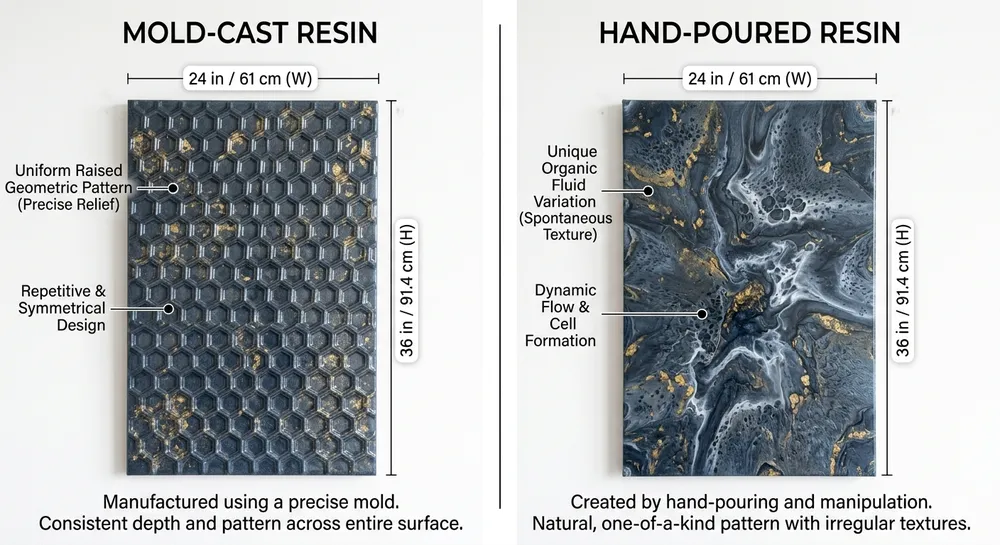
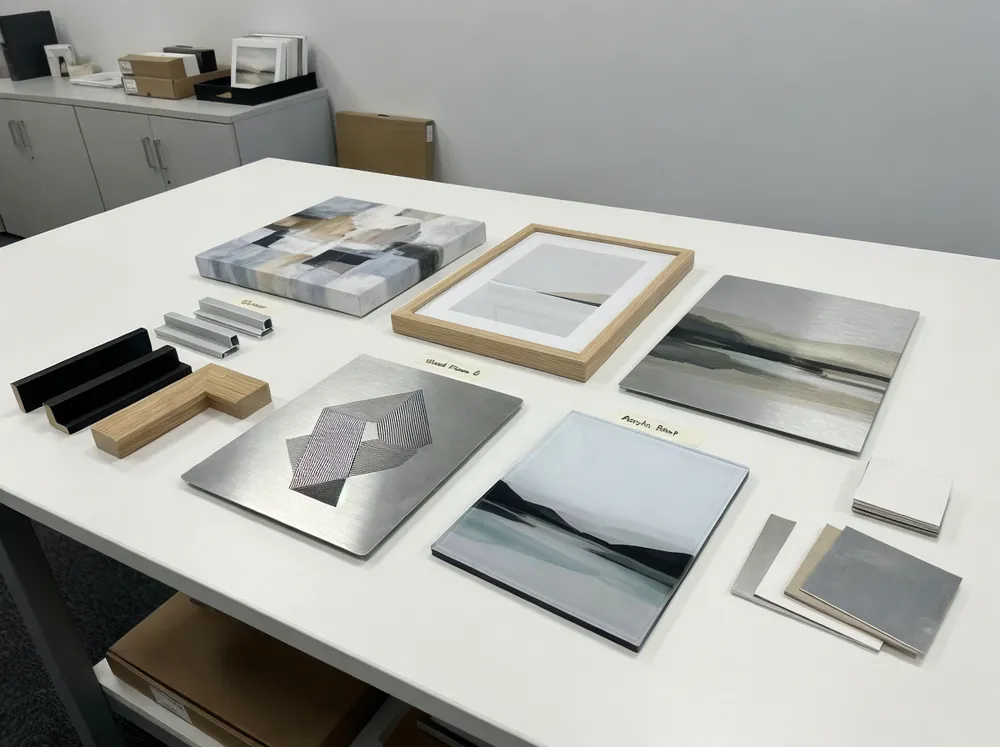
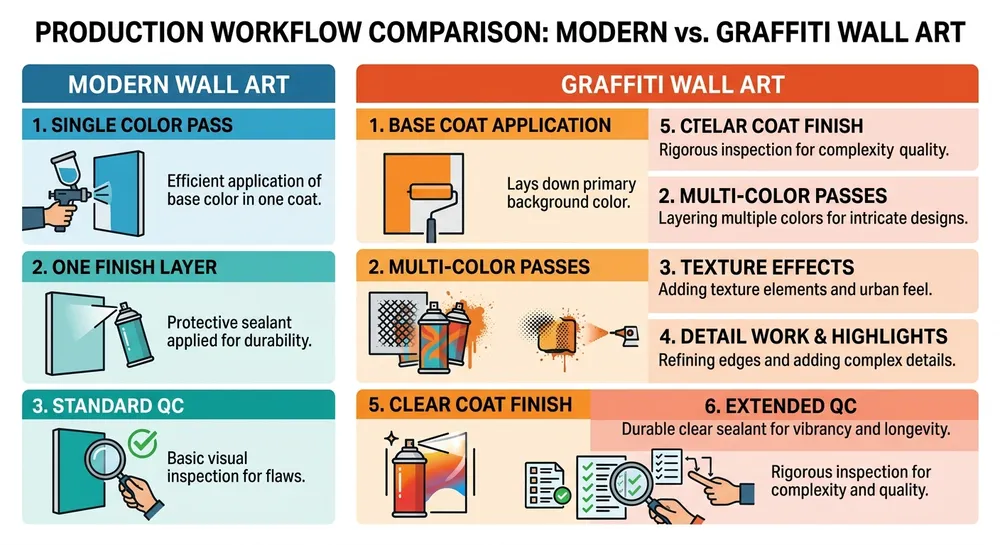
Modern wall art at our facility typically means: single-substrate construction (MDF, canvas, or tempered glass), 1–3 color palettes, clean geometric or abstract compositions, matte or satin finish. Print runs are straightforward — UV flatbed or giclée on canvas, one pass, minimal registration complexity.
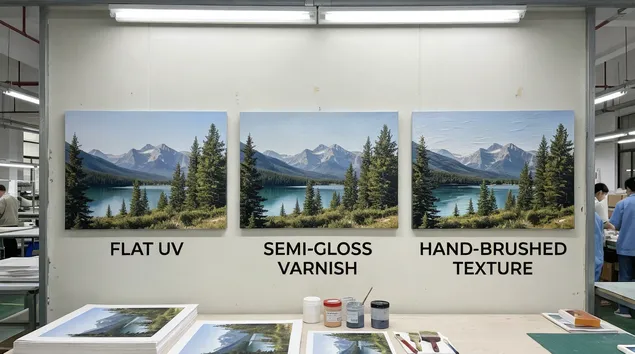
Graffiti wall art means: multi-layer color builds (often 6–12 distinct ink passes), intentional texture effects (drip simulation, spray fade gradients), sometimes mixed-media substrates, and protective clear-coat finishes to preserve vibrancy. The design files alone are heavier — more Pantone references, more proofing rounds before production approval.
(We've had buyers assume graffiti is "just a louder print" — it's not. The color density and layering affect ink consumption, drying time, and reject rate in ways that show up directly on your FOB price.)
Head-to-Head Comparison: The Dimensions That Affect Your Purchase Order
| Dimension | Modern Wall Art | Graffiti Wall Art |
|---|---|---|
| Typical substrate | Canvas, MDF, tempered glass | Canvas, metal, acrylic panel |
| Color complexity | 1–3 tones, neutral palettes | 6–12 colors, high saturation |
| Print method | UV flatbed or giclée, single pass | Multi-pass UV or screen hybrid |
| Finish layers | 1 (matte/satin) | 2–3 (texture + protective clear) |
| FOB price range (per piece, 60×90 cm) | $4.50–$8.00 | $7.50–$14.00 |
| MOQ flexibility | 100 pcs per design | 200 pcs per design (color calibration setup cost) |
| Target retail price | $25–$65 | $45–$120 |
| Gross margin potential | 45–55% at wholesale | 55–70% at wholesale |
| Reorder cycle | 8–14 months (evergreen designs) | 4–8 months (trend-driven rotation) |
| IP/licensing risk | Low (geometric/abstract = generic) | Moderate–High (artist attribution, style mimicry claims) |
| Primary end-buyer demographic | 28–55, broad income, design-conscious | 18–35, urban, higher disposable income or hospitality/commercial |
| Channel fit | E-commerce, mass retail, staging, hospitality | Boutique retail, urban hospitality, youth-focused brands, art-forward e-commerce |
The margin column is where most buyers focus first, and graffiti looks attractive on paper. But margin means nothing if sell-through stalls or a licensing claim pulls your listing. Let me break down the hidden costs.
The Hidden Cost Layer: What Doesn't Show on the FOB Invoice
Color Accuracy and Reject Rate
Modern designs with 2–3 muted tones are forgiving. A slight shift in gray or beige between batches is nearly invisible to the end buyer. Our reject rate on modern wall art runs under 2%.
Graffiti pieces with 8+ saturated colors and intentional gradient effects require tighter color matching across every print head pass. A visible banding artifact or color shift on a neon-to-black fade is immediately obvious. Reject rate on complex graffiti designs runs 4–6% in our experience, and that cost gets absorbed into your unit price or shows up as short-shipped quantities.
Packaging Differential
Modern wall art ships in standard kraft corner protectors and shrink wrap — clean, flat, predictable. Graffiti pieces with textured clear-coat finishes need face-protection film and sometimes foam separation between units to prevent surface marring. On a 40-ft container, that packaging difference adds $0.15–$0.30 per unit and reduces loading density by roughly 8%.
IP and Licensing Exposure
This is the cost most wholesale buyers underestimate until it hits.
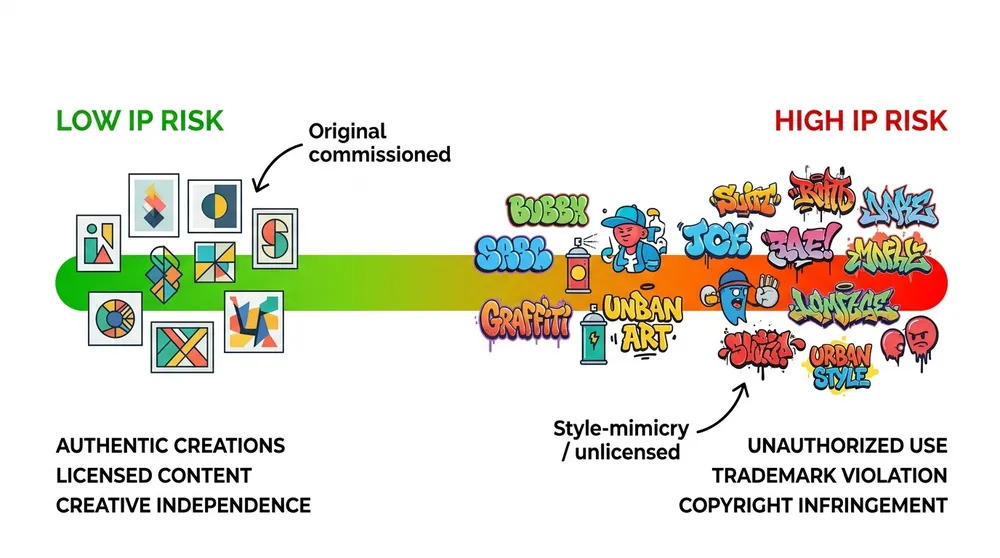
Modern wall art — geometric patterns, color-block abstracts, minimalist line compositions — sits in a design space that's largely generic. You can develop original modern designs with our in-house team, and the risk of an IP claim is minimal. Nobody owns "three overlapping circles in dusty rose."
Graffiti wall art is different. The style itself references specific artists, movements, and visual languages that real people created. If your graffiti designs are "inspired by" a recognizable street artist's technique — even without copying a specific piece — you're in a gray zone. We've seen Amazon listings pulled and Walmart compliance flags raised over graffiti-style artwork that was too close to an identifiable artist's signature elements.
(One of our US distributors lost an entire 2,000-unit shipment to a cease-and-desist in 2022. The design wasn't a direct copy — it used a color palette and drip pattern associated with a specific LA-based artist. That's how narrow the margin of safety can be.)
Your safest path for graffiti: commission original artwork through our OEM design team or supply your own licensed files with documentation. We can produce either way, but we can't absorb your IP risk.

Trend Rotation and Dead Stock Risk
Modern wall art designs have long shelf lives. A matte black geometric triptych that sold in 2020 still sells today. Your reorder cycle is predictable, and dead stock risk is low.
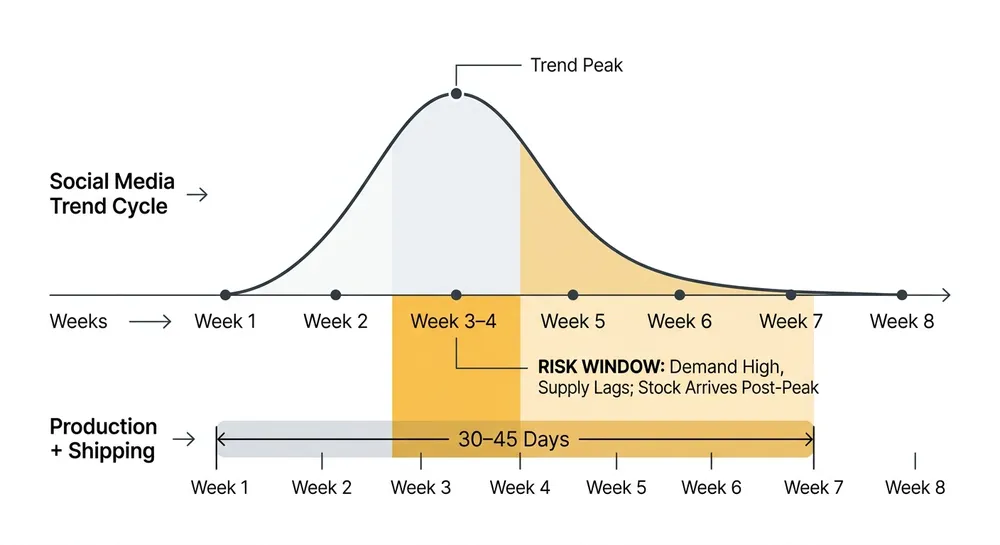
Graffiti trends rotate faster. A neon-drip aesthetic that moved well in 2023 may feel dated by late 2025. If you over-order a graffiti SKU, you're sitting on inventory that loses relevance. This doesn't mean graffiti is a bad bet — it means your order quantities per design should be tighter, and your design refresh cadence needs to be faster.
Channel-Fit Showdown: Three Scenarios, Three Winners
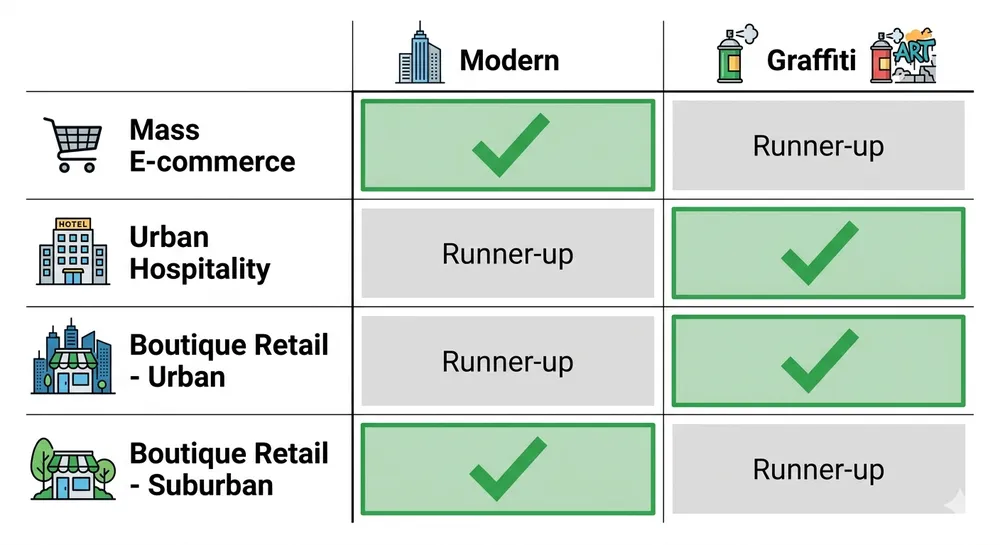
Scenario 1: Mass E-Commerce (Amazon, Wayfair, General Home Decor)
Winner: Modern wall art.
Broad demographic appeal means higher search volume, more stable demand curves, and fewer returns driven by "it looked different in person" complaints. Modern designs photograph predictably — what you see in the listing image is what arrives. Graffiti's color intensity often looks different under various lighting conditions, which drives higher return rates on platforms where the buyer can't see the piece in person first.
Your play: build a modern wall art core catalog of 15–25 evergreen SKUs, reorder quarterly, and let the compound reviews build your listing authority.
Scenario 2: Urban Hospitality and Commercial Projects (Hotels, Restaurants, Co-Working Spaces)
Winner: Graffiti wall art.
Hospitality buyers in urban markets pay for visual impact. A boutique hotel lobby or a co-working space targeting creative professionals wants statement pieces, not safe neutrals. Graffiti wall art commands project pricing — you're quoting per-piece for a curated installation, not competing on unit price against 50 other Amazon sellers.
Margins in this channel run 60–70% because you're selling design curation and project coordination, not just product. The IP risk is also lower here because hospitality projects typically commission original artwork or buy from documented sources.
Scenario 3: Boutique Retail and Gift Channels
Winner: Split — depends on your store's positioning.
If your retail accounts skew toward the 25–40 urban demographic with higher disposable income, graffiti wall arts will outperform on sell-through velocity and average transaction value. If your accounts serve suburban homeowners or the staging/renovation market, modern wins on breadth of appeal and reorder consistency.
The deciding question: what does your retailer's customer look like when they walk in the door? That answer picks your style.
Sourcing Validation: What to Verify Before You Commit
Whether you go modern, graffiti, or both, your RFQ process should surface these production realities before you place a deposit.
For Modern Wall Art Orders
- Color consistency across batches: Request a Delta E tolerance commitment (we hold ΔE < 2 on repeat orders). Muted tones expose inconsistency more than saturated colors — a "warm gray" that shifts cool between batches looks like two different products on your shelf.
- Substrate flatness: MDF and canvas both have warping risks in transit. Ask about moisture content control and packaging method for your destination climate.
- Design originality documentation: Even for "generic" modern designs, get written confirmation that the artwork is original or licensed. Some suppliers pull designs from stock image sites without commercial licensing.
For Graffiti Wall Art Orders
- IP chain of custody: Require documentation showing design origin — either original commission contracts, licensed artwork agreements, or your own supplied files. Do not accept "our designer made it" without paperwork.
- Color proof approval process: Insist on a physical proof or calibrated digital proof before bulk production. Graffiti designs with 8+ colors will shift between screen and print — you need to approve the actual output, not a PDF.
- Clear-coat adhesion testing: Textured finishes over heavy ink layers can delaminate in humid conditions. Ask for cross-hatch adhesion test results, especially if you're shipping to Southeast Asia, the Gulf, or coastal US markets.
- Print method confirmation: Screen printing, UV flatbed, and dye-sublimation all produce different results on graffiti designs. Confirm which method your supplier uses and request samples from that specific process — not a digital mockup.
(If a supplier quotes you graffiti wall art at the same price as modern with the same MOQ, ask questions. Either they're cutting corners on color layers, or they haven't actually produced the design yet and the quote will change after sampling.)
For deeper detail on production methods, see our breakdown of graffiti wall art print methods. And if you're standardizing your modern line, the modern wall art design standards guide covers what to specify in your artwork briefs.
Building a Mixed Catalog: The Portfolio Approach
Most of our successful distributors don't choose one style exclusively. They build a core modern catalog for volume and predictability, then layer in graffiti SKUs for margin and differentiation. A typical split we see working well: 65–70% modern, 30–35% graffiti by SKU count, with graffiti contributing 40–45% of gross margin dollars despite fewer units.
The key is matching your order structure to each style's economics:
- Modern: larger quantities per design (300–500 pcs), fewer designs, longer reorder cycles
- Graffiti: smaller quantities per design (200–300 pcs), more designs, faster rotation
We produce both styles on the same wall arts by style and subject production lines, so you can consolidate into single shipments and split containers between styles without managing two supplier relationships. That alone saves you one layer of coordination cost and gives you a single QC standard across your entire wall art catalog.
FAQ
Which wall art style has better sell-through on Amazon — modern or graffiti?
Modern wall art consistently outperforms on Amazon for total unit volume because it appeals to a wider demographic and photographs more predictably. Graffiti listings can achieve higher average selling prices but face more competition from low-quality imports and higher return rates due to color expectation mismatches. If Amazon is your primary channel, build your foundation on modern and test graffiti as a premium tier.
How do I protect myself from IP claims on graffiti-style wall art?
Three steps: commission original artwork through your manufacturer's design team with a written work-for-hire agreement, require your supplier to provide design origin documentation before production, and run a reverse image search on any graffiti design before listing it publicly. If you're sourcing designs that reference a specific artist's recognizable style elements, consult an IP attorney before scaling. The cost of a legal review is trivial compared to a pulled listing and destroyed inventory. For more detail, see our graffiti wall art licensing guide.
Can I order both modern and graffiti wall art from the same supplier in one shipment?
Yes — and you should, if your supplier produces both in-house. Consolidating styles into a single purchase order reduces freight cost per unit, simplifies QC coordination, and gives you one point of accountability. At our facility, both styles run through the same print and finishing lines, so mixed-style orders ship together without split-container surcharges or timing mismatches.
What MOQ should I expect for graffiti wall art versus modern?
Modern wall art MOQs start lower (100 pieces per design at our facility) because production setup is simpler — fewer color calibration steps, faster changeover between designs. Graffiti wall art typically requires 200 pieces per design minimum because the multi-pass color calibration and proofing process has a higher fixed setup cost that needs to amortize across more units. If you need smaller test quantities for graffiti, ask about sampling programs — most factories can produce 10–20 piece sample runs at a premium per-unit cost for market testing before you commit to bulk.