Buyers get this wrong more often than you'd expect. They pick a substrate based on what looks good in a sample photo, place a 500-unit order, and then discover the freight cost blew their margin — or the product arrived with corner damage because the packaging spec wasn't built for that material. Substrate choice isn't an aesthetic decision. It's a cost structure decision, a logistics decision, and a channel-fit decision all at once.
We produce all three substrates — canvas, wood panel, and metal — at our facility in Dong Nai, Vietnam. Twelve years of running nature wall art through these lines gives us a clear picture of where each material wins and where it creates problems. This comparison is built on production specs and export data, not consumer opinion.
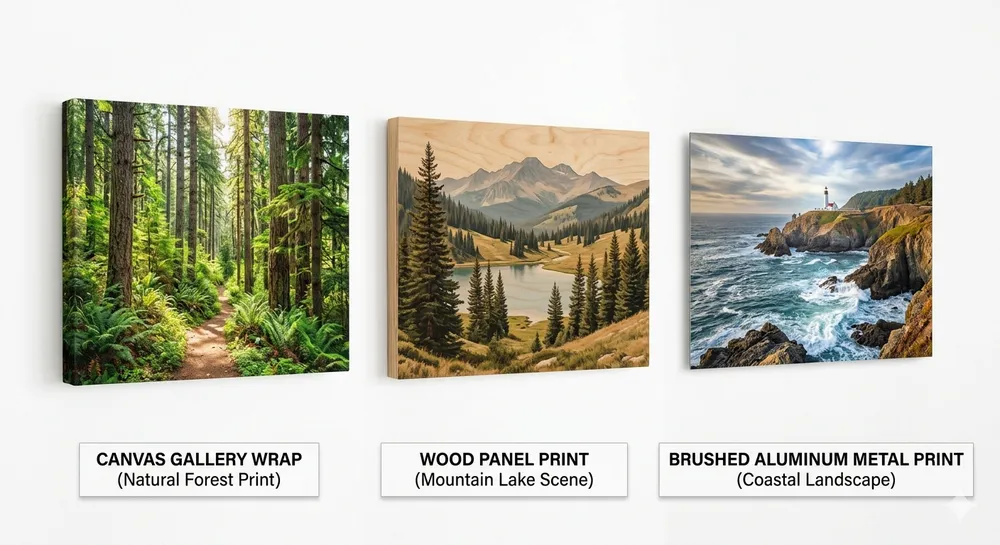
What each substrate actually is at the production level
Before the comparison table, it helps to be precise about what we're actually building — because "canvas wall art" and "metal wall art" mean different things depending on who's quoting you.
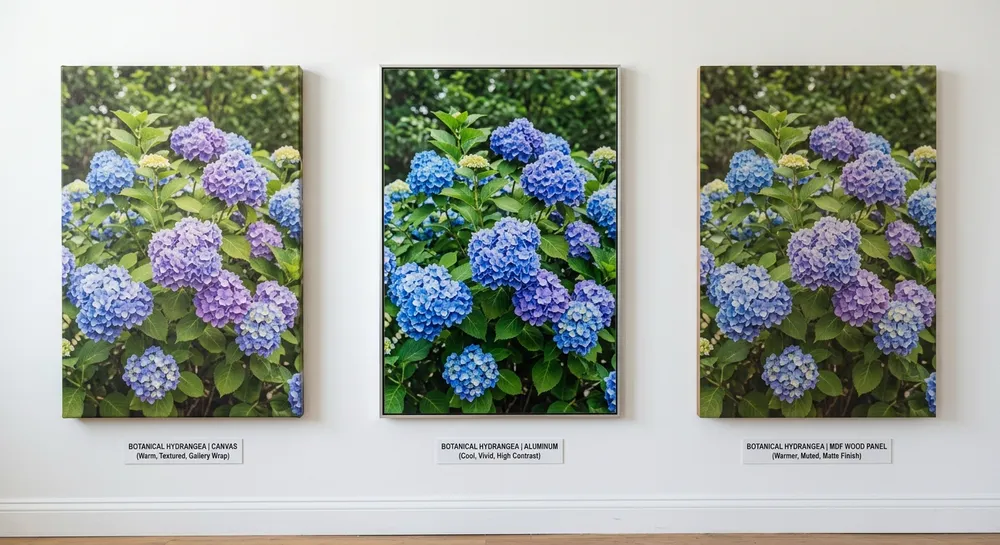
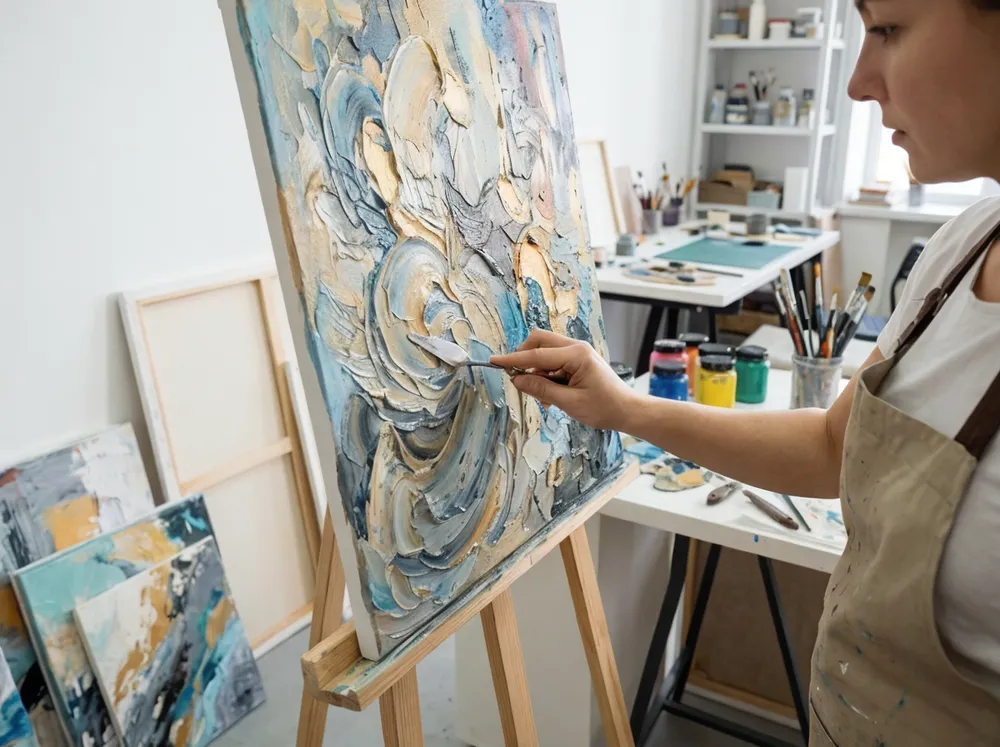
Canvas in our production is a polyester-cotton blend canvas (typically 260–300 gsm) stretched over a 1.5 cm or 3.8 cm pine or MDF stretcher frame. The image is printed via UV or latex inkjet directly onto the canvas face. The stretcher depth determines whether the piece reads as a gallery wrap (3.8 cm, image wraps the sides) or a standard print (1.5 cm, requires separate framing). We run both configurations. The 3.8 cm gallery wrap is the dominant format for US retail and e-commerce.
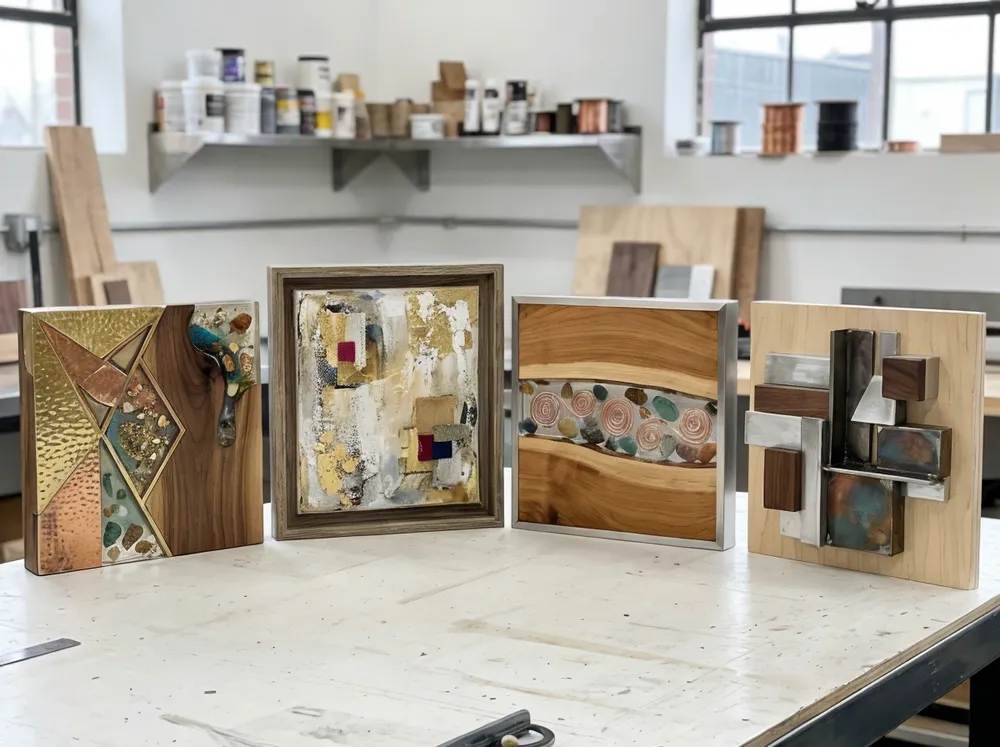
Wood panel is either solid pine board (12–18 mm thickness) or MDF panel (9–15 mm) with a UV-printed or direct-transfer image on the face. Some buyers want a raw wood-grain texture showing through the image — that requires a specific semi-transparent ink pass, which we do on the pine boards. MDF gives a flatter, more consistent surface for high-detail photography prints. (We lean toward MDF for nature photography subjects and pine for botanical or rustic-style art where the grain adds to the aesthetic.)
Metal in this context is aluminum composite panel (ACP) — two thin aluminum skins bonded to a polyethylene core — typically 3 mm total thickness. The image is dye-sublimated directly onto a white-coated aluminum surface. The result is a hard, glossy or semi-matte finish with no texture. Some buyers also specify brushed aluminum for a more industrial look, which we can do with a pre-treated substrate before sublimation.
These distinctions matter when you're writing a purchase order or comparing quotes. A supplier quoting "metal wall art" on solid aluminum sheet is quoting a completely different weight and cost profile than ACP.
Substrate spec comparison: weight, durability, and moisture resistance
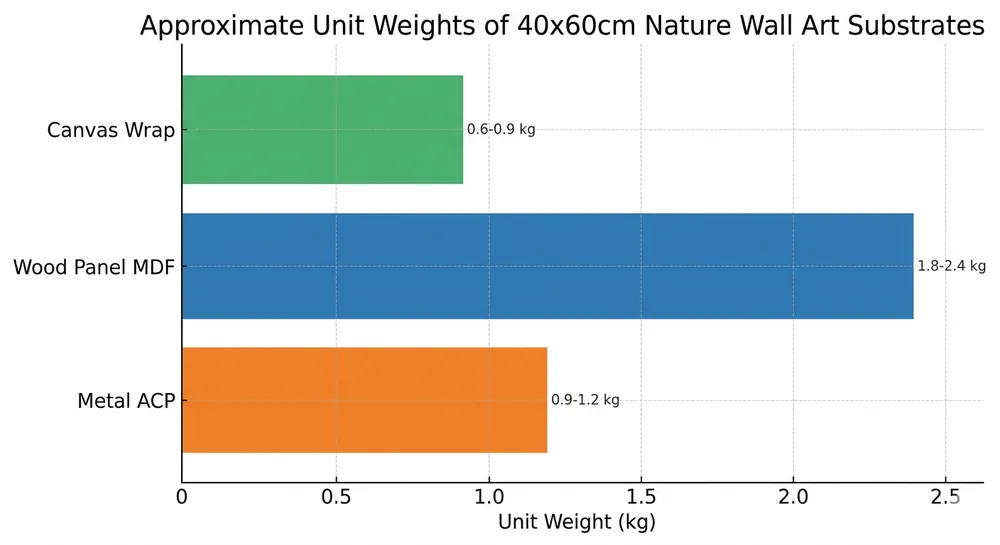
This is where the sourcing decision actually lives. The table below reflects our standard production specs for a 40×60 cm piece — a common mid-size SKU for nature wall art in retail and hospitality.
| Spec | Canvas (3.8 cm wrap) | Wood Panel (MDF, 15 mm) | Metal (ACP, 3 mm) |
|---|---|---|---|
| Approx. unit weight | 0.6–0.9 kg | 1.8–2.4 kg | 0.9–1.2 kg |
| Surface finish | Matte / satin | Matte / semi-gloss | Gloss / semi-matte / brushed |
| Moisture resistance | Low (untreated) / Medium (UV-coated) | Low (untreated) / High (multi-coat sealed) | High (inherent) |
| UV resistance | Medium (latex ink) / High (UV-cured ink) | Medium–High (UV-cured) | High (dye-sub, sealed surface) |
| Edge/corner fragility | Medium (stretcher corners) | Low–Medium (sealed edges) | Low (rigid panel) |
| Breakage risk in transit | Medium | Medium–High (MDF edge chips) | Low |
| Typical retail price tier | Entry–Mid | Mid–Premium | Mid–Premium |
| Hospitality grade suitability | Moderate | High (sealed) | High |
A few things worth unpacking from that table.
Canvas is the lightest option, which directly affects your freight cost per container. A 40-foot container of canvas wall art carries significantly more units than the same container loaded with MDF panels — we've seen buyers underestimate this by 30–40% when switching substrates mid-season. The tradeoff is moisture sensitivity: untreated canvas in humid climates (Southeast Asia retail, coastal US markets) can develop warping or mold on the stretcher frame within 12–18 months. We apply a UV-protective coating on the canvas face as standard, but the stretcher itself needs to be kiln-dried timber to hold stable. We specify kiln-dried pine on all our stretcher frames — it's a detail that doesn't show up in most trading-company quotes.
Metal (ACP) has the best inherent moisture and UV resistance of the three. For hospitality buyers — hotels, resorts, restaurant chains — this matters because the art goes into bathrooms, pool areas, and exterior corridors where canvas would fail within a year. The surface is sealed during the sublimation process, so there's no separate coating step required. Breakage risk in transit is also the lowest of the three: ACP flexes slightly rather than cracking, and the rigid panel survives corner impacts that would split an MDF edge.
Wood panel sits in the middle on most specs, but it's the most variable depending on finishing. Unfinished or single-coat MDF edges are the most common source of damage claims we see on wood panel orders — the edge absorbs moisture during ocean freight and swells or chips. Our standard is a 3-coat edge seal on all MDF panels before packaging. If a supplier isn't specifying edge treatment, that's a gap worth asking about before you commit to volume.

How substrate choice moves your landed cost
Weight is the most obvious cost lever, but it's not the only one. Packaging spec, breakage rate, and MOQ structure all shift depending on which substrate you're ordering.
Freight weight and container density. Canvas is the clear winner here. A standard 40-foot container can hold roughly 2,000–2,500 units of 40×60 cm canvas gallery wraps (stacked flat in custom cartons). The same container loaded with MDF wood panels of the same size holds closer to 1,200–1,500 units. Metal ACP falls between the two at around 1,600–2,000 units. If your landed cost target is tight, canvas gives you the most units per freight dollar — which is why it dominates the mass-market e-commerce channel.
Packaging cost per unit. Canvas wraps can ship in flat corrugated cartons with foam corner protectors — relatively low packaging cost. MDF panels need foam-lined boxes with edge protection on all four sides, which adds material cost and increases carton volume. Metal ACP is the most forgiving to package: the rigid panel doesn't need as much internal cushioning, and we can often fit two pieces back-to-back in a single carton with a foam separator, which recovers some of the per-unit packaging cost.
Breakage and RMA rate. In our export history, MDF wood panels have the highest in-transit damage rate of the three substrates when packaging spec is inadequate — primarily edge chipping and corner splits. Canvas has occasional stretcher frame damage (corners pulling away from the frame) if the carton is compressed. Metal ACP has the lowest damage rate. For buyers selling into retail channels where a single damaged-goods return triggers a chargeback, the RMA rate difference between substrates is worth factoring into your total cost model, not just the unit price.
MOQ and lead time. We run all three substrates on the same production floor, so there's no supplier-switching cost if you want to mix substrates in one order. Our standard MOQ is 100 pieces per SKU for canvas and wood panel, and 150 pieces per SKU for metal (the sublimation setup cost is slightly higher). Lead time across all three is 25–35 days for standard sizes after sample approval.
Matching substrate to channel: where each material actually sells
This is the part most substrate comparison articles skip. The right material depends on where your buyer is selling, at what price point, and to whom.
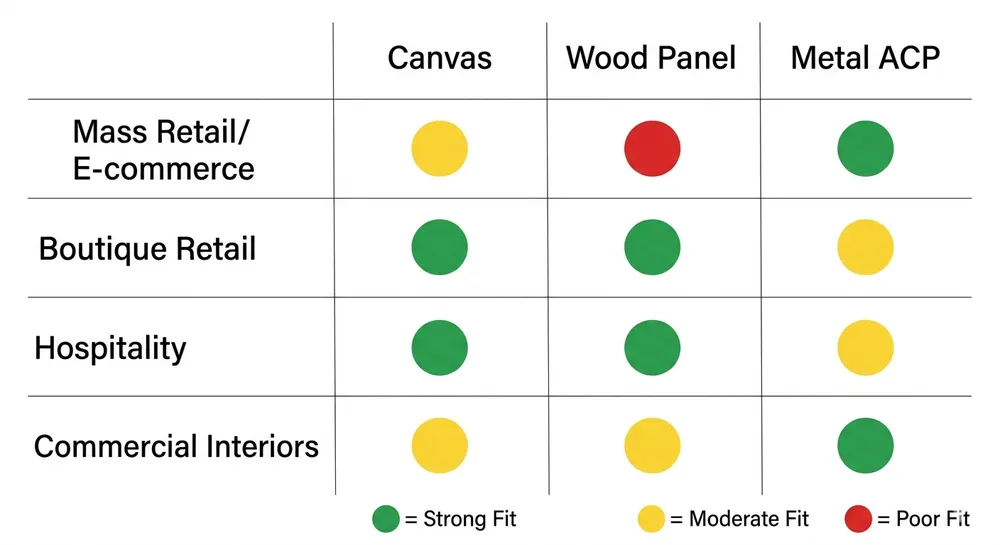
Mass retail and e-commerce (Walmart, Amazon, Wayfair tier). Canvas dominates this channel. The price point is competitive, freight efficiency matters, and the consumer expectation is a gallery-wrap canvas — it's the default format for nature wall art in this segment. We supply canvas wall art to buyers in this channel regularly; the typical order is 500–2,000 units per SKU, with 3–5 nature subjects per run. Retail compliance requirements (ASTM, CARB for MDF, Prop 65) are manageable across all substrates, but canvas has the simplest compliance profile.
Boutique retail and independent home décor stores. Wood panel and metal both perform well here. The higher price point supports the material cost, and the tactile quality of a wood panel or the sharp finish of a metal print differentiates the product from mass-market canvas. Nature photography subjects — landscapes, botanicals, wildlife — translate particularly well to metal's high-contrast glossy surface. Boutique buyers in this segment often want smaller runs (100–300 units) with more SKU variety, which our flexible MOQ structure supports.
Hospitality: hotels, resorts, restaurant groups. Metal ACP is the preferred substrate for most hospitality specifications, particularly for bathrooms, spas, and any area with humidity exposure. Wood panel with full multi-coat sealing is also used in dry interior spaces — lobbies, corridors, guest rooms. Canvas is generally avoided in hospitality unless the space is climate-controlled and the buyer accepts a shorter replacement cycle. Hospitality orders tend to run 200–800 units per project with tight size standardization, which suits our production setup well.
Contract and commercial interiors (offices, healthcare, education). This segment is growing for us. Nature wall art — particularly botanical and landscape subjects — is specified by interior designers for biophilic design projects. Metal and sealed wood panel are both used. The key requirement here is often fire rating and VOC compliance, which our ACP panels and water-based wood finishes satisfy. (We can provide material safety data sheets and fire-rating documentation for commercial project specifications on request.)
Livewellcraft's production capability across all three substrates
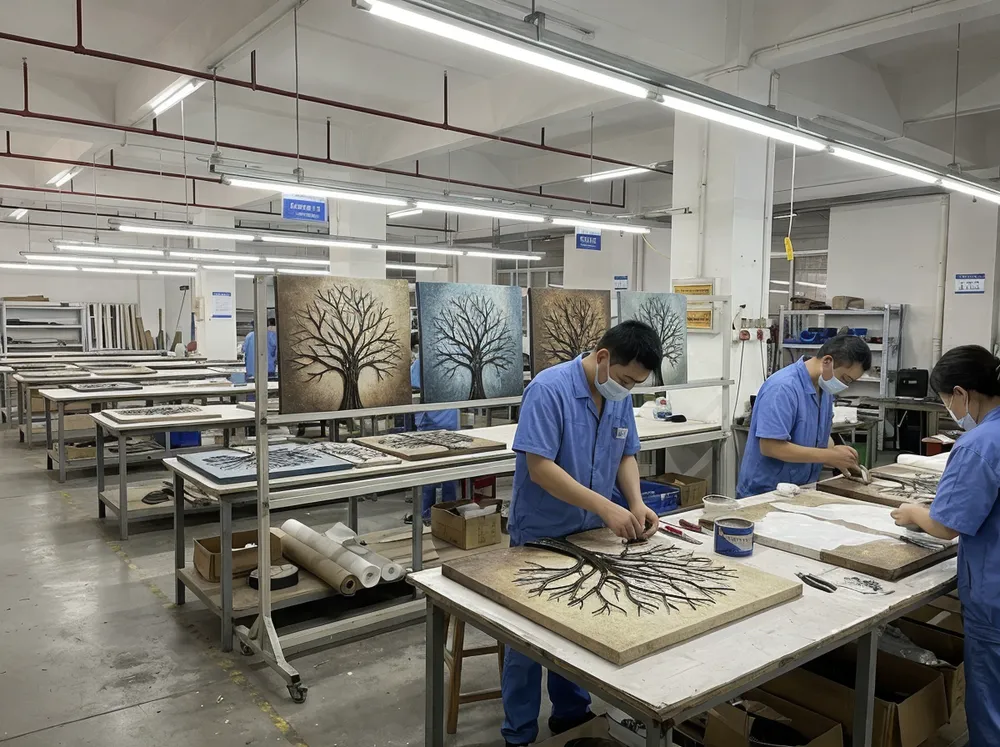
We run canvas, wood panel, and metal under one roof — 12,000 m² facility, 6 production lines, 150 people. The practical advantage for your order is that you don't need to split a mixed-substrate program across two or three suppliers. One purchase order, one QC process, one shipment.
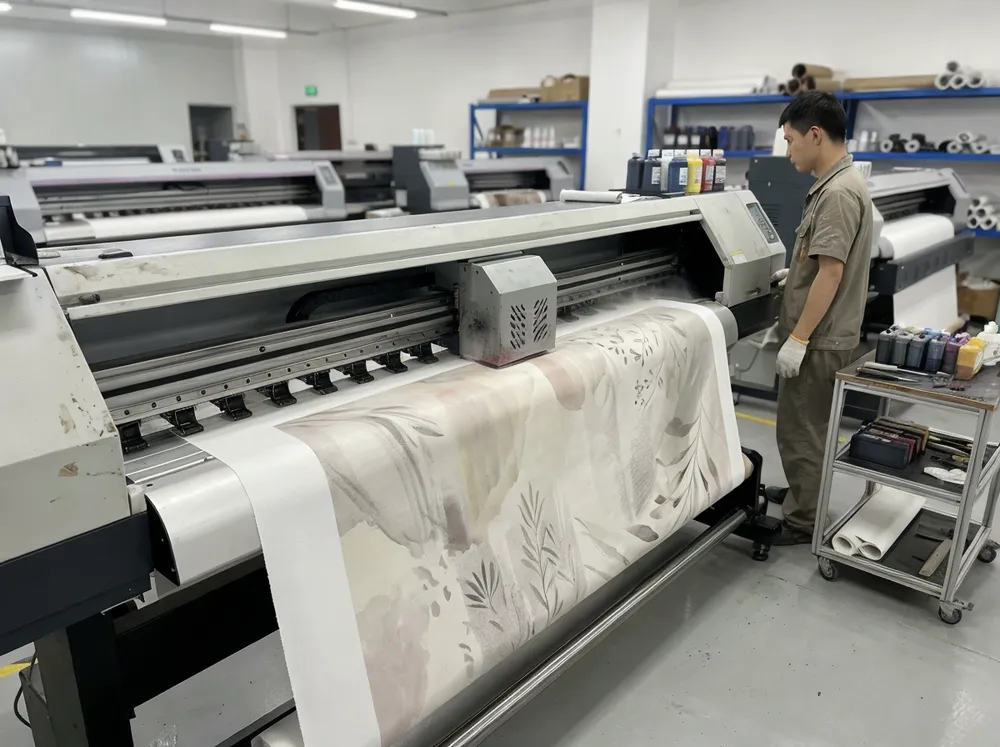
For canvas, we run UV and latex inkjet printing on our dedicated canvas lines. Color profiles are calibrated per substrate — the same nature image file will print differently on canvas versus metal, and we manage that translation in-house rather than asking the buyer to supply separate files for each substrate. Our 12-person engineering team handles the color matching and sample approval process before bulk production starts.
For wood panel, our finishing line runs a 3-coat sealing process on MDF edges as standard — primer, base coat, topcoat — before the panel goes into packaging. We also offer a raw-edge natural wood finish on solid pine panels for buyers who want the exposed grain as part of the aesthetic. The UV printing on wood uses cured inks that bond directly to the sealed surface, giving a scratch resistance that water-based inks on unsealed wood can't match.
For metal, our dye-sublimation line handles the image transfer onto pre-coated aluminum composite panels. We offer gloss, semi-matte, and brushed finishes. The brushed finish requires a pre-treated substrate and adds 2–3 days to the production schedule, but it's a meaningful product differentiation for boutique and hospitality buyers who want something that doesn't read as a standard photo print.
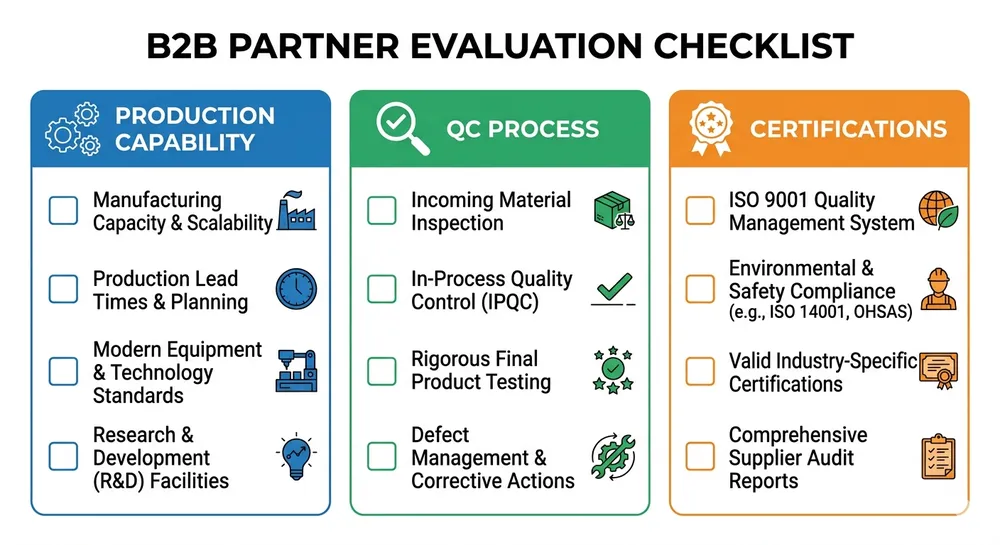
All three substrates go through our standard QC process: 100% visual inspection, color accuracy check against approved sample, and packaging integrity check before container loading. We hold ISO 9001:2015 certification and have passed SGS, CE, and BSCI audits — documentation available on request for retail compliance submissions.
If you're building a multi-substrate nature wall art program and want to see how the specs translate to your specific size and quantity requirements, the Nature Wall Arts category page covers our current subject range. For a broader view of our wall art production across styles, Wall Arts by Style & Subject is the right starting point.
Substrate selection guide: which material fits your order
The decision comes down to three variables: channel, price tier, and environment.
Choose canvas if:
- Your channel is mass retail or e-commerce
- Your target retail price is in the entry-to-mid range
- Freight cost efficiency is a priority
- The end-use environment is climate-controlled interior
Choose wood panel if:
- Your channel is boutique retail or commercial interiors
- You want a tactile, premium-feeling product that justifies a higher price point
- The nature subject benefits from a natural or semi-textured surface (botanicals, landscapes with earthy tones)
- You're willing to specify edge sealing and accept slightly higher freight cost
Choose metal (ACP) if:
- Your channel is hospitality, coastal retail, or any humidity-exposed environment
- You want the sharpest color reproduction and highest contrast — metal handles nature photography particularly well
- Breakage rate and RMA risk are a concern for your downstream customers
- You're targeting a premium price tier where the material cost is supportable
One thing worth saying directly: for most buyers building a nature wall art program from scratch, starting with canvas for the volume SKUs and adding one or two metal or wood panel accent pieces is the lowest-risk entry. Canvas gives you the freight efficiency and price flexibility to test sell-through; the premium substrates give you margin upside once you know which subjects are moving. We've helped buyers structure programs this way — it's a more conservative approach, but it protects your first-order economics while you build channel data.
For color accuracy considerations across substrates — particularly how nature photography subjects translate differently on canvas versus metal — see our article on Nature Wall Art Color Accuracy.
Frequently asked questions
What is the minimum order quantity for mixed-substrate nature wall art orders? Our standard MOQ is 100 pieces per SKU for canvas and wood panel, 150 pieces per SKU for metal. If you're ordering multiple substrates in one shipment, each SKU holds its own MOQ — we don't require a combined minimum across substrates. A typical mixed program might be 300 canvas units across three subjects plus 150 metal units in one or two subjects, all in a single container.
Does substrate choice affect CARB and Prop 65 compliance for US retail? MDF wood panels require CARB Phase 2 compliance for formaldehyde emissions — we use CARB-compliant MDF as standard and can provide documentation. Canvas stretcher frames using MDF or composite board also fall under this requirement; solid pine stretchers do not. Metal ACP has no CARB requirement. For Prop 65, our water-based inks and UV-cured coatings across all substrates are formulated to comply — we can provide material safety data sheets for your retail compliance submission.
How does moisture affect each substrate during ocean freight? Ocean freight is the highest-risk environment for moisture exposure. Canvas stretcher frames made from non-kiln-dried timber can warp during a 30-day ocean transit in humid conditions — we specify kiln-dried pine and seal all cartons with moisture-barrier poly bags as standard. MDF panels are the most moisture-sensitive: edge swelling is the most common damage mode, which is why our 3-coat edge seal is non-negotiable on export orders. Metal ACP is essentially unaffected by transit humidity. If your destination port has high ambient humidity (Southeast Asia, Middle East summer), we recommend requesting moisture-barrier packaging on canvas and wood panel orders regardless.
Can the same nature image file be used across all three substrates? The same source file can be used, but the color profile and resolution requirements differ by substrate. Metal dye-sublimation requires a higher-resolution file and a different ICC color profile than canvas UV printing — the same file printed without profile adjustment will look oversaturated on metal and flat on canvas. We handle the profile conversion in-house as part of our pre-production process, so you don't need to supply separate files. What you do need to confirm is that your source files are at least 150 dpi at final print size — below that, the quality difference becomes visible on metal's high-contrast surface before it shows on canvas.
What lead time should I plan for a first order with mixed substrates? 25–35 days from sample approval to container loading, across all three substrates. The sample approval step typically adds 7–10 days before production starts — we ship physical samples for color and finish sign-off before committing to bulk. If you're on a tight seasonal deadline, tell us upfront and we'll flag whether the timeline is achievable before you place the order.
Send us your substrate preference, target size, and order quantity — or tell us your retail price point and channel, and we'll recommend the right material. Request a quote to get specs, samples, and pricing.