Here's the question we get from US buyers more than almost any other: should I load up on abstract or go heavier on nature subjects? It sounds like a style question. It isn't. It's a margin and inventory-turn question, and the answer depends on your channel, your seasonal exposure, and how much production flexibility your supplier can actually give you.
We've been making wall art for Walmart, Wayfair, and Amazon vendor programs since before most of the current crop of wholesale platforms existed. We've watched abstract dominate a season, seen botanical explode out of nowhere in spring 2021 and never fully retreat, and we've had buyers come back to us after a bad buy asking why their nature SKUs stalled in October. The pattern is consistent enough that I can give you a direct answer — with the caveats that actually matter.
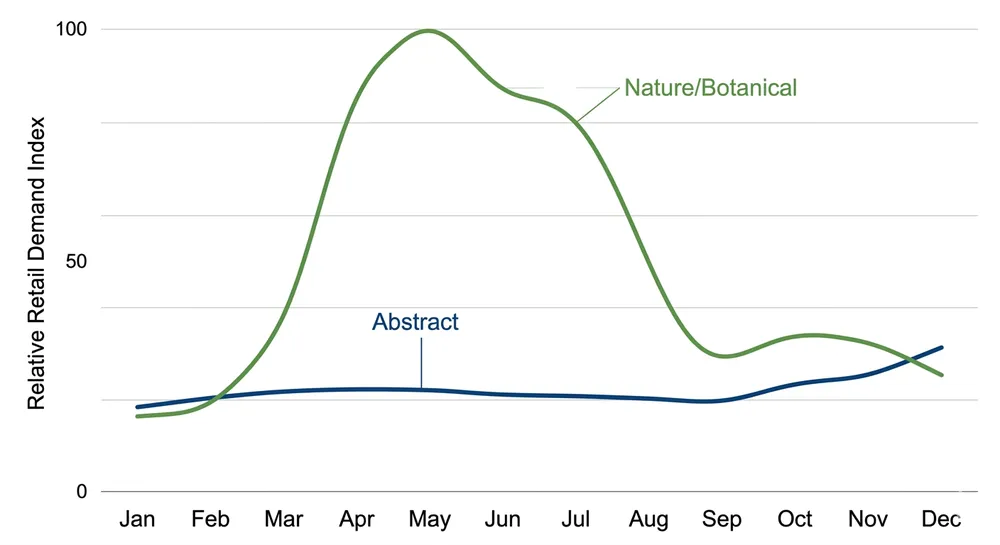
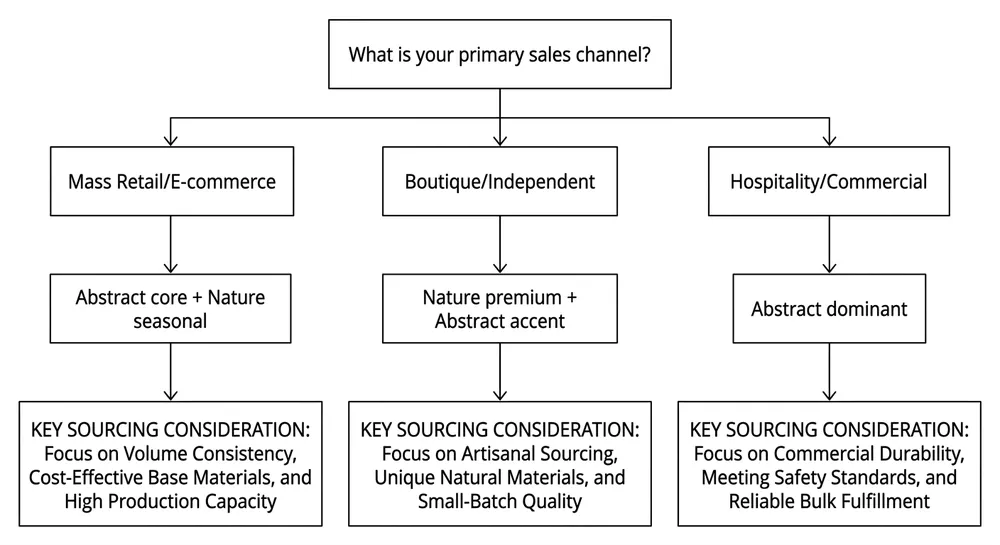
Quick verdict: Abstract wins on year-round velocity and channel breadth. Nature wins on seasonal peak margins and trend-driven sell-through in spring/summer. If you're building a core wall art program, abstract is your foundation. If you're chasing seasonal lift or targeting home décor boutiques and hospitality buyers, nature earns its place in the mix. The right answer for most US distributors is a weighted split — not a binary choice.

What These Two Categories Actually Mean at the Sourcing Level
Before the comparison lands, it helps to be precise about what we're comparing — not as art theory, but as production and SKU categories.
Abstract wall art at the wholesale level covers non-representational compositions: color-field pieces, geometric forms, brushstroke canvases, ink wash prints, and mixed-media looks. The defining characteristic from a production standpoint is that the design doesn't need to be botanically or photographically accurate. A slightly shifted color register on an abstract piece is a style choice. On a botanical print, it's a defect.
Nature wall art covers representational subjects drawn from the natural world — botanicals, florals, landscapes, wildlife, and coastal scenes. Botanical and floral prints are the dominant subcategory in US retail right now, followed by landscape and coastal. The production challenge is color fidelity: a eucalyptus leaf rendered in the wrong green reads as wrong to the end buyer immediately.
Both categories run on the same core substrates — canvas over MDF or stretcher frame, framed fine-art paper prints, and metal prints for the premium tier. The difference shows up in color complexity, design licensing exposure, and how forgiving the production run is when color drift happens across a 2,000-piece order.
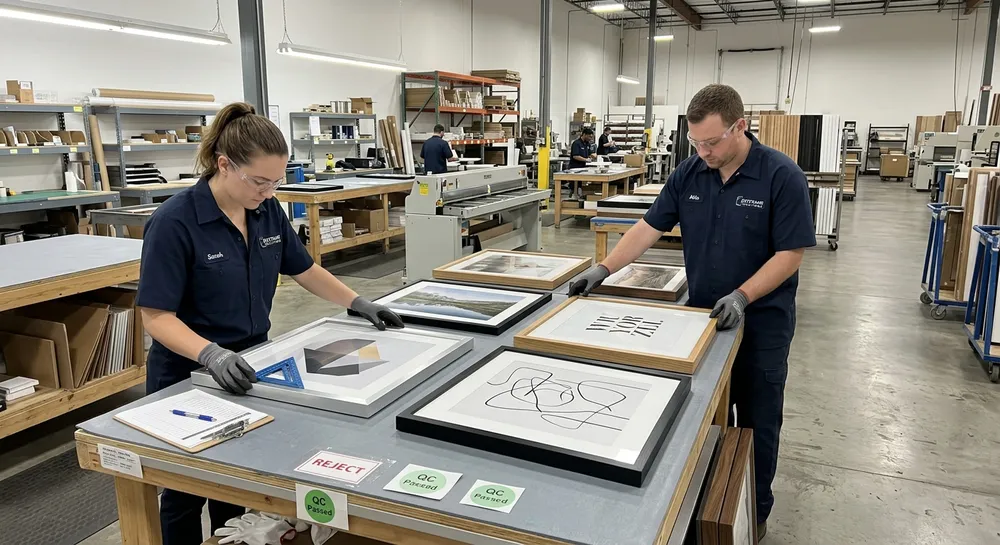
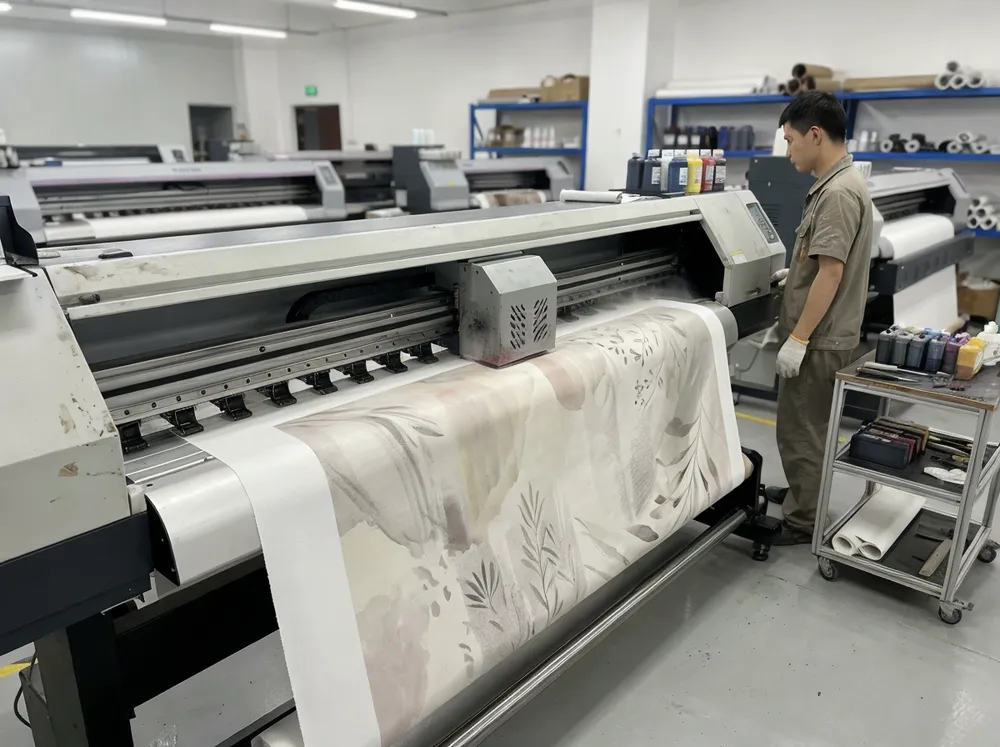
(We run color calibration checks at three points during a nature print run — start, mid-batch, and end — because the drift risk is real on high-saturation botanical colors. On abstract, we still check, but the tolerance window is wider.)
Head-to-Head: Retail Performance and Sourcing Profile
| Dimension | Abstract Wall Art | Nature Wall Art |
|---|---|---|
| Year-round demand | High — consistent across all quarters | Moderate — strong Q1–Q2, softer Q3–Q4 |
| Seasonal peak | Mild Q4 lift (holiday gifting) | Strong spring/summer peak (March–July) |
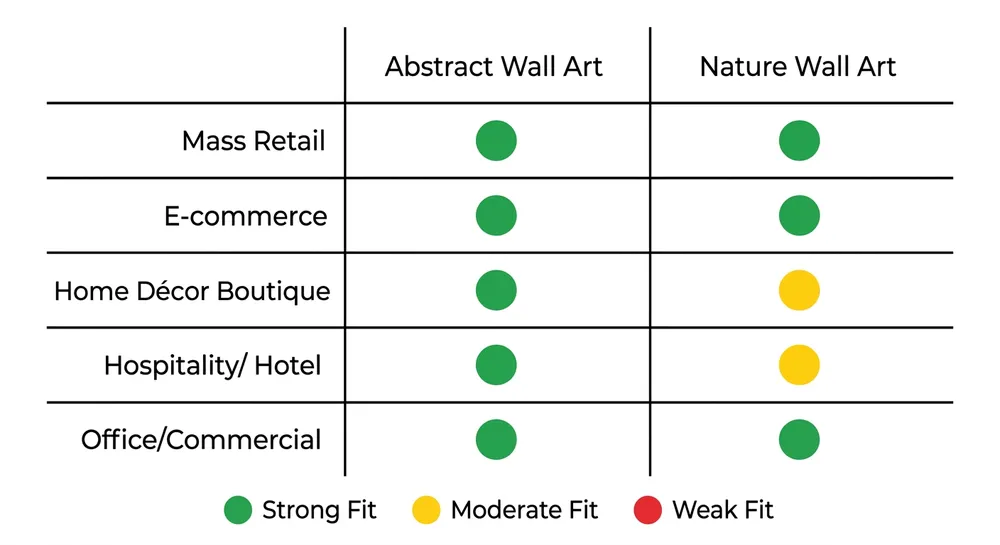
| Channel breadth | Mass retail, e-commerce, hospitality, office | Home décor boutiques, e-commerce, hospitality |
| Average retail price range | $35–$150 (canvas/framed) | $40–$180 (botanical framed prints command premium) |
| Color complexity | Low–medium | Medium–high |
| Production color risk | Low | Medium–high |
| Design licensing exposure | Low (original compositions common) | Medium (licensed botanical illustrations common) |
| MOQ flexibility | High — abstract designs repeat well | Medium — nature designs often tied to seasonal collections |
| Trend cycle | Slow-moving, multi-year cycles | Faster — botanical trends shift 12–18 months |
| Reorder predictability | High | Moderate — seasonal timing matters |
The Hidden Cost Most Buyers Don't Price In
The unit cost difference between abstract and nature wall art looks small on a factory quote — often $0.50 to $2.00 per piece depending on color complexity and substrate. That's not where the real cost gap lives.
Color correction and reprint risk is where nature wall art costs you more. When a botanical print arrives with color drift — and it happens, even with good suppliers — you're looking at a return authorization, a reprint cycle, and a gap in your planogram. We've had buyers come to us after a competitor's factory shipped 1,500 units of a eucalyptus print where the background had shifted warm. The retailer rejected the shipment. The buyer ate the freight both ways and the reprint lead time blew their seasonal window entirely.
Abstract doesn't carry that risk at the same level. A warm shift on an abstract brushstroke piece is often indistinguishable from intentional variation. Your QC threshold is wider, your rejection rate is lower, and your reorder cycle is more predictable.
Design licensing is the second hidden cost. A significant share of nature wall art in the US market — particularly botanical illustrations and wildlife prints — runs on licensed artwork. If your supplier is sourcing designs without proper licensing, you carry the IP liability. We develop original designs in-house for both categories, which eliminates that exposure, but it's a question worth asking any supplier you're evaluating. (We've seen buyers get hit with takedown notices on Amazon for botanical prints their supplier assured them were "royalty-free." It's more common than people admit.)
Seasonal inventory risk is the third. Nature wall art that doesn't sell through by July is sitting in your warehouse at full carrying cost through Q3 and Q4. Abstract doesn't have that cliff. A slow-moving abstract SKU is a slow-moving SKU — it doesn't become actively wrong for the season.
Which Subject Wins by Channel and Buyer Situation
Mass Retail and Large-Format E-commerce (Walmart, Wayfair, Amazon)
Abstract is the workhorse here. The demand is year-round, the reorder cycles are predictable, and the color consistency requirements — while still strict for retail compliance — are more forgiving than botanical. We supply both categories into these channels, and abstract SKUs consistently show higher reorder frequency and lower return rates.
Nature wall art earns its place in these channels as a seasonal program — a spring refresh assortment, a coastal summer collection, a botanical accent series. Buyers who treat nature as a permanent core SKU in mass retail tend to get caught with inventory in Q4.
Home Décor Boutiques and Independent Retailers
This is where nature wall art, particularly premium botanical and landscape prints, commands its best margins. Boutique buyers are willing to pay for design specificity, and a well-executed framed botanical print at $120 retail carries margin that a comparable abstract piece at the same price point doesn't always justify to the end buyer.
The trade-off: boutique order volumes are smaller, trend cycles are faster, and you need design freshness more often. If you're supplying this channel, your supplier's ability to develop new nature designs quickly — and sample them at low MOQ — matters more than it does in mass retail.
Hospitality and Commercial Projects
Abstract dominates. Hotel buyers, restaurant groups, and commercial interior specifiers want pieces that work across varied lighting conditions, don't date quickly, and don't require seasonal rotation. A 200-room hotel ordering 400 pieces of abstract wall art is a clean, repeatable transaction. Nature subjects in hospitality tend to be accent pieces — a botanical feature wall in a lobby, coastal prints in a beach resort property — not the core program.
E-commerce Private Label and DTC Brands
Both subjects work, but the margin dynamics differ. Abstract private-label programs benefit from design exclusivity — a buyer who develops original abstract compositions with us owns designs that competitors can't easily replicate. Nature private-label programs benefit from trend timing — a buyer who gets a trending botanical subject to market three months before the channel saturates captures the margin premium.
(This segment has grown significantly for us over the last three years — worth paying attention to if you're building a wall art private-label program.)
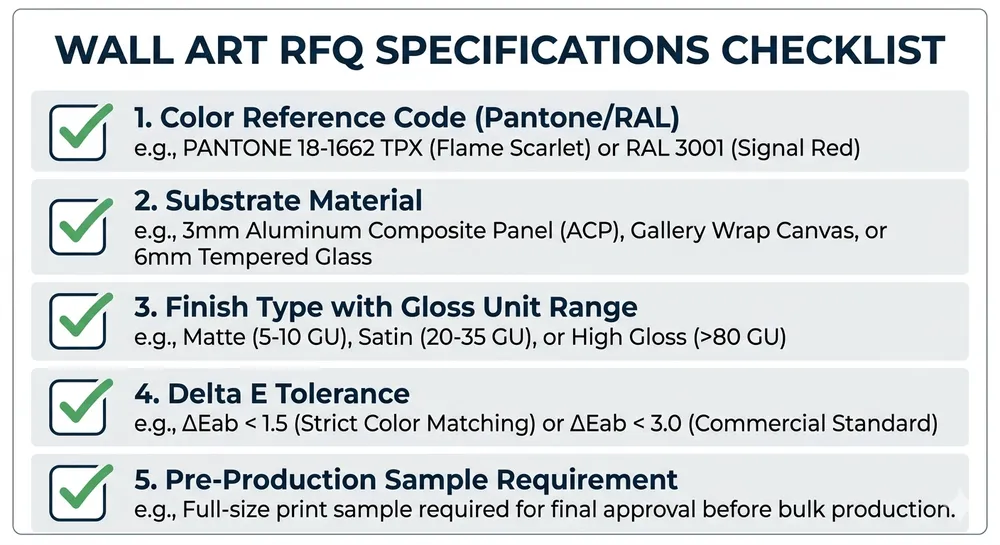
Sourcing Trade-offs: What to Specify in Your RFQ
When you're quoting either category, the variables that actually move your landed cost and risk profile are:
For abstract wall art:
- Substrate and frame spec (canvas over MDF vs stretched canvas — MDF is more stable for container shipping)
- Color profile: how many ink passes, what color gamut the printer runs
- Frame finish: whether the frame is wrapped in the print or has a separate molding profile
- Reorder consistency: ask for a color-match guarantee across production batches, not just the first run
For nature wall art:
- Color accuracy standard: ask specifically how color drift is controlled across a production run — what's the tolerance, how is it measured, and what's the remedy if a batch fails
- Design origin: original in-house design, licensed artwork, or public domain — get this in writing
- Seasonal MOQ: can your supplier run a 200-unit nature collection for a spring test, or do they require 500+ to justify the setup?
- Lead time relative to your seasonal window: a nature collection that ships in August misses the spring sell-through window entirely
We can run mixed-subject sample orders at 100 pieces minimum — abstract and nature in the same shipment — which is how most of our new US buyers test both categories before committing to a full production run. It's the lowest-risk way to read your own channel's response before you're sitting on 2,000 units of the wrong subject.
Scenario Verdicts: Three Buying Situations, Direct Answers
Situation 1: You're building a 12-month wall art program for a mid-size US retailer with 200+ doors. Abstract is your core. Plan 60–70% of your SKU count in abstract, with a nature/botanical refresh for spring (February–March delivery) and a coastal or landscape accent for summer. Don't carry nature SKUs as permanent planogram items — rotate them seasonally and clear them by August.
Situation 2: You're a distributor entering the home décor boutique channel for the first time. Start with nature. Boutique buyers respond to design specificity, and a curated botanical or landscape collection gives you a story to sell. Keep your first order small — 100–200 pieces across 4–6 SKUs — and test sell-through before scaling. Abstract will come into your mix once you understand which price points your boutique accounts support.
Situation 3: You're sourcing wall art for a hospitality FF&E project — 300+ rooms. Abstract, full stop. Specify a cohesive color palette across 2–3 abstract designs, confirm the supplier can hold color consistency across the full run, and make sure the frame profile is specified for wall-mount stability, not just retail display. Nature subjects in hospitality work as accent pieces only — don't build your core FF&E program around them.
What to Verify Before You Commit to Either Subject
The comparison above assumes your supplier can actually execute on the category. Here's what separates a supplier who can from one who can't:
Color consistency across a production run — not just sample-to-bulk, but batch-to-batch within the same order. Ask for their color control process in writing. If they can't describe it specifically, that's your answer.
Design ownership documentation — especially for nature subjects. Ask for the design origin for every SKU you're quoting. "Royalty-free" is not a sufficient answer. You want to know whether the design is original, licensed (with documentation), or public domain (with the source).
Retail compliance capability — if you're supplying Walmart, Wayfair, or Amazon, your supplier needs EDI capability, retail-ready packaging specs, and experience with those programs' compliance requirements. We've been in Walmart and Wayfair vendor programs long enough to know what gets a shipment rejected, and it's usually packaging and labeling, not the product itself.
Mixed-subject sampling — a supplier who can only run single-subject sample orders is limiting your ability to test your market efficiently. The ability to mix abstract and nature in a 100-piece sample order is a practical capability that matters for your buying process.
For a broader view of what's moving in US retail across both categories, see our Trending Wall Art Subjects analysis. If you're ready to explore specific SKUs, our Abstract Wall Arts and Nature Wall Arts category pages show current production-ready designs. The full Wall Arts by Style & Subject collection gives you the complete picture of what we run.
Frequently Asked Questions
Does abstract or nature wall art have better sell-through in US mass retail? Abstract consistently shows higher year-round sell-through in mass retail channels. Nature wall art performs strongly in spring and early summer but slows significantly in Q3–Q4. For a 12-month planogram, abstract carries less seasonal inventory risk.
What's the MOQ difference between abstract and nature wall art at wholesale? At Livewellcraft, both categories start at 100 pieces for standard models. The practical difference is that nature designs tied to seasonal collections may have shorter production windows — if you miss the booking deadline for a spring nature collection, you're waiting until the following year. Abstract reorders are available year-round without seasonal constraints.
How does color complexity affect unit cost for nature vs abstract wall art? Nature wall art — particularly high-detail botanical and floral prints — typically requires more ink passes and tighter color calibration, which adds to unit cost. The difference is usually $0.50–$2.00 per piece depending on design complexity and substrate. More importantly, nature prints carry higher reprint risk if color drift occurs during production, which is a cost that doesn't show up in the initial quote.
Can I order a mixed abstract and nature sample assortment before committing to a full run? Yes. We run mixed-subject sample orders at 100-piece minimum. Most new US buyers use this to test both categories with their own retail accounts before scaling. It's the most efficient way to read your channel's response without committing to a full production run of a single subject.
What design licensing risks should I watch for with nature wall art? Botanical illustrations, wildlife prints, and some landscape photography are frequently licensed artwork. If your supplier is using licensed designs without proper documentation, you carry the IP liability — including potential Amazon takedowns and retailer chargebacks. Ask for design origin documentation on every nature SKU you source. Original in-house designs eliminate this risk entirely.
Is abstract wall art a safer choice for hospitality and commercial projects? For core FF&E programs, yes. Abstract designs work across varied lighting conditions, don't date quickly, and don't require seasonal rotation — all of which matter when you're specifying 200+ rooms. Nature subjects work well as accent pieces in hospitality (lobby botanicals, coastal resort themes) but shouldn't anchor a large-scale commercial program.