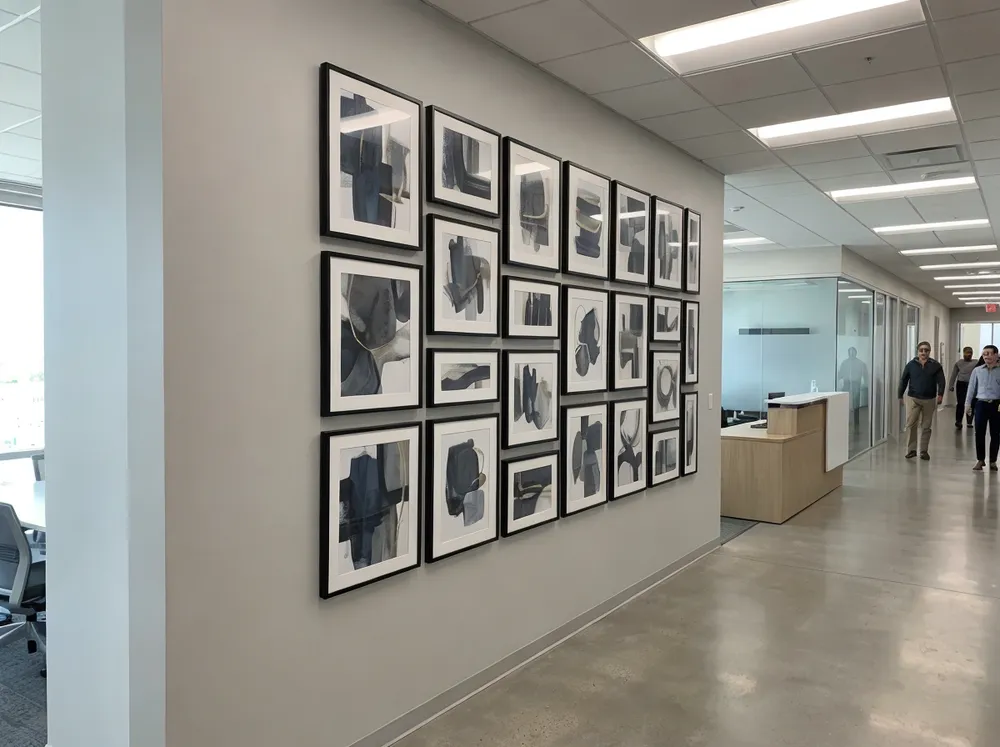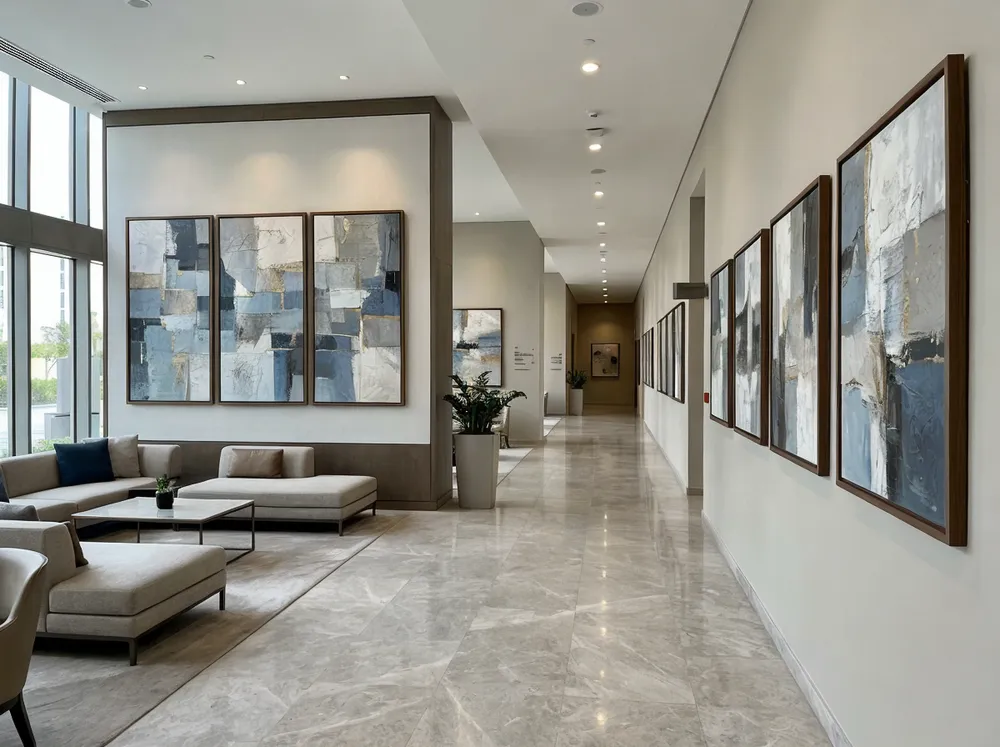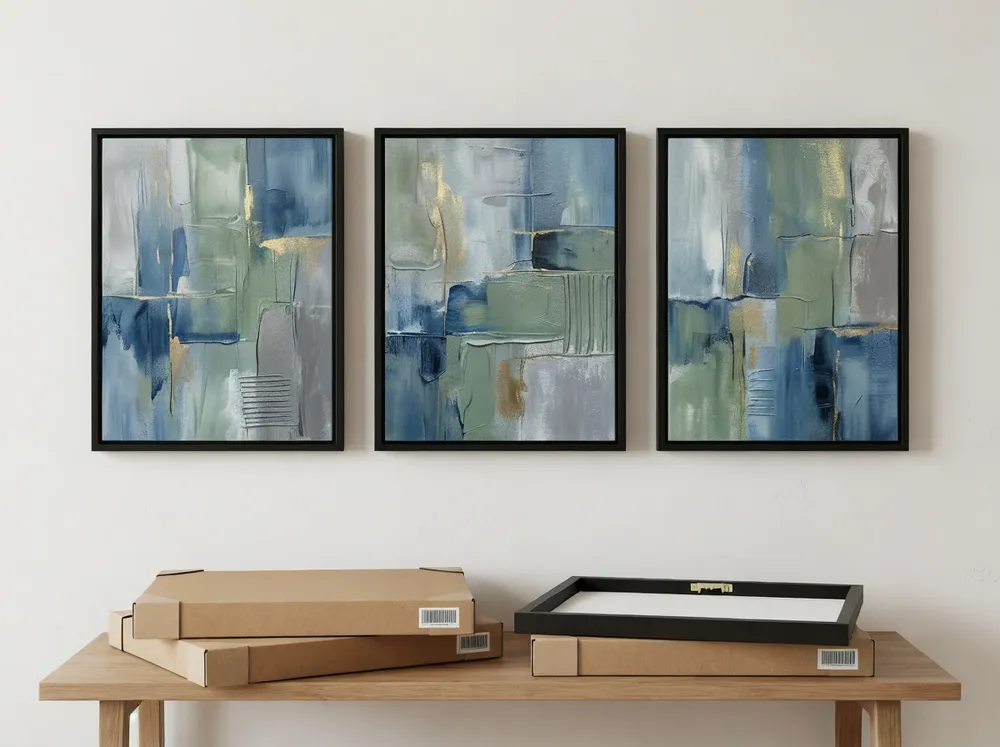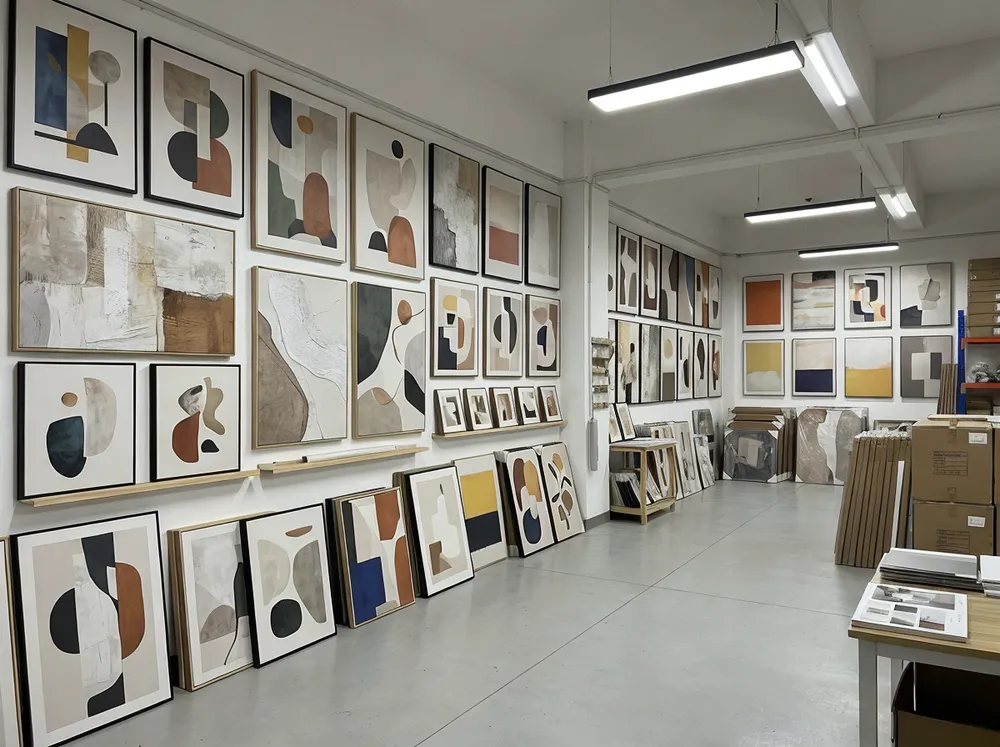
Wholesale abstract wall arts with hand-applied texture finishing, manufactured and shipped direct from our Dong Nai facility. Each piece goes through 2–3 rounds of hand-applied texture medium over a printed base composition — your buyers see original-looking art at production-scale pricing.
Understanding the commercial positioning of abstract wall art within a broader wall decor catalog.
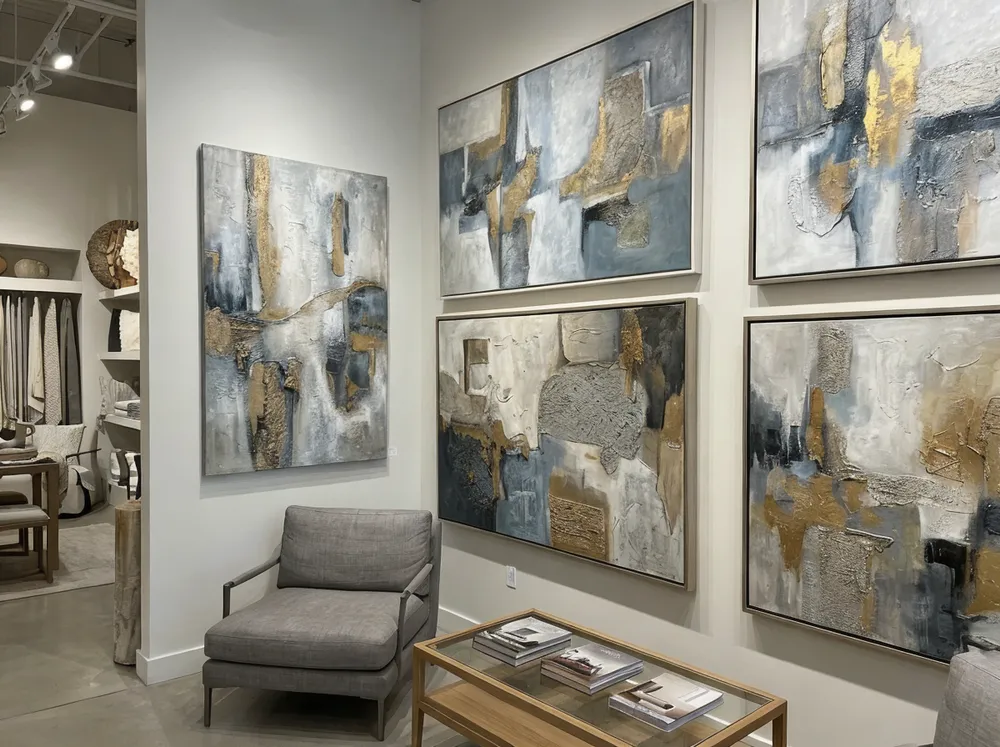
Abstract wall art is the margin category in a wall decor line. Where modern and nature subjects compete on volume and price, abstract pieces carry higher perceived value at retail — your end customers read hand-textured, color-rich compositions as original artwork, and they pay accordingly.
We see our distributors marking up abstract SKUs 30–50% above their modern equivalents at comparable production cost, because the texture and visual complexity justify a premium shelf price that clean-line modern pieces can't command.
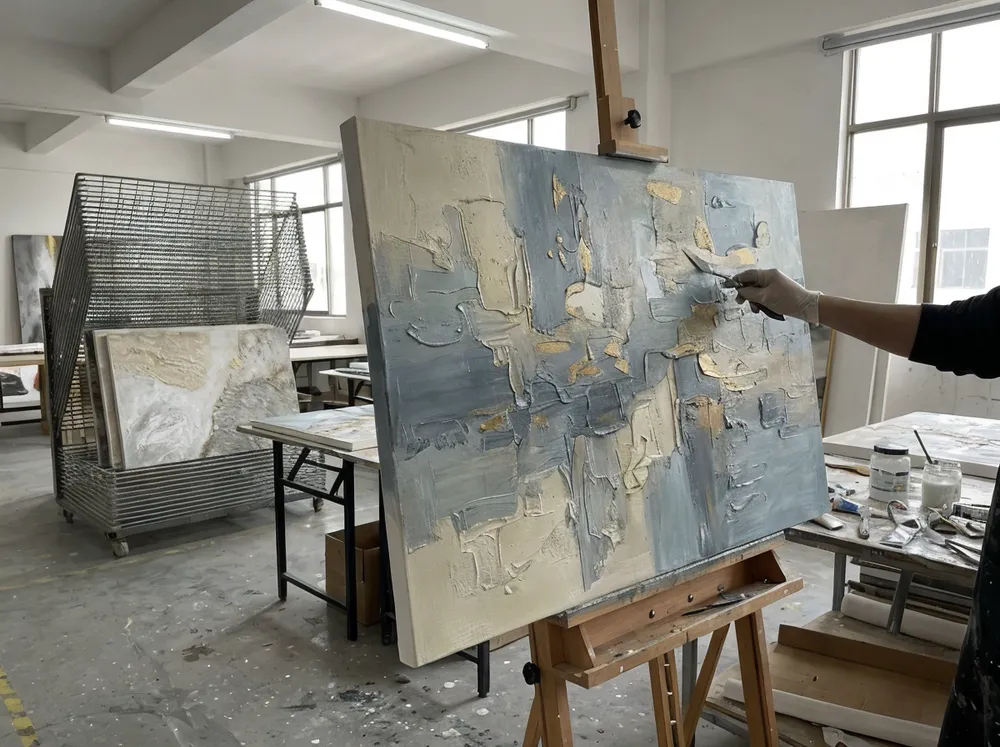
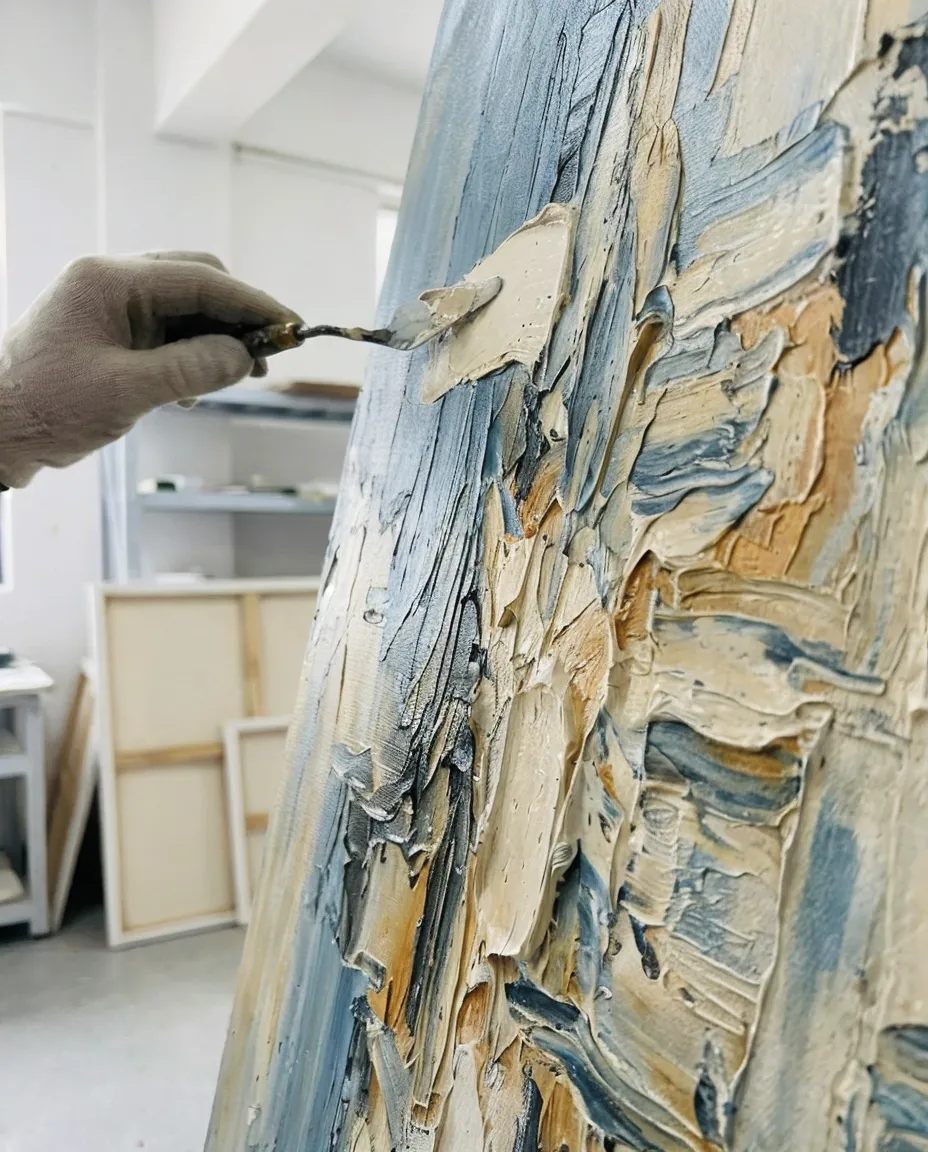
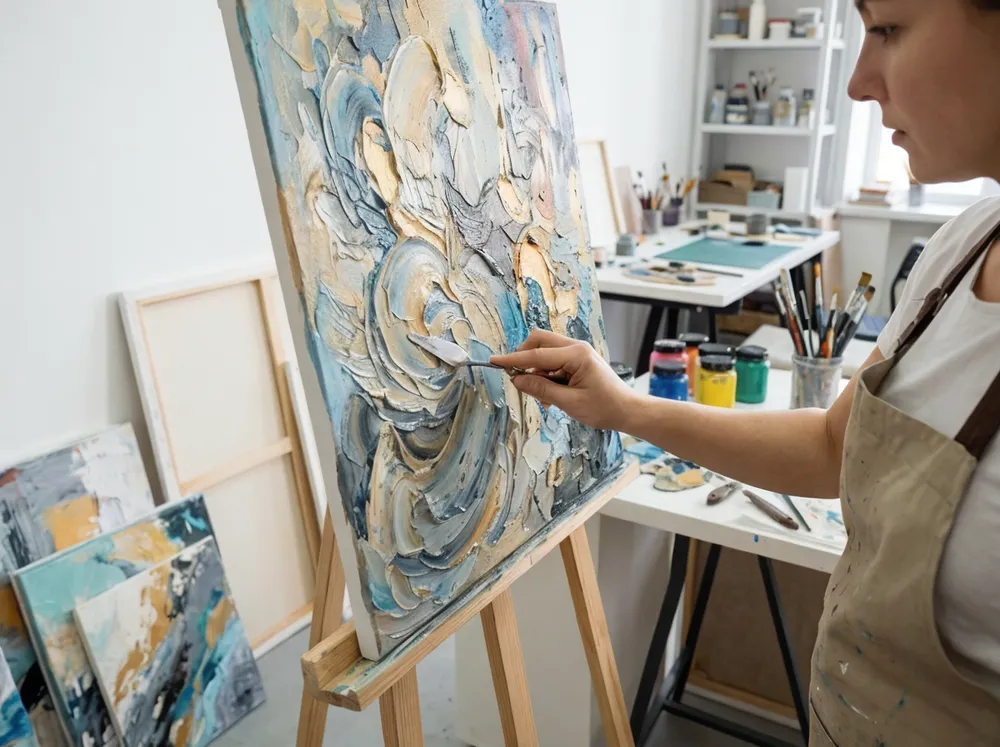
What makes our abstract wall arts distinct from the rest of our style catalog comes down to production method. Every abstract piece runs through 2–3 rounds of hand-applied texture medium over a printed base composition. The base layer is UV-printed for color accuracy and batch consistency, then our texture team builds up impasto, palette-knife strokes, or stippled surfaces by hand. The result looks and feels like gallery art — raised ridges, visible brushwork, surface depth — at a fraction of hand-painted cost. Your buyers get original-looking product; you get repeatable production at scale pricing.
If you're already carrying wall art and want to move your average selling price up without adding complexity to your supply chain, abstract is the category that does it.
If you're building a wall art line from scratch, abstract pieces make strong hero SKUs that anchor your catalog at the premium end.
This is the production step that separates our abstract wall arts from printed-flat alternatives, so it's worth understanding what actually happens on the floor.
We run a dedicated texture team — 12 workers whose only job is hand-finishing. They don't rotate onto other lines. Abstract texture work requires a specific touch: knowing how much medium to load on a palette knife, how to vary stroke direction so a 500-piece run doesn't look stamped, and how to manage drying time between layers so the topcoat bonds properly.
We trained this team over two years, and the consistency shows in our rejection rates.
We bought automated texture gun equipment, ran it for two months, and shelved it. Machine-applied texture looks machine-applied, and our QC team rejected nearly one in five pieces. The hand team went back on the line and the guns went into storage.
First layer goes down over the cured UV print — this is the structural texture that creates the raised surface profile. It dries for 4–6 hours depending on ambient humidity in the finishing room.
Second layer adds detail: finer strokes, color accents mixed into the medium, directional variation that gives each piece its individual character.
On heavier-texture designs — deep impasto or sculptural relief — a third layer builds additional dimension for maximum visual impact.
After the final texture layer cures, the piece gets a protective topcoat: matte, satin, or gloss depending on your spec. The topcoat seals the texture against handling damage during shipping and retail display, and it standardizes the surface sheen across the batch.
Hand-textured abstract art retails at 2–4× the price of flat-printed canvas in the same size.
Your production cost increase versus a standard printed piece is roughly 25–35%.
Your retail price ceiling jumps significantly higher while production costs increase modestly. That margin gap is the commercial case for this category.
| Parameter | Standard Options | Notes |
|---|---|---|
| Substrates | Canvas-over-board (12mm MDF), MDF panel (12–18mm), stretched canvas (pine stretcher bars, 2 cm or 3.8 cm depth) | Canvas-over-board is our default for textured abstract — the rigid backing supports heavy impasto without canvas sag |
| Standard sizes | 40×60 cm, 50×70 cm, 60×80 cm, 60×90 cm, 80×120 cm | Custom sizing available on any dimension up to 120×180 cm |
| Texture types | Impasto, palette-knife, stippled, layered relief, mixed stroke | Specify by reference image or choose from our texture sample set |
| Print base | Large-format UV print, color-matched to Pantone reference | Calibration pull every 200 units per batch |
| Topcoat finish | Matte, satin, gloss | Satin is the most popular for abstract — balances texture visibility with surface protection |
| Frame options | Floater frame (wood or metal), shadow-box frame, gallery-wrap (painted edges, no frame) | Floater in black or natural wood is the top seller across our abstract accounts |
| Hanging hardware | D-ring, sawtooth, wire (pre-installed) | Retail-ready with hardware mounted before packaging |
| Piece weight | 1.2–4.5 kg depending on size and substrate | Canvas-over-board runs heavier than stretched canvas at equivalent size |
For specifications outside this table — unusual substrates, oversized formats, or specific material certifications for your market — send us your requirements and we'll confirm feasibility within 48 hours.
Abstract isn't a niche. It's a high-margin segment that cuts across multiple commercial channels. Here's where our buyers are placing abstract wall art and why the numbers work.
This is where abstract earns its highest per-unit margin. Independent home stores and design showrooms position textured abstract pieces as statement art — retail prices run 3–5x above mass-market wall decor. Volume per SKU is lower (20–100 units per design), but your margin per piece more than compensates.
Interior designers order abstract art as part of room packages for residential clients, which means reorders follow project flow rather than seasonal cycles. If you serve this channel, abstract pieces let you offer gallery-grade product without commissioning original artwork or managing artist relationships.
Design firms specifying wall art for office interiors lean heavily on abstract. The subject matter is non-representational — no landscapes that clash with branding, no figurative work that risks being divisive — so it passes procurement approval easily.
Orders come in project batches: 50–300 pieces per office, consistent sizing, color-matched to the interior palette. We handle the color adaptation — you send a mood board or Pantone spec, our design team develops compositions that fit.
(One of our regular accounts supplies a commercial fit-out firm in Australia. They send us the architect's color palette for each project, and we produce matched abstract sets. Same workflow every time, different colors.)
Hotels and serviced apartments use abstract wall art in lobbies, corridors, and guest rooms. The appeal is the same as corporate — non-representational, universally appropriate — but hospitality runs at higher volume per project.
A 200-room hotel might take 400–600 pieces across room types, all from one style family with size variations. Your competitive advantage here is offering textured, original-looking art at a price point that fits hospitality budgets. Flat-printed canvas looks flat on the wall; hand-textured abstract reads as curated.
Abstract is a consistent performer on Amazon, Wayfair, and regional home goods platforms. It photographs well — the texture catches light in listing images, which drives click-through rates.
Distributors supplying these channels typically carry 10–20 abstract SKUs as part of a broader wall art assortment. Reorder cycles run 45–60 days on proven designs.
The key for this channel is retail-ready packaging with pre-installed hardware, barcodes, and branded inserts — we configure all of that before the container ships.
Tell us which segment you're targeting — we'll recommend designs and sizing that match.
Get Segment-Specific RecommendationsMost of our abstract wall art ships as OEM/ODM. You're not limited to a catalog — here's exactly what you can control.
Bring your own artwork, reference images, or a style direction. Our 12-engineer design team develops print-ready compositions and produces physical samples. You can also select from our existing abstract design library and modify colors, scale, or composition elements. Sample turnaround is 10–14 days for standard constructions, 18–21 days for heavy-texture or mixed-media pieces.
Any dimension up to 120×180 cm. We cut substrates and stretcher bars to your spec — no fixed-size constraint. Custom sizes don't carry a surcharge; they just need to be specified at order confirmation so we cut material accordingly.
Canvas-over-board, MDF panel, or stretched canvas. Each affects the piece's weight, rigidity, and price point. Canvas-over-board is our recommendation for heavy-texture abstract work because the rigid backing prevents canvas flex that can crack thick impasto over time. Stretched canvas works well for lighter texture profiles and keeps your unit cost lower. (If you're unsure which substrate fits your market, we'll sample the same design on two or three options so you can compare side by side.)
We match to Pantone references or your provided color spec. The UV print base is calibrated per batch, and the texture medium can be tinted to match or contrast with the base composition. If you're producing abstract art for a project with a defined interior palette, send us the color spec and we'll develop matched compositions.
Floater frames in wood or metal, shadow-box frames, or frameless gallery-wrap with painted edges. Frame finish options include natural wood, black, white, walnut stain, gold, and silver. Custom frame profiles are possible on orders above 300 pieces — below that, the tooling cost for a new profile doesn't justify the per-unit economics.
Standard export packaging, retail shelf-ready with barcodes and inserts, or custom branded packaging with your logo and product information. We handle UPC/EAN labeling, hanging hardware pre-installation, and channel-specific compliance labeling for major retail programs.
| Customization | MOQ Impact | Lead Time Impact |
|---|---|---|
| Color/palette change on existing design | No change (100 pcs) | +0 days |
| New custom design development | No change (100 pcs) | +10–14 days for sampling |
| Custom sizing | No change (100 pcs) | +0 days |
| Custom frame profile | 300 pcs minimum | +7–10 days for tooling |
| Custom branded packaging | 200 pcs minimum | +5–7 days for print setup |
| Heavy texture (3-layer impasto) | No change (100 pcs) | +3–5 days production time |
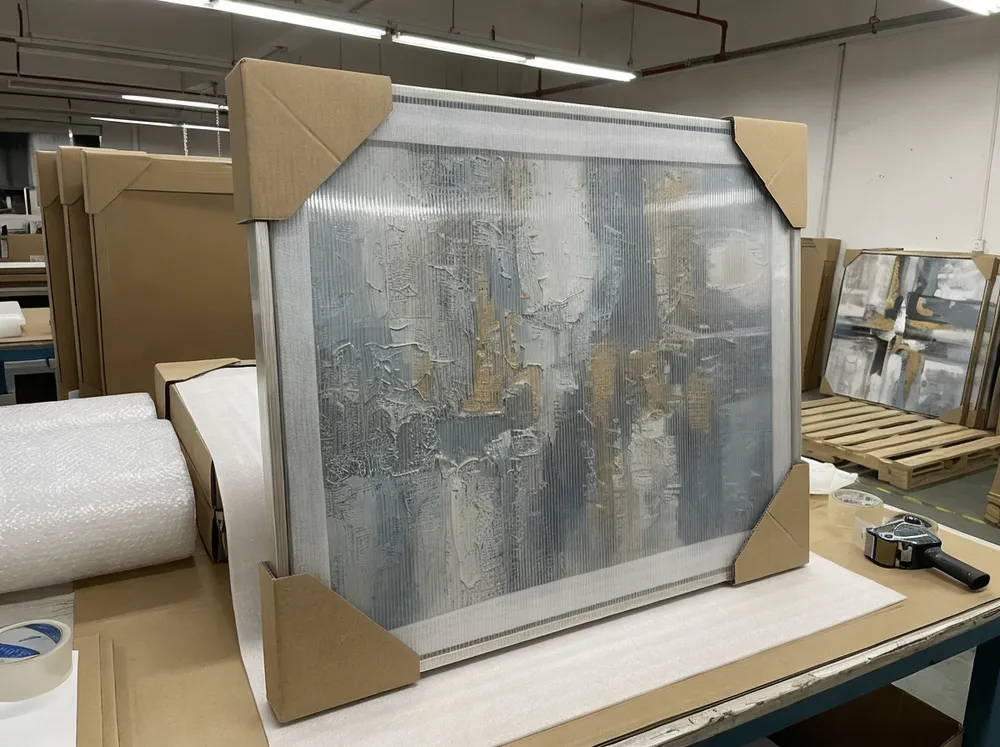
Texture adds a shipping consideration that flat-printed wall art doesn't have. Raised surfaces are vulnerable to compression damage if packaging isn't designed for them. We've solved this through trial and a few expensive lessons.
Each abstract piece gets a foam-faced separator sheet over the textured surface — not just poly-wrap, which can press into wet-look topcoats and leave marks. Corner protectors go on all four edges, then the piece slides into a corrugated carton sized to the specific dimensions with foam inserts preventing movement. For heavy-texture pieces with deep impasto, we add a rigid face shield between the texture surface and the carton wall.
Breakage and damage rate on textured abstract shipments
Breakage rate for flat canvas (baseline comparison)
A standard 40HQ container loads 600–900 abstract pieces depending on size mix and frame configuration. Framed pieces take more cube than gallery-wrap, so your container utilization varies.
We provide loading plans with your order confirmation so you can calculate landed cost accurately before committing.
Canvas-over-board uses canvas adhered to a rigid 12mm MDF panel. It supports heavy texture without flex — thick impasto and sculptural relief stay stable over time because the substrate doesn't bend. Stretched canvas uses traditional pine stretcher bars and is lighter, but heavy texture applications can cause the canvas to sag or the medium to crack at stress points over months. We default to canvas-over-board for abstract pieces with medium to heavy texture. For light-texture or flat abstract prints, stretched canvas works fine and saves you roughly 15–20% on unit cost.
The UV-printed base layer handles color consistency — we calibrate to Pantone references and pull verification prints every 200 units. The hand-applied texture is where variation naturally occurs, and we manage it through our dedicated 12-person texture team working from standardized technique guides for each design. Every piece gets a visual QC check against a master sample before topcoat application. You'll see slight variation in stroke detail from piece to piece — that's intentional and desirable, since it's what makes each unit read as hand-finished rather than mass-produced. What stays consistent is the overall texture density, color palette, and surface profile.
100 pieces for standard models using existing designs. Custom designs, color modifications, and custom sizing all hold at the same 100-piece MOQ. Custom frame profiles require 300 pieces minimum due to tooling setup. If you're testing the category, we recommend starting with a 5–10 piece sample set across different designs and substrates before committing to a production order.
Yes — most of our abstract volume ships as OEM/ODM. Send your artwork files, reference images, or even a style direction with a target price point. Our design team develops compositions, prepares print-ready files, and produces physical samples within 10–14 days. Your branding goes on packaging, labels, and hanging hardware cards. We don't retain rights to your custom designs.
Our facility carries ISO 9001:2015, with SGS testing reports and CE marking available. BSCI audit compliance covers social responsibility requirements for European retail. For channel-specific requirements — California Prop 65, REACH, or retailer chemical compliance programs — we coordinate third-party testing and provide documentation with your shipment. If you're supplying a major retailer with specific compliance requirements, send us the spec sheet and we'll confirm what testing is needed.
Standard abstract pieces with 2-layer texture add approximately 2–3 days to production versus flat-printed canvas, primarily for drying time between layers. Heavy 3-layer impasto adds 3–5 days. On a typical 1,000-piece order, expect 25–30 days total production for standard texture, 30–35 days for heavy texture. These timelines assume existing designs — new custom design development adds 10–14 days upfront for sampling and approval.
If you're adding abstract wall art to your line or looking for a more reliable abstract wall arts supplier, the fastest path is to send us what you're working with — reference images, target sizes, volume estimates, and your target market. We'll come back with a design proposal, substrate and texture recommendations matched to your price point, and unit pricing at your volume tier. Most quotes go out within 48 hours.
Already have production-ready artwork? Send the files directly to allenliu@livewellcraft.com with your quantity and packaging requirements. We'll confirm production feasibility, timeline, and pricing in one response.