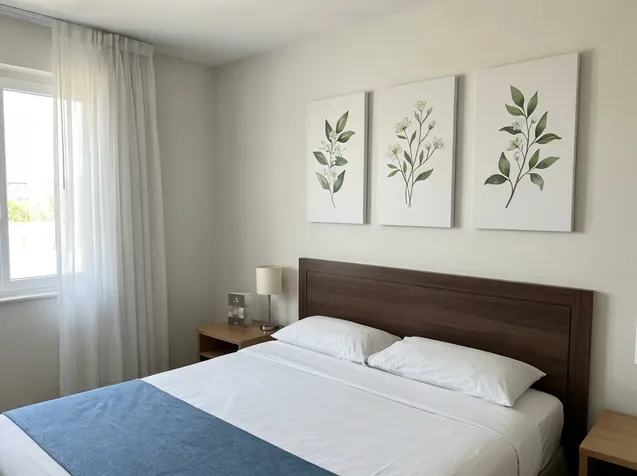
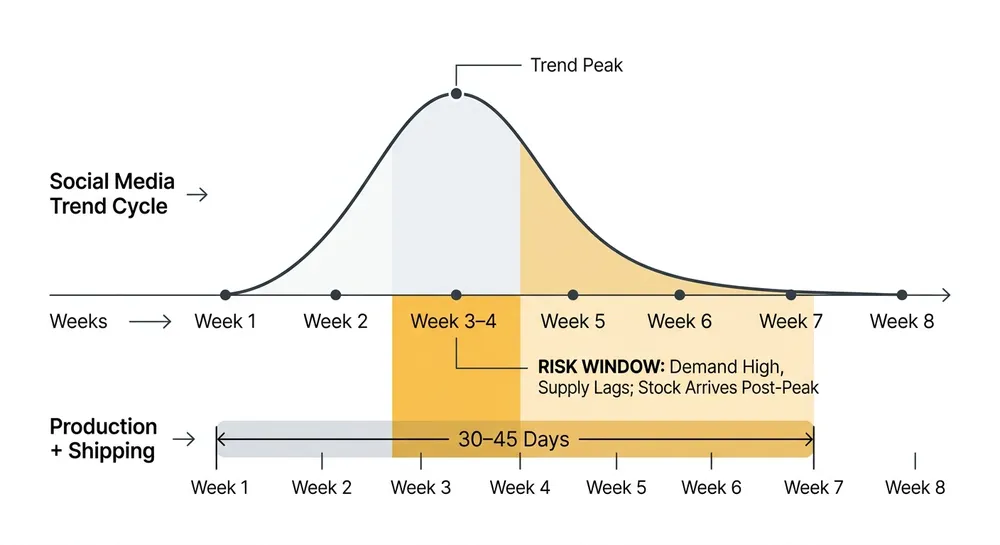
The inventory problem usually shows up about six weeks after the order ships. A cottagecore print trend peaked on TikTok while your container was still on the water. By the time it clears customs and hits your warehouse, the algorithm has moved on. You're sitting on 500 units of something that was selling at $38 retail two months ago and is now getting marked down to clear.
This isn't a trend-reading failure. It's a sourcing structure failure. The mismatch between a 2–6 week social media trend cycle and a 30–45 day production-plus-shipping window is real, and most generic sourcing guides don't address it because they're written by people who've never had to manage a reorder against a trend shelf life.
This guide walks through how we approach it from the factory side — and how buyers who structure their orders correctly can stay close enough to the trend curve to protect their margins.

Step 1: Separate Durable Aesthetics from Flash Trends Before You Spec Anything
Not every viral wall art style deserves a production run. The first decision — before substrate, before frame, before MOQ — is whether the aesthetic has enough shelf life to survive your lead time.
We track this across the accounts we supply, and the pattern is consistent. Trends that originate from a single viral post or a celebrity moment tend to collapse within 3–4 weeks. Trends that emerge from a broader aesthetic movement — a color palette shift, a design language spreading across multiple creators in different niches — tend to hold 3–6 months or longer.
Signals worth watching:
- Pinterest saves, not just views. Saves indicate intent to return. A trend with high saves-to-views ratio is being bookmarked for purchase consideration, not just scrolled past.
- Cross-platform presence. If the same aesthetic is appearing on TikTok, Instagram Reels, and Pinterest simultaneously, it has broader cultural traction than a single-platform spike.
- Search volume trend on Google. A rising search curve for terms like "dark academia wall art" or "coastal grandmother prints" confirms the aesthetic has moved from passive scrolling to active buying intent.
- Retailer adoption lag. When Target or Wayfair starts listing a style, the trend is already 4–6 months old. That's your signal it's entering the commodity phase — margins compress, but volume is reliable.
(We've seen buyers chase the Wayfair adoption signal and wonder why their margins are thin. By that point you're competing on price, not trend timing.)
The practical split: aesthetics with 3+ months of cross-platform traction are worth a standard production run. Aesthetics under 6 weeks old with single-platform origin should go through a low-MOQ test run first — 100–200 pieces — before you commit to a full container.
Step 2: Translate the Visual Trend into a Production Spec
This is where most sourcing conversations break down. A buyer sends a Pinterest screenshot and asks for "something like this." That's not a spec — it's a reference. The factory needs to know substrate, print method, frame material, and finish before it can quote accurately or produce consistently.
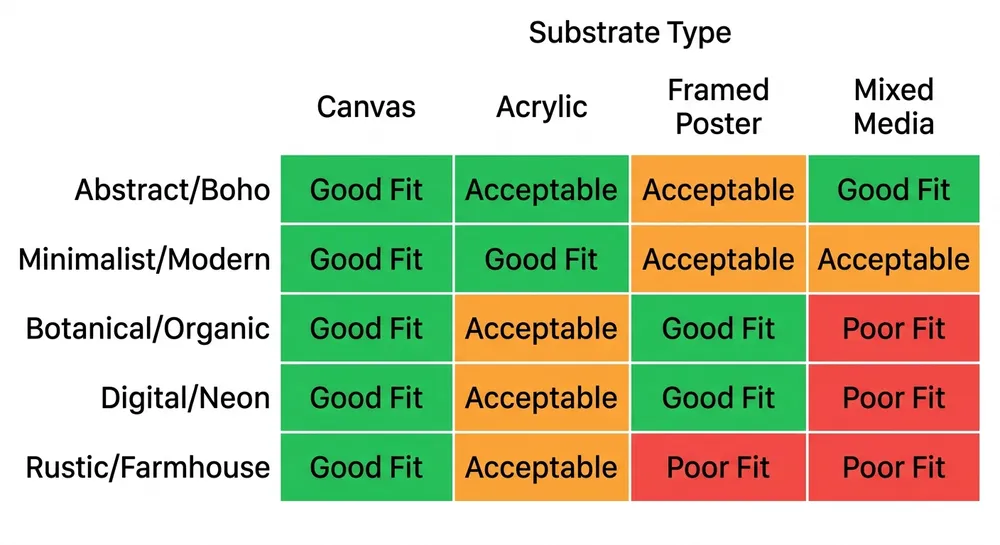
The aesthetic style usually points toward the right substrate if you know what to look for:
Canvas prints work for organic, painterly aesthetics — abstract expressionism, botanical illustration, boho. The texture reads as handcrafted, which is part of the perceived value. Canvas also ships flat-rolled for lower freight cost, which matters if you're testing a trend with a small run. The trade-off: color saturation is lower than acrylic, and the look doesn't suit minimalist or high-gloss aesthetics.
Acrylic face-mount prints suit clean, high-contrast aesthetics — modern minimalist, architectural photography, neon-palette digital art. The depth and gloss read as premium. They're heavier and more fragile in transit, so packaging cost goes up. We typically recommend acrylic for styles where the buyer is targeting a $60+ retail price point — the perceived quality justifies the freight premium.
Framed poster prints are the workhorse format for trend-driven retail. Fast to produce, easy to swap the print without retooling the frame, and the frame itself can carry aesthetic weight. A thin black metal frame reads differently than a chunky MDF frame with a distressed white finish — both are "aesthetic wall art" but they serve completely different style categories.
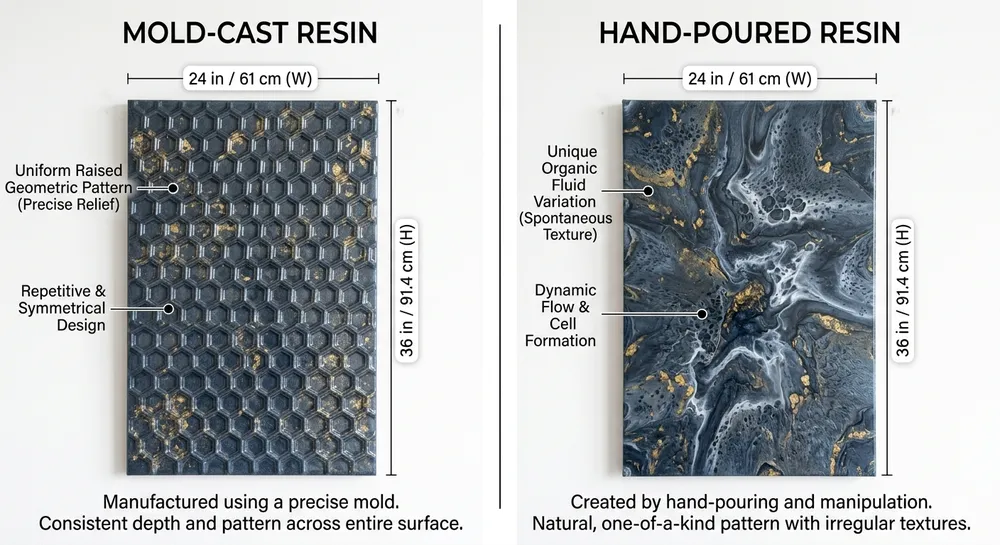
Mixed-media and layered formats — think resin-coated prints, wood-mounted art, or metal-panel prints — are slower to produce and carry higher unit cost, but they're defensible margin items. Competitors can't undercut you on a format that requires more production steps.
Step 3: Choose Frame Materials That Match the Aesthetic — and Your Reorder Speed
The frame is where trend-matching gets expensive if you're sourcing it separately. If your print supplier and your frame supplier are different factories, you're adding 1–2 weeks of coordination time and a second MOQ commitment every time you want to switch styles.
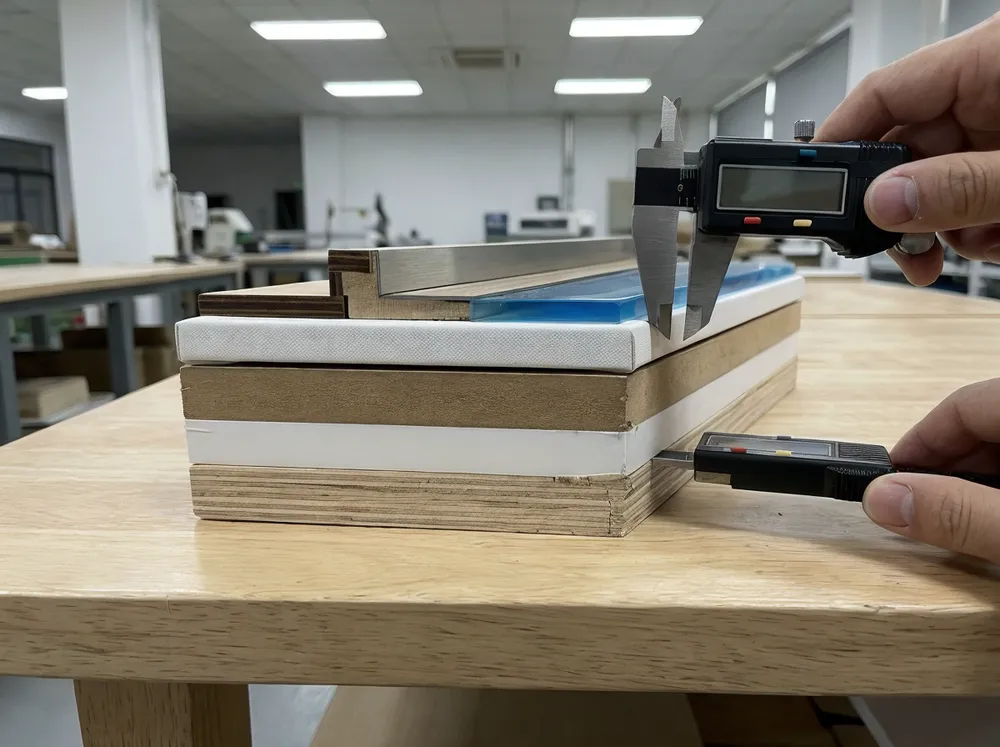
We mold frames in-house — MDF, metal, resin, and wood profiles — which means when a buyer needs to shift from a thin gold metal frame (which was everywhere in 2023) to a chunky natural wood frame (which is what the organic/cottagecore aesthetic calls for now), we can do that without the buyer sourcing frames from a separate vendor.
The material choice affects more than aesthetics:
| Frame Material | Best Aesthetic Fit | Weight Impact | Reorder Flexibility |
|---|---|---|---|
| Thin metal (black, gold, silver) | Minimalist, modern, gallery-style | Low | High — standard profiles |
| MDF with painted finish | Farmhouse, transitional, maximalist | Medium | High — finish can be changed |
| Natural wood | Organic, cottagecore, Japandi | Medium-high | Medium — grain variation |
| Resin/composite | Ornate, vintage, maximalist | Medium | Medium — tooling required |
For trend-driven sourcing, thin metal and painted MDF frames give you the most reorder flexibility because they're standard profiles. If you're chasing a specific aesthetic that requires a custom profile — say, a fluted wood frame for a Japandi-inspired line — budget 2–3 weeks for profile development on the first order. After that, the tooling is set and reorders move at standard speed.
(Our engineering team has turned around custom frame profile samples in under a week for buyers who came in with clear reference images and dimension specs. The bottleneck is usually the approval process on the buyer's side, not production.)
Step 4: Structure the Order to Limit Trend Risk
The single most expensive mistake in trend-driven wall art sourcing is committing a full container to a style before you've validated sell-through. A 40-foot container of aesthetic wall art is roughly 800–1,200 units depending on format. If the trend fades before you've moved 60% of that, you're discounting to clear and your margin is gone.
The order structure that works:
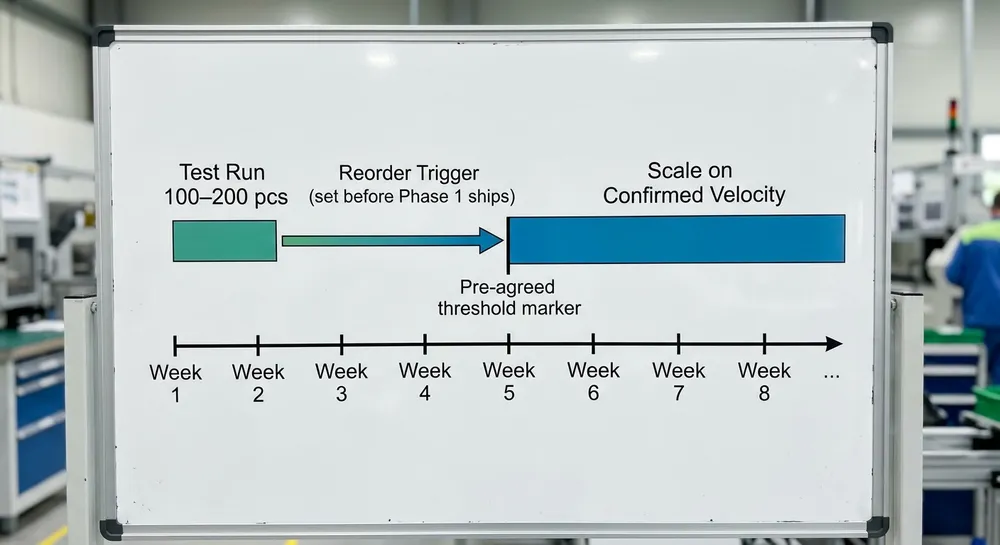
Phase 1 — Test run at 100–200 pieces. This is enough to put product in front of your buyers or onto your platform and measure real demand. At 100-piece MOQ, you're not betting the category on a trend signal — you're buying data. We run standard models at 100-piece MOQ specifically because buyers need this flexibility.
Phase 2 — Reorder trigger set before Phase 1 ships. Before your test run leaves the factory, agree on the reorder threshold with your supplier. If you sell 60% of Phase 1 within 3 weeks of receipt, you trigger Phase 2 immediately. This compresses the gap between sell-through signal and restock arrival.
Phase 3 — Scale only on confirmed velocity. A full container order makes sense once you have 2–3 reorder cycles of data. By that point, you know the style has staying power and you can negotiate better unit pricing on volume.
The math on this is straightforward: three smaller orders with one markdown event costs less than one large order with a 30% clearance event. The per-unit cost on small runs is higher, but the total landed cost including markdowns usually favors the phased approach for trend-driven styles.
Step 5: Use a Vertically Integrated Factory to Compress Lead Times
The 30–45 day production window that creates the trend-timing problem is largely a coordination problem, not a manufacturing problem. When glass cutting, silvering, frame molding, print production, and final assembly happen at different facilities, each handoff adds days. A delay at the frame supplier holds up the whole order.
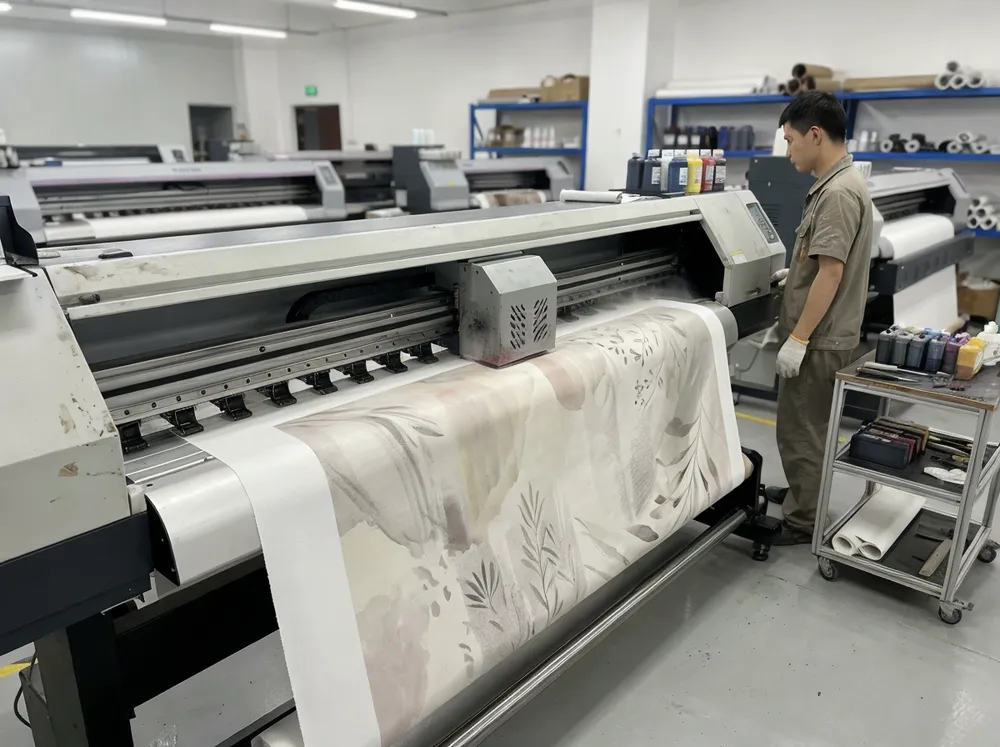
We run all of this under one roof on a 12,000 m² facility — glass cutting, frame molding, print production, assembly, and packaging. Six production lines, 150 people, 400,000 pieces a year. When a buyer needs to switch a frame finish mid-run because a trend shifted, we don't have to call a separate supplier. We adjust internally.
What this means for lead time in practice:
- Standard reorders on existing SKUs: 15–20 days production, depending on queue position
- New style with existing frame profile: 20–25 days
- New style with custom frame profile: 25–35 days (includes profile development and sample approval)
- Rush production on 6 lines: possible when a trend window is tight — ask us about lane allocation when you place the order
The 6-line structure matters here. A single-line factory has to finish one style before starting another. We can run different aesthetic styles on different lines simultaneously, so your cottagecore canvas order doesn't queue behind someone else's minimalist metal-frame run.
For buyers sourcing Aesthetic Wall Arts across multiple style categories, this parallel production capability is the difference between catching a trend window and missing it.
Common Mistakes That Cost Buyers Margin
These show up consistently across the accounts we work with. None of them are obvious until you've seen the outcome.
Over-committing to a single aesthetic. A buyer who goes all-in on one trend — say, dark academia — with a full container order is exposed if the trend fades or if a competitor floods the channel with the same style at lower price. Spreading across 2–3 aesthetics in a single order, even at lower quantities per style, gives you more sell-through options.
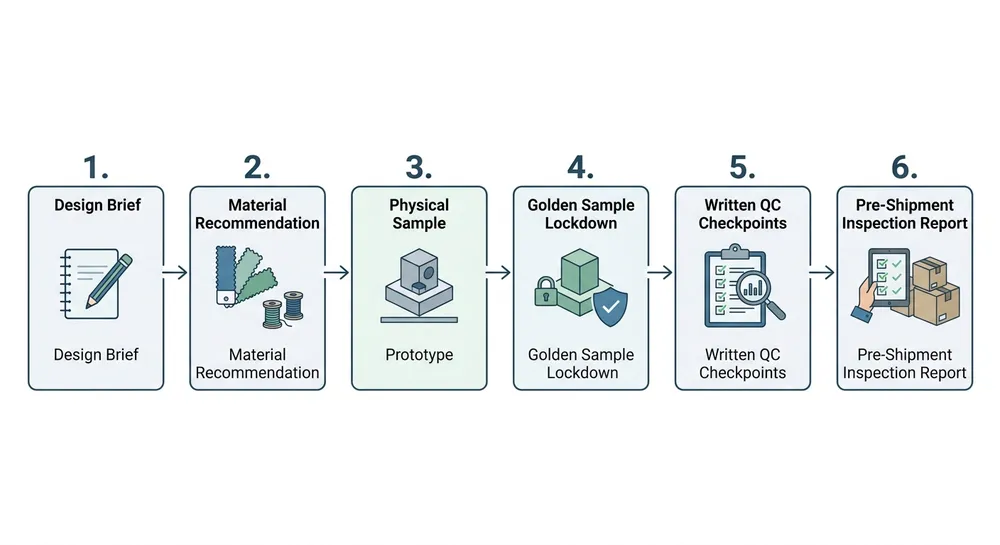
Skipping sample approval to save time. We understand the pressure to move fast on a trend. But skipping physical sample approval means you're approving color accuracy from a screen, and screens lie. A print that looks warm amber on your monitor can arrive looking yellow-orange on canvas. Color accuracy across substrates is one of the harder problems in wall art production — we run color calibration checks on every print run, but the buyer still needs to approve a physical sample against their reference before bulk production starts.
Ignoring print color accuracy across substrates. The same artwork file will render differently on canvas, acrylic, and coated paper. If you're running the same design across multiple formats, request substrate-specific color proofs. This adds a few days to the sample process but prevents the most common bulk production complaint we see.
Treating MOQ as a fixed constraint. Some factories won't move below 500 pieces. That's a factory structure problem, not an industry standard. If your supplier's minimum is forcing you into larger commitments than your trend confidence justifies, the supplier structure is adding risk to your business.
Not setting reorder triggers before the first order ships. By the time your Phase 1 inventory arrives and you've had two weeks of sell-through data, you've already lost 2–3 weeks of potential reorder lead time. The reorder conversation needs to happen before the first container loads.
RFQ Checklist: What to Include When Sourcing Trend-Driven Aesthetic Wall Art
A complete RFQ gets you an accurate quote faster and avoids the back-and-forth that eats days off your trend window.
Include:
- [ ] Visual references — Pinterest board, TikTok screenshot, or product photo showing the target aesthetic
- [ ] Substrate preference — canvas, acrylic, framed poster, mixed media, or open to recommendation
- [ ] Frame material and finish — or note "open to recommendation based on aesthetic"
- [ ] Target dimensions — at minimum, a size range (e.g., 16×20" to 24×30")
- [ ] Target quantity — Phase 1 test run quantity and anticipated Phase 2 scale quantity
- [ ] Target retail price point — helps us spec the right format and material combination for your margin
- [ ] Required certifications — CE, BSCI, or other compliance requirements for your market
- [ ] Packaging requirements — retail-ready, master carton only, or specific retail compliance (EDI, Walmart/Wayfair standards)
- [ ] Timeline — when you need product in-warehouse, working backward from that date
We supply buyers across North America, Europe, Australia, and Southeast Asia with wholesale aesthetic wall art across a range of styles and formats. ISO 9001:2015, SGS, CE, and BSCI certified — compliance documentation is available on request.
If you're working with a trend reference and want a technical proposal with pricing, Request Quote with your references and target quantities. We'll come back with substrate recommendations, frame options, and a production timeline within 48 hours.
For buyers who want to go deeper on print method and substrate selection for specific aesthetic styles, see Aesthetic Wall Art Trend Specs — it covers color accuracy, print method trade-offs, and substrate durability by style category.
If you're building a broader wall art program across multiple style categories, OEM/ODM Wall Arts covers custom frame profile development, private label packaging, and the full development process from concept to container. “`