Send us your specs or select from our existing catalog. 12 engineers, 6 production lines, and 18 years of custom mirror manufacturing handle the rest — from frame tooling to retail-ready packaging.
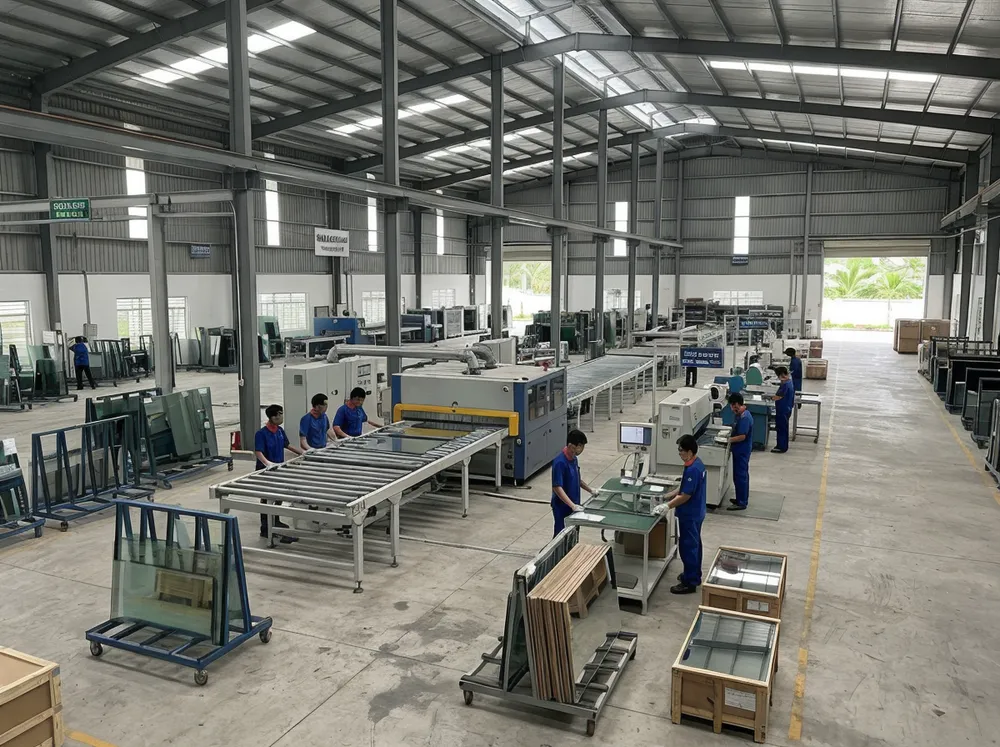
We build custom decor mirrors and wall arts for brands, distributors, and project buyers who need their own product — not someone else's catalog with a sticker on it. Our 12,000 m² facility in Dong Nai, Vietnam runs the full production chain in-house: glass cutting, silvering, frame molding, finishing, assembly, and packaging. 150 people, 6 lines, roughly 400,000 pieces a year shipping to North America, Europe, Australia, Southeast Asia, and the Middle East.
This page walks you through exactly how OEM and ODM collaboration works with us — what you can customize, where the production boundaries sit, and what the process looks like from your first email to a loaded container.
We run both models, and the right one depends on where you are in your product development.
You send us technical drawings, reference photos, or even a competitor sample you want to improve on. Our 12-person engineering team translates your concept into production-ready specs — frame profiles, glass configuration, finish details, hardware — and we build it. You own the design.
Best for:
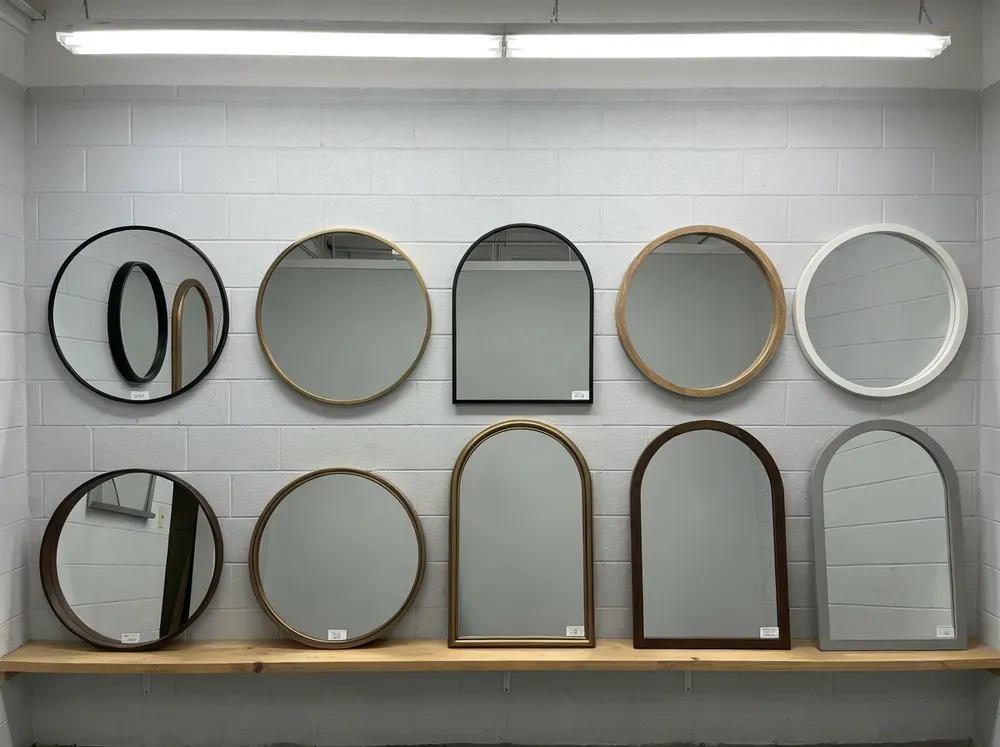
You select from hundreds of existing mirror and wall art designs across every frame material and shape category we produce. We apply your branding, adjust sizing or finish if needed, and ship under your label. Tooling already exists — no development lead time.
Best for:
Most of our long-term buyers start with ODM to test their market, then move into OEM once they know which styles sell. We see this pattern so often that we've streamlined the transition — your ODM order history tells us your market preferences, which shortens the OEM development cycle later.
Here's what you can specify on a custom decor mirror or wall art order — and where the practical limits sit.
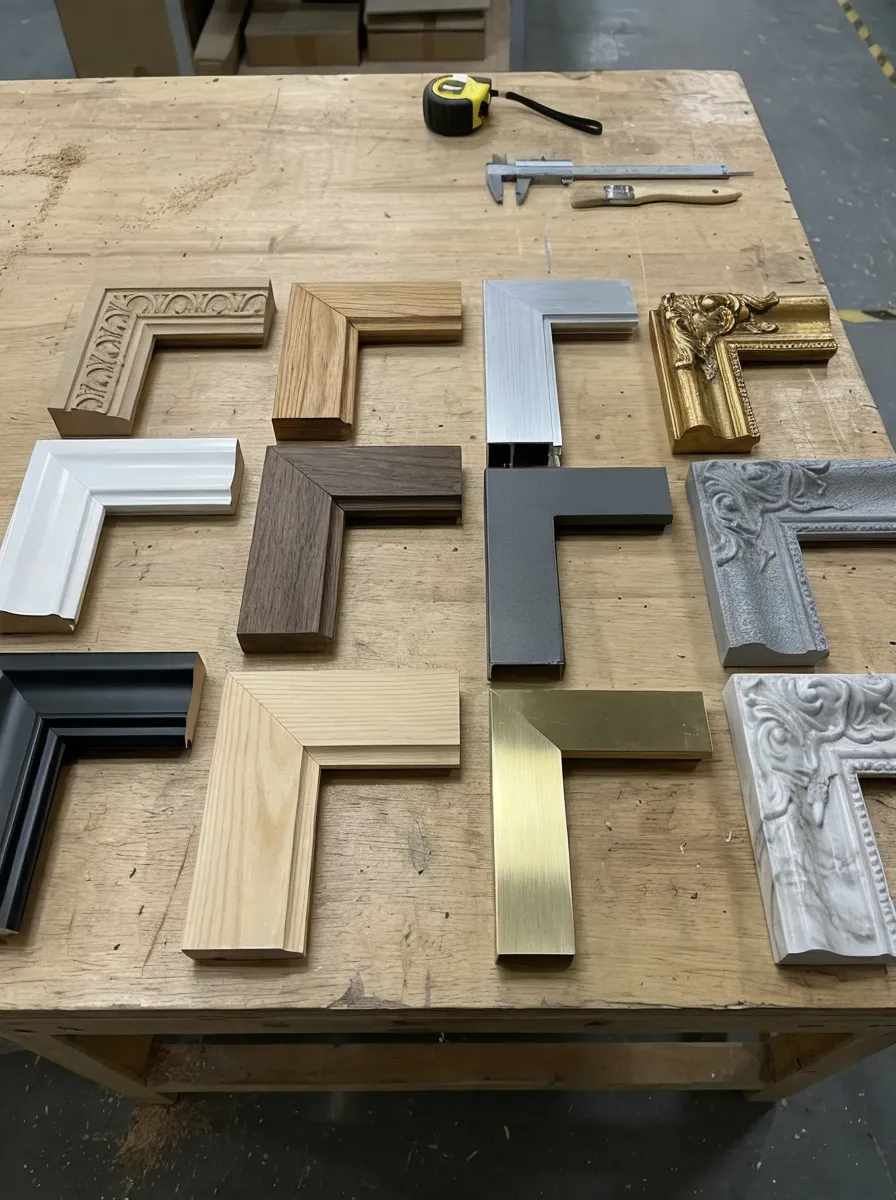
We mold frames in MDF, solid wood, metal, and resin. Each material has a different customization range:
| Material | What's Customizable | Typical Lead Impact |
|---|---|---|
| MDF | Profile shape, width, surface texture, any paint/lacquer finish | New profile mold: 7–10 days |
| Solid Wood | Species selection, profile shape, stain or paint finish | Depends on wood sourcing — common species in stock |
| Metal (Iron/Aluminum) | Profile shape, powder coat or electroplated finish, color | New bending die: 5–7 days |
| Resin | Sculptural detail, hand-painted or spray finish, texture | New casting mold: 10–14 days |
If you need a frame profile we haven't produced before, our engineers develop the mold in-house. You approve a CAD drawing before we cut anything, so there are no surprises on the sample.
Paint, lacquer, powder coat, electroplating, hand-applied patina, distressed finishes, gold/silver leaf. We match to Pantone or RAL codes, or we can color-match a physical sample you send.
Color consistency note: If you're targeting a specific retail planogram and need exact color consistency across a 3,000-unit run, send us the swatch early — some finishes need a test batch to lock in the formula.
This is where private label wall arts and mirror programs come together. We configure packaging to your channel:
We handle UPC generation if you need it, and our packaging engineers optimize carton dimensions for container loading efficiency — the goal is maximum units per 40' container, which directly reduces your landed cost per piece.
Here's how a custom decor mirrors order actually moves through our facility, step by step.
You send us your specs — drawings, reference images, a competitor product, or just a description of what you need. We come back with a detailed quotation that includes material breakdown, tooling costs (if any), unit pricing at your target volume, and packaging options. If you're working from an ODM selection, this step is faster because the specs already exist.
For OEM projects, our engineering team produces CAD drawings for your approval, then builds a physical sample. Most custom mirror samples take 2–3 weeks after drawing approval. ODM samples from existing molds ship within 5–7 days. You receive the sample, test it, and send feedback. We adjust and resample if needed — most projects close in 1–2 sampling rounds.
Once you approve the sample, we lock in the production spec sheet: materials, dimensions, finish codes, packaging configuration, labeling details, and shipping marks. This document becomes the reference standard for your entire production run and all future reorders.
Standard products on existing molds: 15–25 days. Custom products with new tooling: 25–35 days. Your order runs on a dedicated line — 6 lines mean we don't bump your schedule to accommodate another buyer's rush order.
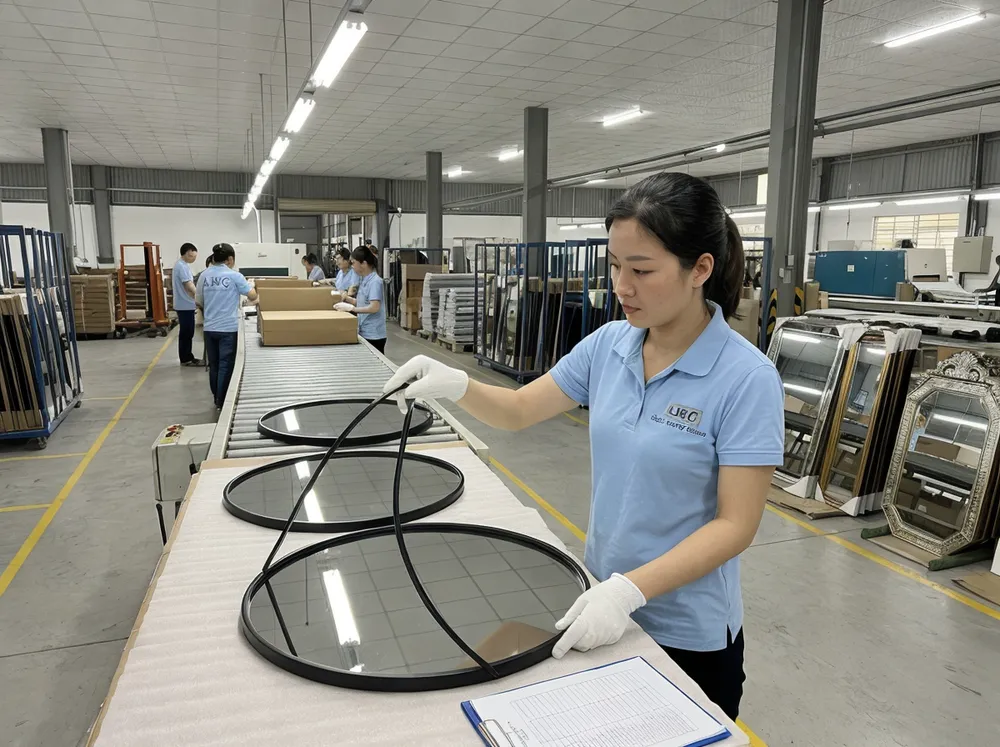
Our QC team inspects at three checkpoints: incoming materials, in-process assembly, and finished product. Every unit gets 100% visual inspection and silver coating adhesion testing before it packs.
Final packaging runs to your approved spec. We arrange third-party inspection if you require it — we're set up for SGS, BV, and TUV audits and can coordinate scheduling directly. Shipping documentation, packing lists, and commercial invoices follow standard export formats. We ship FOB from Vietnamese ports, and our logistics team coordinates with your freight forwarder on container loading and booking.
| Order Type | MOQ | Typical Lead Time |
|---|---|---|
| ODM existing design, your label | 100 pieces | 15–25 days |
| OEM existing mold, custom finish/size | 200 pieces | 20–30 days |
| OEM new mold/tooling required | 300 pieces | 25–40 days |
| Mixed SKU order multiple designs | 100 pieces per SKU | 25–35 days |
These ranges cover the majority of orders we handle. Actual lead times depend on finish complexity, material availability, and your inspection requirements. We confirm exact timelines when we quote.
The 100-piece MOQ on standard models lets you test a new SKU without a full-container commitment. For buyers building a private label wall arts program across multiple categories — metal, wood, mixed media — this means you can launch a curated collection without overcommitting inventory on any single design.
We sign NDAs before any proprietary design work begins. This is standard practice for us — a significant share of our output is OEM production for brands that sell under their own name, and those buyers need to know their product won't show up in someone else's catalog.
Mold ownership is straightforward: if you pay for custom tooling, the mold is yours. We store it at our facility for production convenience, but it doesn't get used for other buyers' orders. Design files, technical drawings, and product specifications stay confidential and are accessible only to the engineering and production staff assigned to your project.
"We've been running OEM programs for brands supplying Walmart, Wayfair, and Amazon for years — IP discipline isn't something we had to learn recently. It's built into how we operate."
Non-disclosure agreements signed before any proprietary design work begins. Your concepts stay confidential from day one.
Pay for custom tooling and the mold is yours. Stored at our facility for convenience, never used for other buyers' orders.
Design files, technical drawings, and product specifications accessible only to engineering and production staff assigned to your project.
Here's a composite example based on how many of our distributor partnerships develop — not a specific client, but a pattern we see regularly.
A home decor distributor in North America wants to launch a private label decorative mirror line covering living room, bedroom, and bathroom segments.
They start by selecting 8 designs from our ODM catalog — a mix of round and arch mirrors in metal and MDF frames.
Two frame finishes adjusted to match brand palette
Retail packaging with logo and UPC codes
200 pieces per SKU × 8 SKUs
Six months later, they've identified their three best sellers and want exclusive designs for those slots. We move into OEM: their team sends reference sketches, our engineers develop new frame profiles.
Within 4 weeks they have approved samples for three custom SKUs that no competitor can source from us. Reorders run on the same molds with a 15-day turnaround.
Low upfront investment, proven designs, quick market entry
Exclusive designs, defensible product line, competitor-proof sourcing
This is the most common path we see for buyers building a mirror or wall art program.
Our facility operates under ISO 9001:2015, with annual external audits. SGS third-party inspection reports are available on request. Products carry CE marking for European market compliance, and our BSCI audit covers workplace and social compliance standards — a procurement gate for most European and North American retail buyers.
Quality Management System
Annual external audits
Third-Party Inspection
Available on request
European Compliance
Market-ready certification
Social Compliance
EU & NA retail gate
On the production floor, quality control runs at three stages: incoming material inspection, in-process checks during assembly, and 100% finished product inspection covering visual defects, dimensional accuracy, and silver coating adhesion.
Raw materials verified before entering production
Quality gates during frame and glass assembly
Visual defects, dimensional accuracy, coating adhesion
We test adhesion on every batch because coating failure is the single most common quality issue in mirror manufacturing — and the most expensive one for you if it reaches your customer.
We work with AI, PDF, CAD (DWG/DXF), or high-resolution images. If all you have is a hand sketch or a photo of a competitor product, that's enough to start — our engineering team produces the technical drawings from your reference.
Yes. We require 100 pieces minimum per SKU for standard models, 200–300 for custom designs. Mixed-SKU orders are common — most buyers ship a curated collection rather than a single design.
We match to Pantone, RAL, or a physical swatch you provide. The first production batch includes a color approval step — we send photos and measurements before the full run proceeds. For finishes that are sensitive to batch variation (hand-applied patinas, distressed effects), we establish an acceptable range with you during sampling.
We do. We coordinate directly with SGS, Bureau Veritas, TUV, or any inspection agency you designate. Our QC team prepares the inspection-ready lot and handles scheduling so your inspector walks into an organized process, not a scramble.
ODM orders skip tooling costs entirely since the molds exist. OEM orders include a one-time tooling fee — typically recovered within the first or second production run depending on volume. Unit pricing depends on materials, finish complexity, and order quantity. We break all of this down in the quotation so you can compare landed costs clearly.
Send us your design files, reference images, or a description of what you're looking for — along with your target quantities and destination market. Our engineering team will come back with a technical proposal, pricing breakdown, and realistic production timeline, typically within 48 hours.
If you're not sure whether OEM or ODM fits your situation, tell us about your product line goals. We'll recommend the model that gets you to market with the right balance of speed, cost, and exclusivity.