Organic silhouettes, tinted glass, and frameless edge work — aesthetic decor mirrors manufactured for the catalogs and channels where the product photo closes the sale.
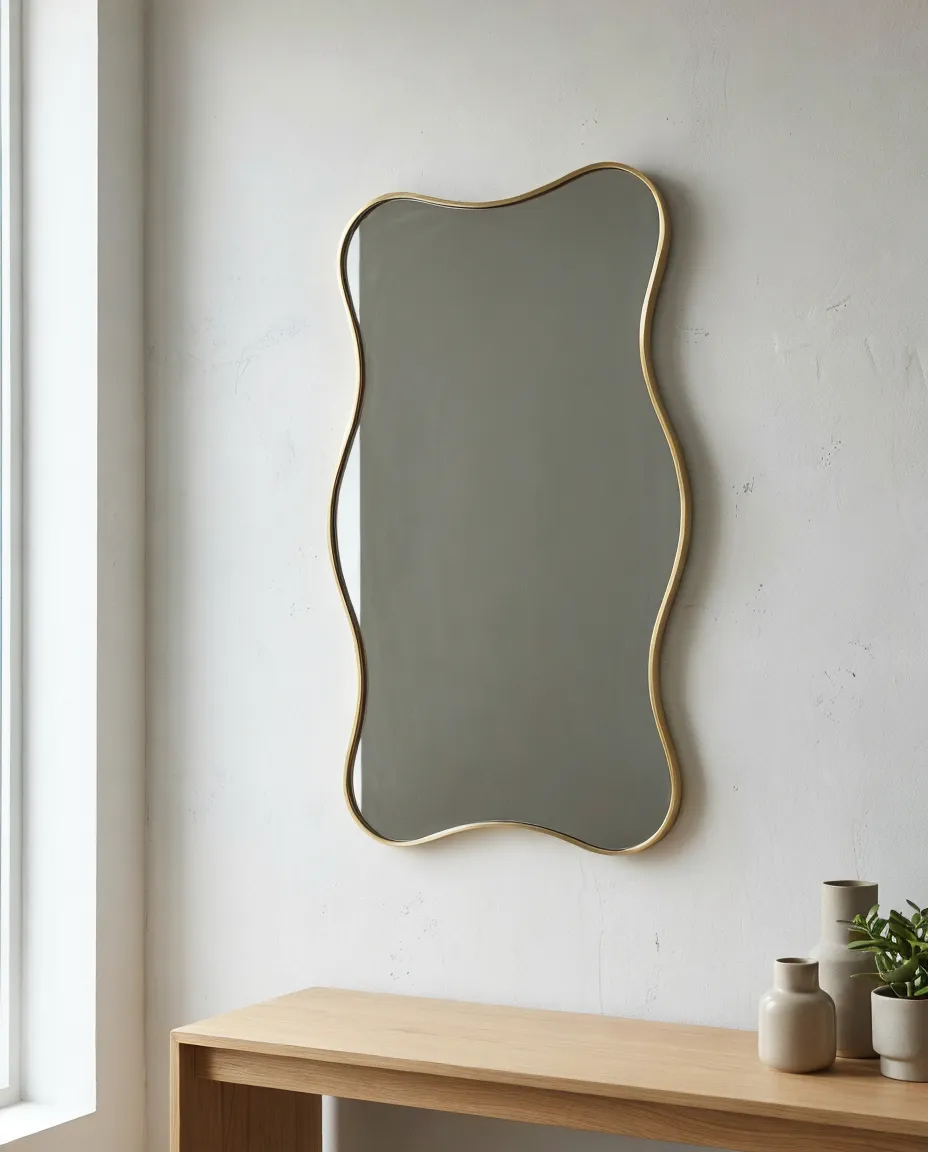
Livewellcraft produces aesthetic mirrors in wavy, asymmetric, and irregular shapes with clear, amber, smoke, and pink-tinted glass options. Frameless beveled edges or lightweight resin frames, 100-piece MOQ on catalog models, OEM shapes from 200 pieces. Every unit passes 100% visual inspection and silver adhesion testing before it ships.
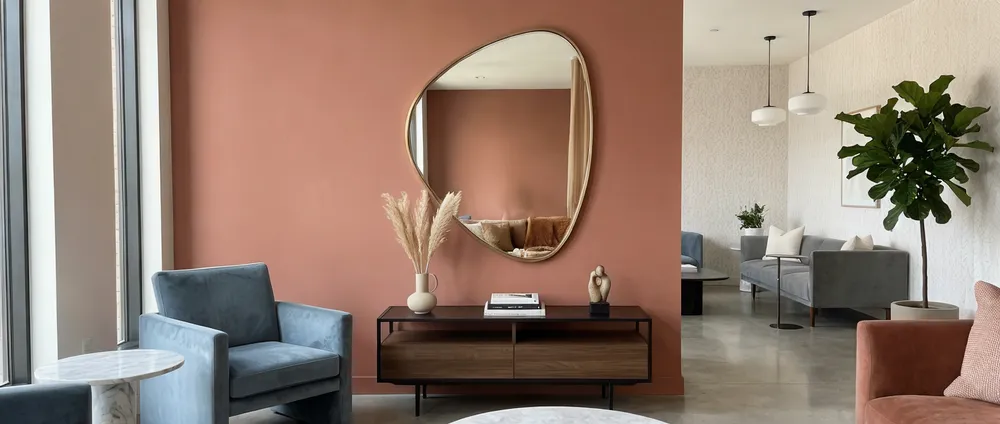
Aesthetic decor mirrors occupy the space between modern minimalism and decorative statement pieces. Where modern mirrors rely on clean geometry and neutral finishes, aesthetic mirrors break the grid — wavy edges, cloud shapes, asymmetric silhouettes, tinted glass that shifts the visual tone of a room. The designs are trend-responsive, driven by what performs on visual platforms and e-commerce product feeds.
For your sourcing strategy, this distinction matters commercially. Modern mirrors compete on price because the designs are interchangeable across suppliers — a round black-frame mirror is a round black-frame mirror. Aesthetic mirrors compete on design differentiation. Your product listing looks different from the next seller's, which means less direct price comparison from your customers and stronger margin protection on your end.
We've watched this play out across our buyer base: aesthetic SKUs consistently hold higher retail markups than modern equivalents at similar FOB cost, because the perceived value sits in the shape and finish, not in the raw material.
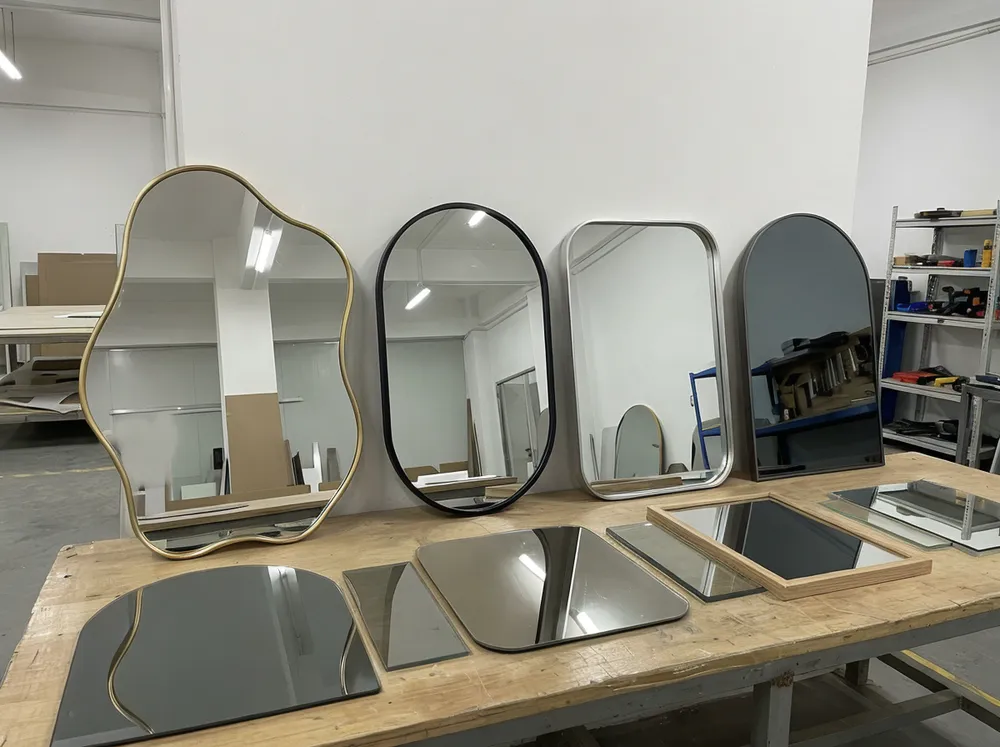
As an aesthetic decor mirrors manufacturer, we produce these designs across our standard catalog and through OEM development. Our 12-person engineering team has built tooling for over 40 aesthetic mirror profiles — wavy, blob, arch-with-irregular-edge, cloud, and freeform organic shapes. When you need a new silhouette, we're adapting proven tooling rather than engineering from zero, so your sampling cycle stays short.
Unique silhouettes mean your listing stands apart from competitors sourcing generic shapes.
Less direct price comparison from customers translates to stronger retail markups.
Value sits in shape and finish, not raw material — customers pay for the aesthetic.
Existing tooling means faster sampling when you need a new silhouette.
Specifications for our aesthetic mirror line. For the full category-wide specification envelope across all six style lines, see Decor Mirrors by Style.
| Parameter | Aesthetic Mirror Specification |
|---|---|
| Mirror glass thickness | 4mm float glass standard; 3mm available for small formats under 400mm |
| Silvering process | Copper-free silver coating (EU-compliant), multi-layer protective backing |
| Glass treatment options |
Clear
Amber tint
Smoke tint
Pink tint
Antiqued/distressed
|
| Frame configurations | Frameless with polished or beveled edge; lightweight resin frame; slim metal wire frame |
| Frame finishes |
Matte white
Matte black
Gold-tone
Brushed brass
Natural resin tone
|
| Available shapes | Wavy, asymmetric, cloud, blob, irregular arch, organic round, freeform |
| Size range | 300mm–900mm for accent/statement wall mirrors; up to 1500mm for full-length formats |
| Hanging hardware | D-ring, French cleat, or keyhole — selected based on mirror weight and your market's wall type |
| Weight range | 1.5 kg (small frameless accent) to 12 kg (full-length resin-framed) |
| Packaging | E-commerce mail-order ready or retail shelf-ready with barcode, insert, and color box |
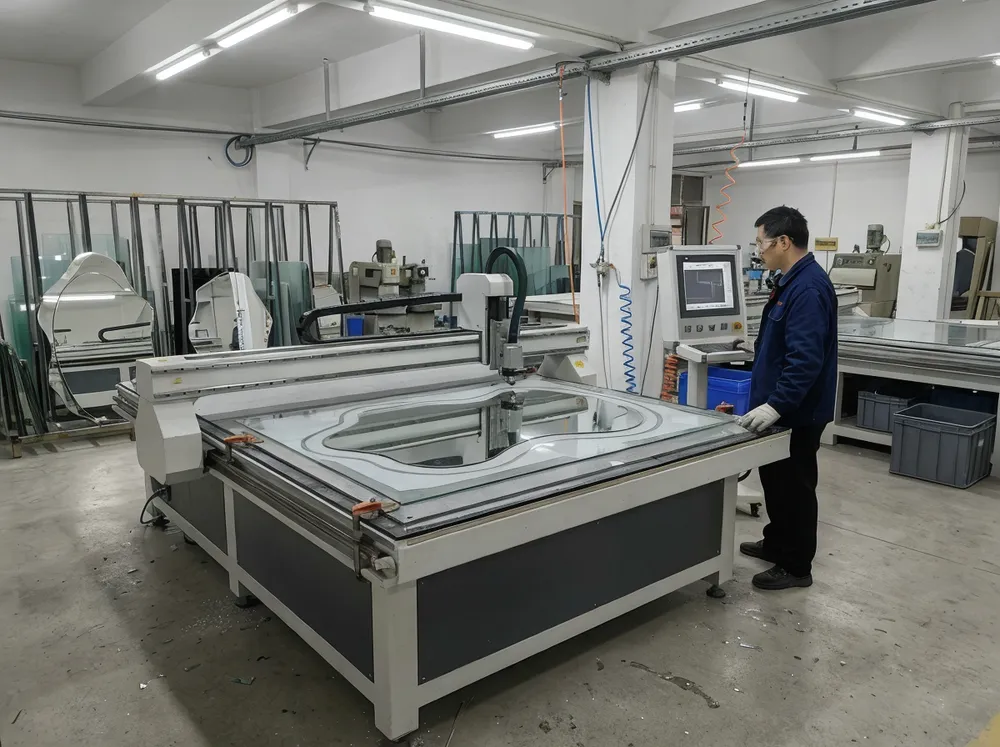
This is where aesthetic mirrors diverge from the rest of our production. A rectangular modern mirror runs through automated cutting with near-zero waste and predictable cycle times. An asymmetric wavy mirror requires CNC-guided cutting on custom templates, and the irregular contours generate 15–20% more glass waste than geometric shapes. That waste factors into your unit cost — we're transparent about it because it explains the FOB gap between a standard round mirror and a freeform aesthetic piece of similar size.
We've invested in optimizing this. Our glass cutting team nests irregular shapes on the float glass sheet using layout software that minimizes offcut waste. On a typical production run of 1,000 asymmetric mirrors, we've brought waste down to around 12% through better nesting — still higher than geometric cuts, but meaningfully lower than the industry norm for irregular shapes.
The edge work on organic contours also runs slower: each curve segment gets polished individually to maintain a consistent bevel width around the entire perimeter. On a wavy mirror with 8–10 directional changes, that's more grinding time per unit than a simple round or rectangular edge. We run these on dedicated edge-polishing stations with adjustable guides that follow the contour template.
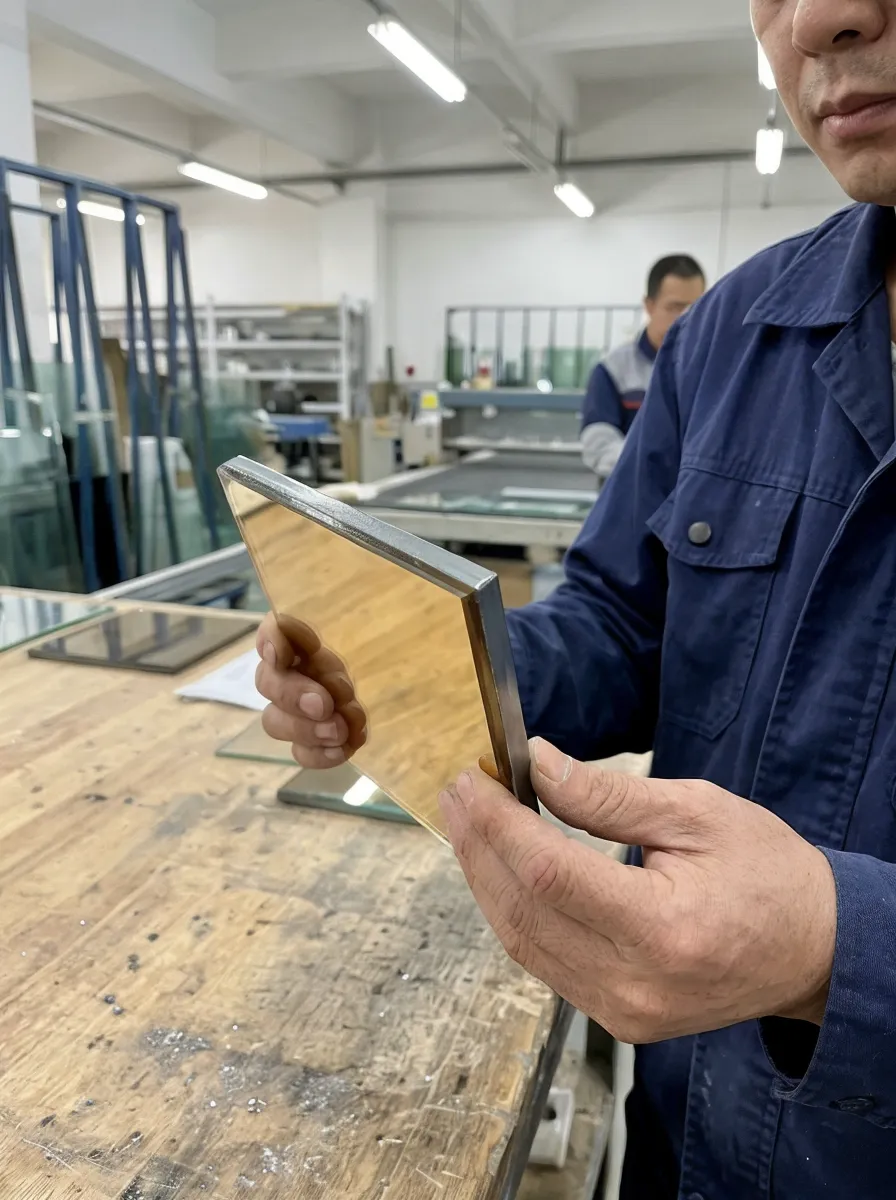
We apply tint through a controlled coating process after silvering — the tint layer sits between the silver and the protective backing, so it's sealed and won't degrade or shift color over time. Each tint has a defined optical density range that we hold consistent across a production batch, so unit 500 matches unit 1 in color tone.
Amber tint has been our fastest-growing glass option over the past two years — if you're building a trend-forward catalog, it's worth sampling alongside clear.
Fastest-growing option
Classic neutral tone
Soft warm accent
Custom tint development is possible for orders above 500 pieces. You send us a Pantone reference or a sample of the tone you want, and our coating team formulates a match. Turnaround on a custom tint sample is typically 10–12 days.
The category page covers the broad channel fit for modern and aesthetic mirrors. Here's where aesthetic mirrors specifically generate repeat orders for our buyers:
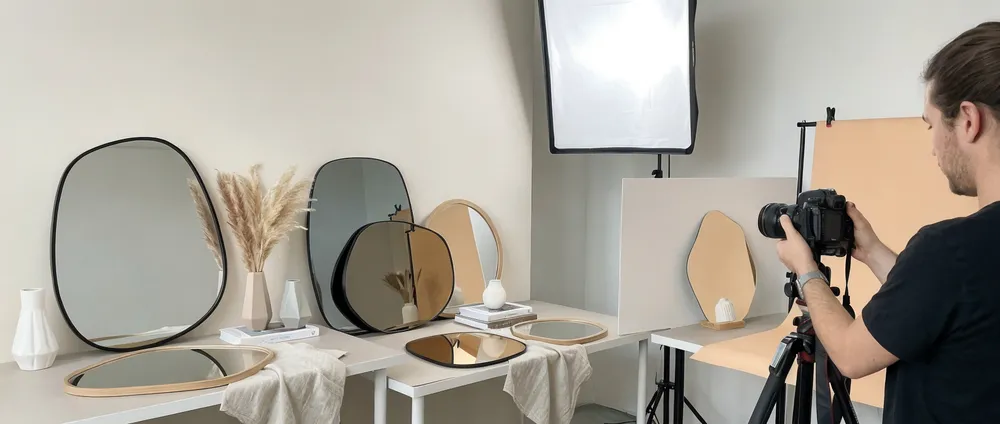
Aesthetic mirrors are built for scroll-stopping product photography. The irregular shapes and tinted glass create visual differentiation in a feed full of rectangular mirrors, which translates directly to higher click-through rates on platforms like Amazon, Wayfair, and independent Shopify stores.
We've supplied aesthetic mirror SKUs into Amazon and Wayfair vendor programs — the packaging, labeling, and compliance documentation are already configured for those channels. Your onboarding is faster because we've already solved the logistics layer.
Volume Pattern
E-commerce buyers typically start with 3–5 aesthetic SKUs at 100–200 pieces each, test sell-through over 60–90 days, then scale the top performers to 500–1,000 piece reorders. The reorder cycle on trending aesthetic shapes runs tighter than other styles — quarterly rather than semi-annual — because visual trends shift and your catalog needs to keep pace.
Brands that sell through Instagram, TikTok, and Pinterest need products that photograph well and feel distinctive. Aesthetic mirrors — especially tinted glass variants — are natural content pieces. Your customers photograph them, share them, and drive organic traffic back to your store.
Fulfillment Support
We support this channel with white-label packaging and blind drop-ship capability, so your brand stays front and center.
Boutique hotels, co-working spaces, salons, and café fitouts use aesthetic mirrors as design accents. Orders are smaller per project (20–80 pieces) but carry premium pricing because the buyer is an interior designer or project specifier, not a price-comparison shopper.
Margin Advantage
If you supply the hospitality trade, aesthetic mirrors give you a SKU category with strong per-unit margin and low return rates.
Staging companies rotate inventory across properties and need visually impactful pieces at mid-range cost. Aesthetic mirrors hit that brief — they photograph well in listing shots and create perceived value in a staged room without the price tag of luxury or vintage frames.
Reorder Pattern
This is a smaller segment by volume, but staging companies reorder consistently because mirrors get damaged in transit between properties.
Tell us your channels and we'll suggest a starter SKU mix tailored to your market.
Any organic or irregular silhouette. Send us a sketch, a CAD file, or even a photo of a competitor product — our engineering team will develop the cutting template and send back a technical drawing for your approval.
Within our production range of 300mm to 1500mm. Custom sizes outside this range are possible but require a feasibility review.
Amber, smoke, pink from our standard range, or custom tint matching for orders above 500 pieces.
Frameless, resin, or metal wire — with finish options including matte, gloss, metallic tone, or custom color matching.
Your branding, your barcodes, your insert cards. We configure retail-ready or e-commerce packaging to your channel specifications.
D-ring, French cleat, keyhole, or adhesive mount — matched to your target market's wall construction norms.
Standard catalog aesthetic mirrors ship at 100-piece MOQ per SKU, with a 25–30 day production lead time after order confirmation.
Custom OEM designs — new shapes, custom tints, or new frame profiles — carry a 200-piece MOQ per SKU.
Add 12–18 days for the sampling and approval phase before production begins.
If your custom shape requires a new cutting template (most do), template development is included in the sampling phase at no separate charge.
Aesthetic mirrors are fragile and irregularly shaped — two characteristics that make packaging a margin issue, not just a logistics detail. A damage claim on an e-commerce order costs you the product, the return shipping, and the customer relationship. We've engineered our aesthetic mirror packaging specifically to prevent that.
Each unit ships in a double-wall corrugated carton with molded foam corner inserts and a full-face foam sheet protecting the mirror surface. For e-commerce mail-order, the carton is sized to minimize dimensional weight charges — we don't over-box. For retail shelf-ready, we add a color-printed sleeve or window box with your branding and UPC.
Outer carton protection
Impact absorption at edges
Surface protection
Sleeve or window box option
We've shipped aesthetic mirrors through FBA fulfillment with a damage claim rate under 1.5% — the foam inserts and double-wall corrugated make the difference.
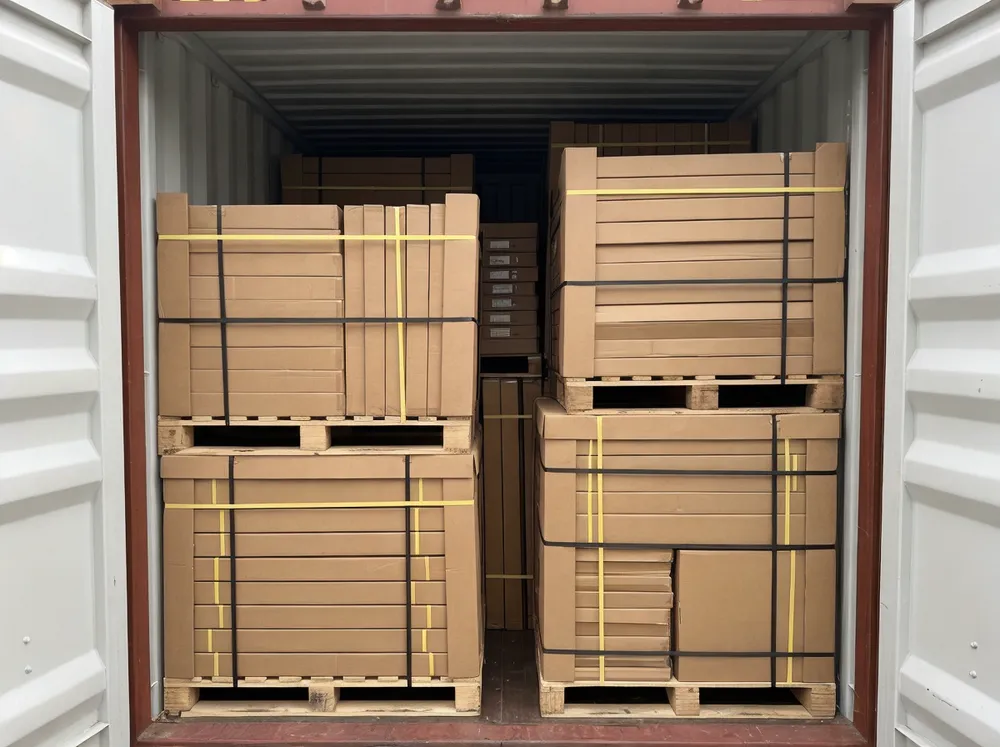
A standard 40HQ container holds approximately 2,800–3,500 pieces depending on the size mix, packed on pallets with corner board protection and strap securing.
Frameless aesthetic mirrors in the 400–600mm range load at the higher end of that range because the slim profile and flat-pack configuration maximize container utilization.
Larger resin-framed pieces load at the lower end due to increased bulk and protective packaging requirements.
Aesthetic mirrors sit in a specific lane — trend-driven, visually distinctive, mid-price. If your market needs something different, here's where to look within our style range:
Highest container density, broadest consumer appeal, most competitive unit cost
Highest retail markup in the style range — frame craftsmanship drives perceived value
Local Vietnamese rattan supply keeps material cost competitive; strong for seasonal collections
Jig-based assembly holds tight tolerances; strong for hospitality lobbies and high-end retail
Semi-custom production for interior design and boutique hospitality specifications
You can source across multiple style lines in a single purchase order — one factory, one quality standard, one shipment. Most of our distribution partners carry 2–3 style lines to cover different price tiers in their catalog.
Modern mirrors use geometric shapes — round, rectangular, arch — with minimal or no frames. They're your volume movers at the lowest FOB per unit. Aesthetic mirrors use organic, irregular shapes (wavy, cloud, blob, asymmetric) and offer tinted glass options. The unit cost runs 15–30% higher than a comparable-size modern mirror because of the irregular cutting and edge work, but your retail markup is typically stronger because the designs aren't directly comparable across sellers. If you're building a catalog, modern covers your price-competitive tier; aesthetic covers your differentiated, higher-margin tier.
Both. Our catalog includes over 40 aesthetic mirror profiles ready for production at 100-piece MOQ. For custom shapes, send us a reference image or sketch — our engineering team develops the cutting template, produces a sample, and once you approve, production runs at 200-piece MOQ. Most custom aesthetic shapes go from brief to approved sample in 12–18 days.
Standard tints are amber, smoke, and pink. Each tint is applied as a controlled coating layer sealed between the silver and protective backing, so it won't fade or shift over time. Tinted mirrors have a slightly lower reflectivity than clear glass — roughly 10–15% reduction depending on tint density — which is intentional. The tint creates a warm or moody visual tone that's the whole point of the product. For custom tint colors, we need a minimum of 500 pieces and a Pantone or physical sample reference.
Double-wall corrugated cartons, molded foam corner inserts, and full-face foam surface protection on every unit. For e-commerce fulfillment, cartons are sized to minimize dimensional weight surcharges. For pallet-loaded container shipments, we add corner board protection and strap securing. Our damage claim rate on aesthetic mirrors shipped through FBA fulfillment runs under 1.5%.
Our facility holds ISO 9001:2015 certification, with SGS and BSCI social compliance audits completed. For EU markets, we provide CE-marked mirrors with required documentation. For North American retail programs, our mirrors meet the labeling, packaging, and safety requirements of Walmart, Wayfair, and Amazon. All audit reports and certification documents are available on request — send us your compliance checklist and we'll confirm coverage before you commit to an order.
100 pieces per SKU on standard catalog models, 25–30 day production lead time. Custom OEM designs start at 200 pieces per SKU, with an additional 12–18 day sampling phase before production. We provide a detailed production schedule with your order confirmation so you can coordinate your freight booking and warehouse receiving.
Most new buyers in this category start with a 2–3 SKU sample order to test which shapes and glass treatments perform in their market. We can ship samples within 7–10 days so you can evaluate quality, photograph the product, and gauge customer response before committing to production volume.
Share your target market, preferred shapes or tints, and expected order quantities. We'll come back with a technical proposal, FOB pricing, and a production timeline — typically within 48 hours.
Prefer direct contact?