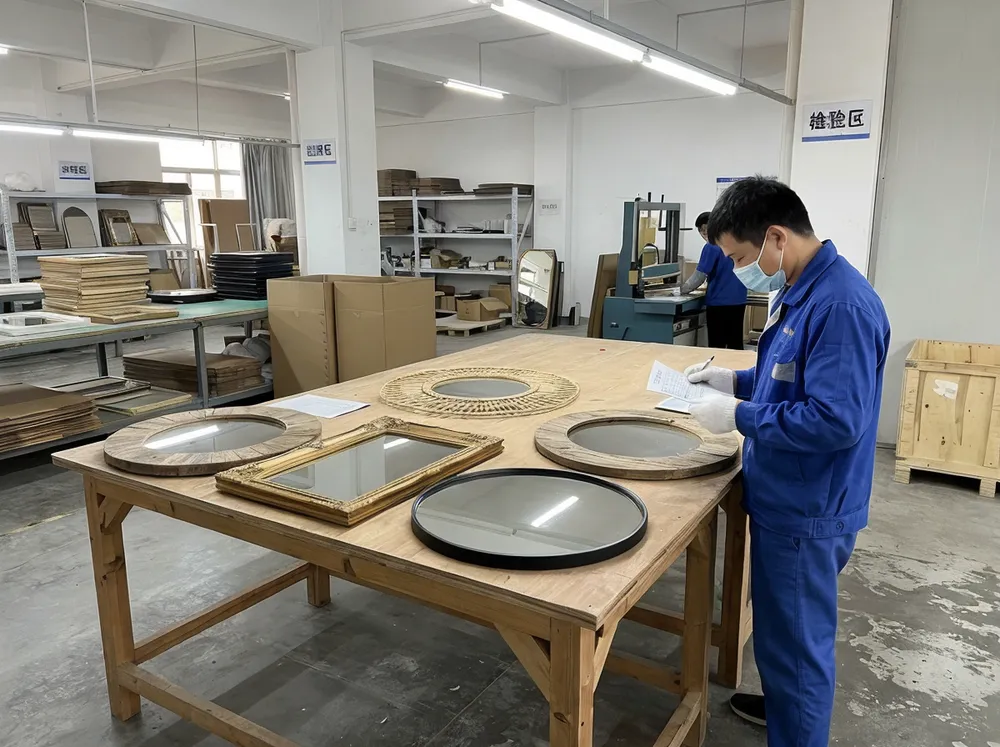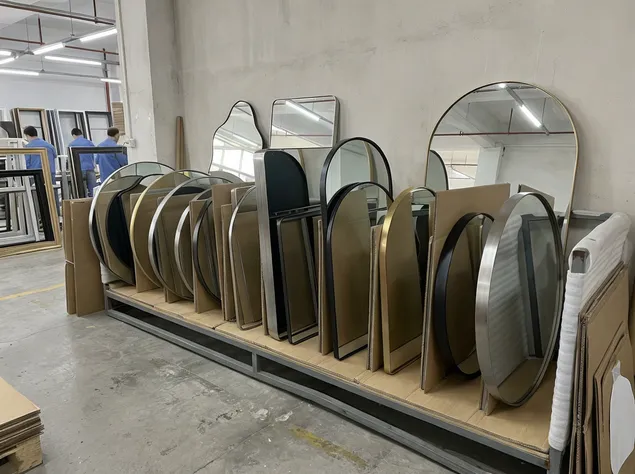
Livewellcraft produces modern, vintage, luxury, bohemian, aesthetic, and art deco mirrors across 6 production lines in Dong Nai, Vietnam. Every style ships with the same QC standard: 100% visual inspection and silver coating adhesion testing on every unit.
When you organize your mirror catalog by style, you're making a merchandising decision that affects sell-through rates, average order values, and which retail or project channels you can serve. A modern minimalist mirror and a vintage ornate mirror may use the same 4mm float glass, but they require completely different frame profiles, finishing processes, and packaging presentations — which means different tooling, different production sequences, and different cost structures.
We manufacture decor mirrors across six defined style categories. Each one runs on its own frame tooling and finish specifications, so you can source multiple aesthetics from a single supplier without compromising on the design details that make each style sell. That consolidation matters: one purchase order, one quality standard, one shipping timeline, instead of coordinating three or four factories to fill out your style range.
Our 12-person engineering team has developed frame profiles for all six style directions. When you need a new SKU — say a sunburst mirror with an antiqued gold resin frame for your vintage line — we're not starting from scratch. We're adapting existing tooling and finish formulations we've already proven in production. That cuts your development cycle and reduces the sampling rounds before you approve.
Each style category has its own product page with detailed specifications, frame options, and finish variants. Here's what we produce.
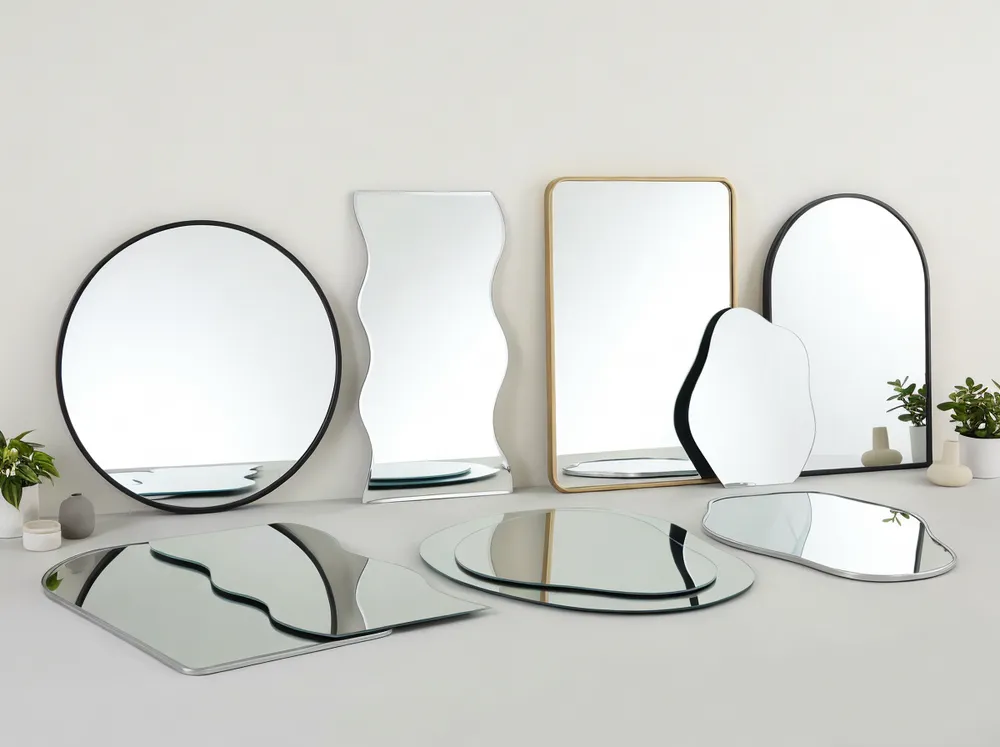
Clean geometry, minimal frames or frameless designs, neutral finishes. These are the volume movers for contemporary retail and hospitality projects. Frame materials typically run in metal (brushed steel, matte black, brass-tone) or slim MDF with lacquer finish. We produce modern decor mirrors in round, rectangular, arch, and irregular silhouettes.
View Modern Decor Mirrors
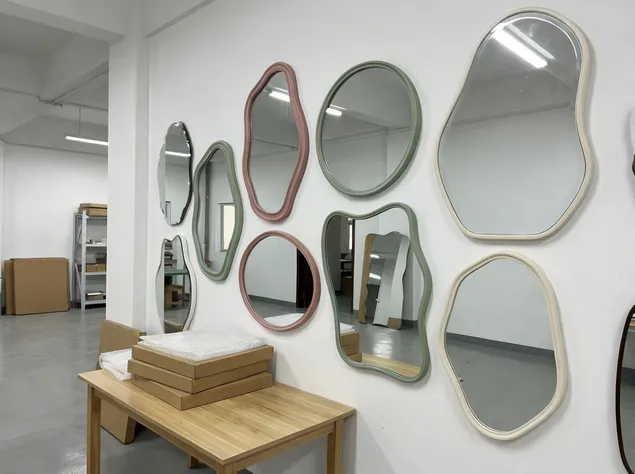
Trend-driven designs that sit between modern and decorative — wavy edges, asymmetric shapes, tinted glass options. This category moves well in online retail channels where visual differentiation drives click-through. We produce aesthetic mirrors with both frameless beveled edges and lightweight resin frames in organic shapes.
View Aesthetic Decor Mirrors
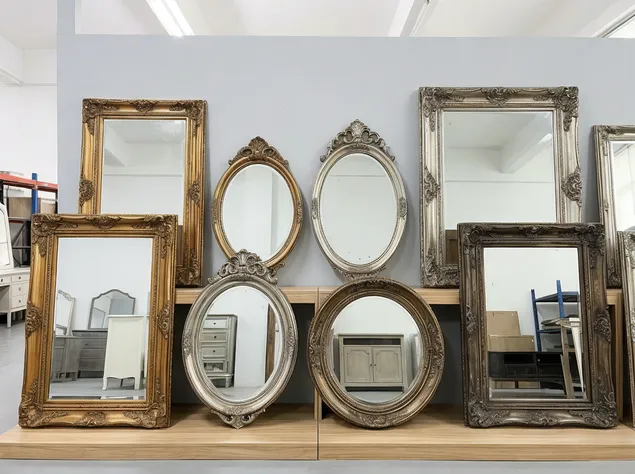
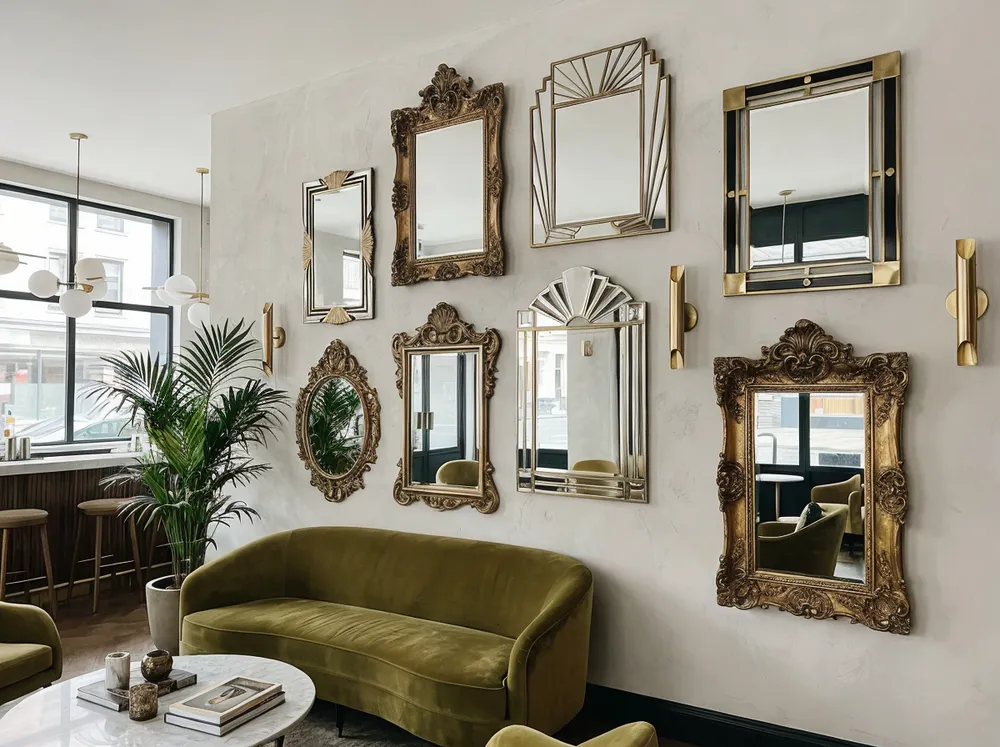
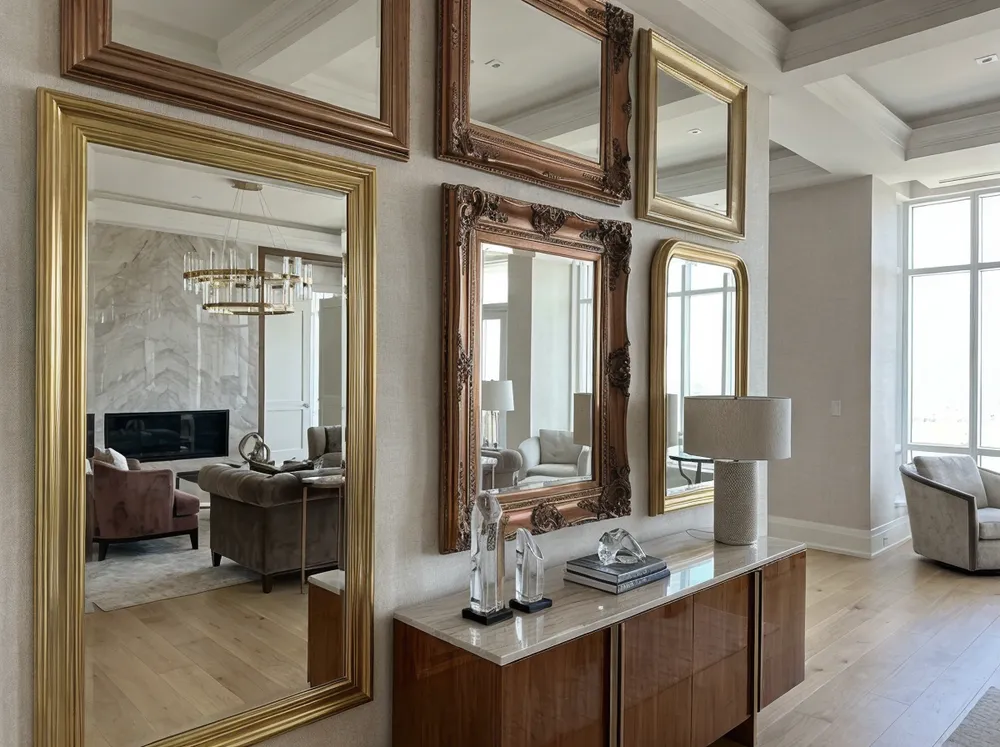
Ornate frame profiles, distressed finishes, antiqued gold and silver tones. Vintage mirrors require the most complex frame work — deep-relief resin casting or multi-layer wood finishing with hand-applied patina. The frame cost runs higher, but so does your retail margin. This is the category where we see the widest markup between FOB and shelf price — your buyers are paying for the look, not the glass.
View Vintage Decor Mirrors
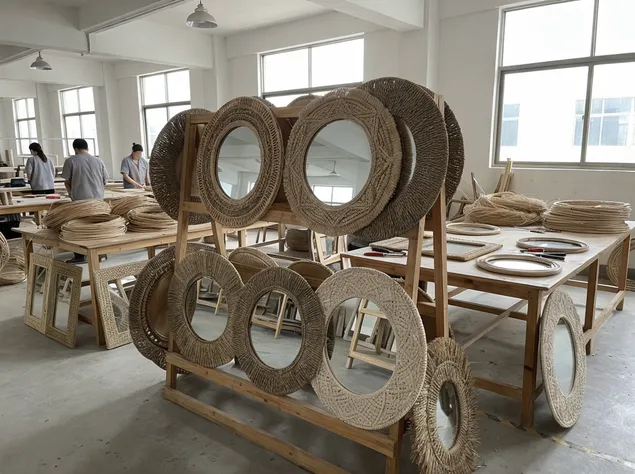
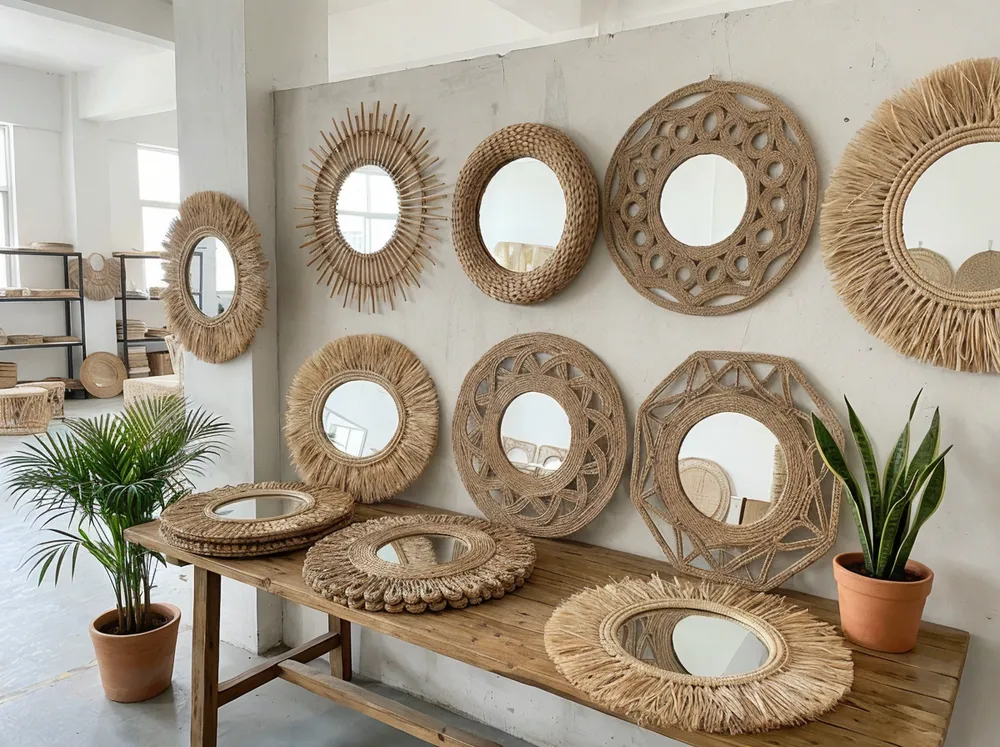
Natural materials, woven textures, rattan-look frames, macramé-wrapped borders. Bohemian mirrors combine our standard mirror panels with mixed-material frame assemblies. We source rattan and natural fiber components from local Vietnamese suppliers — short supply chain, consistent availability, and competitive material cost compared to importing these materials into a factory elsewhere in the region.
View Bohemian Decor Mirrors
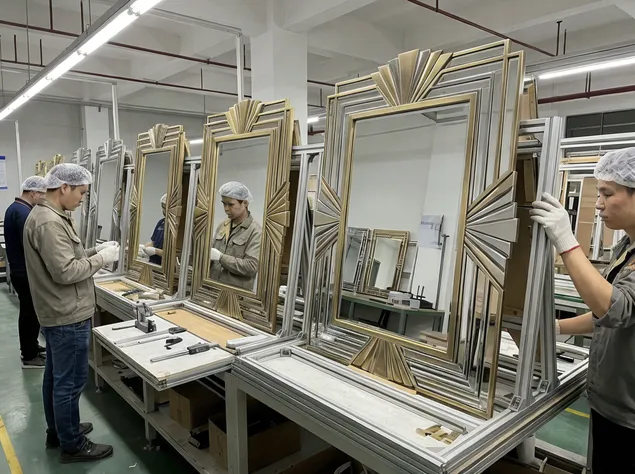
Geometric patterns, stepped frames, metallic accents, fan and sunburst motifs. Art deco mirrors use precision metal frame work — laser-cut steel or cast resin with metallic plating. We produce art deco designs in both wall-mount and freestanding formats, with frame finishes in polished gold, brushed brass, and chrome. The geometric precision matters here — uneven spacing or misaligned segments kill the deco look, so we run these frames through a jig-based assembly process that holds tolerances tighter than our standard mirror lines. Art deco is a strong fit for hospitality procurement and high-end retail, where the visual impact justifies a higher price point.
View Art Deco Mirrors
Premium materials, oversized formats, statement-level finishes. Luxury decor mirrors are where frame craftsmanship drives the product value — hand-applied gold leaf, multi-layer antiquing, beveled glass with wide-angle cuts. We produce luxury mirrors in both standard catalog designs and full-custom OEM specifications. These are typically lower-volume, higher-margin SKUs, and we've structured our luxury line MOQ accordingly. If you're building a premium collection or supplying boutique hospitality projects, this is the category where your per-unit margin is highest.
View Luxury Decor MirrorsYou don't need exact specs at this stage — that's what the individual product pages are for. But you do need to know whether our manufacturing range covers your requirements. Here's the category-wide envelope for decor mirrors by style:
| Parameter | Range Across All Styles |
|---|---|
| Mirror glass thickness | 3mm – 6mm float glass |
| Silvering process | Copper-free silver coating (EU-compliant default) |
| Frame materials | MDF, solid wood, metal (iron/stainless), resin, rattan/natural fiber |
| Frame finishes | Powder coat, electroplating, lacquer, hand-applied gold/silver leaf, antiqued patina, natural stain |
| Mirror shapes | Round, oval, rectangular, arch, sunburst, irregular/asymmetric, geometric |
| Size range | 200mm diameter (small accent) to 1800mm height (full-length floor mirrors) |
| Hanging hardware | D-ring, French cleat, wire, or keyhole — configured per your market's wall type |
| Packaging options | Retail shelf-ready (barcode, insert, color box) or bulk palletized for project delivery |
Every style category draws from this specification range, but the typical configurations differ. Modern mirrors cluster around frameless or slim metal frames in neutral tones. Vintage mirrors lean into ornate resin or carved wood frames with multi-layer finishing. Your product page for each style narrows these ranges to the specific options available.
Request specs for a specific styleStyle isn't decoration — it's market segmentation. Each aesthetic opens different sales channels, and the frame construction and finish determine your landed cost and margin structure. Here's how our buyers typically deploy each style line:
Modern decor mirrors are the highest-velocity category we produce. Clean lines, minimal frame material, and efficient packaging make them the lowest landed cost per unit in our style range. Your 40HQ container holds more modern mirrors than any other style because the slim profiles and flat-pack configurations maximize loading density.
Aesthetic mirrors — the wavy, asymmetric, trend-driven designs — move particularly well on e-commerce platforms where the product photo does the selling. We've supplied aesthetic mirror SKUs for Amazon and Wayfair vendor programs, so the packaging and labeling already meet those channel requirements.
If you're building an online catalog or stocking a mid-market retail chain, modern and aesthetic mirrors give you the combination of competitive FOB pricing, high container utilization, and broad consumer appeal.
Vintage and art deco mirrors carry higher frame costs — the resin casting, multi-layer finishing, and hand-applied detailing add labor and material. But they also carry higher retail price points, and your margin percentage typically improves even as your per-unit cost rises.
We see vintage mirrors performing strongest in specialty home decor stores, interior design trade showrooms, and boutique hospitality projects (hotels, restaurants, upscale salons). Art deco mirrors share similar channels but also move into commercial lobby and reception area projects where a statement piece anchors the space.
A note on vintage frame durability: the ornate resin frames look delicate, but we reinforce the structural core with fiberglass mesh before the detail layer goes on. They survive shipping and handling far better than they appear to — our breakage rate on vintage frames is under 0.5% across ocean freight.
Bohemian mirrors have a distinct sourcing advantage for you: the natural fiber frame materials (rattan, water hyacinth, jute) are locally abundant in Vietnam, so our material cost on boho frames is lower than factories sourcing these materials from elsewhere in Southeast Asia.
The category sells well through lifestyle brands, seasonal home collections, and coastal/resort retail. Volume tends to be seasonal — heavier ordering in Q1 and Q2 for spring/summer retail placement — so plan your production slots accordingly.
Luxury mirrors are project-driven. Your buyers are interior designers specifying pieces for hotel renovations, high-end residential developments, or flagship retail buildouts. Orders are smaller — typically 50 to 500 units — but your per-unit margin is the highest in the mirror category.
We handle luxury mirrors as semi-custom production: you select a base design, then specify the exact finish, size, and glass treatment. Our engineering team adjusts the frame tooling and finish process to match.
The frame is where style lives, and it's also where most of your unit cost variation comes from. The glass panel across all six style categories uses the same silvering line and the same QC process — your cost difference between a modern mirror and a luxury mirror is almost entirely in the frame.
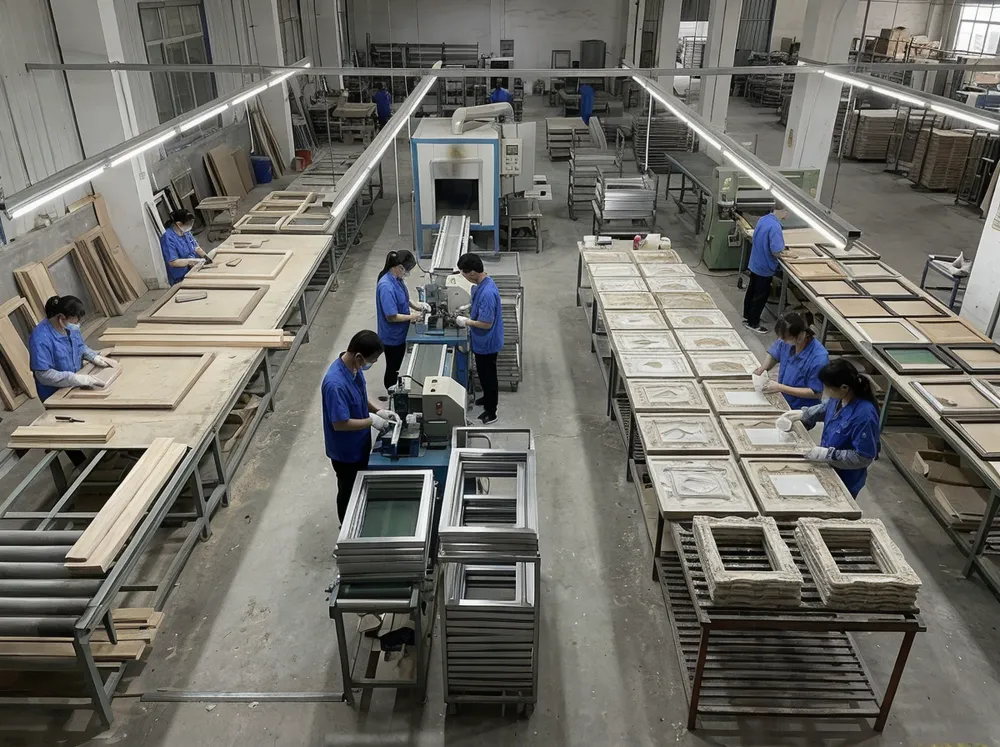
We run frame production on material-specific lines: one for MDF and wood, one for metal, one for resin casting, and a mixed-material station for bohemian and combination frames. Each line has its own finishing sequence. A modern brushed-steel frame goes through deburring, powder coating, and a single cure cycle. A vintage resin frame goes through casting, demolding, sanding, base coat, hand-applied patina, and a protective clear coat — five more steps, each adding labor time and material cost.
Cutting, routing, sanding, primer, paint or veneer application, topcoat
Deburring, powder coating, single cure cycle — streamlined for modern frames
Casting, demolding, sanding, base coat, hand-applied patina, protective clear coat
Bohemian and combination frames requiring multiple material integrations
When you're building a multi-style catalog, we can quote each style line at its actual production cost rather than averaging across styles. Your modern line stays price-competitive for volume retail, and your vintage line carries the margin that justifies the extra frame work. We don't force you into a blended price that makes your modern mirrors too expensive and your vintage mirrors suspiciously cheap.
We stock common frame molds for each style category. If you're ordering from existing designs, there's no tooling charge — the mold is already on the line.
Custom frame profiles require a one-time mold fee (resin molds are the most affordable; metal stamping dies cost more), but the mold belongs to your program and we store it for reorders.
Typical amortization: Most of our repeat buyers amortize the mold cost across their first two orders and run at pure unit cost from the third order onward.
Our 12-person engineering team develops custom mirror designs across all six style categories. Here's what "custom" actually covers at the category level:
New shapes, cross-sections, and detail patterns — we design in CAD, produce a prototype mold, and send you a physical sample before production.
Color matching to your Pantone or RAL reference, custom patina recipes, mixed-finish combinations (e.g., matte body with polished accent edges).
Scaling existing designs up or down within structural limits (we'll tell you if a frame profile doesn't hold up at a larger size — some ornate resin designs need internal reinforcement above 900mm).
Clear, beveled, antiqued, tinted (bronze, grey, black), or combination panels — matched to your style category requirements.
Your logo on backing boards, hang tags, packaging, and — for metal frames — laser-etched brand marks directly on the frame.
Channel-specific carton design, retail inserts, assembly instructions in your language, UPC/EAN barcode placement.
Sample rounds: We send 2–3 sample rounds as standard. In practice, most programs approve on the second sample — the first round nails the shape and proportion, the second round fine-tunes the finish.
New frame profiles, custom finishes, or unique specifications
Useful when testing a new style in your market before committing to a larger run
Ready to develop style-specific mirrors for your catalog? Our engineering team is prepared to work from your brief to approved samples.
Request Custom DevelopmentMirrors break. That's the baseline reality of this product category, and your packaging strategy is the difference between a 3% damage rate and a 0.3% damage rate on arrival. We've shipped mirrors to 30+ countries over 18 years, and our packaging engineering reflects every lesson from those shipments.
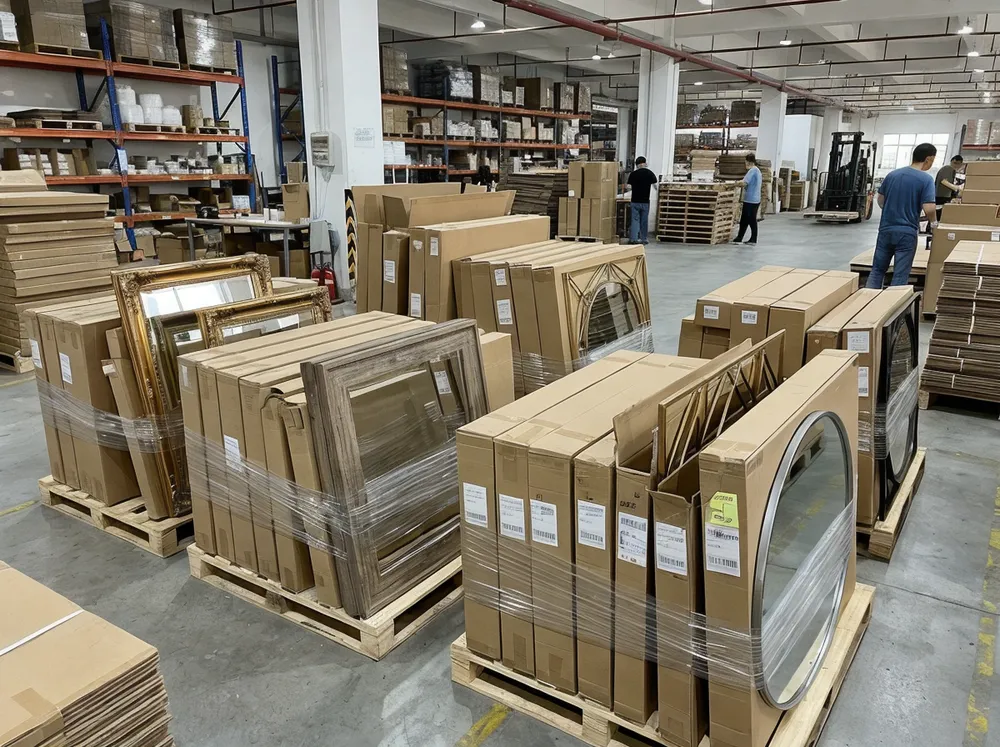
Every mirror leaves our facility with corner protectors, foam edge guards, and a fitted inner carton before going into the outer shipping carton.
For mirrors above 600mm in any dimension, we add a rigid cardboard frame insert that prevents flex during transit — flex is what cracks glass in shipping, not impact.
We switched to this insert system in 2017 after tracking damage claims on large-format mirrors.
For retail channels, we produce shelf-ready packaging with your branding, UPC codes, and product photography printed on the carton. The mirror arrives at your warehouse or your retailer's DC ready to go on the shelf — no repackaging labor on your end.
For project and bulk orders, we palletize with stretch wrap and corner boards, configured for your container type. Loading plans are provided with your quote so you can calculate per-unit freight cost before you commit.
Container loading is where packaging design directly affects your landed cost. We provide loading plans with your quote so you can calculate your per-unit freight cost before you commit.
Per standard 40HQ container, depending on size mix. Highest loading density due to slim frame construction.
Per standard 40HQ container. Deeper ornate frames require more protective spacing during transit.
Every mirror that ships from our facility — regardless of style — passes through the same QC sequence. We don't run a lighter inspection on volume modern mirrors and a heavier one on luxury pieces. The standard is the standard.
Checking for bubbles, inclusions, and thickness consistency before any processing begins.
Cross-hatch tape test on every batch — we pull samples and test to destruction, not just visual check.
Color consistency, surface defects, and hardware fitment verification on every frame.
100% visual check on every finished unit for glass clarity, frame alignment, backing security, and hardware function.
For retail programs with specific QC requirements (Walmart, Wayfair, Amazon), we integrate your inspection criteria into our standard process. If your program requires AQL 2.5 third-party inspection, we coordinate directly with your nominated inspection company and schedule the inspection window into our production timeline.
Request QC documentation or audit reports
These aren't decorative certificates — they mean your import documentation is clean and your compliance team doesn't have to chase paperwork after the container ships.
Technical answers to the questions our distribution partners ask most often when sourcing style-specific mirror programs.
For standard wall-mounted decor mirrors up to 800mm in any dimension, 4mm float glass is the industry standard — it balances optical clarity, weight, and cost. Above 800mm, we recommend 5mm glass for structural rigidity, especially on frameless or slim-frame designs where the glass carries its own weight on the wall mount. 6mm is reserved for oversized floor mirrors or commercial installations where impact resistance matters. Thicker glass adds weight and freight cost, so don't over-spec — 4mm handles the vast majority of residential and hospitality applications.
It depends on your price point and market channel. Resin frames allow intricate ornate detail at lower tooling cost — ideal for vintage and art deco styles where the frame design is the selling point. They're also lighter, which reduces your shipping cost per unit. Wood frames (MDF or solid wood) deliver a more natural, tactile feel and work better for modern, Scandinavian, and farmhouse aesthetics. Wood frames cost more to finish (multiple sanding and coating steps) but command higher retail prices. We produce both, so you can mix frame materials across your style range without splitting your sourcing.
Silver degradation — the black spots and edge clouding you see on cheap mirrors — comes from moisture penetrating the protective coating layers behind the silver. We run copper-free silvering with three protective paint layers as our standard process. The copper-free formulation meets EU environmental standards and actually outperforms traditional copper-silver processes in humidity resistance. For mirrors specifically destined for bathroom or coastal hospitality use, we add a moisture-resistant sealant on the mirror edges where water exposure is highest. Specify your end-use environment when you order, and we'll configure the coating stack accordingly.
For orders using existing catalog designs and molds: 30–35 days from deposit to ready-for-shipment, regardless of style mix. Mixing styles within one order doesn't extend your lead time because each style runs on its own frame line simultaneously — your modern mirrors and vintage mirrors are being produced in parallel, not sequentially. For orders that include new custom designs requiring mold development, add 15–20 days for the sampling and approval phase before production begins. We provide a detailed production schedule with your order confirmation so you can coordinate your logistics.
Yes. MOQ is 100 pieces per SKU on standard catalog models. You can spread a trial order across 4–6 styles at 100 units each to test which aesthetics perform in your market before scaling up. This is how most of our new distribution partners start — a 400–600 piece mixed-style trial container, followed by focused reorders on the 2–3 styles that sell best. Custom OEM designs carry a 200-piece MOQ per SKU because of the mold and finish setup involved.
Our facility holds ISO 9001:2015 certification, and we've passed SGS and BSCI social compliance audits. For EU markets, we provide CE-marked mirrors with the required documentation. For North American retail programs, we supply mirrors that meet the labeling, packaging, and safety requirements of major retailers including Walmart and Wayfair. All certification and audit reports are available on request — send us your compliance checklist and we'll confirm coverage before you place an order.
You've seen the style range, the production capabilities, and the specification envelope. The next step is yours: tell us which styles fit your market, your target quantities, and any customization requirements. We'll come back with a technical proposal, FOB pricing by style, and a production timeline — typically within 48 hours.
Direct Contact