Most revision cycles we see on custom wall art orders trace back to the same problem: the buyer sent a mood board and a size, and assumed the factory would fill in the rest. We don't fill in the rest — we make decisions, and those decisions may not match what you had in mind. A substrate choice, a finish call, a mounting method — each one affects your landed cost, your retail price point, and whether your downstream customer returns the piece.
This guide walks through every field a complete custom brief needs, the material trade-offs behind each one, and the tolerance and QC standards that separate a production-ready spec from a wishlist. If you're sourcing Unique Wall Arts for resale or project deployment, this is the spec logic your factory contact needs before they can quote you accurately.
What "Custom Specs" Actually Means on the Factory Floor
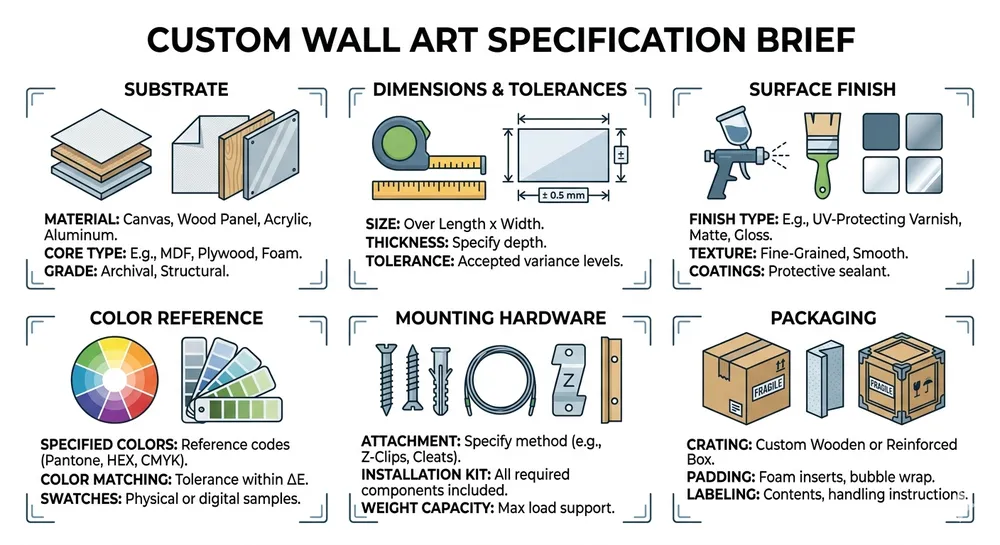
When a buyer says "custom," they usually mean the design is unique — a specific graphic, a proprietary color palette, a shape that isn't in our catalog. That's one layer. But from a production standpoint, "custom" touches six distinct spec fields, and each one has to be resolved before we can cut a single piece of substrate or mix a single gram of coating.
The six fields are: substrate, dimensions and tolerances, surface finish and color, mounting hardware, packaging, and QC acceptance criteria. A brief that covers all six gives our engineering team everything needed to build a production plan, price the tooling, and commit to a lead time. A brief that covers two or three of them means we're going back and forth on email for two weeks before production starts — and that delay lands on your delivery schedule, not ours.
We've received briefs that were essentially a Pinterest screenshot and a target retail price. We've also received briefs with full material callouts, Pantone references, tolerance tables, and packaging diagrams. The second type ships faster, costs less to sample, and has fewer surprises at final inspection.
Substrate Selection: the Decision That Drives Everything Else
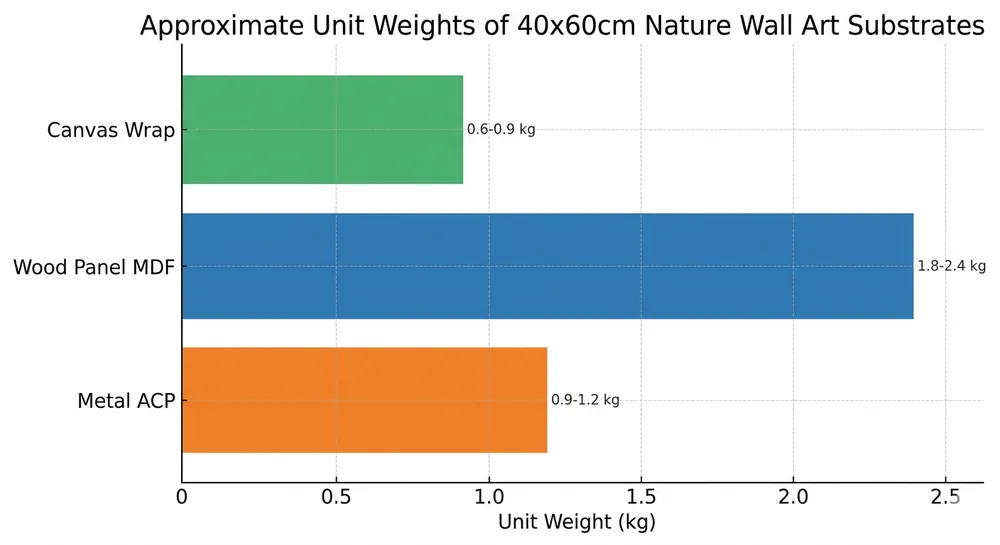
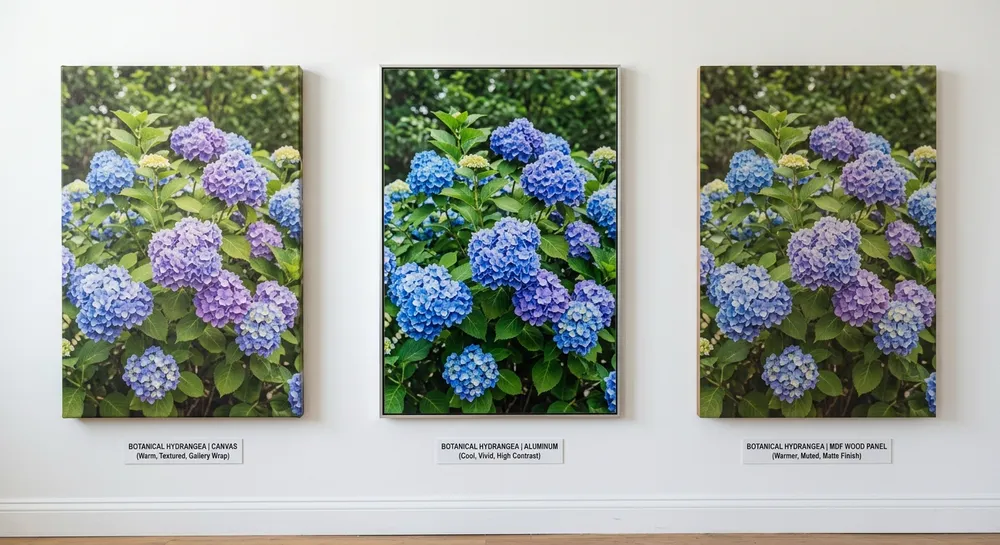
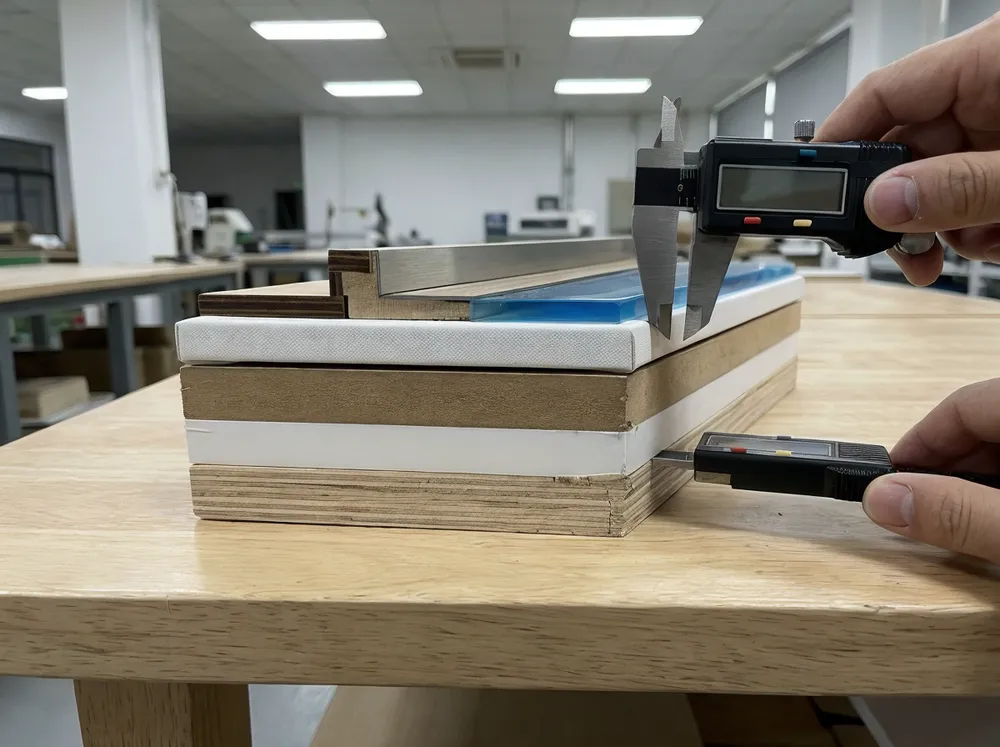
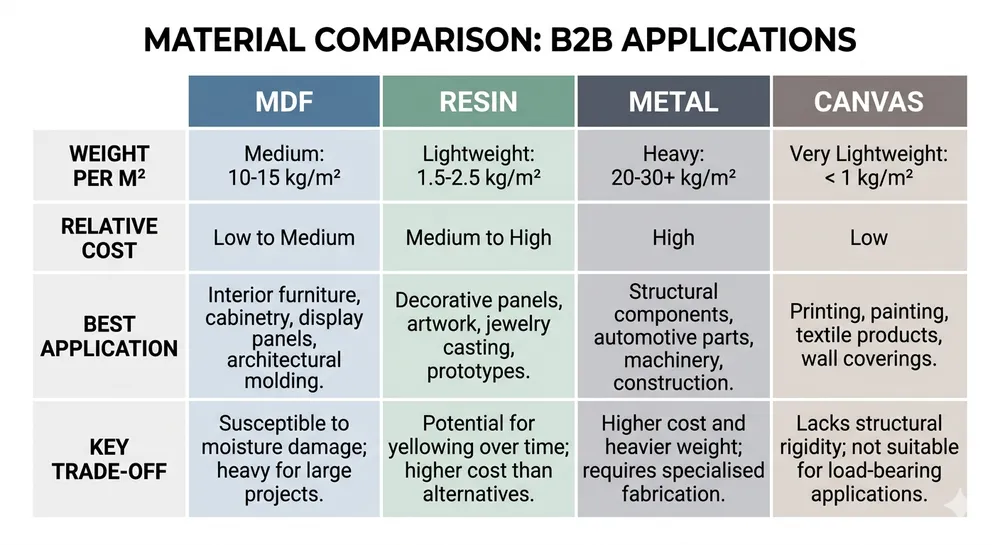
Substrate is the first call, and it affects every other spec. The four materials we work with most on unique wall art designs are MDF, resin composite, metal (typically cold-rolled steel or aluminum sheet), and stretched canvas over a wood frame. Each has a different weight profile, a different surface behavior under coating, and a different cost structure at volume.
| Substrate | Typical Weight (per m²) | Best For | Trade-off |
|---|---|---|---|
| MDF (12mm) | ~10 kg | Painted, printed, or routed designs | Moisture-sensitive; needs sealed edges for humid markets |
| Resin composite | ~6–8 kg | 3D texture, sculptural relief | Higher tooling cost; longer sampling cycle |
| Cold-rolled steel (0.8mm) | ~6.3 kg | Industrial, geometric, metal-finish designs | Heavier per unit; freight cost climbs on large formats |
| Aluminum sheet (1.0mm) | ~2.7 kg | Lightweight large-format, coastal markets | Softer surface; dent risk in transit without proper packaging |
| Stretched canvas (wood frame) | ~2–3 kg | Print-on-canvas, gallery-wrap styles | Frame warp risk in high-humidity shipping lanes |
(We've had buyers spec MDF for Southeast Asian hotel projects without sealing the edges — the pieces came back swollen after six months in a humid corridor. Edge sealing adds roughly $0.30–0.50 per unit and eliminates that warranty exposure entirely.)
For most retail wall art programs targeting North America or Europe, MDF with a sealed edge and a UV-resistant topcoat is the default. It machines cleanly, takes paint and print well, and ships flat. Resin is the right call when the design has sculptural depth — raised texture, layered relief — that can't be achieved with a routed MDF surface. Metal is a growing segment for industrial-loft and commercial interior buyers; we've seen strong reorder rates on geometric steel pieces for hospitality accounts.
Your substrate choice also determines your MOQ flexibility. MDF and canvas designs can often run at 100 pieces on standard tooling. Resin molds carry a tooling cost — typically $800–2,500 depending on complexity — that needs to be amortized across a minimum run to keep your unit cost viable. Specify your target unit cost alongside your substrate preference and we can tell you immediately whether the tooling math works at your volume.

Dimensions, Tolerances, and What "Custom Size" Costs You
Dimension spec seems straightforward until you realize that "36 x 48 inches" means different things depending on whether you're measuring the substrate, the frame outer edge, or the hanging footprint. We need all three called out explicitly, because a frame profile adds 15–40mm per side depending on the molding depth, and that changes your retail packaging dimensions, your carton count per pallet, and your container utilization.
Standard tolerance on cut substrate at our facility is ±1.5mm on length and width, ±1.0mm on thickness. For framed pieces, the assembled outer dimension tolerance is ±2.0mm. If your retail program has tighter requirements — some big-box buyers specify ±1.0mm on assembled dimensions for planogram compliance — call that out in the brief. We can hold tighter tolerances, but it affects line speed and therefore unit cost.
Non-standard shapes (hexagons, arches, irregular silhouettes) require CNC routing templates. Template setup is a one-time cost, typically $150–400 depending on path complexity. Once the template is cut and approved, repeat orders run at standard lead time. Buyers who plan a multi-SKU program with several unique shapes should consolidate their shape library early — each new shape is a new template cost.
One thing worth flagging: if your design includes a printed graphic that bleeds to the edge, your artwork file needs to account for the substrate cut tolerance. We ask for a minimum 3mm bleed on all edge-to-edge print designs. Artwork submitted without bleed almost always requires a revision round before we can send a pre-production sample.
Surface Finish and Color: Where Most Spec Briefs Fall Short
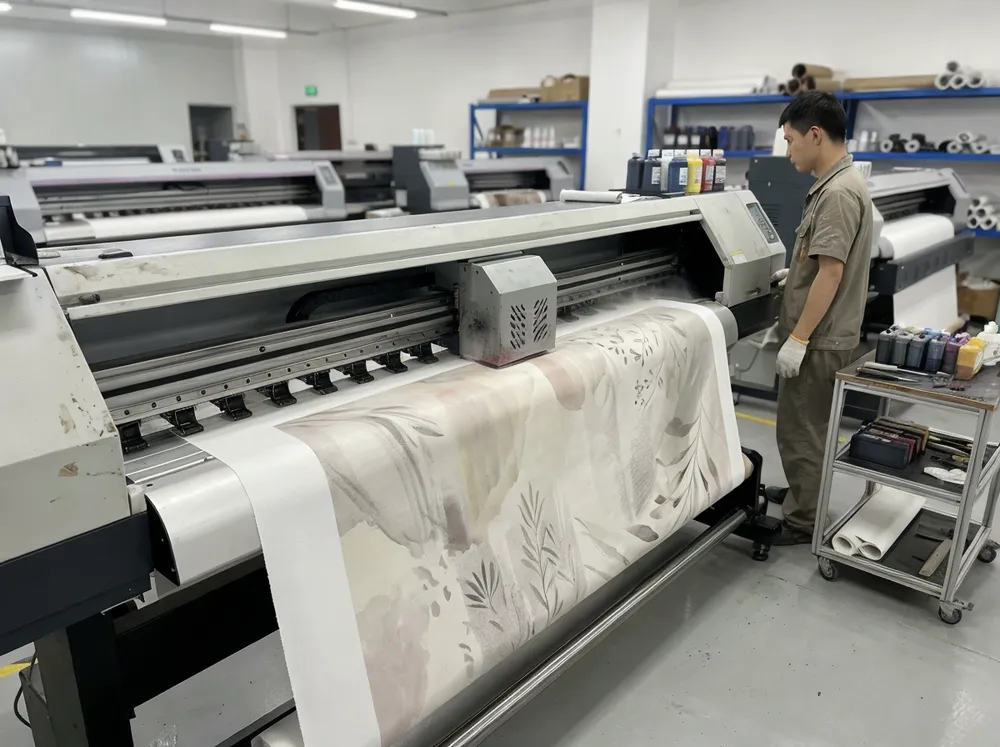
This is the section where incomplete briefs cause the most expensive problems. "Matte white" is not a spec. "Matte white, similar to the reference image" is not a spec. A production-ready color and finish spec includes a Pantone reference (or RAL code for European programs), a gloss level in GU (gloss units), and a substrate-specific note on whether the finish is painted, UV-printed, or powder-coated.
For painted MDF and resin pieces, we use water-based acrylic coatings with a UV-resistant topcoat. Gloss levels run from 5 GU (dead matte) to 85 GU (high gloss). Most retail wall art programs land in the 10–30 GU range — enough sheen to photograph well without looking plasticky on the shelf. If your buyer's planogram specifies a particular finish level, get that number from them before you brief us.
For metal pieces, the finish options split into powder coat, brushed metal (mechanical finish), and patina/oxidation treatments. Powder coat is the most durable and the most color-consistent across a production run — we run our powder line at 60–80μm film thickness, which passes 500-hour salt spray. Brushed finishes are directional and require a consistent brushing spec (grit, direction, pass count) to stay uniform across units. Patina treatments are the hardest to control at volume; we can do them, but we require a signed color-range approval sample before bulk production starts.
Color matching across a 500-piece run is a real production challenge, not a theoretical one. We do batch color checks at the start of each production run and at every 100-unit interval. If your brief includes a physical color chip or an approved sample, we match to that. If it includes only a digital reference, we match to our closest Pantone equivalent and send a pre-production sample for your sign-off before bulk coating starts. Skipping that sign-off step is how color disputes happen at final inspection.
(We've had buyers reject a full container over a color that was 3 GU off from their reference — a difference invisible to the naked eye but detectable with a gloss meter. The fix was a signed gloss spec in the brief. Now we require it on every custom finish order.)
Mounting Hardware: the Spec Most Buyers Forget Until It's Too Late
Mounting hardware is almost always the last thing in a buyer's brief and the first thing their end customer notices when the piece arrives. A wall art unit that ships without the right hardware — or with hardware that doesn't match the wall construction in the target market — generates returns and negative reviews that land on your account, not ours.
The spec fields for mounting are: hardware type, weight rating, wall anchor compatibility, and pre-installation requirement. For the North American market, the standard is a D-ring or sawtooth hanger rated to at least 2x the piece weight, with a keyhole slot option for heavier pieces over 5 kg. For the European market, many buyers specify a French cleat or a concealed rail system for a flush-wall look. For hospitality and commercial projects, anti-theft hardware (tamper-resistant screws, security brackets) is often a project requirement.
| Mounting Type | Best For | Weight Limit | Notes |
|---|---|---|---|
| Sawtooth hanger | Lightweight retail pieces (<2 kg) | Up to 5 kg | Low cost; standard for e-commerce |
| D-ring with wire | Mid-weight retail (2–5 kg) | Up to 15 kg | Adjustable hang angle |
| Keyhole slot | Heavier pieces (5–10 kg) | Up to 20 kg | Requires wall anchor; include in packaging |
| French cleat | Commercial / hospitality | 30 kg+ | Flush wall look; two-part system |
| Security bracket | Hospitality, public spaces | Varies | Tamper-resistant; specify screw type |
If your target market requires wall anchors to be included in the retail package, specify that in the brief. We source anchors to match the hardware spec and pack them in the accessory bag. It's a small cost — typically $0.15–0.40 per unit — but it has to be in the brief for us to include it in the BOM and the quote.
Packaging Spec: Protecting Margin from Factory to Shelf
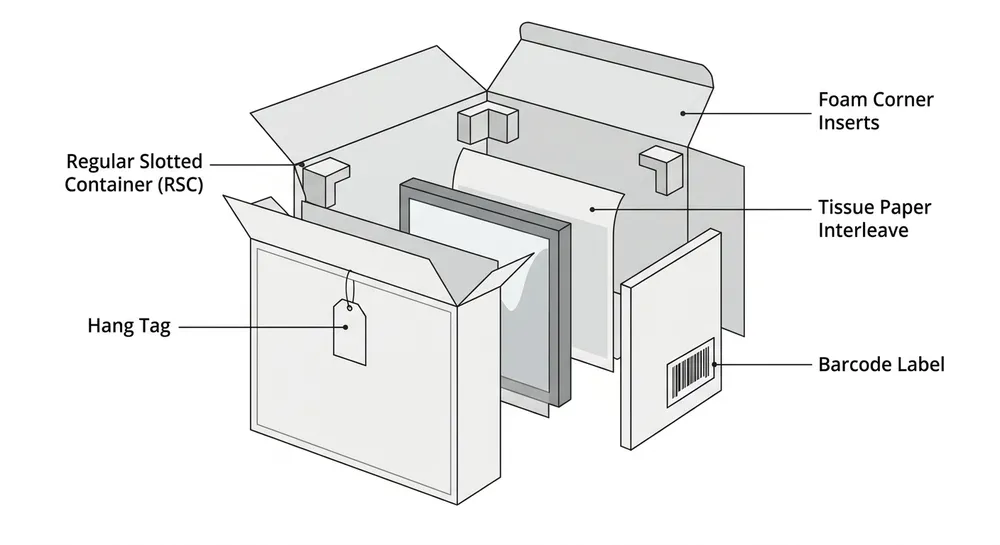
Packaging is a cost driver and a damage-prevention system. For unique wall art, the packaging spec needs to cover inner protection (foam corners, bubble wrap, kraft paper interleave), outer carton strength (ECT rating), and retail presentation requirements (hang tag, barcode placement, poly bag).
Most of our wall art ships in individual RSC cartons with foam corner inserts. For pieces with textured or relief surfaces, we add a layer of tissue paper or foam sheet between the face and the carton inner wall to prevent surface abrasion. For metal pieces with brushed finishes, we use a peel-off protective film applied at the end of the production line — the film stays on through shipping and the end customer removes it at installation.
If your program is retail shelf-ready, your packaging brief needs to include: barcode type and placement, hang tag copy and attachment method, poly bag requirement (yes/no), and any retailer-specific labeling requirements (Walmart, Wayfair, and Amazon each have their own compliance specs). We've handled EDI compliance for major US retailers, so if you're supplying into a retail program with specific packaging requirements, send us the retailer's vendor guide and we'll build the packaging spec to match.
Carton master pack quantity affects your container utilization. A 36 x 48-inch piece in a standard RSC carton typically runs 1 piece per carton. Smaller pieces (under 20 x 20 inches) can often run 2–4 per master carton with interleave protection. Getting the carton dimensions right before production starts means your container count is accurate in your landed cost model — a detail that matters when you're quoting a project with a fixed logistics budget.
Tolerance Standards and QC Checkpoints for One-of-a-Kind Runs
Custom and one-of-a-kind designs don't get a pass on QC standards — they get tighter scrutiny because there's no catalog reference to compare against. The only reference is your approved pre-production sample, and every unit in the bulk run is measured against it.
Our QC process on custom wall art runs four checkpoints: incoming material inspection, in-process dimensional check, finish and color verification, and final pre-shipment inspection. For truly one-of-a-kind designs where the approved sample is the only reference, we photograph the sample under controlled lighting and use that as the visual standard for the production run.
The acceptance criteria your brief should specify:
- Dimensional tolerance: ±1.5mm substrate, ±2.0mm assembled (or tighter if your retail program requires it)
- Color delta: ΔE ≤ 2.0 against approved Pantone reference (ΔE ≤ 1.5 for premium programs)
- Gloss tolerance: ±5 GU against approved finish spec
- Surface defects: zero visible scratches, chips, or coating voids on face; minor cosmetic marks on back acceptable if not visible when hung
- Hardware function: 100% pull-test on mounting hardware at rated load
We do 100% visual inspection on face surfaces before packing. For orders over 500 units, we also pull a statistical sample for dimensional and color measurement — typically 32 units per AQL 2.5 standard. If your program requires a third-party pre-shipment inspection (SGS, Bureau Veritas, Intertek), call that out in the brief so we can schedule the inspection window into the production timeline.
(One thing buyers often miss: QC criteria need to be agreed before production starts, not after the container arrives at your warehouse. Disputes over acceptance criteria at final inspection are almost always the result of a brief that didn't include them.)
MOQ, Tooling Costs, and the Real Cost Drivers for Unique Designs
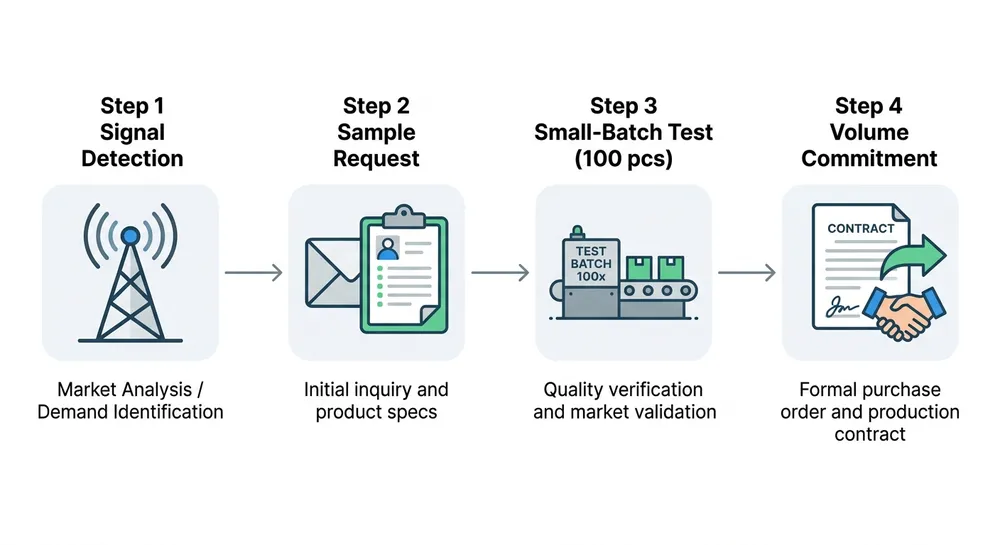
The MOQ question on unique wall art is more nuanced than on catalog items. For designs that use standard substrates and off-the-shelf hardware, we can often run at 100 pieces — the same floor as our standard models. The cost driver isn't the run quantity; it's the setup cost amortized across that quantity.
Setup costs on a unique design typically include: artwork file preparation and color separation ($50–150), CNC routing template if the shape is non-standard ($150–400), any custom frame profile tooling if you're specifying a proprietary molding ($800–3,000 depending on profile complexity), and pre-production sampling ($200–500 for a 2–3 unit sample set with shipping).
At 100 units, a $1,500 total setup cost adds $15 per unit to your cost base. At 500 units, the same setup cost adds $3 per unit. That math is why buyers who plan a multi-SKU unique wall art program benefit from consolidating their design library — shared substrate formats, shared frame profiles, and shared hardware specs reduce per-SKU setup costs significantly.
For designs that require a new resin mold, the economics shift. A resin mold for a medium-complexity relief design runs $1,200–2,500. At 100 units, that's $12–25 per unit in tooling amortization before you've paid for materials or labor. Most buyers in this situation either increase their opening order quantity or plan a two-phase program: a 200-unit trial run to validate sell-through, then a 500+ unit reorder that brings the unit cost into target range.
We're transparent about tooling costs upfront. Send us your design references and target unit cost, and we'll tell you the tooling math before you commit to anything. That's a better use of your time than discovering the cost structure after you've already briefed your retail buyer on a price point.
For more on ordering strategy for smaller unique design programs, see Unique Wall Art Small Batch Ordering.
The Spec Brief Template: Fields to Fill Before You Contact a Factory
Here's the framework we use internally when a buyer sends a custom inquiry. Fill these fields before your first conversation with any manufacturer — it compresses the quoting cycle from weeks to days.
Design & Substrate
- Design reference (file format: AI, PDF, or high-res JPG minimum 300 DPI)
- Substrate material (MDF / resin / steel / aluminum / canvas)
- Substrate thickness (mm)
- Shape (rectangular / non-standard — include silhouette file if non-standard)
Dimensions
- Substrate dimensions (W x H, in mm or inches — specify which)
- Frame outer dimensions if framed (W x H)
- Hanging footprint (W x H including any protruding hardware)
- Dimensional tolerance requirement (standard ±2mm or tighter)
Surface Finish & Color
- Finish type (painted / UV-printed / powder-coated / brushed metal / patina)
- Color reference (Pantone number / RAL code / physical chip)
- Gloss level (GU value or descriptor: dead matte / satin / semi-gloss / high gloss)
- Topcoat requirement (UV-resistant / standard / none)
Mounting Hardware
- Hardware type (sawtooth / D-ring / keyhole / French cleat / security bracket)
- Weight rating required
- Wall anchor inclusion (yes / no)
- Pre-installation requirement (hardware pre-installed at factory / packed separately)
Packaging
- Inner protection (foam corners / bubble wrap / tissue interleave)
- Outer carton type (RSC / custom)
- Retail presentation (hang tag yes/no, barcode type and placement, poly bag yes/no)
- Retailer compliance requirement (if applicable — attach vendor guide)
QC & Compliance
- Color delta acceptance (ΔE value)
- Gloss tolerance (±GU)
- Surface defect criteria
- Third-party inspection requirement (SGS / BV / Intertek / none)
- Target market certifications (CE / ASTM / none)
Commercial
- Target quantity (units)
- Target unit cost (FOB or landed — specify)
- Required ship date
- Sample requirement (yes / no, quantity)
A brief that covers these fields gives a factory everything needed to return a technical proposal, a tooling cost breakdown, and a production timeline in one round. Anything missing means a follow-up question — and each follow-up question is a day added to your quoting cycle.
Common Spec Gaps That Cause Cost Overruns
We see the same gaps repeatedly. Not because buyers are careless — because the gaps aren't obvious until you've been on the production side of a few hundred custom orders.
No bleed on edge-to-edge print artwork. The fix is a 3mm bleed on all edges. The cost of not doing it is a revision round and a delayed sample.
Color reference is a screen capture. Screen colors are RGB and vary by monitor calibration. A Pantone or RAL reference is the only way to get consistent color across a production run. If you don't have a Pantone number, we can match from a physical chip — but you need to send the chip, not a photo of it.
Mounting hardware not specified. We default to a D-ring with wire on unspecified pieces. If your market or retail program requires something different, the default will generate returns or compliance failures.
No tolerance callout for retail programs. Big-box retailers often have planogram compliance requirements that are tighter than our standard tolerance. If your buyer has a spec, it needs to be in your brief.
Packaging spec missing retailer compliance details. If you're supplying Walmart, Wayfair, or Amazon, each has specific labeling, barcode, and packaging requirements. A generic packaging spec will fail their receiving inspection.
QC criteria absent from the brief. Without agreed acceptance criteria, any dispute at final inspection becomes a negotiation. With agreed criteria, it's a measurement.
For a broader look at design options and style directions for custom programs, Creative Wall Art Design Options covers the style and subject decisions that typically precede the spec brief stage.
Frequently Asked Questions
What's the minimum order quantity for a truly unique wall art design with custom tooling?
It depends on the tooling type. For designs using standard substrates and off-the-shelf hardware, 100 pieces is achievable. For designs requiring a new resin mold or custom frame profile, the practical minimum is 200–300 pieces to keep the tooling amortization from making the unit cost unworkable. Send us your design and target unit cost — we'll tell you the minimum that makes commercial sense for your program.
How do I specify color for a custom wall art order if I don't have a Pantone number?
Send a physical color chip or an approved physical sample. We'll match to it and send you a pre-production sample for sign-off before bulk coating starts. Digital references (screen captures, JPG files) are not reliable for production color matching because they're RGB and monitor-dependent. If you're working from a brand color guide, ask your brand team for the Pantone equivalent — most brand guides include it.
What file formats do you need for a custom wall art design?
Vector files (AI or PDF) are preferred for any design with clean lines, text, or geometric shapes. High-resolution raster files (JPG or PNG at 300 DPI minimum at final print size) are acceptable for photographic or painterly designs. If your design includes a custom shape or silhouette, include a separate DXF or AI file for the CNC routing path. Sending a low-resolution JPG as the only reference is the single most common cause of a delayed first sample.
Can you match a competitor's existing wall art piece for a private-label program?
We can develop a design that achieves a similar aesthetic, but we don't copy existing products. Send us reference images of the style direction you're targeting, your substrate and finish preferences, and your target price point — our design team will develop an original spec that fits your program. This is standard OEM/ODM practice and protects your program from IP exposure.
What certifications apply to wall art for the US and European markets?
For the US market, wall art doesn't typically require mandatory product certification, but if your pieces include electrical components (LED, backlit), UL or ETL listing applies. For the European market, CE marking is required if the product falls under a relevant directive (e.g., Low Voltage Directive for lit pieces). For general decorative wall art with no electrical components, the main compliance requirements are chemical safety (REACH, California Prop 65 for US) and packaging compliance. We hold ISO 9001:2015, SGS, CE, and BSCI certifications — documentation available on request.
—
If your brief is ready or close to ready, the fastest next step is to send your design references, target specs, and quantities through our Request Quote page. Our engineering team reviews every custom inquiry and returns a technical proposal with tooling costs and lead time within 48 hours.
You can also browse our full Wall Arts by Style & Subject catalog to see the style directions and substrate combinations we've already developed — useful context before you finalize your own brief.