allenliu@livewellcraft.com +86 182 2840 2575 Mon–Sat: 9:00 AM – 6:00 PM (GMT+7)
Shatter-Resistant · Cast In-House

Acrylic Decor Mirrors

Shatter-resistant acrylic decor mirrors — cast and hand-finished in-house for hospitality, commercial, and retail channels.

Lightweight acrylic frames with optical-grade edge clarity, produced on our own casting line in Dong Nai, Vietnam. You get the safety profile of acrylic with the visual finish your downstream buyers expect.

ISO 9001:2015 certified
100-piece MOQ
30–35 day lead time
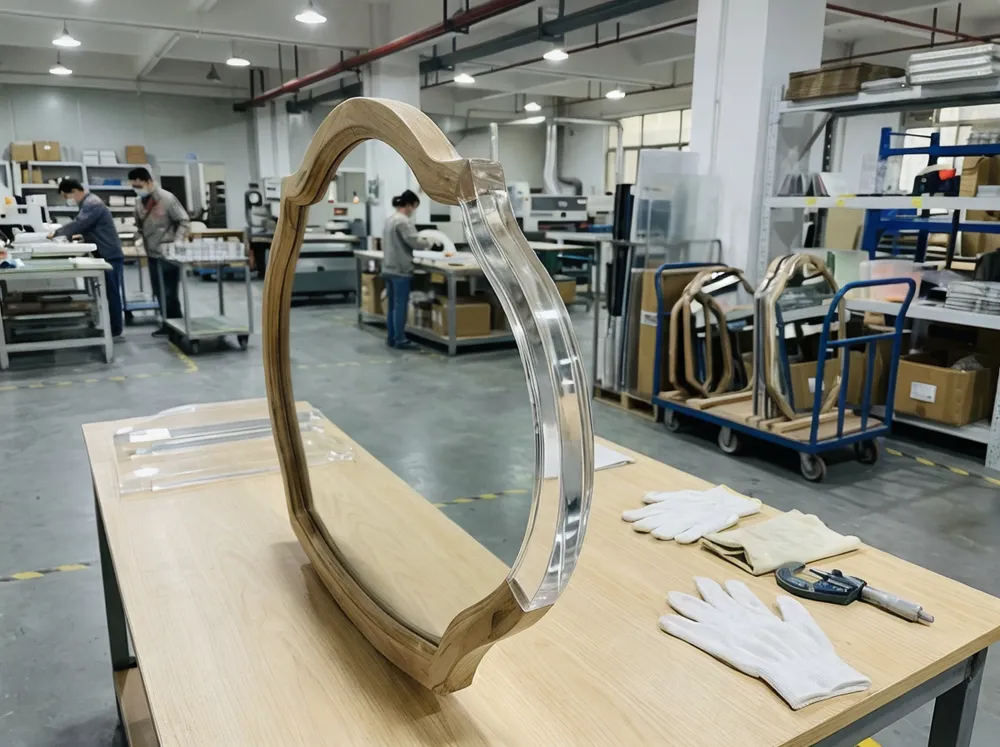
Cast acrylic decor mirror with hand-finished frame showing optical-grade edge clarity

Acrylic decor mirrors solve a specific sourcing problem: you need a mirror that looks like glass on the wall but doesn't shatter during shipping, installation, or daily use. We cast acrylic frames in-house and pair them with either acrylic mirror panels or standard silver-coated glass, depending on your application. The result is a product line that opens up market segments — hospitality, gyms, children's spaces, rental properties — where traditional glass-framed mirrors create liability exposure and return-cost problems you'd rather not absorb.

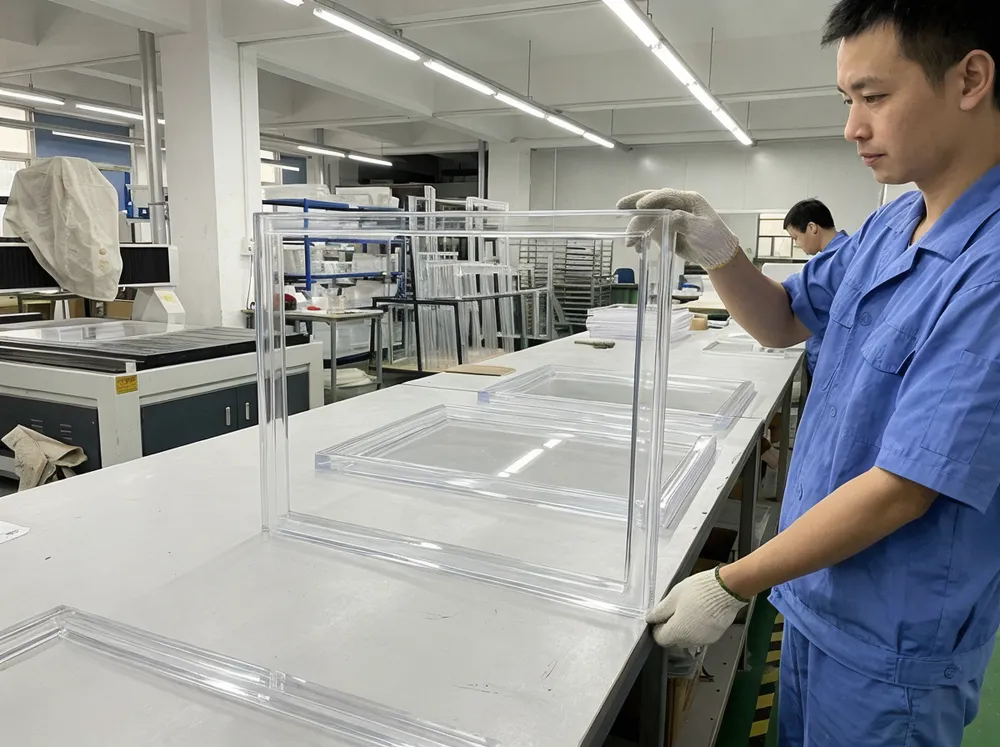
What separates our acrylic mirrors from most suppliers' offerings is the frame production method. We cast acrylic frames from liquid PMMA into precision silicone molds and hand-finish each piece for edge clarity and surface polish. Most competing acrylic decor mirrors use injection-molded frames — faster to produce, but they leave visible gate marks, inconsistent wall thickness, and a slightly cloudy surface that cheapens the look at retail. Our casting process takes longer per unit, but your product holds up in side-by-side comparison on a shelf or in a hospitality spec review. The parent category page covers how all our frame materials compare at the category level — this page is about what makes acrylic the right choice for specific programs and how we produce it.

Why Buyers Choose Acrylic

  • Shatter-resistant for high-traffic and liability-sensitive environments
  • Lightweight frames reduce shipping costs and simplify installation
  • Cast PMMA process delivers optical-grade edge clarity
  • Opens hospitality, gym, children's, and rental property segments
  • Hand-finished frames outperform injection-molded competitors at retail
Certified
ISO 9001:2015
Minimum Order
100 Pieces
Lead Time
30–35 Days
Production
Dong Nai, VN

Acrylic Mirror Specifications for Procurement Comparison

Parameter Specification
Frame material Cast acrylic (PMMA), UV-stabilized
Frame profile width 20mm – 80mm
Frame thickness 3mm – 8mm depending on profile design
Mirror panel options Acrylic mirror panel (2mm, 3mm) or silver-coated glass (3mm, 4mm copper-free)
Overall sizes 300×400mm up to 1200×800mm rectangular; up to 1000mm diameter round
Shape options Round, oval, rectangular, arch, hexagonal, custom irregular
Frame finishes Clear, frosted, tinted (smoke, bronze), opaque colors (any RAL/Pantone match), metallic spray
Backing MDF backing board with pre-installed hanging hardware
Hanging hardware D-rings, sawtooth hangers, French cleat, or adhesive mount — pre-installed
Unit weight (typical 600×800mm) 1.8–2.5 kg with acrylic panel / 3.2–4.0 kg with glass panel
Certifications ISO 9001:2015, SGS, CE, BSCI
MOQ 100 pieces per SKU (existing profiles), 300 pieces per SKU (custom profiles)
Lead time 30–35 days (existing mold), 45–50 days (new custom profile)

If you need specs formatted for a specific procurement template or additional test data — impact resistance, UV yellowing rates, flammability class — we provide technical data sheets with your sample shipment.

Request a Spec Sheet or Sample

Cast Acrylic Frames vs. Injection-Molded: What It Means for Your Margin

Most acrylic decor mirrors on the market use injection-molded frames. Injection molding is fast and cheap at high volumes, but it produces frames with visible gate marks, sink marks at thicker cross-sections, and a surface finish that needs secondary polishing to look presentable — polishing that most factories skip because it adds cost and cycle time.

We cast our acrylic frames from liquid PMMA into silicone molds, cure them under controlled temperature, and hand-finish each piece. The casting process gives you three things that matter commercially. Wall thickness stays uniform across the entire profile, so frames don't develop stress cracks during shipping or temperature swings in a warehouse. The surface comes out of the mold with near-optical clarity — we do a final buff, but we're refining, not rescuing a rough surface. And casting lets us produce complex profiles — curved edges, beveled faces, faceted surfaces — that injection molds can't achieve without prohibitive tooling costs, so your product line isn't limited to flat rectangular frames.

The trade-off is cycle time. Casting runs slower than injection, which is why our FOB sits in the mid tier rather than the budget end of the market. But your downstream margin tells the real story: cast-frame acrylic mirrors hold up in side-by-side retail comparison against products priced 30-40% higher, so your markup room is wider than the FOB delta suggests. We've had distributors in North America run cast-acrylic and injection-molded samples through buyer review panels — the cast frames consistently get selected for the premium tier, which is where your per-unit margin actually lives.

Cast acrylic frame showing uniform wall thickness and optical clarity finish

Margin Advantage

Cast frames position at premium tier pricing

  • 30-40% higher retail positioning vs injection-molded
  • Wider markup room despite mid-tier FOB
  • Consistently selected for premium tier in buyer panels

A Note on Material Sourcing

We use virgin PMMA pellets, not recycled acrylic. Recycled stock is cheaper, but it introduces micro-yellowing and inconsistent UV resistance across batches. If you're placing product in retail environments with fluorescent or LED display lighting, virgin PMMA holds its clarity for 5+ years without the haze that recycled acrylic develops after 18-24 months. Your returns rate on yellowed mirrors is the hidden cost that wipes out any raw material savings.

Have a specific frame profile in mind? Send us a sketch or reference photo — we'll confirm feasibility and quote within 48 hours.

Send Your Design

Where Acrylic Decor Mirrors Sell: Five Market Segments Worth Building SKUs For

Every application below represents a repeatable order channel, not a one-off placement. We're listing these because our existing wholesale acrylic decor mirrors buyers are actively shipping into these segments, so the demand pattern is proven — not theoretical.

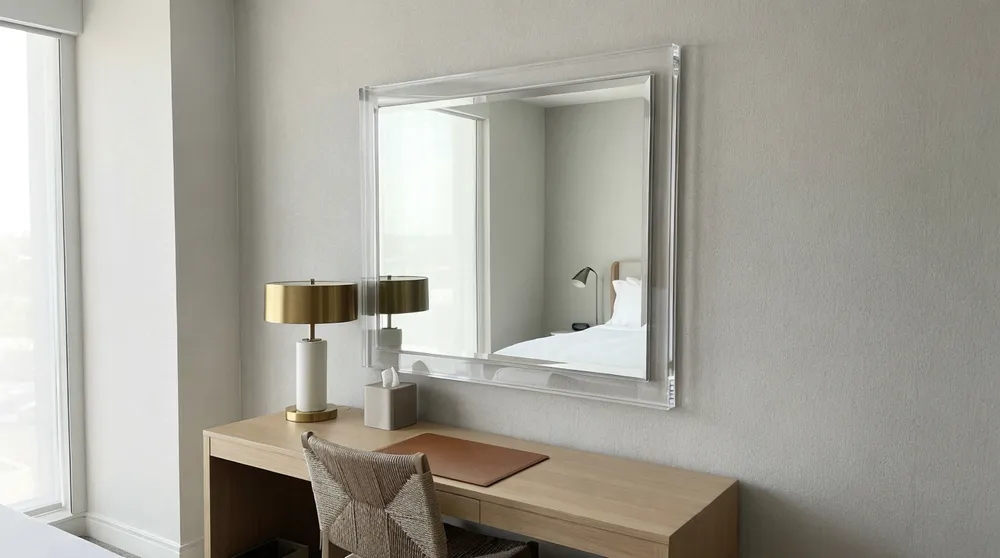
Acrylic framed mirrors installed in boutique hotel guest rooms

Hospitality Renovation and New-Build FF&E

Hotels, serviced apartments, and short-term rental operators replace mirrors constantly — guest damage, renovation cycles, brand refreshes. Acrylic-framed mirrors eliminate the breakage liability that makes glass mirrors expensive to insure and replace in guest rooms.

A typical boutique hotel order runs 200-500 units across 2-3 SKU variants (bathroom vanity, full-length, and decorative accent), and reorders come on 18-24 month cycles as properties rotate decor.

Your pitch to the FF&E buyer is simple: same visual quality, lower replacement cost, zero broken-glass incident reports. We supply acrylic mirrors to hospitality distributors in the Middle East and Southeast Asia who've built their entire mirror catalog around this value proposition.

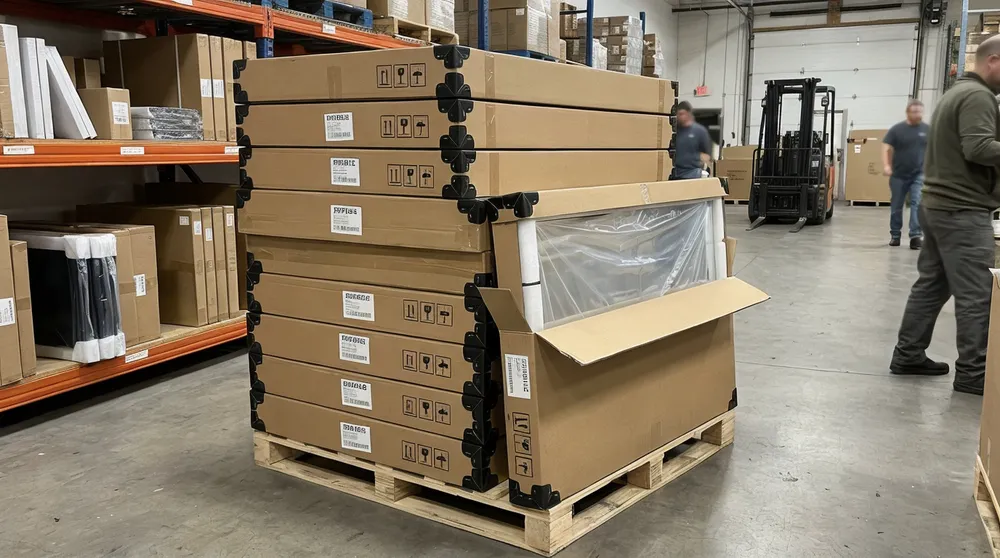
Acrylic mirrors packaged for e-commerce fulfillment and last-mile delivery

E-Commerce and Direct-to-Consumer Channels

Last-mile delivery is where glass mirrors generate the most damage claims — and the most margin erosion. Acrylic decor mirrors weigh 40-60% less than equivalent glass-framed models, so your shipping cost drops and your damage rate drops with it.

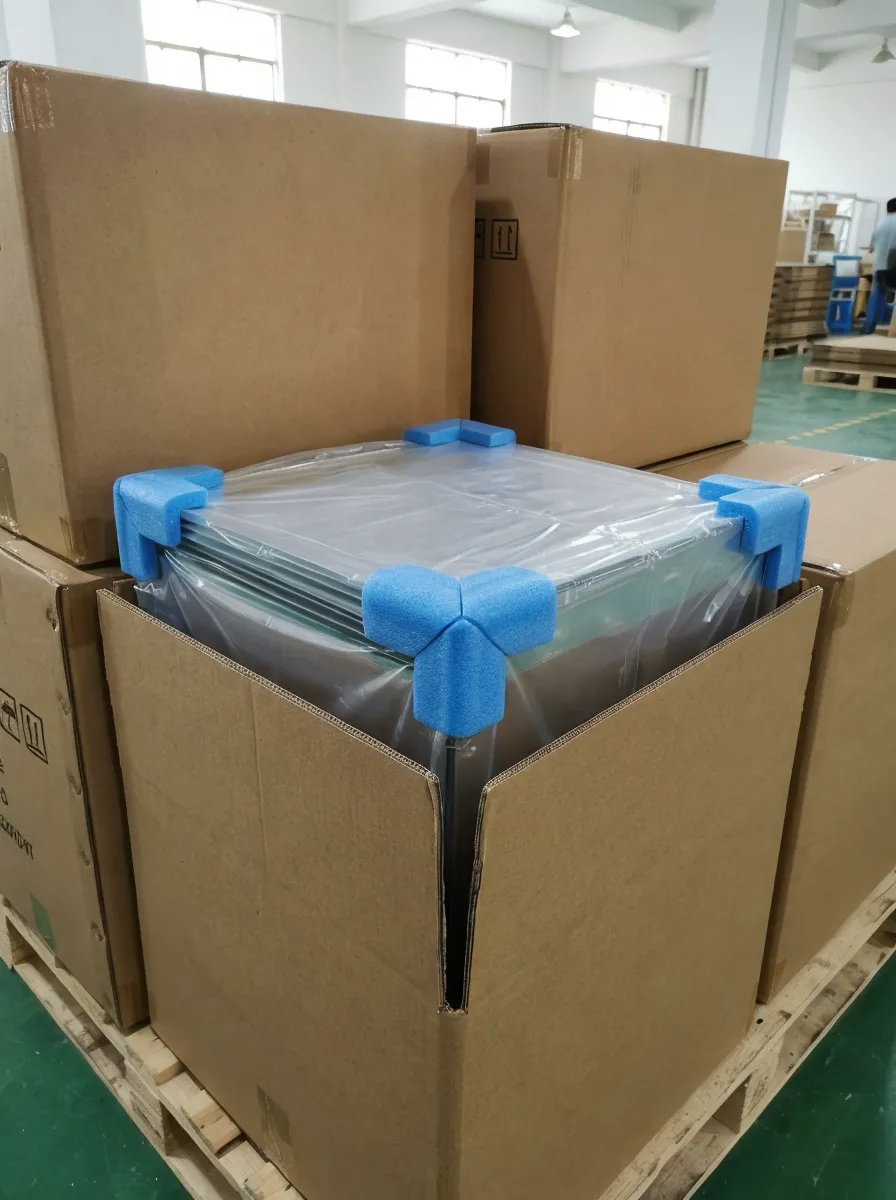
For Amazon FBA and Wayfair sellers, that weight reduction also means lower dimensional weight charges on oversized SKUs. We pack acrylic mirrors in standard 5-layer corrugated with corner protectors and poly-bag wrap; the acrylic panel doesn't need the foam-cell inserts that glass requires, so your packaging cost per unit is lower too.

We've tracked damage claim rates across our e-commerce buyers — acrylic-panel mirrors run under 0.5% versus 3-4% for glass in the same size range. That difference is pure margin recovery.

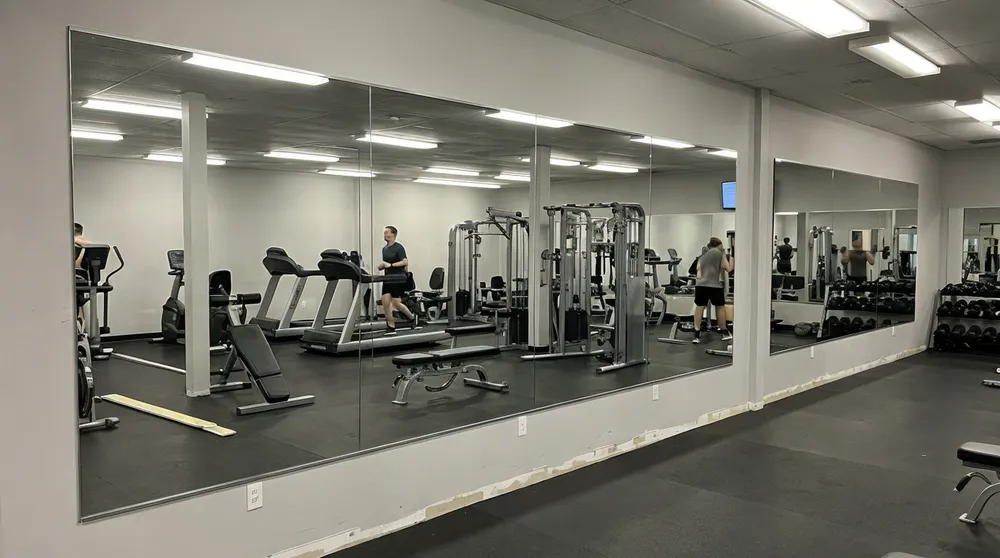
Large acrylic mirrors installed in commercial gym and fitness studio

Commercial Interiors and Retail Fit-Out

Gyms, yoga studios, dance schools, retail fitting rooms — any commercial space where large mirrors face daily contact and vibration. Building codes in several markets restrict glass mirror use in high-traffic commercial areas without safety backing film, which adds cost and installation complexity.

Acrylic mirrors sidestep that requirement entirely. Contractors ordering for commercial fit-outs typically need 50-150 units per project in 2-3 standard sizes, and they value the lighter weight for wall-mounting on drywall without heavy-duty anchoring.

Shatter-resistant acrylic mirrors in childcare and educational environments

Children's and Education Spaces

Childcare centers, pediatric clinics, and school environments have strict safety requirements around reflective surfaces. Acrylic mirrors meet child-safety standards for shatter resistance without requiring laminated glass or safety film overlays.

This is a niche segment, but it's a sticky one — once you're specified into a childcare chain's approved vendor list, reorders are automatic as new locations open. Order volumes are modest per location (10-30 units) but multiply across multi-site operators.

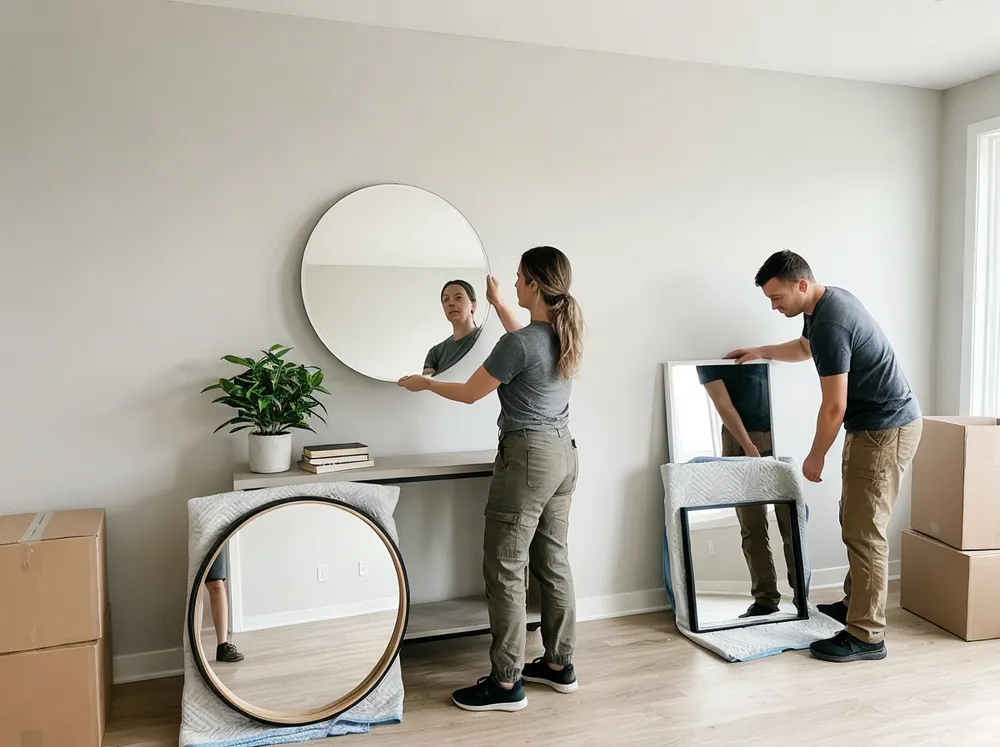
Acrylic mirrors used in rental property staging and home presentation

Rental Property and Staging

Property managers and home staging companies need mirrors that look good in listing photos but survive tenant turnover and repeated moves. Acrylic frames don't chip or dent the way wood and metal frames do during handling, and the mirror panels survive the kind of casual impact that cracks glass.

Staging companies in particular value the weight savings — their crews move inventory between properties weekly, and lighter mirrors mean faster setup and fewer workers per job. This segment tends to order in smaller batches (50-100 units) but with high reorder frequency.

Tell us which segments you're targeting

We'll recommend SKU configurations and send samples matched to your channel.

Get Channel-Matched Samples

Customization Parameters and Boundaries

We'd rather tell you exactly what we can and can't do upfront than waste your time on back-and-forth after you've already committed to a design direction.

What You Can Customize

Dimension Options Impact on MOQ / Lead Time
Frame profile shape Any profile achievable through silicone mold casting — curved, beveled, faceted, flat, stepped Existing profile: standard MOQ (100 pcs). New profile: 300 pcs MOQ, add 10-12 days for mold development
Frame width 20mm – 80mm Within range: no impact. Outside range: requires engineering review
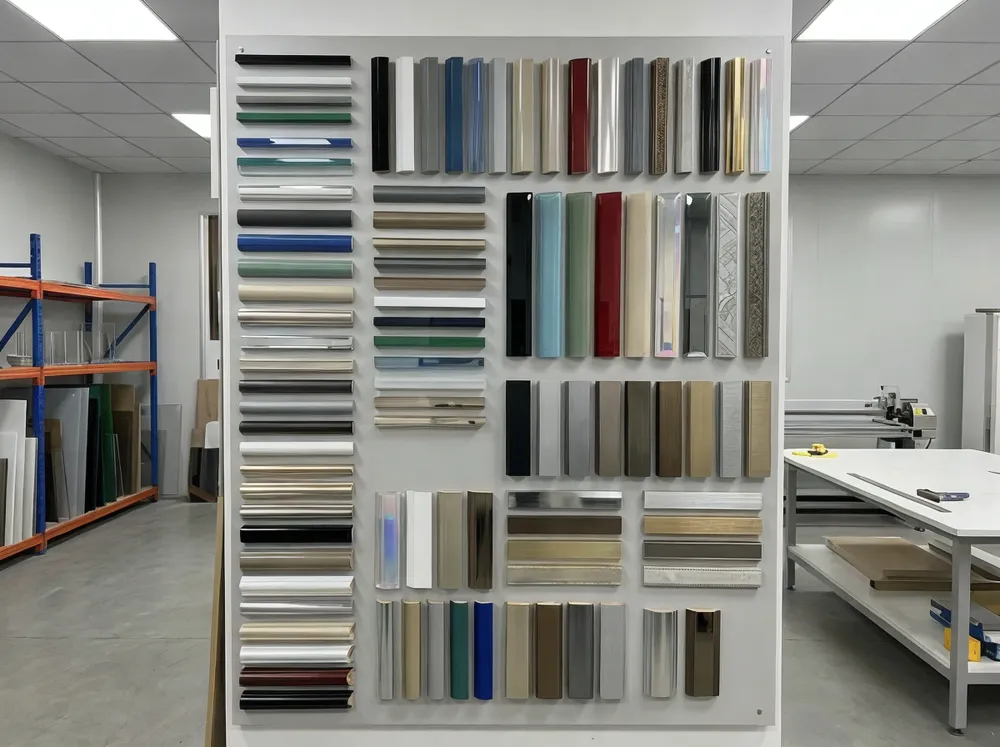
Frame color/finish Clear, frosted, any RAL/Pantone opaque color, tinted (smoke, bronze, grey), metallic spray, gradient Standard colors: no impact. Custom Pantone match: add 5-7 days for color sample approval
Mirror panel type Acrylic mirror (2mm, 3mm) or silver-coated glass (3mm, 4mm) No impact — both options run on existing lines
Overall size Up to 1200×800mm rectangular, up to 1000mm diameter round Within standard range: no impact. Oversize: requires tooling review
Shape Round, oval, rectangular, arch, hexagonal, irregular/custom Standard shapes: no impact. Custom irregular: add 7-10 days for cutting template development
Hanging hardware D-rings, sawtooth, French cleat, adhesive mount, keyhole No impact — all pre-installed at assembly
Packaging Standard export carton, retail-ready box with insert, white-label, custom branded box Retail-ready/branded: add 10-15 days for packaging artwork and print setup
Labeling UPC/EAN barcodes, FBA labels, custom hang tags, care instruction cards No impact on lead time if artwork provided with order

What We Can't Do (or Shouldn't)

Frame thickness below 3mm

Acrylic becomes too flexible and warps under its own weight at larger sizes. We've tested it; 3mm is the practical floor for anything above 400mm in any dimension.

Fully transparent frames with embedded objects

Flowers, glitter, etc. — the casting process traps air bubbles around inclusions, and reject rates climb above 30%. Not economical for either of us.

Acrylic mirror panels above 1200mm

Optical distortion becomes visible at larger sizes. For full-length mirrors over 1200mm, we recommend acrylic frame with glass mirror panel. You get the shatter-resistant frame benefit while maintaining reflection quality.

Acrylic mirror frame customization options showing various profiles, colors, and finishes

If you're unsure whether a custom spec is feasible, send us the concept. We'll give you a straight answer within 24 hours — including alternatives if your first choice isn't practical.

Send Your Custom Spec

Packaging Built for Acrylic's Strengths — and Your Channel Requirements

One of the underappreciated advantages of acrylic decor mirrors is how much they simplify your packaging and logistics costs compared to glass-framed equivalents.

Standard Export Packaging

5-layer corrugated cartons with PE foam corner protectors and individual poly-bag wrapping. Because acrylic panels don't shatter, we don't need the foam-cell full-wrap inserts or honeycomb dividers that glass mirrors require — that saves you roughly 15-20% on packaging material cost per unit and lets us fit more units per carton.

Container Loading Efficiency

For a typical 600×800mm acrylic mirror:

~1,200
units in 20GP
~2,800
units in 40HQ

The lighter unit weight (1.8-2.5 kg versus 3.2-4.0 kg for glass-panel equivalents) means you're less likely to hit the container weight limit before you fill the volume — a common problem with glass mirrors in larger sizes that forces you to ship partially loaded containers.

Acrylic mirror export packaging with PE foam corner protectors and corrugated carton

E-Commerce Sellers

FBA-ready packaging with individual retail boxes, UPC barcode labels, and FNSKU stickers pre-applied. Ready to ship directly to Amazon fulfillment centers.

Retail Distribution

Shelf-ready packaging with hang-tag slots, branded inserts, and master carton configurations matched to your warehouse receiving specs.

White-Label & Blind Drop-Ship

No Livewellcraft branding on any customer-facing material. Your brand, your packaging, your customer relationship.

Custom Branded Packaging

Full custom box design with your branding, inserts, and care cards. Add 10-15 days for artwork approval and print setup.

Need a packaging spec sheet or container loading plan for your order size? We'll send one with your quote.

Request Packaging Specs

Certifications and Compliance: What's Confirmed, What's Available

Our acrylic decor mirrors are produced under ISO 9001:2015 quality management systems, and the facility holds current SGS, CE, and BSCI certifications. These cover the production environment, labor practices, and product safety testing — the baseline compliance package that major retailers and import programs require.

For specific downstream market requirements: CE marking covers EU market entry for decorative mirrors. BSCI certification satisfies the social compliance audits that European retail chains (and increasingly North American ones) require from Asian suppliers. SGS test reports for material composition, reflectivity, and UV stability are available with your sample shipment — these are the documents your compliance team needs to clear customs and satisfy retailer onboarding requirements.

If your market requires additional certifications — REACH compliance documentation for EU chemical regulations, California Proposition 65 testing for US retail, or specific fire-rating classifications for commercial interior applications — we can arrange third-party testing through our existing SGS relationship. Lead time for additional certification testing is typically 15-20 business days. We've completed REACH and Prop 65 testing for other product lines in our facility, so the process is familiar and the results are predictable.

Quality Management
ISO 9001:2015
EU Market Entry
CE Marking
Testing & Inspection
SGS Certified
Social Compliance
BSCI Audited

Quality Control & Inspection Protocol

100% of acrylic mirrors undergo visual inspection before packing — frame surface quality, mirror clarity, edge finish, and hardware installation. We run silver coating adhesion testing on glass-panel variants and surface hardness checks on acrylic panels at the batch level. Inspection reports with photos are included with every shipment.

Third-Party Inspector Access

If you want your own third-party inspector on-site during production, we accommodate that — about 30% of our orders include buyer-appointed QC visits, and our production floor is set up for it.

Available on Request

REACH Compliance

EU chemical regulations documentation for European market requirements.

Available on Request

California Prop 65

Testing certification for US retail compliance requirements.

Available on Request

Fire-Rating Classifications

Specific classifications for commercial interior applications.

Additional certification testing: 15-20 business days lead time via our SGS relationship

Acrylic vs. Other Frame Materials: Choosing the Right Fit for Your Program

If you're evaluating acrylic decor mirrors against other frame materials in our range, this comparison helps you decide based on commercial factors — not just aesthetics.

Factor Acrylic Frame Wood Frame Metal Frame Resin Frame
Unit weight (600×800mm) 1.8–2.5 kg 3.0–4.5 kg 3.5–5.0 kg 2.5–3.5 kg
Breakage risk in transit Very low Low (chipping possible) Very low (denting possible) Low (chipping possible)
Shatter-resistant panel option Yes (acrylic panel) Glass only Glass only Glass only
FOB cost tier Mid Mid–high Mid–high Mid
Best retail price positioning $30–$75 $40–$90 $35–$80 $45–$100
Strongest channel fit E-commerce, hospitality, commercial Boutique retail, farmhouse/rustic Modern/industrial retail, contract Premium decor, ornate/traditional
Moisture resistance Excellent Poor (requires sealing) Good (powder coat) / Excellent (stainless) Excellent
Custom profile complexity High (casting allows complex shapes) Medium (CNC limited) Low–medium (bending/welding) High (mold casting)

Need a Different Frame Material?

If acrylic isn't the right fit for your program — maybe you need the natural grain texture of wood for a farmhouse line, or the weight and heft of metal for a premium industrial collection — we produce all of these under the same roof. You can mix frame materials on a single PO.

Browse all frame material options

Need a specific comparison?

Request samples across multiple frame materials and evaluate them side by side with your own buyers.

Request Multi-Material Samples

Frequently Asked Questions About Acrylic Decor Mirrors

Detailed answers to the procurement and technical questions we hear most often from distributors, retailers, and project specifiers evaluating acrylic mirror products.

Do acrylic mirror panels distort reflections compared to glass?

At sizes up to 800mm, the difference is negligible — acrylic mirror panels produced from optical-grade PMMA sheet deliver reflection clarity within 2-3% of standard silver-coated glass. Above 800mm, slight convex distortion can appear depending on panel thickness and mounting method.

For mirrors over 1000mm in any dimension, we recommend pairing an acrylic frame with a glass mirror panel — you keep the shatter-resistant frame while maintaining the reflection quality your end customers expect.

Sample evaluation: We send both panel types with sample orders so you can evaluate the difference firsthand.

What is the MOQ for custom acrylic mirror profiles, and how does mold development work?

Existing Profiles
100 pcs

MOQ per SKU from our library of 40+ active acrylic molds

New Custom Profile
300 pcs

MOQ per SKU for custom profile development

Mold development takes 10-12 days and the mold cost is typically $200-$400 depending on profile complexity — we credit the mold cost back to you on orders above 1,000 units.

Risk mitigation: You approve a mold sample before we run production, so there's no risk of committing to a profile you haven't physically evaluated.

How do acrylic frames hold up in humid environments like bathrooms?

Acrylic is inherently moisture-resistant — it doesn't absorb water, swell, or warp the way wood frames do in bathroom humidity. We've supplied acrylic-framed bathroom mirrors to hospitality projects in tropical Southeast Asia and the Middle East where bathroom humidity regularly exceeds 80%, with zero frame degradation reported over 3+ years of use.

The mirror panel backing is sealed with moisture-barrier tape at assembly, so the reflective coating is protected from behind as well.

Warranty advantage: If bathroom applications are a significant part of your product mix, acrylic frames eliminate the warranty exposure that wood frames create in wet environments.

Can you match a specific color or finish from a competitor's product?

Yes. Send us a physical sample, a Pantone/RAL reference, or even a product listing photo. Our finishing team will produce a color-match sample within 7-10 days.

Opaque Colored Frames

Tinted during the casting process for through-color consistency — the color isn't a surface coating that can chip or scratch off.

Metallic & Specialty Finishes

Chrome spray, gold leaf effect, and other treatments applied as surface finishes after casting. Most references matchable from our existing finish library.

What's the landed cost advantage of acrylic mirrors over glass-framed equivalents?

The FOB price per unit is comparable to mid-range wood or metal frames. The landed cost advantage comes from three places:

Lower Freight Cost

Lighter unit weight means lower freight cost per unit, especially on ocean freight where you're paying by CBM and weight.

Reduced Packaging Cost

Simpler packaging reduces material cost by 15-20% per unit.

Higher Container Density

More units per shipment means better cost efficiency at scale.

Post-Delivery Cost Advantage

Damage claim rates under 0.5% versus 3-4% for glass means you're not absorbing replacement shipments and customer service overhead.

For an e-commerce seller moving 500+ units per month, that damage rate difference alone can represent thousands of dollars in annual margin recovery.

Low-Risk Entry Point

Start With Samples, Scale When You're Ready

Most buyers new to acrylic decor mirrors start with a 2-3 unit sample order across different sizes and finishes to evaluate quality with their own customers or project specifiers.

Sample Turnaround
Ships within 10 days of order confirmation

Sample cost credited against your first production order

Already Know Your Specs?

Send us your requirements and we'll return a detailed quote within 48 hours:

  • Sizes and quantities per SKU
  • Finish preferences (color, texture, metallic)
  • Packaging format requirements
  • Target market / sales channel

Your quote will include:

FOB Pricing
Container Plan
Timeline

Our engineering team can also review your existing mirror line and recommend where acrylic variants would strengthen your catalog based on what's performing for our current distributors in your region.

Explore More Frame Materials

Compare acrylic with other frame options in our catalog