allenliu@livewellcraft.com +86 182 2840 2575 Mon–Sat: 9:00 AM – 6:00 PM (GMT+7)
Natural Wood Frame Collection

Wood Decor Mirrors Manufactured In-House

From raw timber and float glass to finished, packed units on a single production floor. Pine, paulownia, MDF with real wood veneer, and reclaimed-look frames — we cut the glass, silver it, mill the frame profiles, apply multi-coat finishes, and assemble everything at our 12,000 m² facility in Vietnam.

You get one supplier, one quality standard, and a landed product your downstream buyers recognize as premium.

ISO 9001:2015
400K Annual Capacity
MOQ 100 Pieces
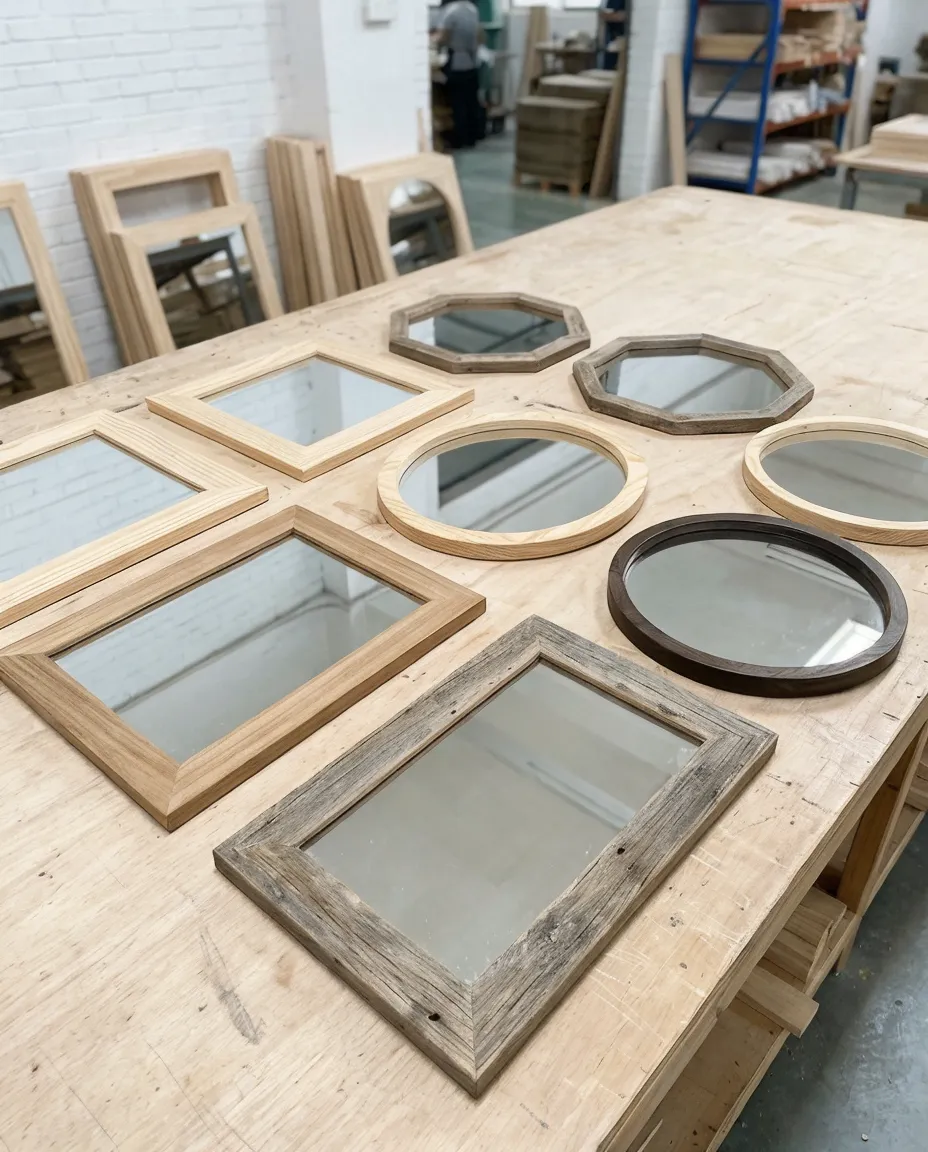
Collection of premium wood-framed decorative mirrors featuring pine, paulownia, and reclaimed-look frames

Wood decor mirrors sit in the mid-to-premium tier of the decorative mirror market — and that positioning is exactly why they're worth carrying. Unlike frameless or basic MDF mirrors that compete on price alone, wood-framed mirrors give you a product with visible material value that supports retail markups in the $40–$90 range without pushback from your end customers. The frame is the margin. The glass is commoditized. Your buyer picks up a wood mirror, feels the weight and grain, and accepts the price tag. That perception gap between material cost and perceived value is where your business makes money.

We've been producing wood decor mirrors since our early years — it was one of the first frame categories we built dedicated tooling for. Today, wood frames account for a significant share of our output, and we run them on lines equipped for the full sequence: timber preparation, CNC profile routing, sanding, priming, multi-coat finishing, and assembly with silvered glass panels. The parent category page covers how all our frame materials map to price tiers and market segments. This page goes deeper into wood specifically — the species options, the production details, and the commercial logic behind each choice.

Why Wood Frames Protect Your Margin

  • Visible material value justifies premium pricing
  • Weight and grain create tactile quality perception
  • $40–$90 retail range with minimal buyer resistance
  • Differentiation from commoditized frameless options
Pine
Classic Grain
Paulownia
Lightweight
MDF Veneer
Real Wood Face
Reclaimed-Look
Distressed Finish

Wood Species and Frame Profiles: The Specs for Your Comparison Sheet

The wood species you select determines your FOB cost, your freight economics, and the retail segment you can credibly target. Here's what we work with and how each one maps to real purchasing decisions.

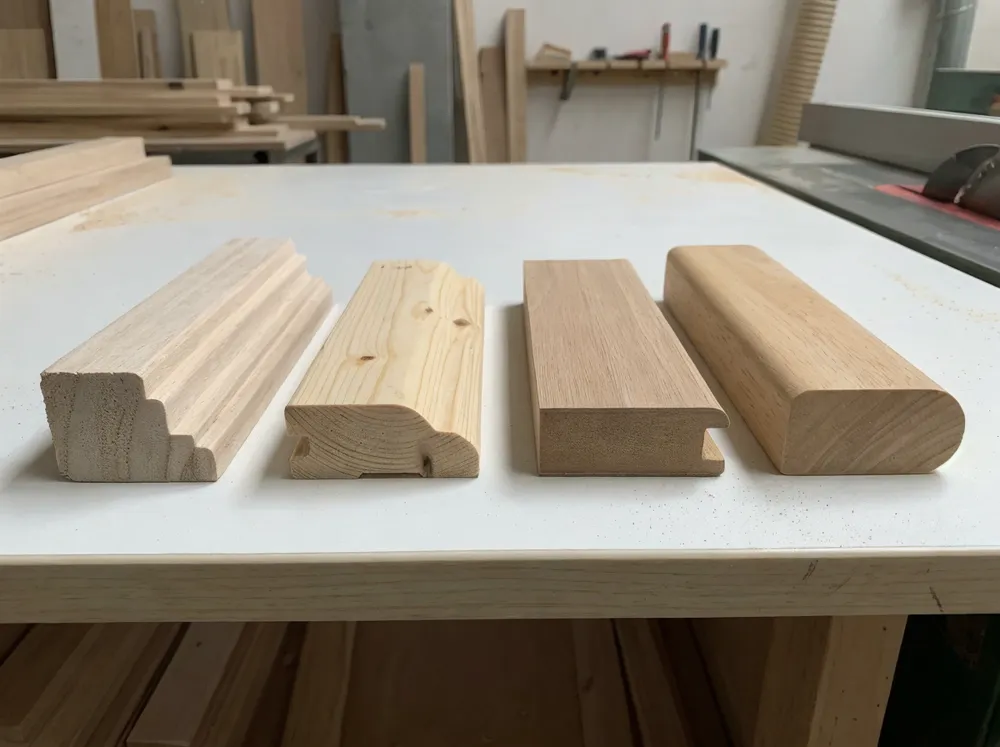
Wood frame samples showing paulownia, pine, MDF veneer, and rubberwood profiles

Paulownia

Frame Weight
2.8–3.5 kg
Relative FOB
Lowest in wood
Best-Fit Market
Volume retail, e-commerce (freight-sensitive channels)

Pine

Frame Weight
4.0–5.2 kg
Relative FOB
Mid
Best-Fit Market
Home decor chains, boutique retail, farmhouse/rustic lines

MDF + Veneer

Frame Weight
4.5–5.8 kg
Relative FOB
Low–mid
Best-Fit Market
Mid-range retail where grain appearance matters but solid wood cost doesn't

Rubberwood

Frame Weight
5.0–6.5 kg
Relative FOB
Mid–high
Best-Fit Market
Premium retail, hospitality FF&E, design-forward lines

Paulownia Freight Advantage

Paulownia deserves a closer look if you're shipping full containers to North America or Europe. At roughly 40% lighter than pine for comparable frame dimensions, the weight savings compound across 400–600 units per 40HQ — that's real money off your freight invoice.

Standard Frame Specifications

These are exact production parameters, not catalog aspirations. Your procurement team can drop them directly into a comparison sheet. If you need a spec outside these ranges, that's a custom conversation — covered further down this page.

Parameter Range / Options
Frame width 20mm – 100mm
Frame depth 15mm – 45mm
Profile types Flat, beveled, stepped, scoop, barn-style, carved ornate
Mirror glass 3mm or 4mm float, copper-free silver coating, protective backing
Glass options Clear, bronze tint, grey tint, antiqued/foxed
Standard sizes 30×40cm, 40×60cm, 50×70cm, 60×90cm, 70×100cm, custom
Shapes Rectangle, arch-top, oval, round, irregular/asymmetric
Hanging hardware D-ring, sawtooth, French cleat, wire — pre-installed

Have target specs ready?

Send us your requirements — we'll confirm feasibility and quote within 48 hours.

Request Quote

How We Build Wood Mirror Frames — and Why the Process Protects Your Margin

The category page covers our overall production chain. Here's what happens specifically on the wood frame lines.

Timber Receiving & Moisture Control

Timber arrives kiln-dried to 8–12% moisture content. We verify moisture with pin meters on every incoming batch because wood that's too wet warps after assembly, and wood that's over-dried cracks during routing. We rejected an entire paulownia shipment last year that tested at 16% — the supplier had rushed the kiln cycle. Catching that at receiving saved us (and our buyers) a production run of frames that would have cupped within weeks of delivery.

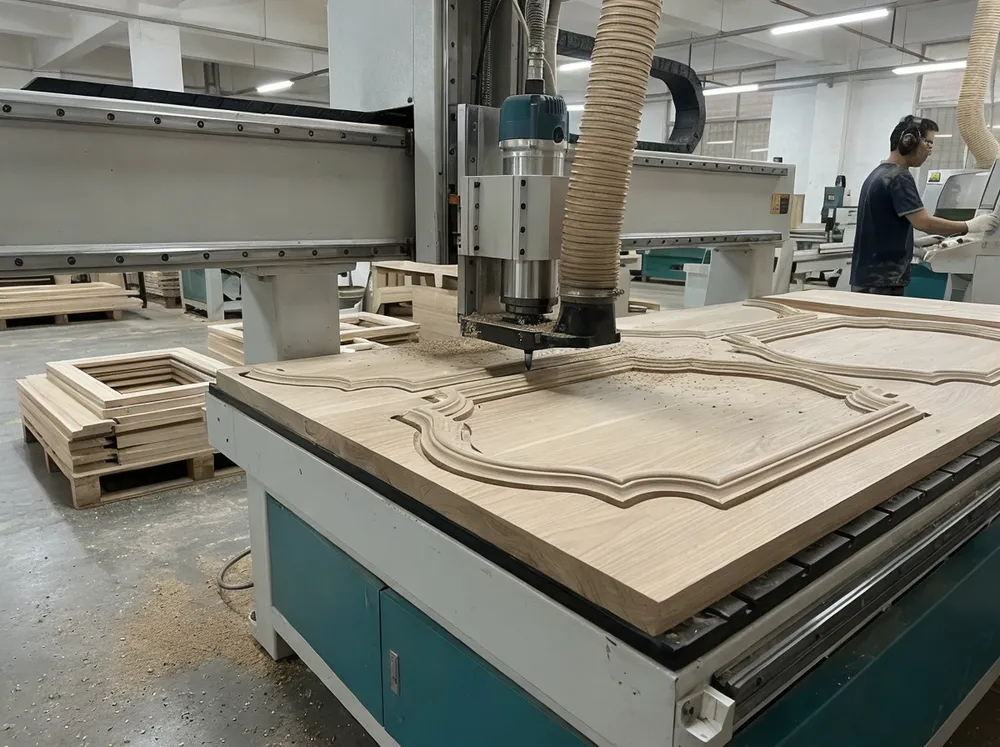
CNC Profile Routing

Frame profiles are cut on CNC routers. We maintain a library of over 40 standard cross-section profiles, and our engineering team can develop a new profile from your reference image in 10–12 days. CNC routing gives us repeatable accuracy across a full run — the profile on unit 3,000 matches unit 1, which matters when your retail display has six mirrors side by side and your customer's eye catches any inconsistency.

Three-Stage Sanding

Sanding runs through three grit stages: 80, 150, and 220. After sanding, frames move to priming — we use a sanding sealer that fills the grain just enough to create a smooth base without hiding the wood texture entirely. For stained finishes, the sealer coat is lighter so the grain reads through. For painted finishes, we apply a heavier primer and sand again before topcoat.

CNC router cutting wood mirror frame profiles with precision tooling

Multi-Coat Finishing Process

Finishing is where most quality variation happens in the wood mirror market, and it's where we invest the most attention. We run multi-coat application — stain or paint, followed by a clear protective topcoat — in a controlled-humidity spray booth. Each coat gets flash-off time before the next layer goes on.

Rushing this step (which cheaper operations do to increase throughput) causes adhesion failure, orange peel texture, and inconsistent sheen. We've standardized on a 3-coat minimum for all wood frames: base, color, clear.

Distressed and antiqued finishes get additional hand-work between coats — sanding through at edges and corners to expose the base layer or raw wood beneath. We keep a visual reference library of over 20 distress patterns so your "lightly weathered farmhouse" looks the same whether you reorder in March or September.

Assembly Line

After finishing, frames move to assembly. The silvered glass panel — cut, edged, and coated on our separate glass line — meets the frame, gets secured with backing board and pre-installed hanging hardware, passes final visual inspection, and moves to packaging.

100% Visual Inspection

100% of finished units go through visual inspection before packing. We check for finish defects (runs, sags, bare spots, inconsistent distressing), glass coating quality (silver adhesion, edge seal integrity), and hardware installation (secure mounting, correct orientation). Units that fail get reworked or rejected — they don't ship.

Four Market Segments Where Wood Mirrors Build Reorder Business

Home Decor Retail and E-Commerce

The largest volume channel for wood decor mirrors. Retailers on Amazon, Wayfair, and independent home decor stores need SKUs that photograph well, carry perceived value above their price point, and survive last-mile shipping. Wood frames deliver on all three.

A pine or paulownia frame with a walnut stain and arch-top glass photographs as a $120 product and retails comfortably at $55–$85 depending on size. Your margin holds because the FOB cost stays in the mid-tier.

We supply retail-ready packaging with UPC labels, custom inserts, and cartons tested to ISTA 3A standards — your product arrives at the customer's door without damage claims eating into your returns budget.

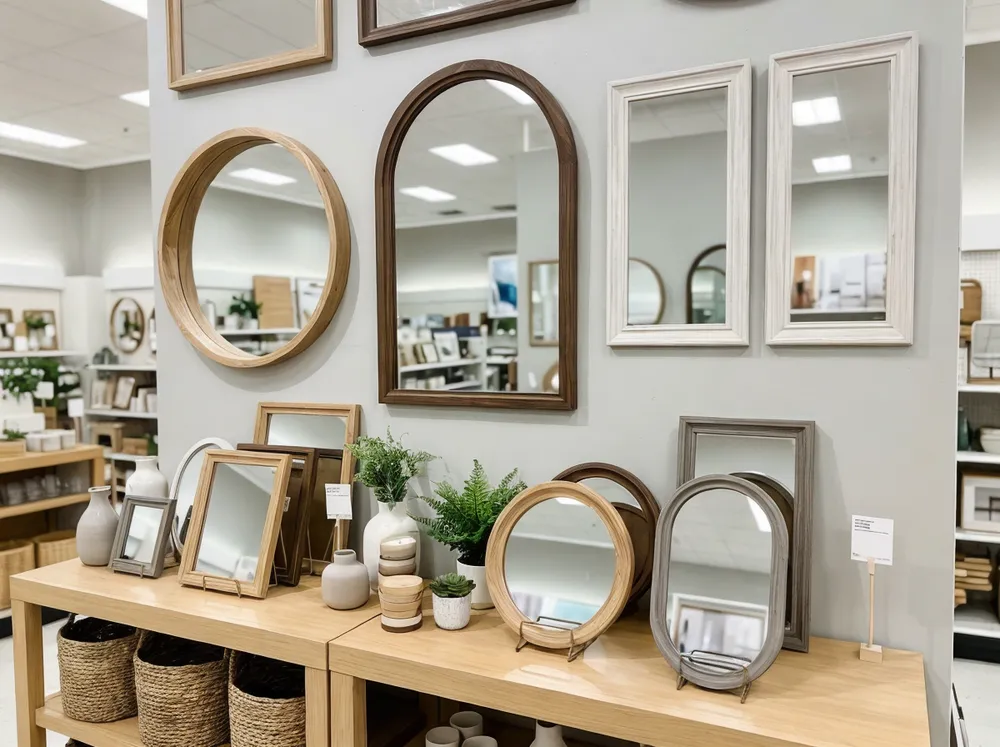
Wood framed mirrors displayed in retail home decor setting
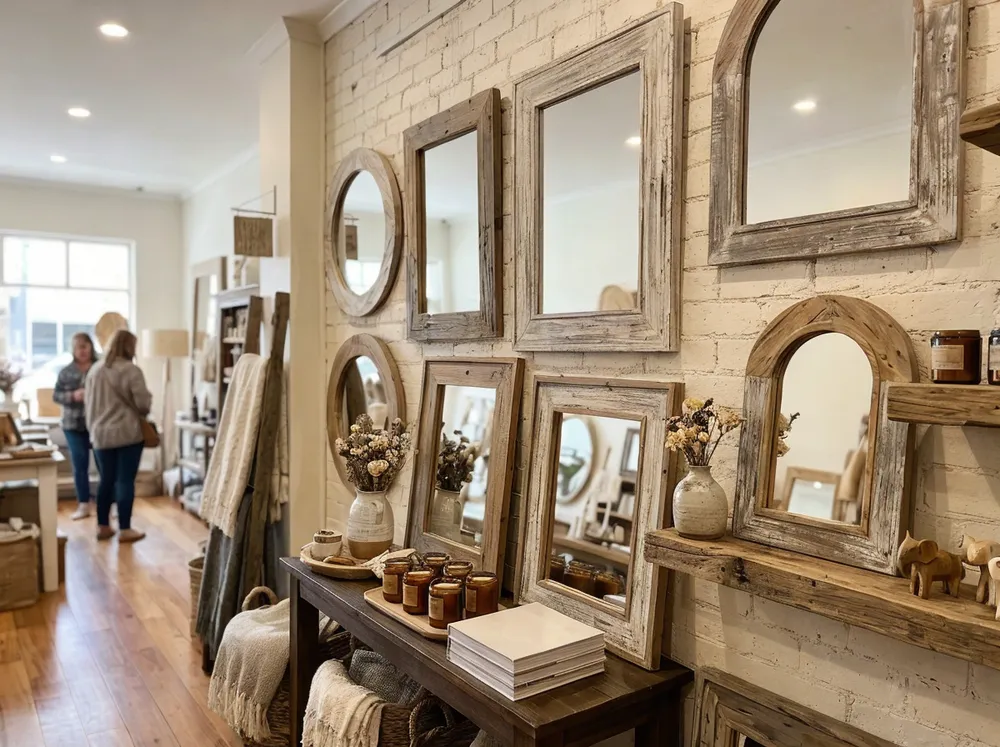
Distressed wood mirrors in boutique specialty store

Boutique and Specialty Distribution

Independent home stores, gift shops, and design-focused retailers buy in smaller quantities but accept higher price points and reorder consistently when a SKU sells through. Wood mirrors — especially distressed, reclaimed-look, and hand-finished styles — are the anchor product for this channel.

Your value here is exclusivity: a custom finish or profile that the mass-market retailers don't carry. We support this with MOQs starting at 100 pieces on standard models, so you can test a new finish in your distribution network without a full-container commitment.

Hospitality and Commercial Interiors

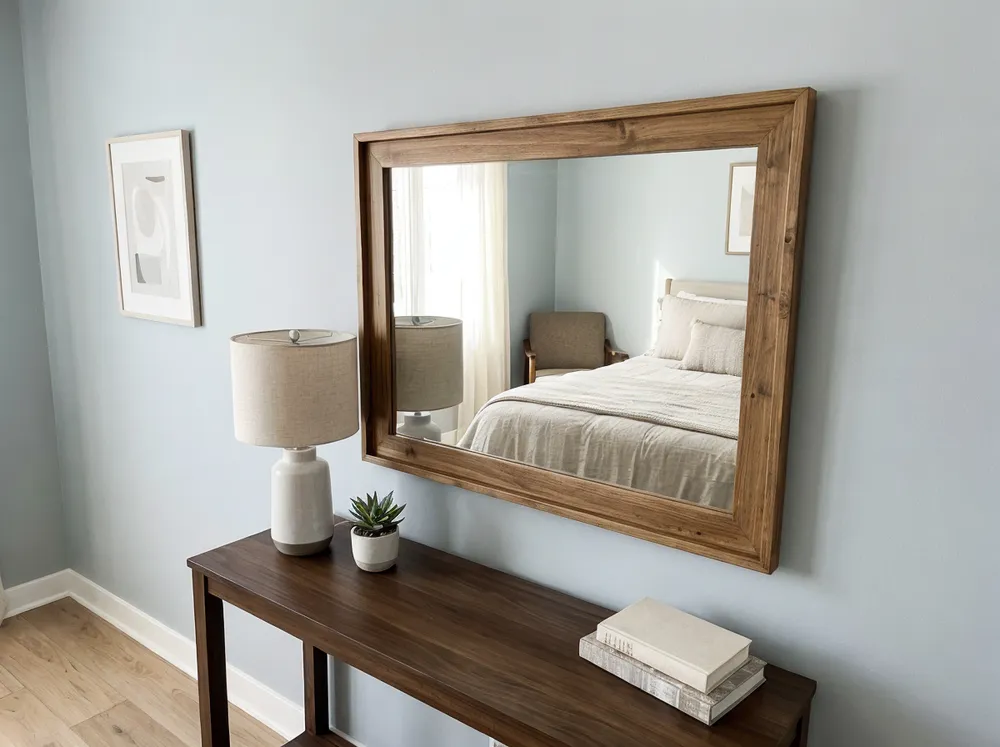
Hotels, restaurants, and commercial designers specify wood-framed mirrors for guest rooms, lobbies, and public restrooms — particularly in properties going for farmhouse, coastal, or boutique-hotel aesthetics. Orders are project-based: 50–300 identical units with specific size and finish requirements, delivered to a tight schedule.

Wood frames work here because they read as premium in the guest experience while keeping the FF&E budget reasonable compared to custom metalwork. We've supplied hospitality programs where finish consistency across 200 units was the non-negotiable requirement — our controlled spray booth and reference library system exists specifically to meet that standard.

Wood framed mirror in boutique hotel guest room interior
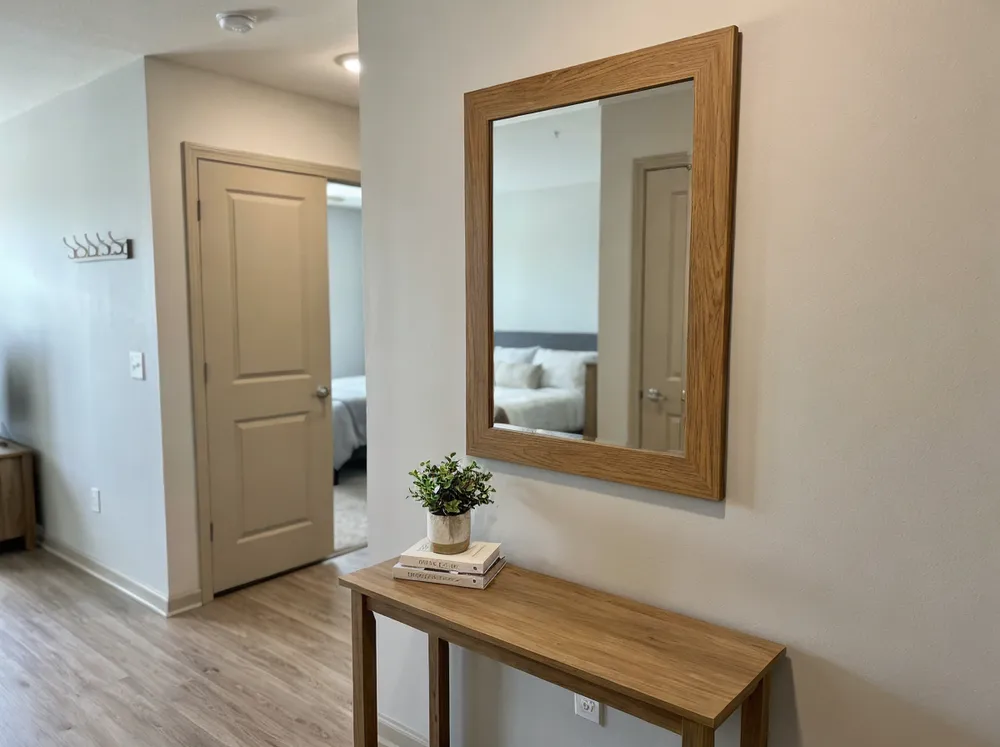
MDF veneer mirror in staged rental property listing

Staging and Rental Property

Property staging companies rotate inventory frequently and need mirrors that look good in listing photos, install quickly, and cost little enough that damage during moves doesn't wreck the budget.

MDF with wood veneer is the sweet spot for this segment — it gives the visual warmth of real wood at a lower per-unit cost, and the engineered core resists the humidity swings that occur in vacant properties better than solid wood. This segment orders smaller quantities but reorders every 60–90 days — steady, predictable volume if you're set up to serve it.

Not sure which segment fits your business?

Tell us which segment you're targeting and we'll recommend a starter SKU mix with specific species, finishes, and sizes.

Get SKU Recommendations
OEM/ODM Capability

Custom Wood Mirror Programs: What You Can Specify, and Where the Limits Are

Our 12-engineer OEM/ODM team handles custom wood mirror development in-house — CNC programming, finish formulation, and sample production all happen on our floor.

CNC machine profiling custom wood mirror frame cross-section

What You Can Customize

  • Frame profile: Any cross-section shape within 20–100mm width. Send a sketch, a photo of a competitor product, or a CAD file — we'll produce a sample.
  • Wood species: Pine, paulownia, rubberwood, MDF with veneer (oak, walnut, ash, teak veneer options). Other species available on request with lead time for material sourcing.
  • Finish: Any stain color (we match to your physical sample or Pantone reference), painted finishes in any color, whitewash, grey wash, distressed, antiqued, cerused, natural clear coat. Sheen levels from dead matte to semi-gloss.
  • Mirror glass: Clear, bronze, grey, or antiqued/foxed. Beveled or polished edge. Custom shapes including arch, oval, and irregular cuts.
  • Size: Custom dimensions up to 120×180cm for rectangular, up to 100cm diameter for round.
  • Branding: Private label packaging, custom hang tags, branded backing labels, retail-specific inserts.

Limitations and Lead Time Impact

Customization Level MOQ Lead Time
Finish change only (existing profile) 100 pieces 30–35 days
New frame profile (new CNC program) 300 pieces 40–45 days
New profile + custom glass shape 300 pieces 45–50 days
New wood species (sourcing required) 500 pieces 50–60 days

Fastest Path to a Differentiated SKU

A finish change on an existing profile is the fastest path to a differentiated SKU. Most of our distributors start there — pick a proven frame shape from our library, specify your own stain color or distress pattern, and you have a product that doesn't appear in your competitor's catalog.

New profiles take longer because we cut a CNC test run and send you a physical sample for approval before committing to production tooling.

Send Reference Image

Our engineering team will confirm the profile, recommend a wood species, and return a sample timeline.

Landed Cost Planning

Freight Math: How Wood Frame Weight Affects Your Landed Cost

Wood mirrors are heavier than acrylic or frameless alternatives, and that weight shows up in your freight invoice. Here's how the numbers work so you can plan accurately.

Weight Comparison by Size & Species

Mirror Size Paulownia Frame
(packed)
Pine Frame
(packed)
Units per 40HQ
(approx.)
40×60cm ~1.8 kg ~2.6 kg 550–650
60×90cm ~3.8 kg ~5.5 kg 350–420
70×100cm ~4.8 kg ~6.8 kg 280–340

Species Choice at Container Scale

A 40HQ of 60×90cm pine-framed mirrors weighs roughly 2,300 kg in product alone. Switch to paulownia and that drops to about 1,600 kg — same container, same unit count, 700 kg less gross weight. If your freight is calculated by weight rather than volume, that's a direct cost reduction.

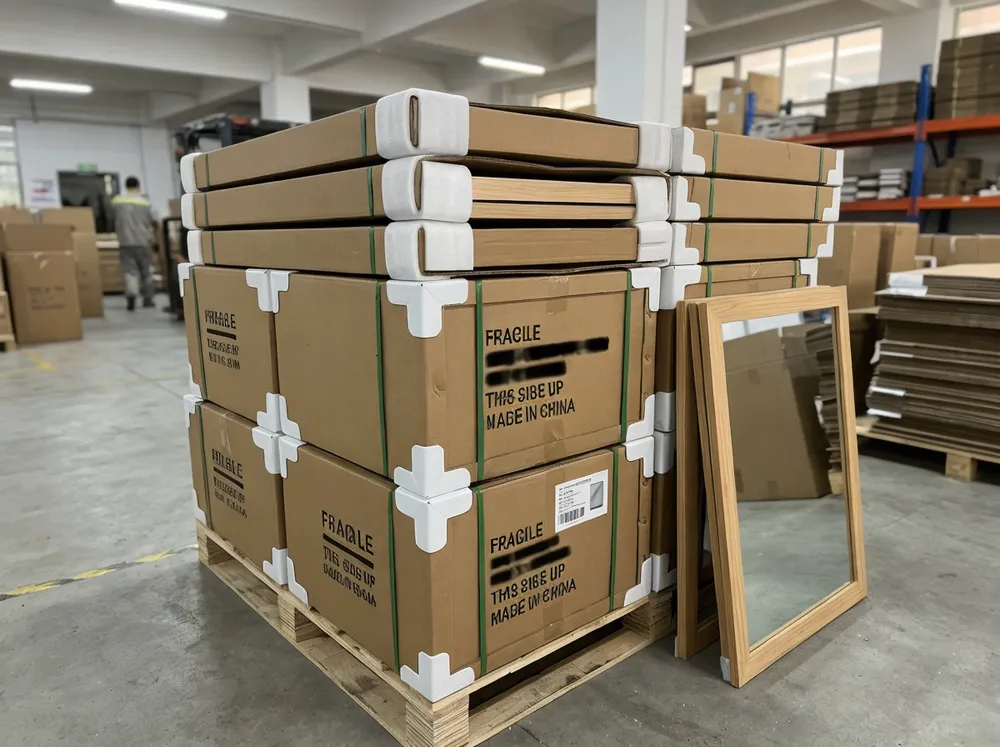
Wood mirrors packed in corrugated cartons with corner protectors for export

Packing & Documentation

  • Individual corrugated cartons with corner protectors and foam edge strips
  • Retail channels: shelf-ready cartons with UPC labels and product photography inserts
  • Project delivery: palletized with stretch wrap and edge boards
  • Export documentation — commercial invoice, packing list, certificate of origin — follows the format your freight forwarder expects

Sourcing Wood Decor Mirrors: Questions Buyers Ask

Direct answers to the specification and sourcing questions we hear most often from distributors evaluating wood mirror programs.

Paulownia is roughly 40% lighter than pine at equivalent frame dimensions, which directly reduces your per-unit freight cost. The grain is softer and more uniform — it takes stain well but doesn't have the pronounced knot character that pine offers.

If your product line targets a clean, modern aesthetic or you're optimizing for e-commerce where shipping cost per unit matters, paulownia is the better pick. If your buyers want visible grain character, knots, and a traditional wood look — especially for farmhouse and rustic lines — pine delivers that without faking it.

We produce both on the same line and can send comparison samples so you evaluate the look and weight side by side.

Every production run starts with a color-match approval sample pulled from the first 10 units off the line. We photograph it under standardized lighting and compare against your approved reference sample before the run continues.

The spray booth maintains controlled humidity and temperature because both affect how stain absorbs into wood grain — a 10% humidity swing can shift the tone noticeably on lighter stains. Between batches, we flush the spray system and re-calibrate.

For distressed finishes, our finishing team works from a visual reference card that specifies distress intensity, edge exposure width, and sanding pattern.

The result: unit 2,000 matches unit 1 closely enough that they can sit side by side on a retail shelf.

Yes. As long as each SKU meets the applicable MOQ (100 pieces for finish changes on existing profiles, 300 for new profiles), you can combine multiple wood species and finishes on one purchase order.

We produce them on the same line and consolidate into a single shipment.

Typical approach: Most distributors building a wood mirror catalog order 3–5 SKUs across two species and several finish options to cover their price range from entry to premium.

MDF with real wood veneer gives you the visual grain of solid wood at a lower material cost and with better dimensional stability — it won't warp or crack with humidity changes the way solid wood can in poorly climate-controlled environments.

The trade-off is weight (MDF is heavier than paulownia, comparable to pine) and the fact that veneer can't be sanded and refinished the way solid wood can.

Retail & E-commerce

Veneer-wrapped MDF is often the smarter spec — finished consumer product, cost-optimized.

Hospitality & High-End

Solid wood justifies its cost premium where buyers expect solid material and may inspect closely.

Our facility holds ISO 9001:2015, CE, and BSCI certifications. For wood specifically, we source from suppliers with proper forestry documentation.

If your market requires CARB Phase 2 compliance for composite wood products (relevant for MDF components sold into California and increasingly other US states), we can supply compliant MDF and provide the documentation.

SGS testing is available for specific finish requirements — VOC emissions, heavy metal content in paints and stains — and we arrange third-party testing reports on request.

ISO 9001:2015 CE BSCI CARB Phase 2
Ready to Move Forward

Start Your Wood Mirror Program

Most buyers new to our wood mirror line start with a 2–3 unit sample order to evaluate frame quality, finish accuracy, and packaging in person. We can ship samples within 10 days of order confirmation.

What to Send Us

Include these details for a faster, more accurate quote

  • Your target market and retail positioning
  • Preferred wood species (pine, paulownia, MDF veneer, reclaimed-look)
  • Finish references — photos work fine
  • Volume expectations for initial and annual orders

What You'll Receive

Our team responds typically within 48 hours

  • Specific SKU recommendation matched to your market
  • FOB pricing based on your volume tier
  • Production timeline for samples and bulk orders
  • Customization options available for your specs