The finish that doesn't chase trends — silver-frame mirrors built for steady sell-through and broad market fit.
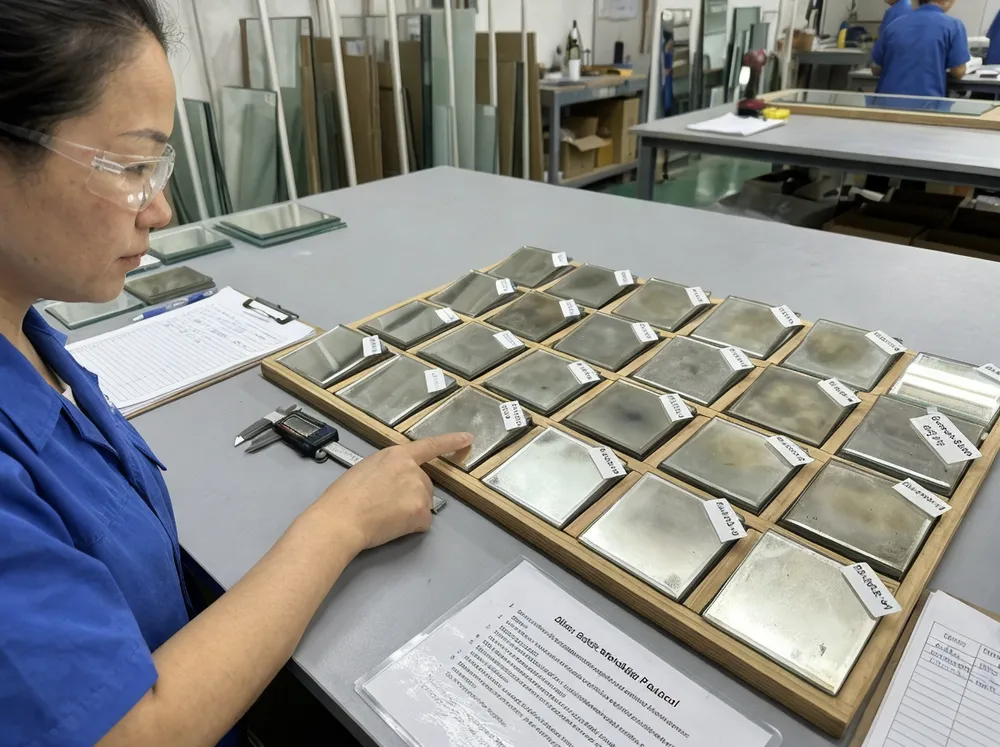
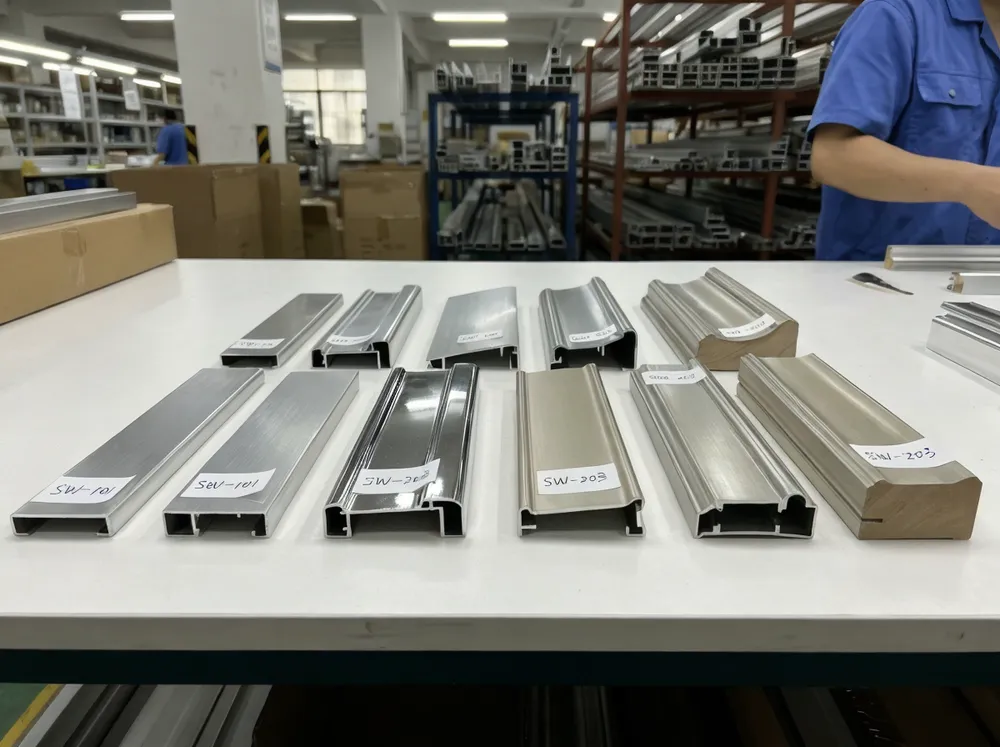
Chrome, brushed nickel, antique silver, and pewter tones, all electroplated or hand-finished in-house on our dedicated metal finishing line. You get consistent color across reorders because we control the plating bath, not a subcontractor.
Silver decor mirrors are metallic-finish framed mirrors in chrome, brushed nickel, antique silver, and pewter tones. Within our frame material lineup, silver sits in the mid-to-high price tier — typically landing at $50–$120 retail depending on size and profile complexity.
Where gold-finish mirrors ride interior design trend cycles and carry higher markdown risk when those cycles shift, silver frames are the neutral metallic. They pair with modern, transitional, and contemporary interiors without dating themselves, which is exactly why they show up as the anchor SKU in most of our distributors' mirror catalogs.
If you're sourcing silver decor mirrors for wholesale, retail placement, or hospitality projects, this page covers the finish options, specifications, electroplating process, and customization range — everything you need to decide whether these fit your product line.
This is the commercial case for silver-frame mirrors, and it's straightforward: silver finishes don't cycle out. Gold surged over the past three to four years on the back of the "warm metals" trend in residential interiors, and it's been a strong seller for us — but gold is fashion-forward, which means it carries inventory risk when the trend eventually cools. Silver has been a constant in interior design for decades. Chrome and brushed nickel read as "modern classic," and that positioning doesn't expire with a design season.
What this means for your catalog: silver-frame SKUs generate the most predictable reorder patterns we see across our distributor base. Buyers who stock silver alongside two or three trend finishes — gold, rose gold, brass — get the best of both: the trend pieces drive excitement and higher ASPs, while the silver pieces provide the steady baseline revenue that keeps your inventory turning year-round.
We've watched this pattern play out across North American and European accounts for years, and the distributors who build their core around silver consistently report lower dead-stock rates than those who lean heavily into a single trend finish.
If you're entering the decorative mirror category for the first time, starting with silver is the lowest-risk way to test your market before adding trend finishes.
Not all silver finishes target the same buyer. We produce four distinct silver tones, each achieved through a different finishing process and each mapping to a specific retail segment.
Electroplated chromium over nickel undercoat
Bright, highly reflective, cool-toned finish that reads as contemporary and clean.
Strongest Segments
Highest Volume
Electroplated nickel + mechanical brushing
Warm silver with soft matte texture — the most versatile tone across interior styles.
Strongest Segments
Higher Margin
Electroplate base + hand-applied patina
Aged, slightly darkened finish with vintage character that justifies premium pricing.
Strongest Segments
Higher Margin
Electroplated with controlled oxidation layer
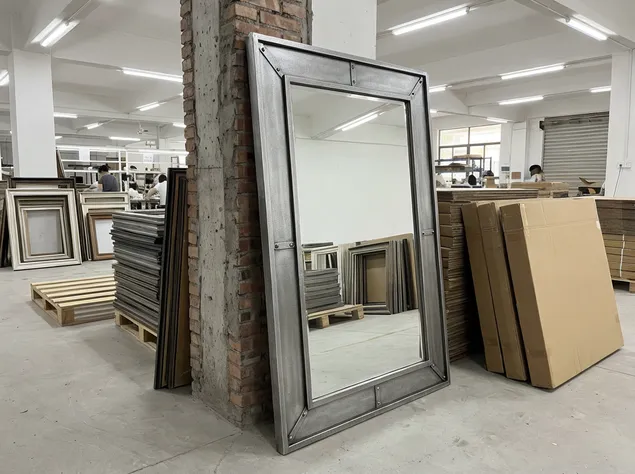
Dark, muted silver with industrial feel — hand-finishing creates perceived value.
Strongest Segments
Brushed nickel is our highest-volume silver finish — it's the most versatile tone and works across the widest range of interior styles. Chrome runs second, driven largely by hospitality orders where bright, clean-reading mirrors are the default.
Antique silver and pewter are lower volume per SKU but carry higher margins at retail because the hand-finishing steps create perceived value that justifies premium pricing.
If you're building a silver-frame assortment, most of our buyers start with brushed nickel and chrome across three to four mirror sizes, then add antique silver or pewter as a margin-enhancing supplement once the core SKUs are moving.
Send us your target retail price range
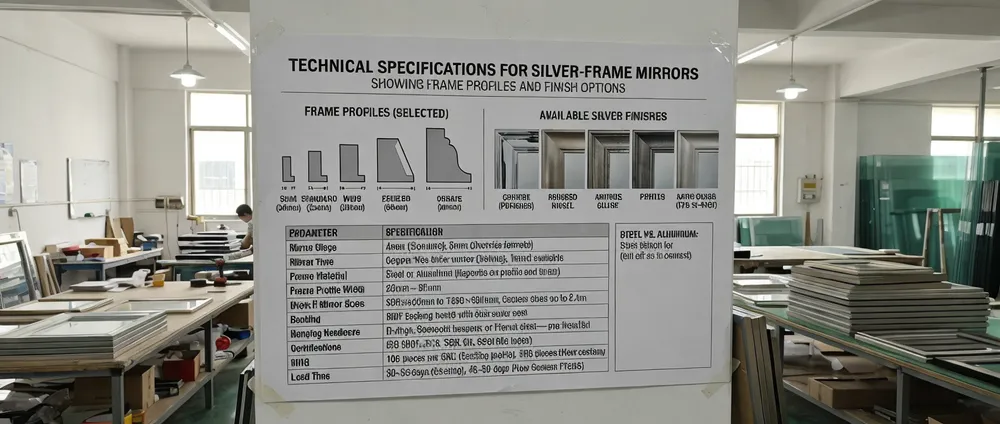
| Parameter | Specification |
|---|---|
| Mirror glass thickness | 4mm (standard), 5mm available for oversize formats |
| Mirror type | Copper-free silver mirror (default), tinted options (bronze, grey) on request |
| Frame material | Steel or aluminum, depending on profile and finish |
| Frame profile width | 20mm – 80mm |
| Available silver finishes | Chrome, brushed nickel, antique silver, pewter, custom Pantone silver tones |
| Overall mirror sizes | 300×400mm up to 1200×900mm; custom sizes available |
| Backing | MDF backing board with dust cover seal |
| Hanging hardware | D-rings, sawtooth hangers, or French cleat — pre-installed |
| Certifications | ISO 9001:2015, SGS, CE, BSCI |
| MOQ | 100 pieces per SKU (standard finish on existing profile), 300 pieces (custom profile or finish) |
| Lead time | 30–35 days (existing profile), 45–50 days (new custom profile) |
Steel frames are the default for most silver-finish mirrors — they take electroplating well and provide the weight and rigidity that feels substantial on the wall.
Aluminum is the better choice when you need to keep shipping weight down or when the mirror is oversized, since aluminum frames at equivalent strength weigh roughly 60% less.
We use aluminum for anything over 900mm in either dimension unless the buyer specifically requests steel — the freight savings on a full container of large mirrors are significant.
The category page covers our general metal frame production process. Here's what's specific to silver-finish electroplating.
Every silver-frame mirror starts with a nickel undercoat. This isn't optional — nickel provides the adhesion layer and corrosion barrier that determines whether your chrome or silver finish holds up after 18 months on a retail shelf or peels at the edges.
We run the nickel bath at controlled temperature and current density, monitoring solution chemistry daily.
Undercoat thickness targets 8–12 microns — go thinner and you lose corrosion protection, go thicker and you start burying fine frame profile details under excess metal.
For chrome finish, a chromium layer goes over the nickel — thin (0.2–0.5 microns is typical), but it's what gives chrome its distinctive blue-white brightness and hardness.
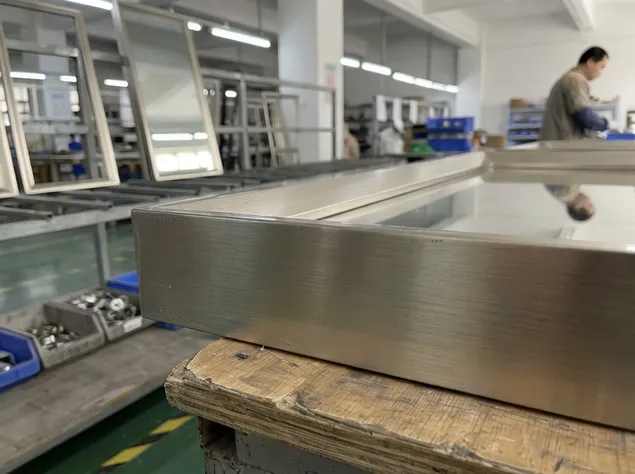
Brushed nickel skips the chromium step entirely; instead, the nickel-plated surface gets mechanically brushed on a rotating abrasive wheel to create the directional grain pattern.
The brushing pressure and wheel grit determine the texture — we calibrate for each frame profile width so the grain reads consistently whether you're looking at a 20mm frame or an 80mm one.
Antique silver and pewter involve a different sequence. We electroplate the base, then our finishing team applies chemical patina solutions by hand, building up the aged or darkened effect in controlled layers.
This hand step is why antique and pewter finishes carry a slightly higher per-unit cost — but it's also why they can't be easily replicated by factories running purely automated lines.
The hand application creates subtle variation that reads as authentic, not manufactured.
The consistency question matters most at reorder. Your second container of chrome mirrors needs to match the first one sitting on your warehouse shelf.
We control this through bath chemistry monitoring — specific gravity, pH, metal ion concentration — and by running test strips at the start of every plating shift. If the bath drifts, we correct before production pieces go in, not after.
We keep reference samples for every antique silver batch we've produced in the last three years, so when you reorder, our team matches against your original production run, not just a generic standard.
Silver-tone mirrors move consistently across multiple B2B channels. Here's where the volume concentrates and why each segment keeps reordering.
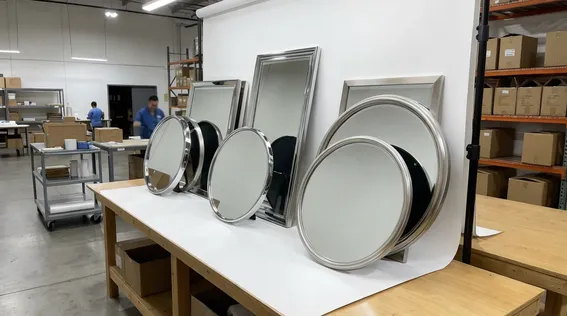
Silver-frame mirrors photograph cleanly against white backgrounds — the neutral metallic doesn't cast color onto surrounding products in lifestyle shots the way gold or brass does. For e-commerce sellers, this translates to lower product photography costs and more versatile listing images.
Chrome and brushed nickel are the top performers here, with retail price points typically between $55 and $110 depending on size. The broad consumer appeal means higher conversion rates and fewer returns driven by "didn't match my decor" complaints.
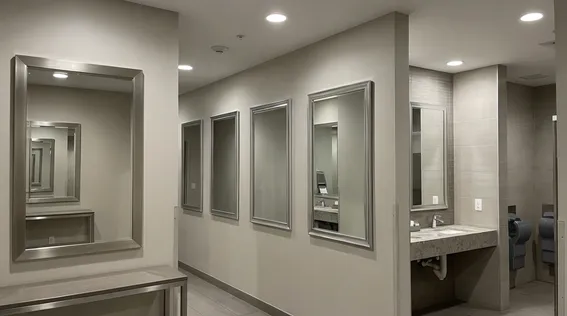
Hotels, restaurants, and commercial properties default to silver-tone mirrors in bathrooms, lobbies, and common areas. Chrome reads as clean and professional. Brushed nickel adds warmth without the design commitment of gold.
Orders in this segment are project-based — 50 to 300 identical units with specific delivery windows — and reorders come when properties renovate or management companies roll out updated design standards across multiple locations.
We've supplied hospitality programs where the same brushed nickel mirror spec has been reordered annually for four consecutive years across different properties in the same hotel group.
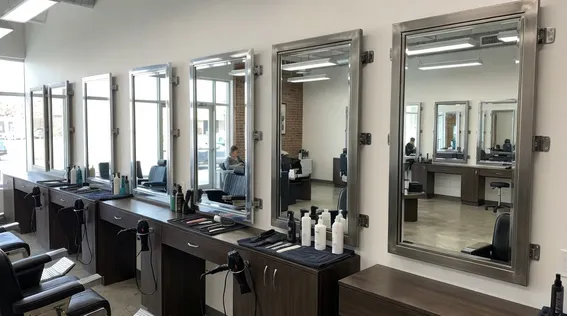
This is a growing niche. Chrome and brushed nickel station mirrors for hair salons, barbershops, and spa treatment rooms. The mirrors need to be large (typically 600×800mm or bigger), wall-mounted with commercial-grade hardware, and finished to a standard that holds up under daily cleaning with chemical products.
Pewter-tone mirrors are gaining traction in the barbershop segment specifically — the darker, industrial aesthetic fits the design language that upscale barbershops are building around.
If you're a distributor building or expanding a mirror catalog, silver-frame SKUs are the foundation. They sell across the widest range of downstream channels — independent retailers, interior designers, online marketplaces, small contractors — without requiring your sales team to pitch a specific aesthetic trend.
Stock silver as your core, add gold and specialty finishes as margin-enhancing options, and your catalog covers the market without excessive SKU proliferation.
Tell us which market you're focused on — we'll suggest a starter SKU mix based on what's moving for your target customers.
We run silver decor mirrors as both standard catalog items and fully custom OEM/ODM products. Here's what you can specify and where the boundaries are.
| Customization Dimension | Range / Options | Impact on MOQ | Impact on Lead Time |
|---|---|---|---|
| Mirror size | Any dimension from 200×200mm to 1200×1200mm | No change for standard finishes | +5 days if new cutting template needed |
| Frame profile | Choose from 15+ existing profiles, or develop a new custom profile | Existing profile: 100 pcs / New profile: 300 pcs | New profile adds 15–20 days for tooling |
| Silver tone | Chrome, brushed nickel, antique silver, pewter, or custom Pantone match | Custom Pantone: 300 pcs | Custom tone adds 7–10 days for sample approval |
| Mirror glass type | Clear silver, bronze-tinted, grey-tinted, or antiqued mirror glass | No change | No change |
| Backing finish | Standard MDF, black felt-covered, or printed backing with your brand info | No change | Printed backing adds 3–5 days |
| Hanging system | D-ring, sawtooth, French cleat, wire, or flush-mount Z-bar | No change | No change |
| Packaging | Standard brown box, white box, full-color retail box, or Amazon FBA-ready | Retail box: 300 pcs | Custom box printing adds 10–12 days |
| Branding | Logo on backing, logo on packaging, hang tags, UPC/barcode labels | No change | No change |
Stays at 4mm for standard sizes and 5mm for oversize. We don't go thinner — 3mm glass distorts reflections at larger sizes and breaks at unacceptable rates during shipping.
We don't mix silver tones within a single production run. Each tone requires a dedicated plating bath setup, so combining chrome and brushed nickel in the same order means two separate runs with two separate MOQs.
Practical minimum of 15mm — anything shallower doesn't provide enough structure to hold the mirror glass and backing securely. Maximum profile depth is 50mm before the frame starts to look disproportionate on standard mirror sizes. (We'll push to 60mm on request for oversize pieces, but we'll send you a rendering first so you can see the proportions before committing.)
For first orders, we recommend starting with existing frame profiles and standard silver tones. This keeps your MOQ at 100 pieces and lead time at 30–35 days. Once you've validated market demand, move to custom profiles and Pantone-matched tones on reorders.
If you're developing a new silver-frame mirror SKU from scratch, the process runs like this:
Send us a reference image or sketch with target dimensions and finish preference.
Our engineering team produces a CAD rendering and material spec within 5 working days.
We make a physical sample in 12–15 days after your approval of the rendering.
Production starts once you sign off on the sample.
Total development cycle from first brief to first production shipment is typically 60–75 days.
For repeat orders on established SKUs, lead time drops to 30–35 days.
Ready to start a custom silver mirror project?
Send Us Your BriefMirror breakage during shipping is the single biggest margin killer in this product category. A 2–3% breakage rate on a 2,000-unit container doesn't just cost you the replacement value — it costs you the customer relationship, the return processing labor, and the negative reviews if you're selling online. We've spent years refining our mirror packaging specifically to keep breakage below 0.5% on ocean freight shipments.
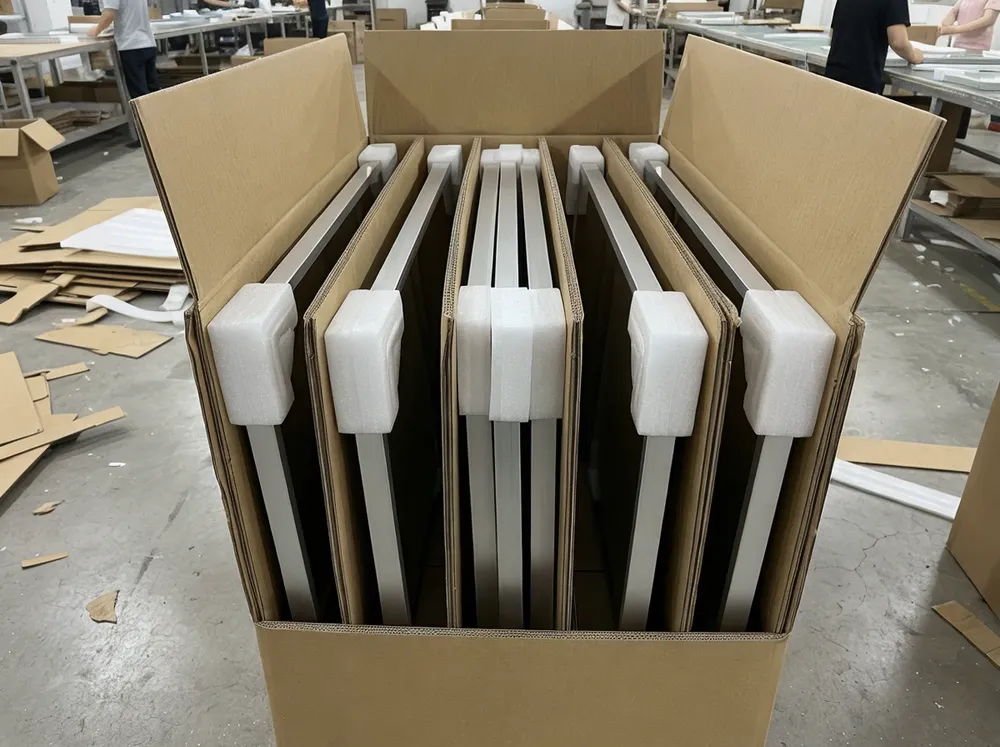
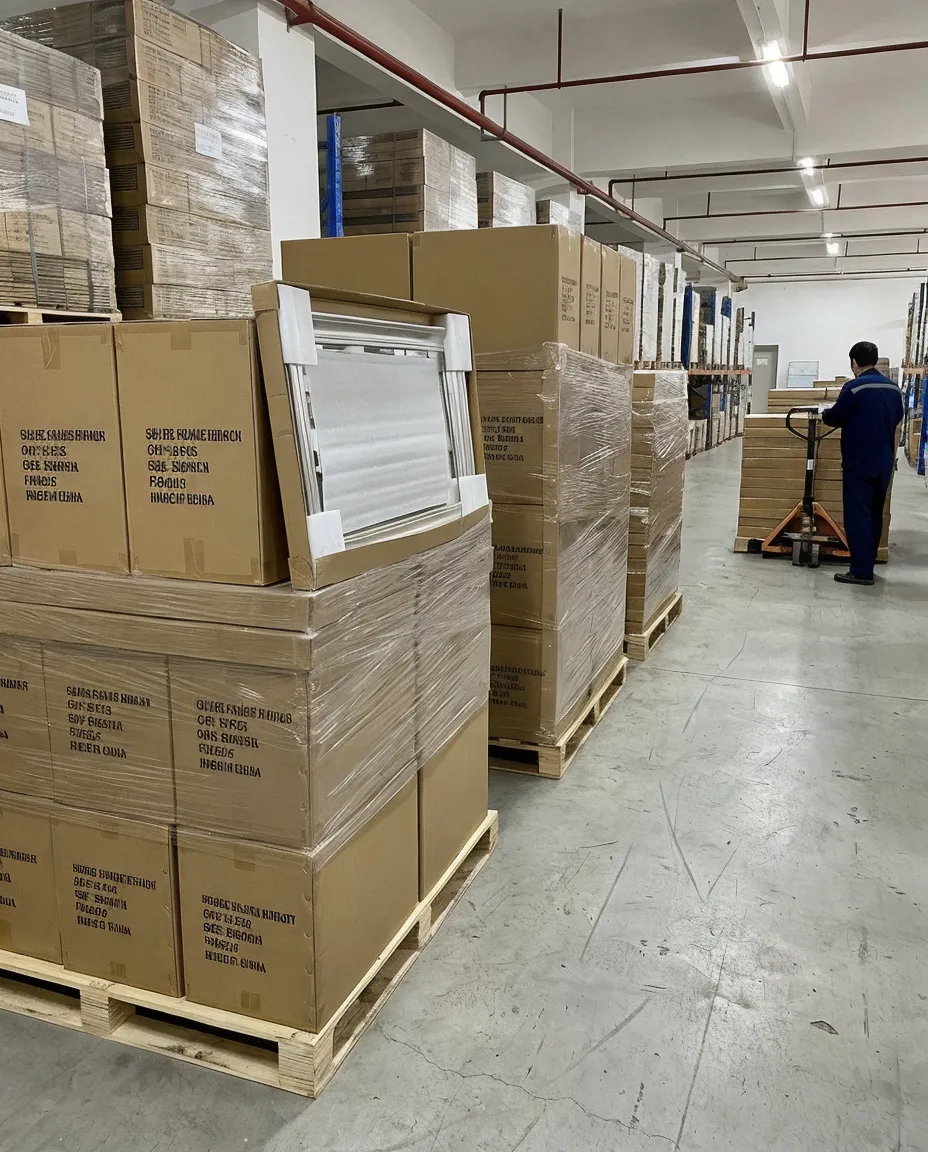
Every silver-frame mirror ships in an individual corrugated box with molded foam corner protectors and a foam sheet over the mirror face. Mirrors are packed vertically in the carton — never flat-stacked — because vertical orientation distributes impact forces along the frame rather than across the glass surface. Master cartons hold 4 to 6 mirrors depending on size, with cardboard dividers between each unit. Palletized loads get stretch-wrapped and corner-boarded.
| Mirror Size | Pieces per 20GP | Pieces per 40HQ |
|---|---|---|
| 300×400mm | ~2,400 | ~5,200 |
| 500×700mm | ~1,200 | ~2,600 |
| 600×800mm | ~800 | ~1,800 |
| 900×600mm | ~700 | ~1,500 |
| 1200×900mm | ~400 | ~900 |
These are conservative estimates — actual loading depends on frame profile depth and packaging configuration. We provide exact loading plans with every quotation so you can calculate your landed cost per unit before committing.
If you're selling through Amazon, Wayfair, or your own online store, we offer mail-order packaging that's designed to survive parcel carrier handling — which is rougher than palletized freight. The mail-order configuration adds a second corrugated layer and replaces foam corners with full-perimeter foam inserts. It costs slightly more per unit but dramatically reduces damage claim rates.
We also handle FBA labeling, FNSKU barcoding, and poly-bagging if you need units shipped directly to Amazon fulfillment centers. (We've been doing FBA prep for three years now — our team knows the label placement specs and box dimension requirements without needing to look them up.)
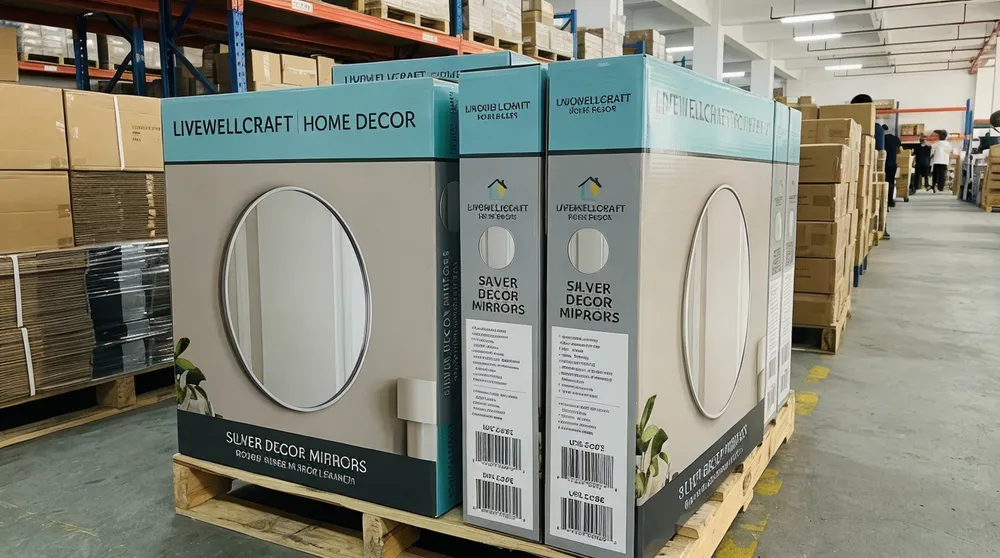
For brick-and-mortar retail, we produce full-color printed retail boxes with your branding, UPC codes, and product photography. The retail box doubles as a display-ready package if your retail partners use shelf-stocking rather than peg display.
You're likely evaluating silver alongside other frame finishes and materials. Here's how the options break down from a sourcing perspective.
| Factor | Silver (Metal Frame) | Gold (Metal Frame) | Wood Frame | Acrylic Frame |
|---|---|---|---|---|
| Typical retail price range | $50–$120 | $55–$130 | $40–$110 | $30–$75 |
| Trend sensitivity | Low — neutral metallic | Medium-high — trend-driven | Low-medium — depends on finish | Medium — modern aesthetic |
| Weight (600×800mm) | ~4.5 kg (steel), ~2.8 kg (aluminum) | ~4.5 kg (steel) | ~3.5 kg | ~2.0 kg |
| Durability in humid environments | High — electroplated finish resists moisture | High — same plating process | Low-medium — requires sealed finish | High — non-porous |
| MOQ at Livewellcraft | 100 pcs (standard) | 100 pcs (standard) | 100 pcs (standard) | 200 pcs |
| Best for | Broad catalog anchor, hospitality, e-commerce | Trend-driven retail, luxury staging | Traditional retail, farmhouse/rustic | Budget-friendly modern, lightweight shipping |
Silver is the safer bet — it covers more downstream market segments with less trend risk.
Pair silver with gold for complementary coverage.
Acrylic frames are worth evaluating for budget-conscious segments.
Wood frames will outperform metal in that segment.
Direct answers to the sourcing and specification questions we hear most often from wholesale buyers.
Chrome is a bright, highly reflective finish with a cool blue-white tone — it reads as sleek and modern. Brushed nickel has a warmer, softer appearance with a matte directional grain texture.
The production difference: chrome adds a thin chromium layer over the nickel undercoat, while brushed nickel skips the chromium and instead mechanically textures the nickel surface. From a sourcing perspective, both cost the same to produce and carry the same MOQ.
Choose based on your target market's interior design preferences — chrome for modern and minimalist, brushed nickel for transitional and broadly appealing.
Yes. Send us a Pantone reference or a physical sample of the silver tone you need to match, and we'll develop a plating formula to replicate it.
Custom tone development takes 7–10 days for sample approval, with a 300-piece MOQ per SKU. We keep the plating formula on file for your account, so reorders match the original batch.
The electroplated nickel-chromium finish on our silver frames provides strong moisture resistance. The nickel undercoat acts as a corrosion barrier, and the sealed plating prevents moisture from reaching the base metal.
We use copper-free silver mirror glass as our default, which resists edge blackening — the most common humidity-related mirror defect — significantly better than traditional copper-backed mirror glass.
For bathroom-specific applications, we recommend specifying sealed MDF backing rather than open backing to prevent moisture ingress from behind.
100 pieces per SKU for any standard silver finish on an existing frame profile. If you want to test multiple silver tones or sizes, each variation counts as a separate SKU with its own 100-piece minimum.
For a typical first trial order, most buyers select 2–3 SKUs at 100 pieces each — enough to test market response across a few sizes without overcommitting on inventory.
We ship pre-production samples for approval on every new SKU. Sample lead time is 12–15 days for new designs, 5–7 days for existing catalog items.
Sample cost is charged at production unit cost plus express shipping — we credit the sample cost back to your account when you place the bulk order.
Yes. We apply FNSKU barcodes, poly-bag individual units, and pack to Amazon's box dimension and weight requirements.
We've been shipping FBA-ready orders for North American and European Amazon fulfillment centers since 2023. Your units arrive at the FC ready to receive — no repackaging or relabeling needed on your end.
You've seen the finish options, the specs, the customization range, and the packaging setup. If silver-frame mirrors fit your product line, here's what happens next:
Send us your requirements — target sizes, finish preferences, quantities, and any branding or packaging needs. Use the quote request form or reach us directly at allenliu@livewellcraft.com.
We respond within 24 hours with pricing, a recommended SKU configuration, and a container loading plan so you can calculate landed costs.
Custom SKU development: We send CAD renderings within 5 working days and physical samples within 12–15 days of your rendering approval.
Production runs 30–35 days for standard items, 45–50 days for new custom profiles.
We're a factory-direct silver decor mirrors supplier — no trading company layer between your order and our production floor. One point of contact from quote through delivery, backed by ISO 9001:2015 quality systems and 100% visual inspection on every unit.
Explore More Frame Materials