Pick the wrong gold finish for your order and you'll find out at the worst possible time — when a buyer sends photos of peeling frames three months after delivery, or when your landed cost blows past your retail price target. The finish decision looks cosmetic. It isn't. It determines your unit economics, your container survival rate, and which retail tier you can actually compete in.
This article breaks down the three gold finish methods used on decorative mirror frames — electroplating, spray coating, and gold leaf — from a production standpoint. We run all three at our Dong Nai facility, so the trade-offs here come from the floor, not from a spec sheet.

What each process actually involves on the production floor
Before comparing costs and durability, it helps to understand what you're actually buying when you specify each finish. The process determines the failure mode — and knowing the failure mode tells you where the risk sits in your supply chain.
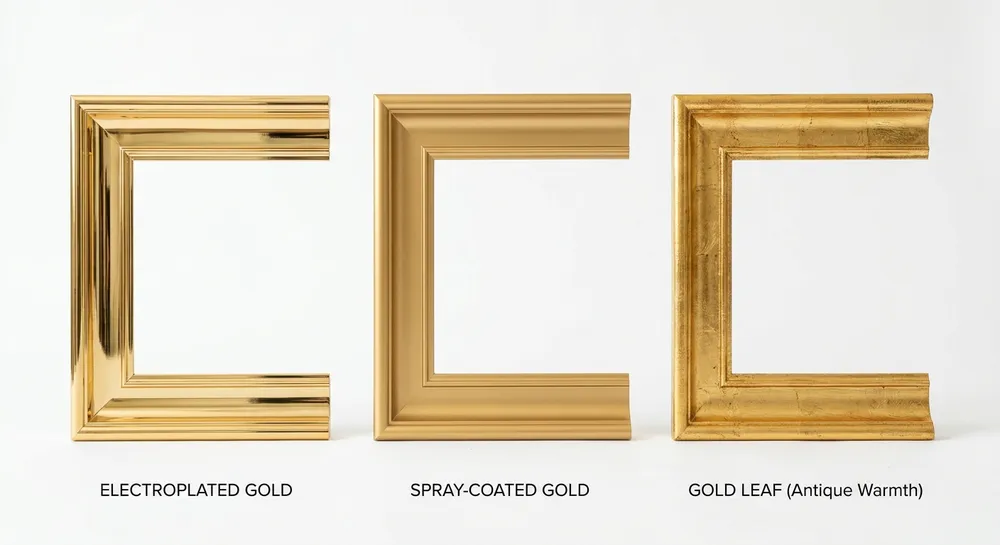
Electroplating deposits a thin layer of metal — typically brass or zinc alloy with a gold-tone topcoat — onto the frame substrate through an electrochemical bath. The frame is cleaned, pre-treated, submerged in the plating solution, and current is applied. What comes out is a hard, uniform metallic surface bonded at the molecular level to the substrate. At our facility, we run this on metal frames (iron, zinc alloy) where the substrate conducts. The gold tone comes from the alloy composition and any post-plate lacquer — not from actual gold content, which matters when buyers ask about tarnish behavior.
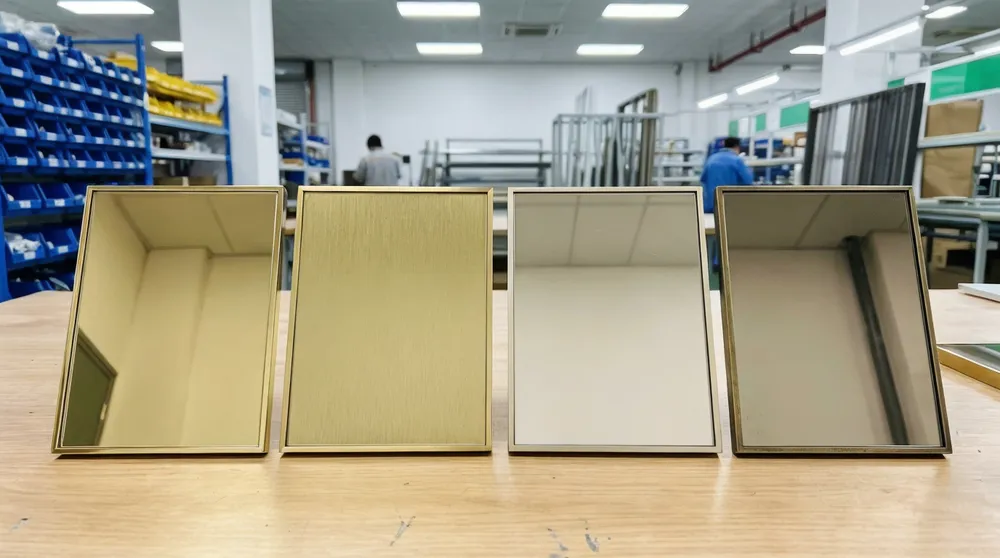
Spray coating (also called spray paint finishing or PU spray) applies pigmented lacquer or polyurethane in gold color onto the frame surface. It's the most flexible process — it works on MDF, resin, wood, and metal — and it's the fastest to set up for new colors or custom shades. The finish quality depends heavily on the number of coats, the primer adhesion, and the topcoat hardness. We typically run 3-4 coat systems on export frames: primer, base color, gold tone, protective clear. Single-coat spray finishes are what you find on the cheapest mass-market product, and they show it within six months.
Gold leaf applies actual metal leaf — genuine gold, imitation gold (brass alloy), or Dutch metal — onto a sized (adhesive-primed) surface by hand or semi-automated press. The result has a warmth and surface variation that neither plating nor spray can replicate. It's also the most labor-intensive and the most sensitive to handling. A gold leaf frame that gets stacked without proper interleaving in the container arrives with pressure marks. We've seen it happen enough times that we now require specific packing specs for every gold leaf order regardless of what the buyer's freight forwarder says.
Side-by-side: what the numbers look like at volume
The table below reflects typical production cost ranges and performance characteristics. Exact figures vary by frame profile complexity, substrate, and order volume — but the relative relationships hold across most standard decorative mirror frames.
| Factor | Electroplating | Spray Coating | Gold Leaf (Imitation) |
|---|---|---|---|
| Relative unit cost | Medium–High | Low–Medium | Medium–High |
| Cost driver | Setup + bath chemistry | Labor + coat count | Labor (hand application) |
| Durability (scratch) | High | Medium | Low–Medium |
| Tarnish resistance | Medium (lacquer-dependent) | Medium–High | Low (imitation) / High (genuine) |
| MOQ sensitivity | Higher (bath setup cost) | Low (flexible) | Medium (labor scales) |
| Lead time impact | +1–2 days (plating cycle) | Minimal | +2–3 days (leaf application + cure) |
| Substrate compatibility | Metal only | MDF, resin, wood, metal | Most substrates |
| Best-fit retail tier | Mid to premium | Mass to mid | Boutique to premium |
(Note: "imitation gold leaf" — brass alloy leaf — is what 90% of wholesale decor orders use. Genuine gold leaf is rare outside hospitality custom projects and adds significant cost. When a supplier quotes "gold leaf" without specifying, ask which one.)

How finish choice maps to retail price tier and margin
This is where most sourcing decisions go wrong. Buyers pick a finish based on how it looks in a sample photo, not on whether it can support the margin structure of their target channel.
Mass retail and high-volume e-commerce (think sub-$50 retail price point, 5,000+ unit orders): spray coating is the right answer. The unit cost is lowest, MOQ flexibility is highest, and the finish holds well enough for the product's expected shelf life and use environment. Electroplating at this tier adds cost without adding enough perceived value to justify the price increase. Gold leaf at mass retail volumes is a production bottleneck — the hand labor doesn't scale without significant lead time impact.
Mid-range retail and specialty e-commerce ($50–$150 retail, 1,000–5,000 units): electroplating earns its cost premium here. The harder surface survives retail handling better, the metallic depth reads as quality on product photography, and the finish consistency across a 2,000-unit run is tighter than spray. Buyers in this tier often have return rate targets — electroplated frames generate fewer finish-related returns than spray-coated equivalents at the same price point.
Boutique retail, hospitality, and project specification ($150+ retail or contract specification): gold leaf — imitation or genuine — is the finish that justifies the price. The surface variation and warmth read as handcrafted, which is exactly what boutique buyers and hospitality procurement teams are paying for. The trade-off is lead time and packing cost. We add 2–3 days for leaf application and cure, and packing requires individual wrapping — that adds to your landed cost and needs to be in your margin calculation from the start.
For buyers building a multi-SKU line across price tiers, we often supply all three finish types from the same facility. That means consistent frame profiles with different finish specs — useful when you're ranging a collection from entry to premium without sourcing from three different factories.
Container survival: how each finish behaves from factory to shelf
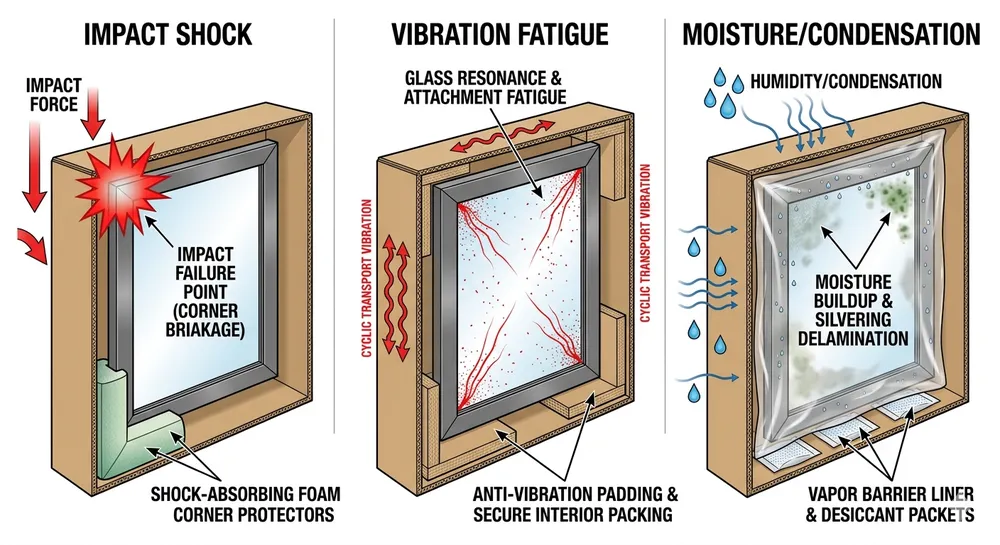
Finish durability in a lab test and finish durability after 30 days in a container are two different things. Temperature swings, humidity, vibration, and stacking pressure all stress the finish in ways that a scratch test doesn't capture.
Electroplated frames are the most robust in transit. The bonded metallic layer doesn't delaminate from vibration, and the lacquer topcoat protects against humidity-driven tarnish during ocean freight. The main risk is edge chipping on frames with sharp profiles — if the plating is thin at corners (a common shortcut on low-cost electroplated product), those edges chip in transit. We plate to a minimum thickness spec on all export frames and do a cross-section check on first-article samples. Buyers sourcing electroplated frames elsewhere should ask for plating thickness data — it's a quick test that separates serious suppliers from those cutting corners on bath time.
Spray-coated frames are sensitive to two things: adhesion quality and topcoat hardness. A well-applied multi-coat system with a hard clear topcoat survives transit fine. A single-coat or under-cured finish will show pressure marks, scuffs, and micro-scratches after stacking. The test we use internally is a cross-hatch adhesion test (ASTM D3359) on cured samples before the batch ships. If you're sourcing spray-finished mirrors and the supplier can't tell you their adhesion test protocol, that's a gap worth closing before you commit to volume.
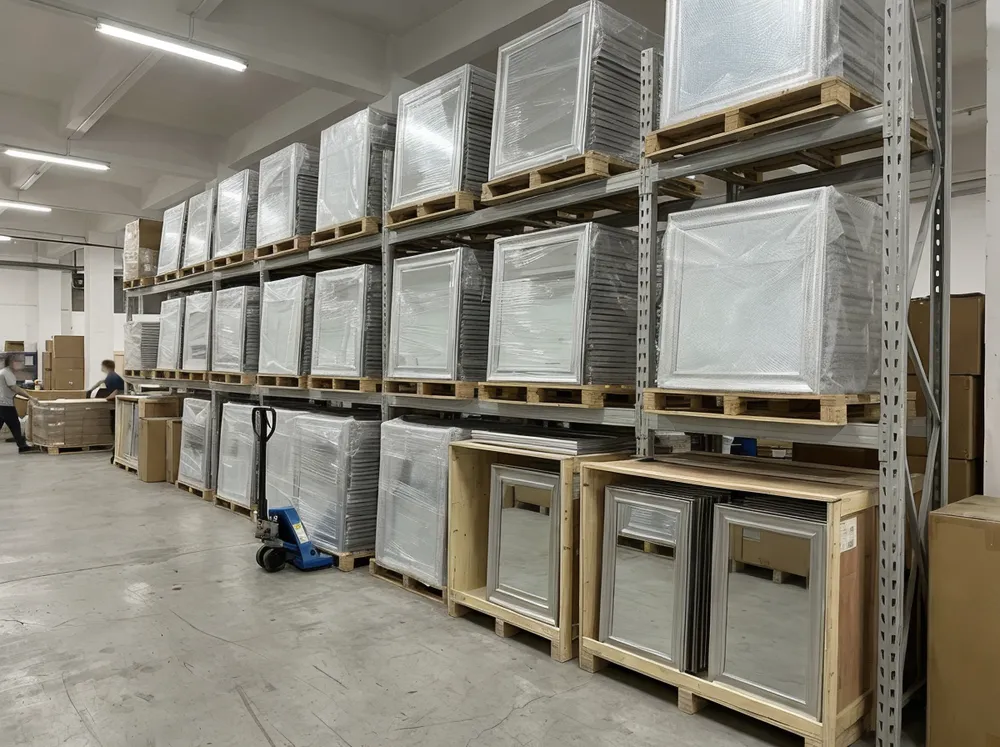
Gold leaf frames need the most attention in packing. The leaf surface is physically soft — it marks under direct contact pressure. Standard poly bag packing is not enough. We use foam interleaving between units and corner protectors on all gold leaf export orders. The packing cost is real (typically adds $0.30–$0.80 per unit depending on frame size), but it's cheaper than a container of marked product. See our notes on Preventing Gold Mirror Tarnish in Storage and Transit for the full packing protocol we use on sensitive finishes.

What to specify when you send an RFQ
Vague finish requests produce vague quotes — and the gap between what you imagined and what arrives gets settled at your expense. When you're requesting pricing on gold-finish mirror frames, include these in your brief:
Finish type and substrate: "Gold electroplated on iron frame" or "Gold spray finish on MDF frame" — not just "gold finish." The substrate determines which process is even possible.
Topcoat requirement: For electroplated frames, specify whether you need a lacquer topcoat and what tarnish resistance you expect (salt spray hours if you have a spec). For spray-finished frames, specify coat count or gloss level. For gold leaf, specify imitation vs. genuine and whether you need a protective sealer coat.
Durability standard: If your buyer or retail channel has a finish durability requirement — scratch resistance, adhesion rating, humidity exposure — state it. We can test to ASTM D3359 (adhesion), ASTM D4145 (scratch), or equivalent. Buyers who don't specify get our standard export spec, which is solid for most channels but may not meet specific retail compliance requirements.
Volume and delivery window: Electroplating bath setup and gold leaf application both have lead time implications at certain volumes. A 500-unit order and a 10,000-unit order of the same electroplated frame have different production scheduling requirements — the quote should reflect that.
Packaging spec: Especially for gold leaf. If you have retail-ready packaging requirements (hang tags, poly bags, specific carton markings), include them. Packing cost is part of your landed cost calculation.
We've developed finish specs for 200+ custom frame profiles across all three methods. If you're not sure which finish fits your target price point and channel, send us the retail price you're working toward and the market you're selling into — our engineering team can work backward from there. Browse our Gold Decor Mirrors range to see how these finishes look across current production profiles, or explore the full Decor Mirrors by Material & Frame category for frame substrate options.
The sourcing trap: what "gold finish" hides on supplier quotes
Most supplier quotes say "gold finish" and leave it there. That two-word description covers a range from a single-coat spray applied over bare MDF to a multi-layer electroplated frame with lacquer topcoat — a cost difference of 3–4x per unit and a durability difference that shows up in your return rate within a season.
The specific shortcuts to watch for:
Thin plating on electroplated frames. Bath time costs money. Suppliers under cost pressure reduce plating thickness, which shows up as edge chipping and faster tarnish. Ask for plating thickness in microns. A credible supplier can tell you. One who can't is telling you something.
Single-coat spray on MDF. MDF absorbs moisture and expands slightly in humid environments. A single-coat spray finish on MDF without proper primer and sealer will crack at joints and peel at edges within months of retail shelf exposure. Ask for the coat system: primer, base, color, clear — minimum four coats for export-grade product.
Imitation gold leaf sold as "gold leaf." Brass alloy leaf tarnishes. Genuine gold leaf doesn't. The price difference is significant. If your product is positioned as premium and the supplier is quoting gold leaf at mass-market pricing, ask what metal the leaf is made from.
No topcoat on gold leaf. Unprotected gold leaf — even genuine — oxidizes in humid storage. A protective sealer coat adds a small cost but meaningfully extends shelf life. Some suppliers skip it to hit a price point. Ask specifically whether a sealer is included.
These aren't edge cases. We see all four of these shortcuts regularly when buyers bring us samples from previous suppliers asking why the finish failed. The fix at the sourcing stage is a few direct questions. The fix after delivery is a claim, a markdown, or a lost account.
For a broader look at how gold and silver finishes compare in terms of market positioning and buyer preference, Gold vs Silver Decor Mirrors covers the commercial angle in detail.
Matching finish to order volume: unit economics at 1K, 5K, and 20K pieces
Finish economics don't scale linearly. The cost relationships shift as volume increases, and the right finish at 1,000 units isn't always the right finish at 20,000.
At 1,000 units, electroplating setup cost is spread across a smaller run, so the per-unit premium over spray coating is at its widest — typically 25–40% higher depending on frame complexity. Gold leaf at this volume is manageable from a lead time standpoint. Spray coating is the most cost-efficient entry point for a new SKU test.
At 5,000 units, electroplating setup cost amortizes more favorably. The per-unit gap versus spray coating narrows to 15–25%. If your retail price point supports it, this is often where electroplating becomes the better margin decision — the finish quality supports a higher retail price that more than covers the cost difference. Gold leaf at 5,000 units requires careful production scheduling; we typically need 3–4 weeks lead time at this volume.
At 20,000 units, spray coating's flexibility advantage matters most — it's the easiest to scale without lead time risk. Electroplating at this volume is fully viable but requires confirmed production scheduling 6–8 weeks out. Gold leaf at 20,000 units is a significant production commitment; most buyers at this volume are using it for a premium SKU within a larger range, not as their primary finish.
(We've run all three at 20,000+ unit volumes. The production planning conversation is different for each — worth having early in the sourcing process, not after the PO is placed.)
FAQ
What's the minimum order quantity for electroplated gold mirror frames? Our standard MOQ for electroplated frames is 200 pieces per SKU. Below that, the bath setup cost makes the per-unit price uncompetitive. For spray-coated frames, MOQ starts at 100 pieces. Gold leaf frames start at 100 pieces but require a longer lead time confirmation.
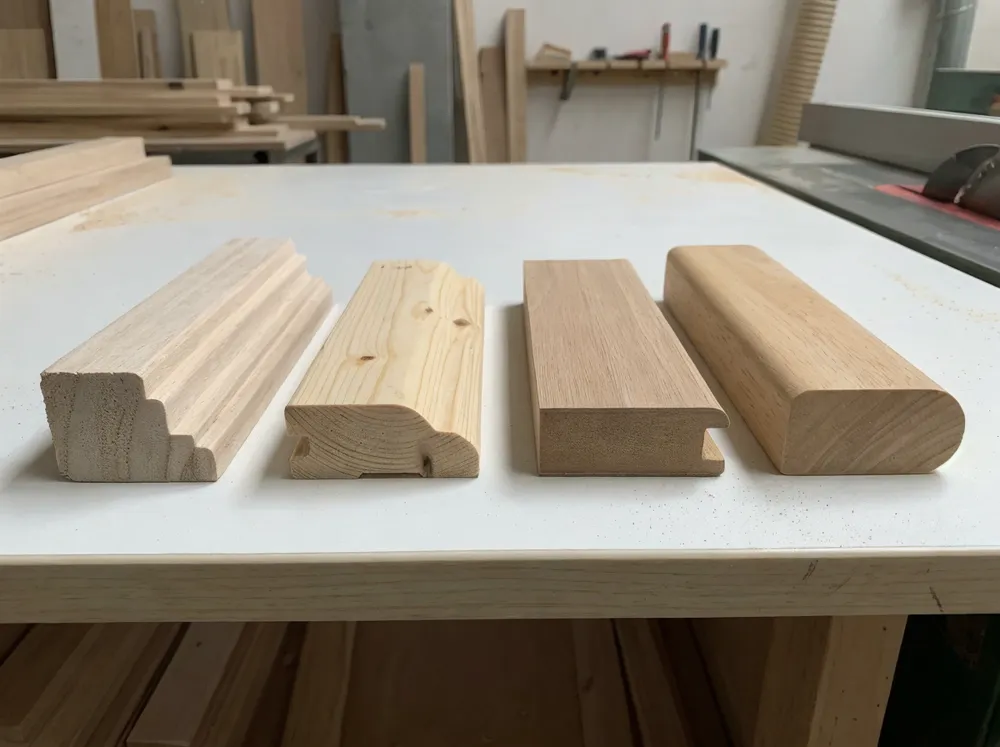
Can the same frame profile be offered in multiple gold finish types? Yes — and we do this regularly for buyers building tiered product lines. The same MDF or metal frame profile can be finished in spray coat for an entry SKU and electroplated for a premium SKU. The frame tooling cost is shared; only the finishing process changes. This is one of the more practical ways to build a gold mirror range without multiplying your supplier count.
How do I test a gold finish sample before committing to volume? For electroplated frames: check edge coverage under magnification and ask for plating thickness data. Run a fingernail scratch test on a flat panel — thin plating shows through quickly. For spray-coated frames: flex the frame slightly and look for cracking at joints — a sign of poor adhesion or insufficient primer. For gold leaf: press a piece of tissue paper against the surface and pull — if leaf transfers, there's no protective sealer. These are quick checks you can do on any sample before approving production.
Does gold finish affect the mirror glass or silvering? The finish is applied to the frame, not the glass. Our silvering process — copper-free silver coating with multi-layer protection — is independent of the frame finishing line. That said, frame finishing chemicals can contaminate glass edges if the production sequence isn't controlled. We finish frames before glass insertion on all standard profiles, which eliminates that risk entirely.
Which gold finish holds up best in humid climates — Southeast Asia, Middle East, coastal markets? Electroplated frames with lacquer topcoat perform best in high-humidity environments. The bonded metallic layer doesn't absorb moisture, and the lacquer seals against oxidation. Spray-coated frames with a hard clear topcoat are acceptable for most humid markets. Imitation gold leaf without a sealer coat is the most vulnerable — we don't recommend it for coastal retail without explicit sealer specification. If you're selling into humid markets, mention it when you request a quote — we'll adjust the finish spec accordingly.