Most wall art sourcing guides hand you a list of names and call it a day. That's not useful when you're trying to decide whether a domestic distributor actually fits your channel requirements — or whether you're paying a 30–40% markup for the convenience of a US warehouse address.
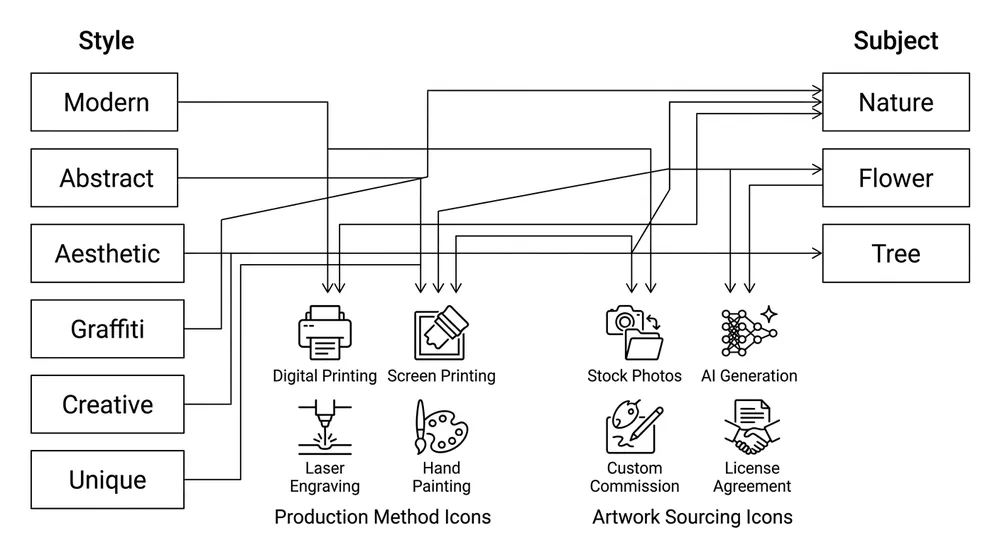
This guide covers 10 real suppliers serving US e-commerce retailers in 2026. Each entry is anchored to the style categories they actually carry — modern, abstract, nature, bohemian, and others — because a supplier with 2,000 SKUs of coastal farmhouse prints doesn't help you if your channel is trending toward urban abstract. After the landscape, we walk through the domestic-vs-import trade-off with real cost logic, and close with a factory-direct alternative for sellers who've outgrown the distributor model.
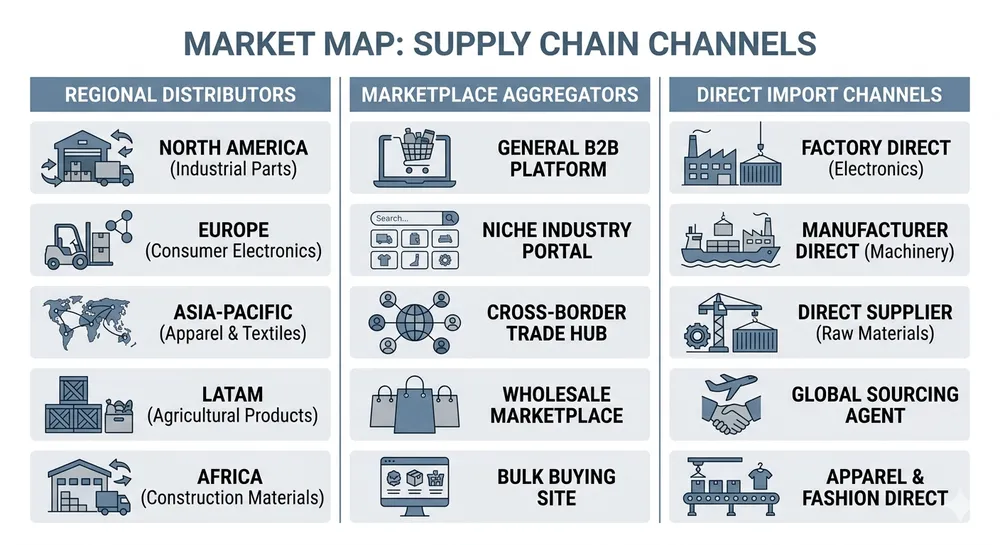
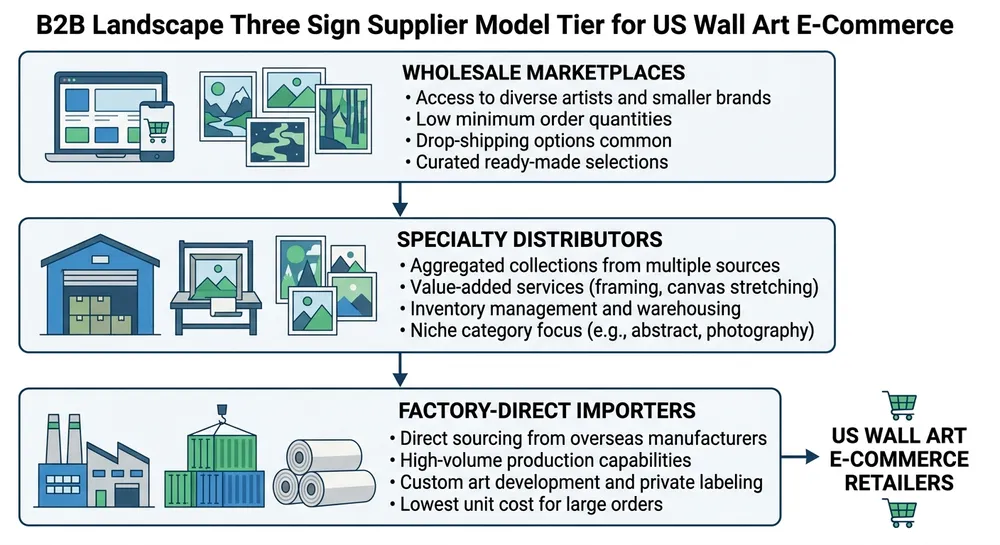
The ranking here is not a popularity contest. It's organized by supplier model type — marketplace aggregators, specialty distributors, and direct-import options — so you can match the sourcing model to your actual business situation.

—
What Separates a Workable Wall Art Supplier from One That Looks Good on Paper
Before the list, the criteria. E-commerce retailers get burned by suppliers who pass the first phone call but fail on execution. Here's what actually matters:
Style range depth — Does the supplier carry the specific aesthetic categories your channel is trending toward? A catalog of 500 SKUs in one style is less useful than 150 SKUs spread across modern, abstract, nature, and bohemian if your buyers are style-diverse.
MOQ structure — Can you test a new style SKU at 50–150 units before committing to a full pallet? Suppliers with 500-unit minimums force you to bet on a style before you've validated it with your own customers.
Retail-ready packaging — UPC labeling, poly-bagging, master carton specs, and channel-specific compliance (Walmart routing guides, Amazon FNSKU, Wayfair drop-ship labels) are non-negotiable for major platform sellers. Many distributors handle this; most overseas factories do not — unless they've specifically built it.
Lead time reliability — Domestic distributors typically ship in 3–10 business days from stock. Factory-direct import runs 45–75 days from order confirmation. Both are workable; neither is better in absolute terms. The question is whether your inventory model can absorb the import cycle.
EDI capability — If you're selling into Walmart, Target, or large regional chains, EDI compliance isn't optional. Verify before you commit.
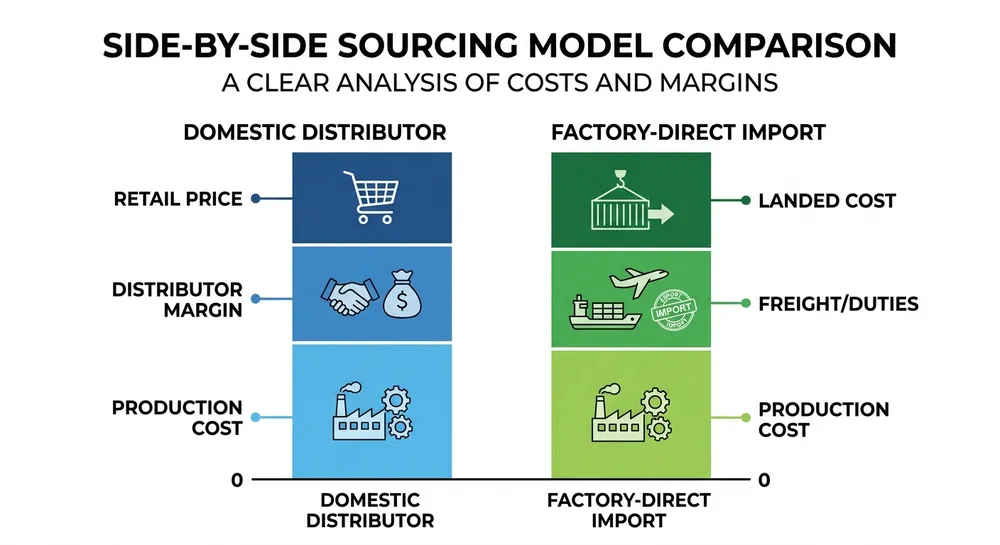
Landed cost transparency — Domestic pricing looks clean until you factor in the distributor's margin layer. Factory-direct pricing looks cheap until you add freight, duties, and warehousing. Run the full landed cost before comparing line items.
—
The 10 Suppliers: US Wall Art Sourcing Landscape for E-Commerce Retailers
1. Uttermost — uttermost.com
Supplier type: Specialty wholesale distributor Style strengths: Traditional, transitional, abstract, nature-inspired Channel fit: Independent retailers, interior design trade, e-commerce
Uttermost is one of the most established decorative accessories wholesalers in the US market, operating out of Rocky Mount, Virginia since 1975. Their wall art catalog spans framed canvas, metal wall sculptures, and mixed-media pieces across traditional and transitional aesthetics — the kind of catalog that works well for home furnishings retailers and mid-market e-commerce stores.
MOQs are generally low by wholesale standards, and they maintain US warehouse stock for faster replenishment. The trade-off: their catalog skews toward classic and transitional styles, so if your channel is trending toward contemporary abstract or urban modern, their range thins out quickly. Pricing reflects the domestic distributor model — you're paying for US inventory access and established trade relationships, not factory-direct economics.
—
2. Artissimo Designs — artissimodesigns.com
Supplier type: Wholesale wall art manufacturer/distributor Style strengths: Abstract, modern, nature, inspirational Channel fit: Mass retail, e-commerce, gift and home décor
Artissimo has built a solid position in the mass-market wall art segment, supplying major US retailers including Walmart and Target. Their catalog covers canvas prints, framed art, and multi-panel sets across a broad style range — abstract, nature photography, modern geometric, and motivational typography.
For e-commerce sellers targeting the $25–$75 retail price band, Artissimo's catalog depth and retail compliance infrastructure are genuine strengths. They understand UPC labeling, retail-ready packaging, and the compliance requirements of big-box channels. The limitation is differentiation: their catalog is widely distributed, so you're competing on price rather than product exclusivity.
—
3. Trademark Fine Art — trademark-fine-art.com
Supplier type: Licensed art publisher and wholesale distributor Style strengths: Fine art reproductions, abstract, nature, modern Channel fit: E-commerce, specialty retail, hospitality
Trademark Fine Art operates as a licensed publisher and wholesale distributor of fine art reproductions, with a catalog that skews toward gallery-quality canvas prints and framed pieces. Their strength is in the mid-to-upper price tier — pieces that retail between $60 and $200 — where buyers are looking for art that reads as curated rather than commodity.
Their style range covers abstract, nature, and modern aesthetics with genuine depth in each category. For e-commerce sellers building a premium or curated home décor brand, Trademark's licensed catalog provides product differentiation that generic print-on-demand suppliers can't match. MOQ and wholesale terms are available through their trade program.
—
4. Fetco Home Décor — fetco.com
Supplier type: Wholesale home décor distributor Style strengths: Traditional, nature, inspirational, family/lifestyle Channel fit: Gift retail, e-commerce, independent home stores
Fetco has been a consistent presence in the US wholesale home décor market for decades, with a catalog that covers wall art, frames, and decorative accessories. Their wall art range leans toward traditional and nature-inspired aesthetics — botanical prints, family-themed pieces, inspirational typography — which performs well in gift retail and lifestyle e-commerce channels.
Their US warehouse operations support faster replenishment cycles, and their trade program is accessible for smaller e-commerce sellers. The style range is narrower than some competitors, so Fetco works best as a complementary supplier rather than a primary source if your catalog needs to span multiple aesthetic categories.
—
5. Stupell Industries — stupellindustries.com
Supplier type: US-based wall art manufacturer Style strengths: Modern farmhouse, nature, inspirational, abstract, kids/nursery Channel fit: E-commerce, mass retail, specialty retail
Stupell is one of the few suppliers on this list that manufactures domestically — their operation is based in Johnston, Rhode Island. That means shorter lead times, easier quality communication, and no import cycle. Their catalog is broad: modern farmhouse, nature photography, abstract, inspirational, and children's themes, with consistent production quality across categories.
For e-commerce sellers who need reliable domestic supply with genuine style breadth, Stupell is a strong candidate. Their wholesale program supports e-commerce retailers, and their domestic manufacturing means you can reorder quickly when a SKU sells through. The cost structure reflects US manufacturing — you're paying more per unit than import alternatives, but you're buying supply chain predictability.
(Stupell's domestic manufacturing is a real differentiator for sellers who've been burned by import delays — worth the unit cost premium if your inventory model is lean.)
—
6. Amanti Art — amantiart.com
Supplier type: Framed art manufacturer and wholesale distributor Style strengths: Fine art reproductions, abstract, nature, modern, photography Channel fit: E-commerce, interior design trade, specialty retail
Amanti Art specializes in framed art and canvas prints, with a catalog that covers fine art reproductions, abstract, nature, and photography across a wide price range. Their framing operation is US-based, which gives them quality control over the finished product even when the print substrate is sourced offshore.
Their wholesale program is well-suited for e-commerce sellers in the $50–$150 retail range who want framed pieces with consistent quality. Style depth is genuine across abstract and nature categories. The limitation is that their catalog is curated rather than broad — you won't find 2,000 SKUs, but the ones they carry are consistently executed.
—
7. Paragon Picture Gallery — paragonpicture.com
Supplier type: Wholesale framed art and wall décor distributor Style strengths: Abstract, modern, nature, transitional, coastal Channel fit: Interior design trade, e-commerce, hospitality
Paragon has been supplying the US wholesale framed art market since 1979, with a catalog that covers abstract, modern, nature, and coastal aesthetics. Their trade program serves interior designers, retailers, and e-commerce sellers, with US warehouse stock supporting faster fulfillment.
Their style range is strongest in abstract and transitional categories — the kind of pieces that work across residential and hospitality applications. For e-commerce sellers targeting the home furnishings and interior design-adjacent market, Paragon's catalog depth and trade program structure are worth evaluating. Pricing is mid-market wholesale, reflecting the domestic distribution model.
—
8. Wholesale Interiors (Baxton Studio) — wholesaleinteriors.com
Supplier type: Wholesale furniture and home décor distributor Style strengths: Modern, contemporary, mid-century, abstract Channel fit: E-commerce, furniture retail, hospitality
Baxton Studio / Wholesale Interiors operates as a wholesale distributor of modern and contemporary home furnishings and décor, including wall art. Their catalog skews heavily toward modern and mid-century aesthetics — clean lines, geometric forms, abstract compositions — which aligns well with urban and contemporary e-commerce channels.
Their wholesale program supports e-commerce retailers with competitive pricing and US warehouse fulfillment. The wall art selection is narrower than dedicated art distributors, but the modern/contemporary depth is genuine. For sellers whose channel is specifically modern or mid-century, Baxton Studio is worth including in your supplier mix.
—
9. Artwall — artwall.com
Supplier type: Online wholesale wall art marketplace/distributor Style strengths: Abstract, nature, photography, modern, fine art reproductions Channel fit: E-commerce, online retail, interior design
Artwall operates as both a retail and wholesale platform for canvas prints, framed art, and wall décor, with a catalog that spans abstract, nature, photography, and fine art reproductions. Their wholesale program is accessible for e-commerce sellers, with competitive pricing on canvas and framed pieces.
The catalog breadth is a genuine strength — thousands of SKUs across multiple style categories, with consistent production quality on canvas prints. For e-commerce sellers who need style variety without committing to large MOQs, Artwall's wholesale program provides flexibility. The trade-off is that their catalog is widely available, limiting product exclusivity.
—
10. Kirkland's Wholesale / At Home (Trade Programs) — representative of the big-box trade supply model
Supplier type: Mass-market wholesale and trade supply Style strengths: Farmhouse, nature, inspirational, transitional, seasonal Channel fit: Mass retail, gift retail, e-commerce
The US market also includes trade and wholesale programs from large home décor retailers — Kirkland's, At Home, and similar chains — that supply independent retailers and e-commerce sellers through wholesale or drop-ship arrangements. These programs cover farmhouse, nature, inspirational, and transitional aesthetics at accessible price points.
The strength here is catalog breadth and domestic availability. The limitation is that these are widely distributed products — your competitors are sourcing from the same catalog, which compresses margin and limits differentiation. For sellers building a commodity-volume business, this model works. For sellers trying to build a differentiated brand, it's a ceiling.
—
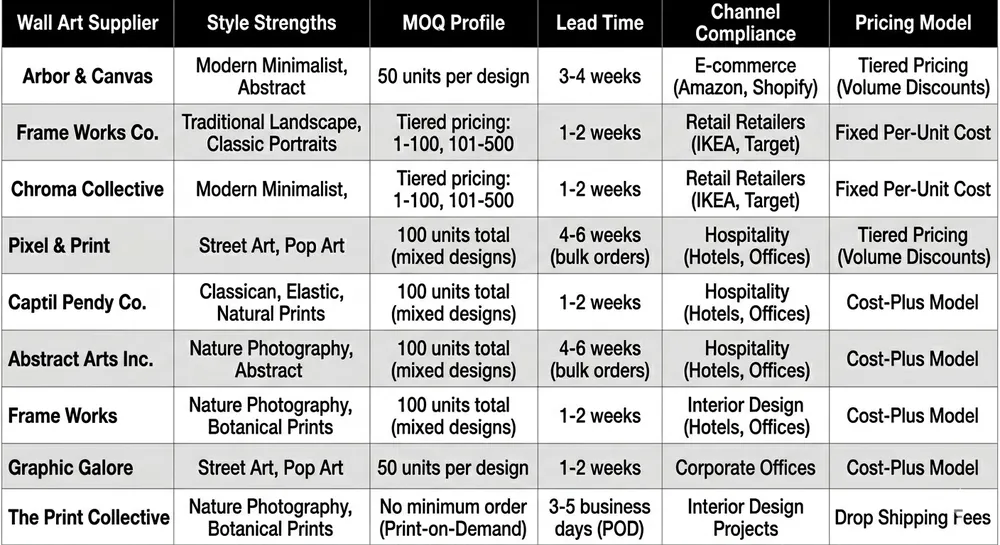
Supplier Comparison: E-Commerce Sourcing Criteria at a Glance
| Supplier | Style Strengths | MOQ Profile | Lead Time | Channel Compliance | Pricing Model |
|---|---|---|---|---|---|
| Uttermost | Traditional, transitional, abstract | Low–medium | 3–10 days (stock) | Trade program | Domestic wholesale |
| Artissimo Designs | Abstract, modern, nature | Medium | 5–15 days (stock) | Walmart/Target ready | Domestic wholesale |
| Trademark Fine Art | Fine art, abstract, nature | Low–medium | 5–10 days (stock) | E-commerce ready | Mid-to-premium wholesale |
| Fetco Home Décor | Traditional, nature, inspirational | Low | 5–10 days (stock) | Gift/retail ready | Domestic wholesale |
| Stupell Industries | Farmhouse, nature, abstract, kids | Low–medium | 3–7 days (domestic mfg) | E-commerce ready | US manufacturing premium |
| Amanti Art | Fine art, abstract, nature, photography | Low–medium | 5–10 days (stock) | E-commerce ready | Mid-to-premium wholesale |
| Paragon Picture Gallery | Abstract, modern, coastal | Medium | 5–15 days (stock) | Trade/hospitality ready | Mid-market wholesale |
| Wholesale Interiors | Modern, contemporary, mid-century | Medium | 5–10 days (stock) | E-commerce ready | Competitive wholesale |
| Artwall | Abstract, nature, photography, modern | Low | 5–10 days (stock) | E-commerce ready | Competitive wholesale |
| Big-box trade programs | Farmhouse, nature, inspirational | Low–medium | 5–15 days (stock) | Mass retail ready | Commodity wholesale |
—
The Real Cost of Domestic Convenience: Where Distributor Margins Compress Your Channel Economics
Every domestic distributor on this list provides genuine value: US warehouse stock, faster replenishment, familiar communication, and no import cycle to manage. For urgent small orders, emergency restocks, and situations where speed matters more than unit cost, domestic supply is the right answer. That's not a concession — it's just accurate.
The question is what that convenience costs at scale.
A typical US wholesale distributor operates on a 35–50% margin over their own landed cost. That margin covers their warehousing, sales infrastructure, and the capital tied up in inventory — all legitimate costs. But it means the price you pay as a retailer includes that layer. On a $40 wholesale piece, you might be paying $12–$18 for the distributor's infrastructure rather than the product itself.
At low volumes — say, 50–200 units per SKU — that premium is often worth it. You're not importing a container for 50 pieces. The domestic distributor's stock is your inventory buffer, and the per-unit premium is the cost of that flexibility.
The math changes at repeat volume. Once a SKU is validated and you're reordering 500+ units per style, the distributor margin becomes a structural cost rather than a convenience fee. At that point, the question is whether factory-direct sourcing — with its longer lead time and higher minimum commitment — delivers better economics over a 12-month procurement cycle.
We've seen this pattern consistently with our own buyers: they start with domestic distributors to test style categories, validate sell-through, and build their catalog. Once they know which styles move, they shift repeat-volume SKUs to factory-direct and keep domestic supply for new launches and emergency replenishment. That hybrid model is how serious e-commerce sellers protect margin without sacrificing supply chain flexibility.
(The break-even point varies by product and freight lane, but most of our buyers find that factory-direct becomes financially compelling somewhere between 300 and 500 units per SKU per order cycle.)
—
Style-Specific Sourcing: Why Your Supplier's Catalog Depth by Aesthetic Category Matters
This is the gap that most sourcing guides miss entirely. "Wall art supplier" is not a monolithic category — the supply landscape looks completely different depending on which style categories your channel is selling.
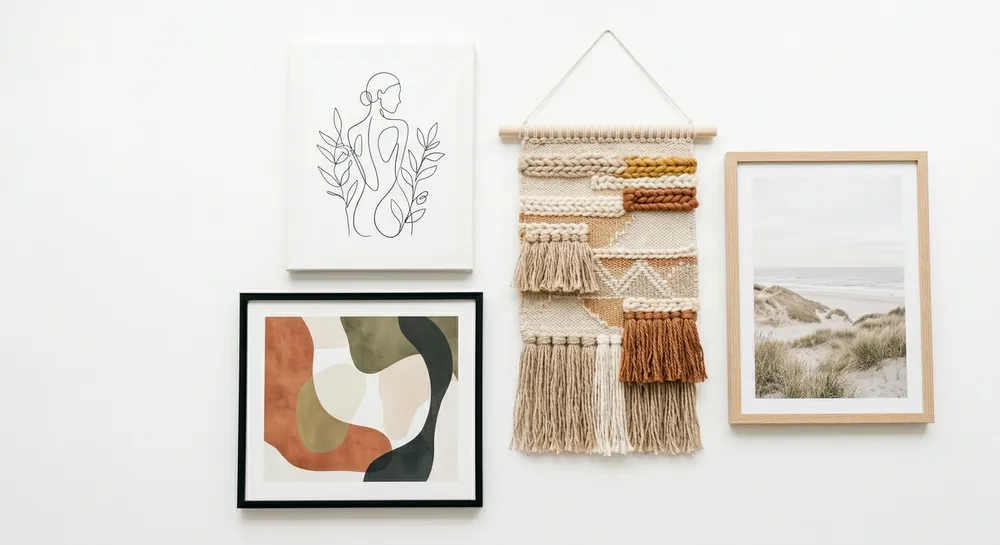
Abstract wall art is the highest-velocity style category in US e-commerce right now, driven by the continued dominance of contemporary and modern interior aesthetics. Most major distributors carry abstract, but depth varies significantly. Suppliers like Trademark Fine Art, Amanti Art, and Artwall have genuine catalog depth in abstract — hundreds of SKUs across color palettes, compositions, and price points. Others carry 20–30 abstract pieces as a token category.
Modern and contemporary wall art — geometric forms, minimalist compositions, architectural photography — is the second major growth category. Wholesale Interiors (Baxton Studio) and Paragon have the strongest modern depth among domestic distributors. If your channel is specifically modern, verify catalog depth before committing.
Nature wall art — botanical prints, landscape photography, wildlife subjects — is the most broadly distributed style category. Nearly every supplier on this list carries nature, but quality and style execution vary. Botanical and floral subjects are trending upward; generic landscape photography is commoditized.
Farmhouse and transitional styles remain high-volume but are showing saturation signals in major e-commerce channels. Stupell and Fetco are strong here, but differentiation is harder when every competitor is sourcing from the same aesthetic pool.
For sellers building a Wall Arts by Style & Subject catalog, the practical implication is this: no single domestic distributor covers all style categories with equal depth. You'll likely need 2–3 supplier relationships to cover your full range — or a factory-direct source with genuine cross-category production capability.
We run modern wall arts, abstract wall arts, and nature wall arts across the same production facility, which means your style mix doesn't require multiple supplier relationships. That's a supply chain simplification that compounds over time.
—
Factory-Direct as a Strategic Layer: What Changes When You Remove the Distributor
Factory-direct sourcing isn't a replacement for domestic distributors — it's a different tool for a different job. Here's what actually changes when you source direct from a manufacturer like Livewellcraft:
The margin layer disappears. We manufacture in Vietnam and ship directly to your warehouse or 3PL. There's no US distributor taking 35–50% between our production cost and your landed cost. On a comparable piece, factory-direct landed cost (including ocean freight, duties, and US delivery) typically runs 25–40% below domestic wholesale pricing at volumes above 300 units.
Style development becomes possible. Domestic distributors sell you what they stock. We develop what you need. Our 12-engineer OEM/ODM team can build custom frame profiles, match specific color palettes, and develop exclusive SKUs that your competitors can't source from the same catalog. For e-commerce sellers trying to build a differentiated brand rather than a commodity catalog, that's a structural advantage.
MOQ is lower than most buyers expect. We start at 100 pieces for standard models — enough to test a new style SKU without a full-container commitment. Most of our new buyers run a 100–200 unit trial order on 2–3 styles before scaling to container quantities. The trial order economics work because our production cost is low enough that small runs are still viable.
Retail compliance is already built. We've shipped to Walmart, Wayfair, and Amazon programs. EDI capability, UPC labeling, channel-specific master carton specs, and retail-ready poly-bagging are standard, not add-ons. If you're selling into major platforms, we already know the compliance requirements.
The trade-off is the lead time. Factory-direct runs 45–60 days from order confirmation to your warehouse. That's not a problem for planned replenishment on validated SKUs — it's a problem for emergency restocks and new launches where you need product in 10 days. The hybrid model (factory-direct for repeat volume, domestic for new launches and emergencies) is how most of our buyers manage this.
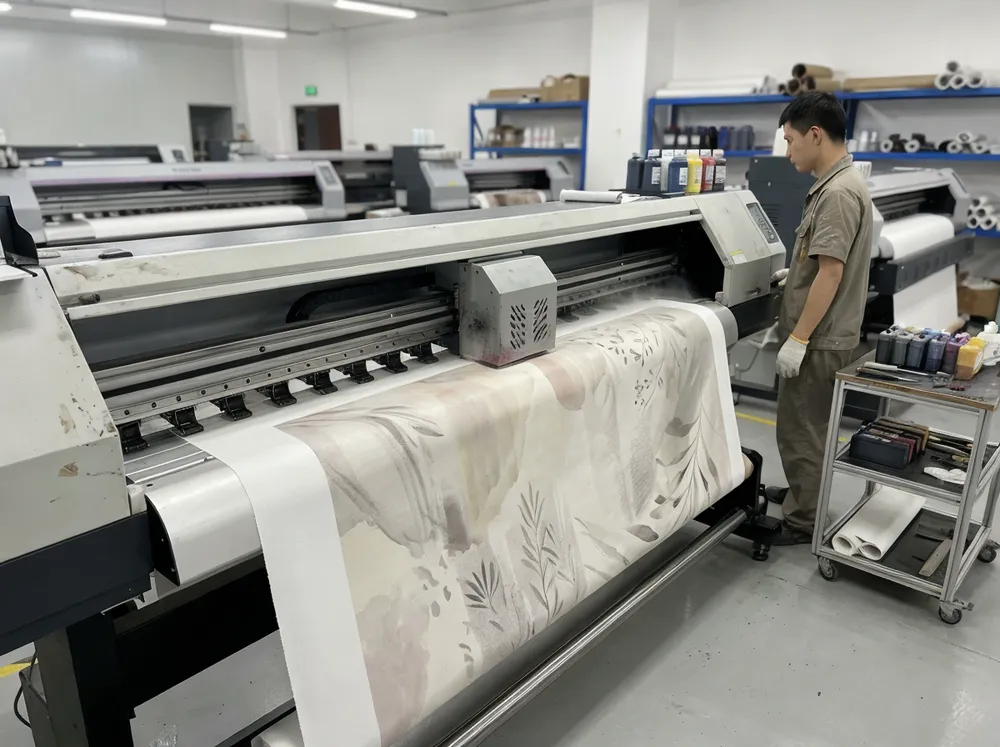
Our 12,000 m² facility in Dong Nai, Vietnam runs 6 production lines with 400,000-piece annual capacity. ISO 9001:2015, SGS, CE, and BSCI certified. We've been manufacturing decorative mirrors and wall art since 2008 — the production infrastructure is built for export, not adapted for it.
—
When Domestic Supply Is the Right Answer (and When It Isn't)
A credible sourcing guide doesn't push factory-direct for every situation. Here's the honest breakdown:
Domestic supply wins when:
- You need product in under 2 weeks — emergency restocks, seasonal spikes, new channel launches
- You're testing a new style category at under 100 units and don't want import cycle risk
- Your retail price point is under $30 and the margin math doesn't support import freight
- You're in a compliance-sensitive situation where domestic sourcing simplifies your supply chain documentation
Factory-direct wins when:
- You're reordering a validated SKU at 300+ units per cycle
- You need custom frame profiles, exclusive colorways, or OEM packaging that domestic distributors can't provide
- Your channel is price-competitive and the 25–40% landed cost advantage is the difference between a viable margin and a thin one
- You're building a private-label or exclusive product line that requires manufacturer-level development
The hybrid model works best for most serious e-commerce sellers: domestic distributors for new launches, seasonal tests, and emergency replenishment; factory-direct for repeat-volume SKUs where the economics justify the import cycle.
For more on evaluating your sourcing options by style category, see our guide on sourcing style-specific wall arts.
—
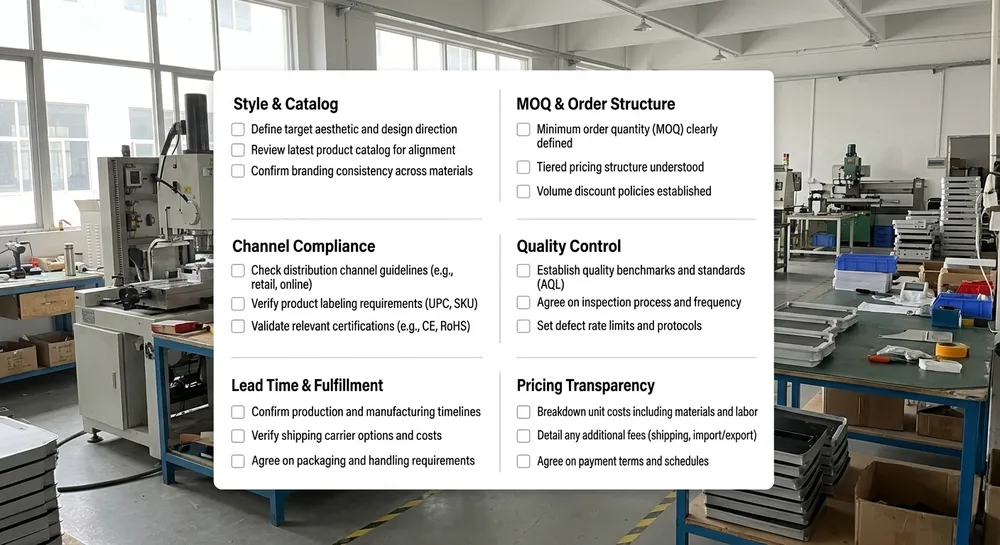
Pre-Order Sourcing Checklist: What to Verify Before Placing a First Order
Whether you're working with a domestic distributor or a factory-direct manufacturer, run through this before committing:
Style and catalog verification
- [ ] Does the supplier carry your target style categories with genuine depth (50+ SKUs per category)?
- [ ] Are samples available before bulk order commitment?
- [ ] Can you see production samples, not just catalog photos?
MOQ and order structure
- [ ] What is the minimum order quantity per SKU?
- [ ] Is there a mixed-SKU minimum that lets you spread the MOQ across styles?
- [ ] What are the reorder minimums once the initial order is placed?
Channel compliance
- [ ] Does the supplier support UPC labeling and retail-ready packaging?
- [ ] Is EDI capability available if you're selling into Walmart, Target, or similar?
- [ ] Can they meet channel-specific master carton and labeling requirements?
Quality control
- [ ] What is the inspection process before shipment?
- [ ] What is the defect rate on recent orders, and what is the claims process?
- [ ] Are certifications (ISO, SGS, CE, BSCI) available and current?
Lead time and fulfillment
- [ ] What is the realistic lead time from order confirmation to your warehouse?
- [ ] Is US warehouse stock available for faster replenishment, or is everything made-to-order?
- [ ] What happens if a SKU goes out of stock mid-season?
Pricing transparency
- [ ] Is the quoted price FOB, CIF, or DDP? What does the full landed cost look like?
- [ ] Are there volume breaks that change the economics at your target order size?
- [ ] What are the payment terms and deposit requirements?
—
Sourcing Decision Framework: Matching Supplier Model to Your Business Situation
| Your Situation | Recommended Sourcing Model | Why |
|---|---|---|
| Testing a new style category, <100 units | Domestic distributor | No import cycle risk, fast validation |
| Reordering validated SKU, 300+ units/cycle | Factory-direct | 25–40% landed cost advantage eliminates distributor margin |
| Building exclusive / private-label SKUs | Factory-direct OEM/ODM | Domestic distributors can't develop custom profiles |
| Emergency restock, <2 week lead time | Domestic distributor | Import cycle incompatible with urgency |
| Selling into Walmart/Wayfair/Amazon at scale | Factory-direct with retail compliance | EDI + channel packaging already built at manufacturer level |
| Style-diverse catalog, multiple aesthetics | Hybrid: factory-direct for core SKUs, domestic for new launches | Single factory source for cross-category production |
The suppliers on this list represent the real US wall art sourcing landscape for e-commerce retailers in 2026. None of them are wrong choices — they're different tools. The question is whether your current sourcing model is optimized for your actual order volumes, style requirements, and margin targets.
If you're at the stage where repeat-volume SKUs are driving most of your revenue, the distributor margin layer is worth examining. Factory-direct sourcing at 300+ units per style isn't complicated — it's a procurement cycle adjustment that pays for itself in margin recovery within the first container.
Request Quote to compare factory-direct pricing against your current supplier costs — send your style preferences, target quantities, and packaging requirements, and we'll return production specs and a detailed quote within 48 hours.