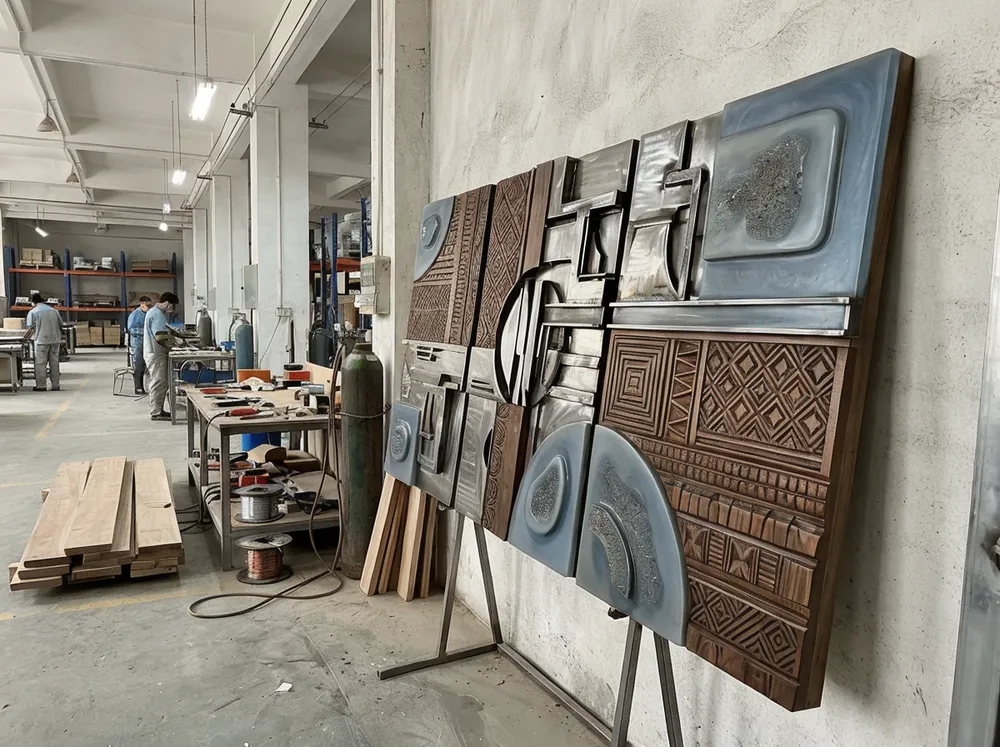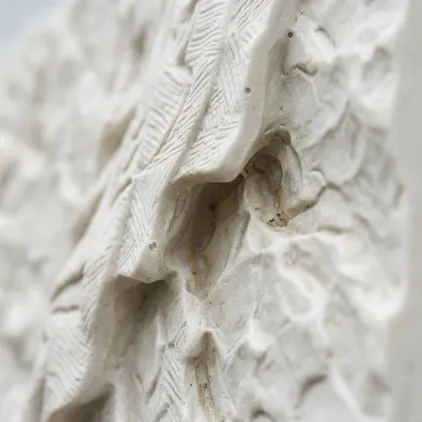
Dimensional wall art — cast resin, welded metal, carved wood — built to mount securely and ship without damage.
Livewellcraft manufactures wall arts sculpture across three material systems, each with dedicated tooling, structural QC, and export-grade packaging. Custom mold development, flexible MOQ from 100 pieces, factory-direct from Vietnam.
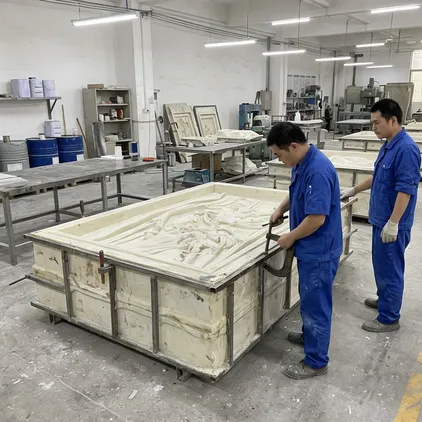
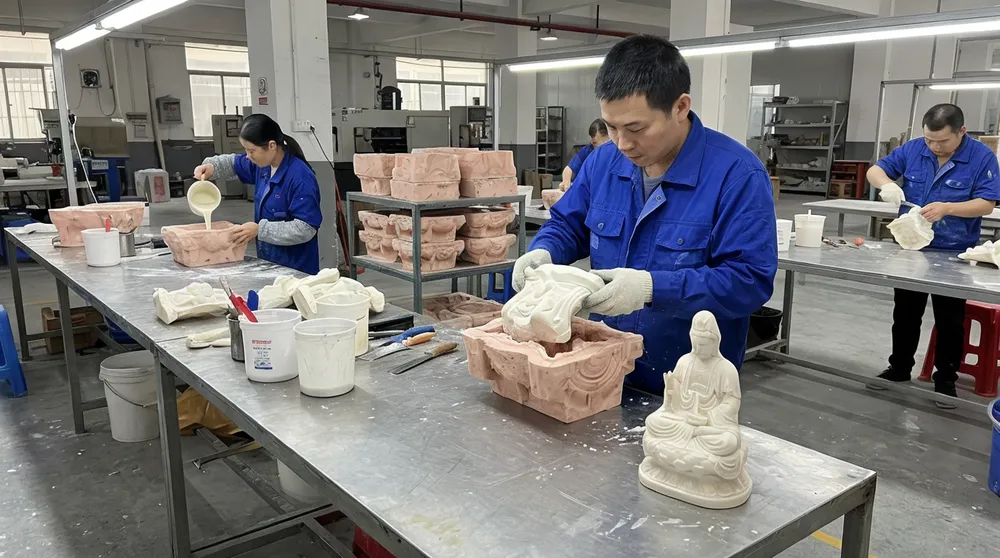
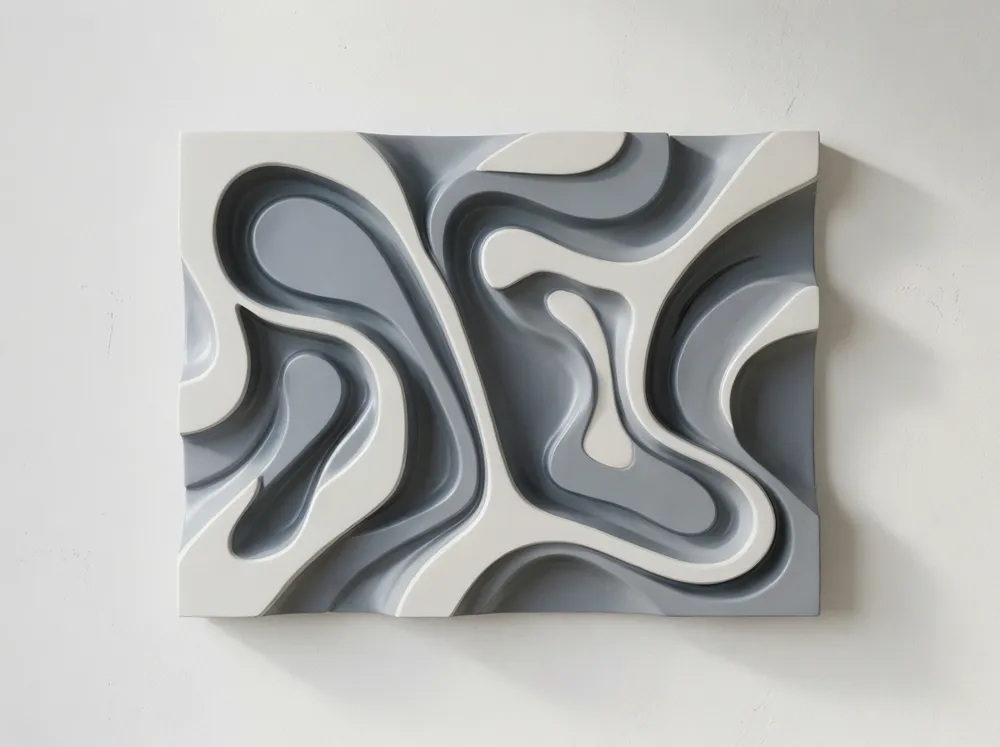
Detailed surface reproduction from silicone molds. Lightweight, paintable, cost-effective at volume.
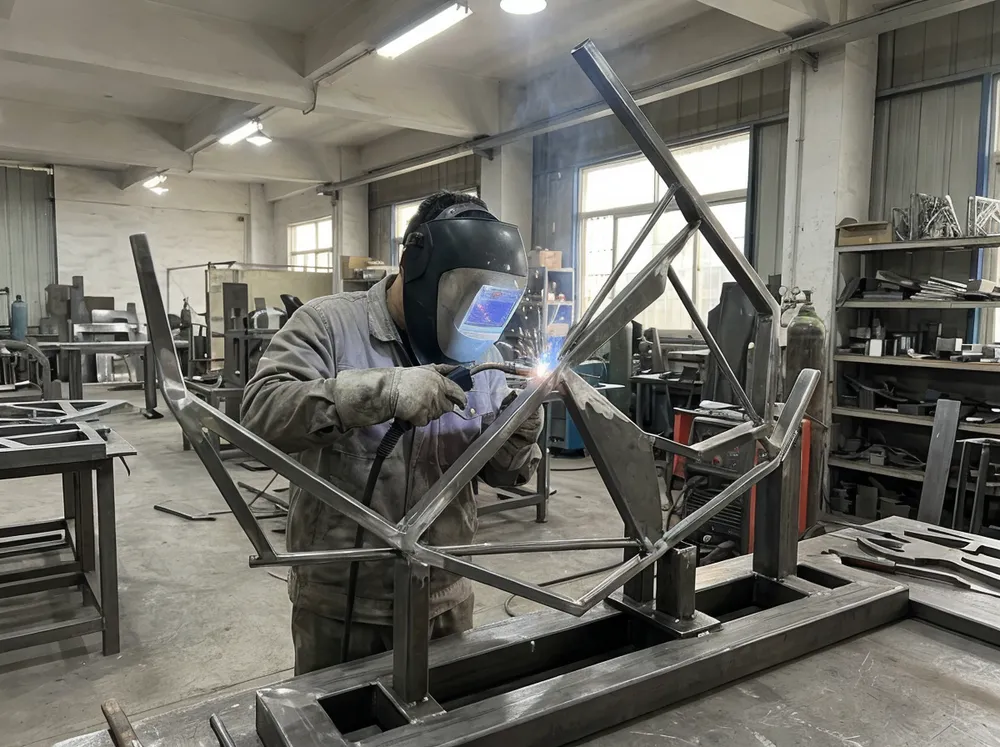
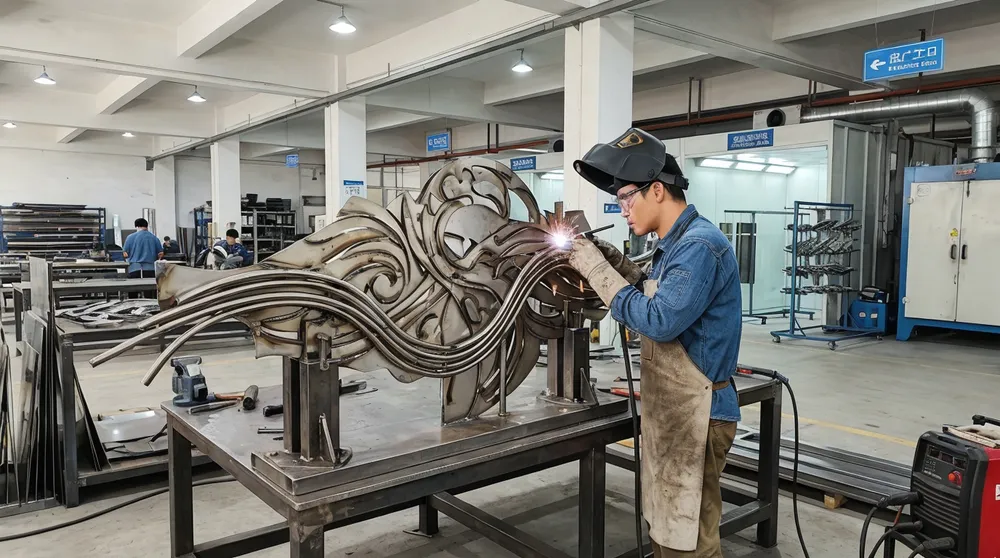
Mild steel or aluminum construction. Industrial aesthetic with powder coat or patina finishes.
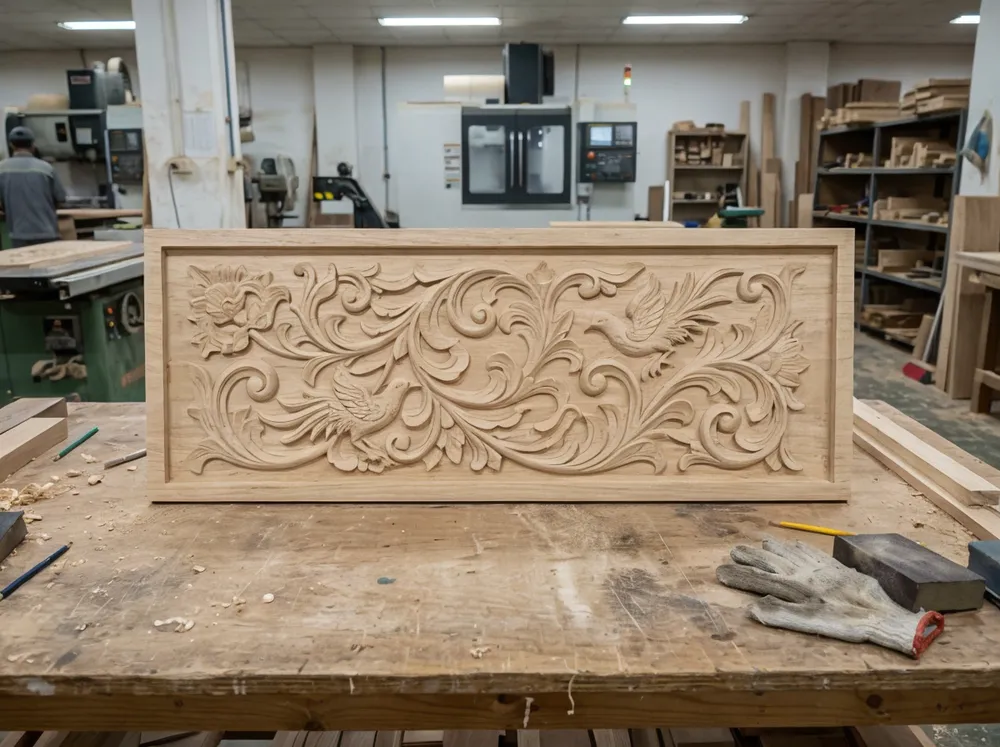
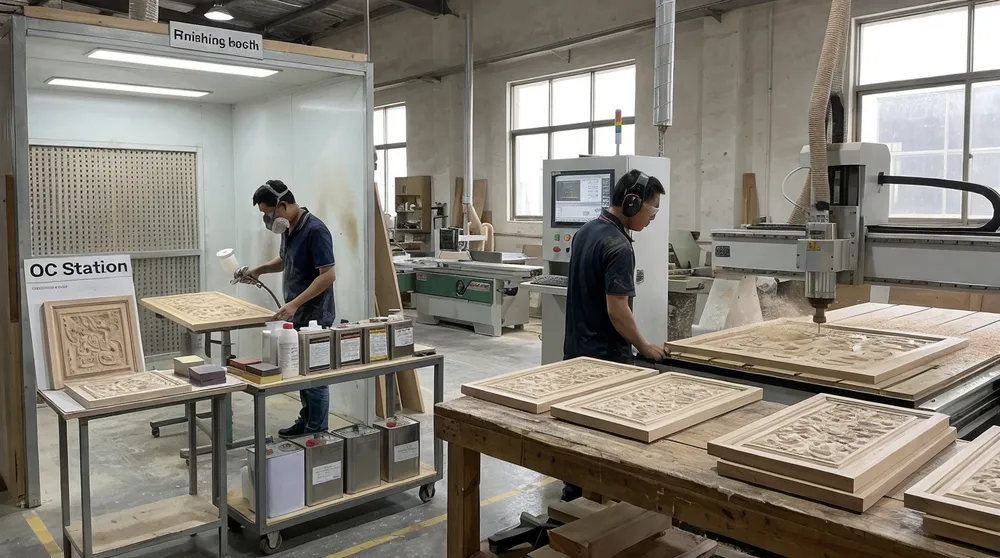
CNC-routed or hand-carved from sustainably sourced timber. Natural grain character with lacquer or oil finishes.
Sculptures are the highest-margin category in a wall art product line. The dimensional surface, the material weight in hand, the visual depth on a wall — these translate directly into higher retail price points than flat canvas or printed art. Buyers typically price wall arts sculpture at 2-3× the retail of equivalent-sized paintings, and the perceived value supports it. If you're building or expanding a wall art catalog, sculpture is where your per-unit margin works hardest.
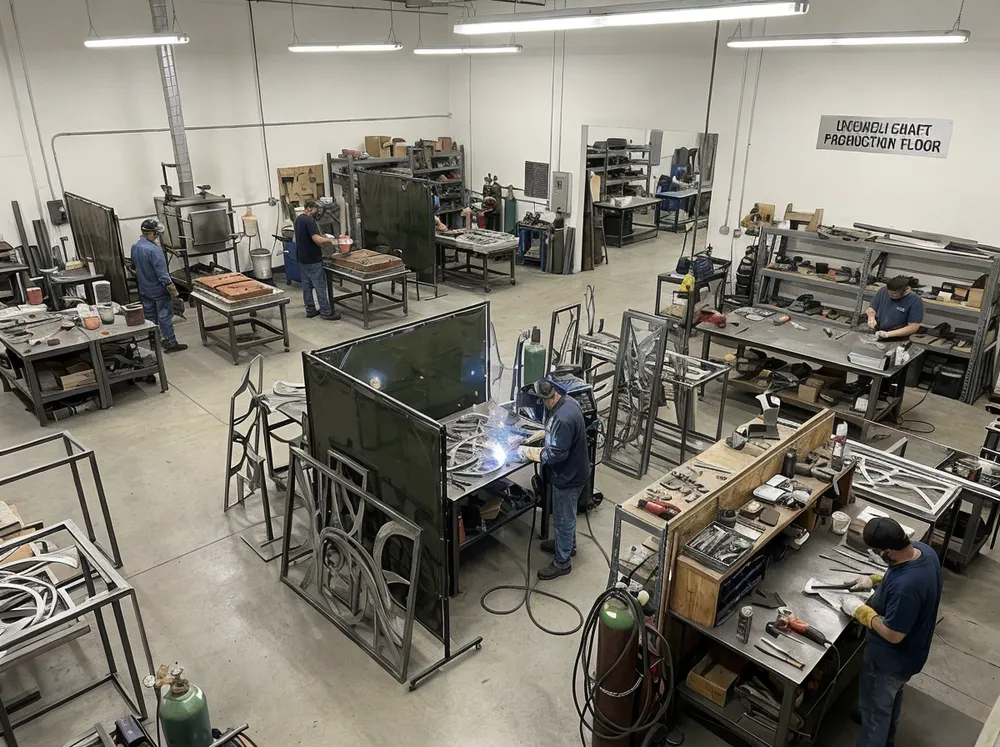
We produce wall arts sculpture in three material systems: cast polyurethane resin, MIG-welded metal (mild steel or aluminum), and carved wood. Each runs on its own production workflow with dedicated stations, tooling, and finishing processes — all under one roof at our 12,000 m² facility in Dong Nai, Vietnam. One supplier, one quality standard, one shipment regardless of which material you order.
The material you choose determines your unit cost, retail positioning, and which market segments you can sell into profitably. Here's how each one works on our production floor.
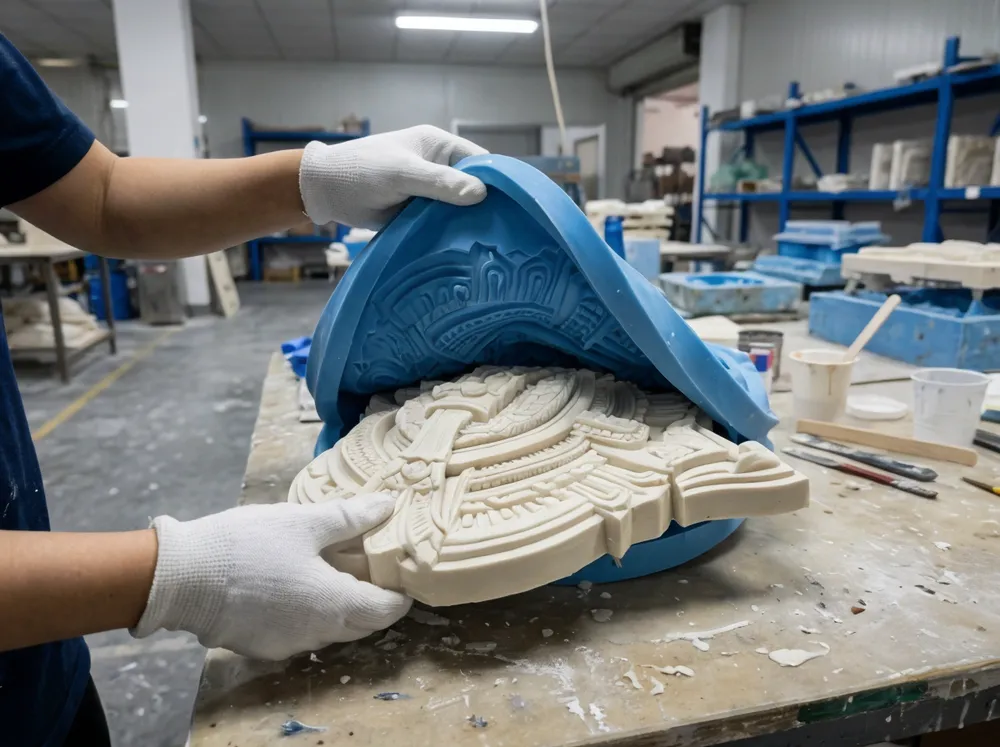
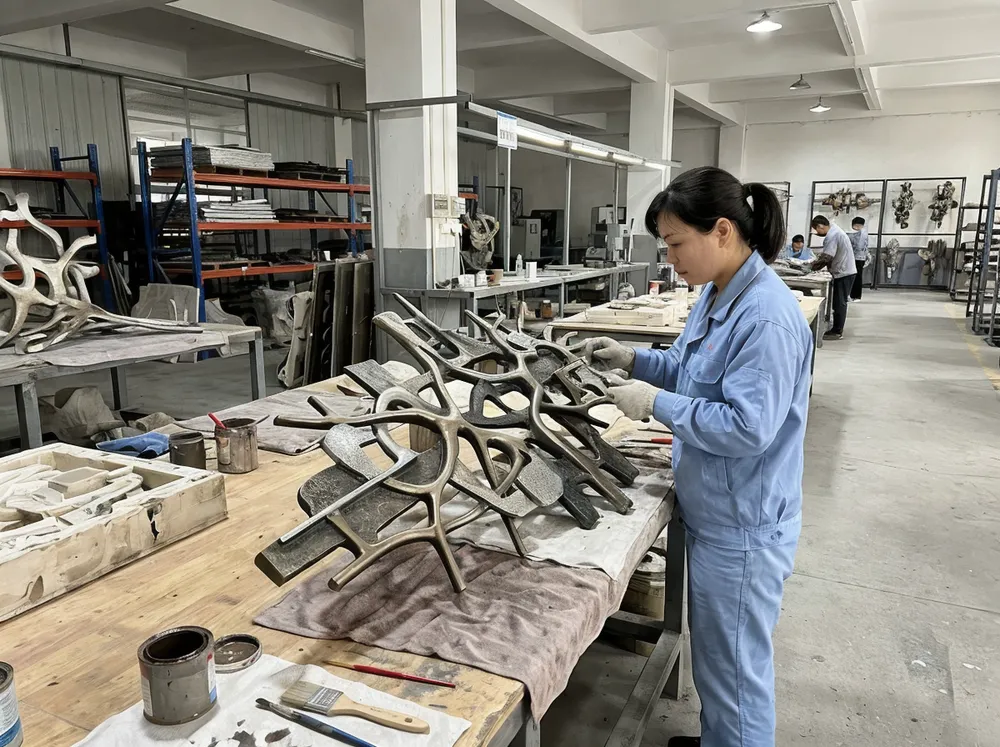
Polyurethane resin cast in silicone or fiberglass molds. This is our highest-volume sculpture material because it offers the best balance of detail reproduction, weight, and unit cost at scale. We add UV stabilizers to the resin mix as standard, so your pieces don't yellow or chalk when displayed near windows or in sun-exposed retail environments.
Resin is our highest-volume sculpture material because the economics work at scale: once the silicone mold exists, per-unit cost drops significantly on runs above 200 pieces. Detail reproduction is excellent—undercuts, fine texture, layered relief—and the finished weight stays manageable for standard wall mounting. Most of our resin sculptures land between 1.5 kg and 6 kg depending on dimensions, which keeps your shipping cost per unit well below metal alternatives.
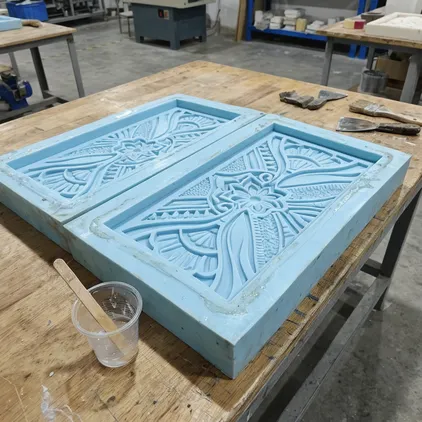
Standard relief depths up to 40 mm. Typically lasts 80–120 pours before detail degradation becomes visible.
For deeper dimensional pieces or production runs above 1,000 units where mold longevity matters. Handles 500+ cycles.
Your mold choice affects upfront tooling cost versus per-unit economics on reorders—we quote both options so you can decide based on your projected volume.
Each finish adds a different labor component to your unit cost, and we break that out in the quotation so you can price your SKUs accurately.
Multi-color artisan finishing with layered paint application
Gold, silver, or copper leaf application for premium positioning
Aged finish with controlled oxidation effect
Uniform matte or gloss finish in custom colors
Mild steel or aluminum, MIG-welded and ground smooth before finishing. Metal wall arts sculpture occupies the premium tier of your product line — the material weight, the industrial texture, the visual permanence on a wall all support retail price points that flat art can't reach.
Material Options
Mild Steel
Heavier, lower material cost, takes powder coat and patina finishes well
Aluminum
Lighter, corrosion-resistant without coating, better for coastal or outdoor-adjacent installations
QC Gate: Joint Integrity
Every welded joint gets a pull test before the piece moves to finishing. A wall-mounted metal sculpture that separates at a weld is a liability claim for your customer and a chargeback for you — we treat joint integrity as a non-negotiable QC gate.
Powder Coat Specification
After welding and grinding, pieces go through our powder coat line at 60-80 μm thickness, the same line and spec we run for our metal-framed mirrors. Running sculpture and mirror frames on the same powder line means your sculpture finish is identical to any mirror frames you order from us — useful if you're building a coordinated collection.
30×30 cm
Min size (~1 kg)
120×180 cm
Max size (12-15 kg)
For pieces above 8 kg, we include heavy-duty French cleat mounting systems rated to 2× the piece weight rather than standard D-ring hardware.
Solid wood or laminated MDF with CNC-carved relief, hand-finished. Wood sculpture sits between resin and metal on your price ladder — the material warmth and grain texture read as artisanal, but CNC carving keeps your per-unit cost predictable across large runs.
Substrate Selection
Rubberwood
Takes stain and lacquer finishes well, consistent grain density ensures batch uniformity
MDF
Better for painted finishes where grain visibility isn't part of the design intent — machines cleaner on fine detail and costs less per unit
CNC Carving Capability
3-Axis
Standard relief panels
4-Axis
Deeper dimensional profiles
Hand-Finishing Standard
After carving, every piece gets hand-sanded at 180 grit and then 320 grit before finishing — the CNC leaves tool marks at transitions between cutting passes that are invisible under heavy paint but show through stain or clear coat if you skip the hand-sanding step. We learned to build that labor into the standard workflow rather than treat it as an upgrade.
Standard ranges across our three material systems. Custom dimensions, finishes, and mounting configurations are quoted per project — send us your spec and we'll confirm feasibility and pricing within 48 hours.
| Parameter | Cast Resin | Welded Metal | Carved Wood |
|---|---|---|---|
| Size range | 20×20 cm to 120×150 cm | 30×30 cm to 120×180 cm | 25×25 cm to 100×120 cm |
| Typical weight | 1.5–6 kg | 1–15 kg | 1–8 kg |
| Relief depth | Up to 40 mm (standard mold), 80 mm (pressure-cast) | 20–150 mm depending on design | 5–30 mm (CNC), up to 60 mm (hand-carved add-on) |
| Standard finish | Hand-painted, metallic leaf, patina wash, lacquer | Powder coat (60–80 μm), brushed, patina | Stain + lacquer, painted, whitewash, distressed |
| Mounting hardware | D-ring + wire (under 5 kg), French cleat (over 5 kg) | French cleat standard on all sizes | Keyhole bracket (under 3 kg), French cleat (over 3 kg) |
| Mold/tooling | Silicone mold (80–120 pours) or fiberglass mold (500+ pours) | Jig fabrication for repeat designs | CNC program (no physical mold needed) |
| MOQ | 100 pcs (existing mold), 200 pcs (new mold) | 100 pcs | 100 pcs |
| Unit cost tier | $$ | $$$ | $$ – $$$ |
The production sequence matters to you because it determines your lead time, your reorder speed, and where quality problems get caught before they become your problem.
Mold fabrication is the longest step on a new design — 10–15 days for silicone, 15–20 days for fiberglass. Once the mold exists, casting runs fast: pour, cure (4–6 hours at controlled temperature), demold, trim flash, sand parting lines, prime, finish.
A trained caster produces 15–25 pieces per day per mold depending on size and complexity. We run multiple copies of high-volume molds simultaneously, so a 500-unit order doesn't mean 500 days of sequential casting.
Critical QC Checkpoint
The critical QC checkpoint on resin is right after demolding. Air bubbles trapped during the pour show up as surface voids — we inspect every piece at this stage and reject any unit with voids larger than 1 mm in visible areas. Rejected pieces get reground and the resin is recycled into the next pour.
Rejection rate: 3–5% on new molds, dropping to under 2% once the mold is broken in and the caster has dialed in the pour speed for that specific geometry.
Metal starts with material cutting — laser for flat sheet components, plasma for thicker plate, tube bending for dimensional framework elements. Components are jigged, tack-welded, checked for alignment, then finish-welded.
Grinding and surface prep follow: weld seams are ground flush, the entire piece is degreased, and phosphate pre-treatment is applied before powder coating. The pre-treatment step is what separates a sculpture that holds its finish for years from one that starts flaking at weld seams within months.
Powder Coat QC
Powder coat cures at 180–200°C for 15–20 minutes. We run a cross-hatch adhesion test on every production batch — score the coating with a grid pattern, apply tape, pull it off. If any coating lifts, the batch gets stripped and recoated.
Your downstream customer never sees a flaking finish.
CNC programming takes 2–3 days for a new design. Once the program is locked, carving runs at 8–15 pieces per machine per day depending on relief depth and detail density.
After carving and hand-sanding, pieces move to the finishing booth: primer coat, dry, sand at 400 grit, finish coat (stain, paint, or lacquer), dry, inspect. Multi-tone finishes like antique wash or distressed effects add a hand-application step between coats.
Wood QC Focus
Wood QC focuses on two things: surface finish consistency (no visible tool marks, no drips, no uneven stain absorption) and dimensional accuracy (±0.5 mm on CNC-carved features).
We check every piece against a reference sample that you approved during the sampling stage.
The category page covers our general OEM/ODM capability across all wall art types — full details here. Below is what's specific to wall arts sculpture customization.
One-Time Tooling Investment
You send a reference — a 3D file, a sketch, a competitor sample, even a photo — and our engineering team develops it into a production-ready mold specification. We produce a first-article sample for your approval before committing to production tooling.
Mold cost is a one-time charge, and you own the mold. If you switch suppliers later, we ship the mold to you.
Typical Mold Development Timeline
Pantone · RAL · Physical Samples
We match finishes to Pantone references, RAL codes, or physical samples you provide.
For metallic finishes (gold leaf, silver leaf, copper patina), we produce a finish sample board with 3–4 variations so you can select the exact tone before production starts.
Why this matters: Metallic finishes vary more than solid colors between batches if you don't lock down the reference — the sample board eliminates that risk.
Material-Specific Limits
An existing sculpture design can be scaled up or down within the structural limits of the material.
Scales well from 20 cm to 120 cm on the long dimension
Handles larger formats — up to 180 cm — because the welded structure supports its own weight
Tops out around 100–120 cm before panel weight creates warping risk on single-piece construction. Beyond that, we split into multi-panel assemblies with alignment hardware on the back.
Hardware Included in Unit Price
Standard is D-ring or French cleat depending on weight. If your market requires specific mounting, we configure the back hardware to your spec.
Security brackets
for hospitality
Z-bar systems
for commercial interiors
Sawtooth hangers
for lightweight retail
Custom spec
your requirements
Mounting hardware is included in the unit price, not an add-on.
Channel-Specific Configuration
Tell us your channel and we'll configure the packaging accordingly.
Standard Export
Individual polyfoam-cornered boxes with corrugated outer carton
Retail-Ready
Branded gift boxes, hang-tag attachment, and UPC labeling
Amazon FBA
FBA prep requirements including FNSKU labeling and poly-bag specifications
Send your reference — 3D file, sketch, competitor sample, or photo — for a custom quote.
Sculpture is not a volume-first product — it's a margin-first product. Your buyers pay more per piece, your return rate is lower, and the perceived value gap between your landed cost and the retail shelf price is wider than any other wall art type.
Why Lower Returns?
Dimensional art doesn't arrive with the "it looked different online" problem that flat prints face.
Hotels, restaurants, corporate lobbies, and healthcare facilities buy sculpture for feature walls and public spaces. These are project orders — 20 to 200 pieces per property, custom-sized to architectural drawings, finish-matched to the interior palette.
Your sales cycle is longer, but the order value per project is substantial and the reorder pattern follows renovation cycles.
Included: Installation spec sheets and weight-load documentation formatted for the general contractor, so your bid package is complete without extra engineering work on your end.
Sculpture pieces in the 30–60 cm range at the $40–120 retail bracket are the sweet spot for online home décor. The dimensional surface photographs with natural shadow depth that flat art can't match — your product listing stands out in a scroll feed without lifestyle staging.
Why resin: Lightweight enough for standard parcel shipping, durable enough to survive carrier handling, and cost-effective enough to protect your margin after shipping and platform fees.
Designers specify sculpture for residential and commercial projects where the wall treatment needs to carry visual weight. This channel values exclusivity — limited colorways, curated collections, designs not available on mass-market platforms.
Exclusive SKUs: If you're selling into the design trade, we can produce exclusive SKUs on dedicated molds that aren't offered to your competitors. You fund the mold, you own the design, we don't produce it for anyone else.
Smaller-format sculptures — 20×20 cm to 40×40 cm — move well in gift shops, boutique retailers, and museum stores. The tactile, dimensional quality makes sculpture a natural gift item at a higher price point than flat prints.
Test new sculptures in your assortment without deep inventory risk.
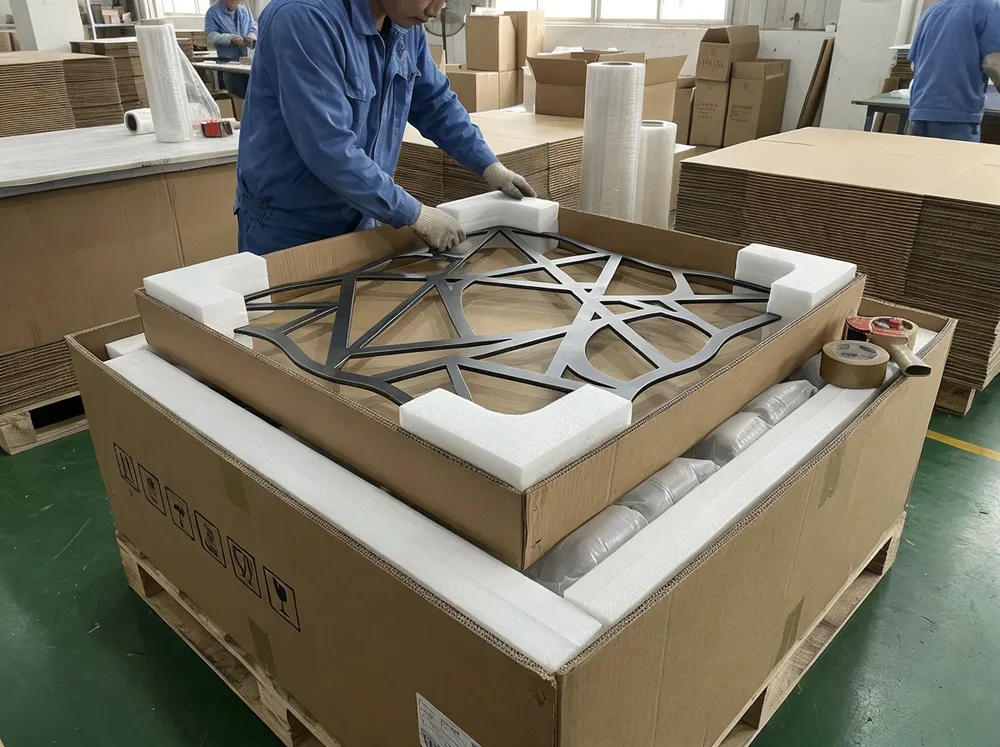
Dimensional art is harder to pack than flat art. The protruding surfaces, the weight distribution, the fragile finish on edges and high points — all of it creates damage opportunities that flat canvas doesn't face. We've shipped sculpture to 30+ countries and our current damage claim rate on sculpture shipments is under 0.5%. Here's how.
Every sculpture gets individual packaging engineered to its specific geometry. Polyfoam corner protectors are CNC-cut to match the piece profile — not generic L-shaped corners, but contoured blocks that cradle the high points and relief surfaces. The piece sits in a corrugated inner carton with foam inserts preventing any lateral movement, then goes into a reinforced outer carton rated for stacking pressure in a container environment.
For metal sculptures above 8 kg, we add a plywood crate option for ocean freight. The cost per unit is higher, but the damage rate on heavy metal pieces in standard cartons during rough sea transit makes the crate pay for itself in avoided claims. We quote both options and let you decide based on your freight route and risk tolerance.
Container loading follows a sculpture-specific protocol: heaviest pieces on the bottom tier, lighter resin and wood pieces stacked above, with airbag dunnage between carton columns to prevent shifting during transit.
A standard 40HQ container holds approximately 800-1,200 sculpture units depending on the size mix — we provide a loading plan with your quotation so you can calculate your landed cost per unit accurately.
Our facility operates under ISO 9001:2015 quality management, with SGS testing and CE marking on applicable products. BSCI certification covers social compliance for European retail supply chains. These are factory-level certifications that apply across our full product range including wall arts sculpture.
For sculpture-specific compliance, the relevant concerns are material safety and mounting safety. Resin sculptures use polyurethane formulations tested for VOC emissions — we provide test reports per batch if your market requires indoor air quality documentation.
Paint and coating materials are tested for heavy metal content per EN 71-3 when the product is destined for markets with toy safety crossover concerns — some decorative items sold in children's retail environments trigger these requirements.
Required for children's retail environments
Mounting hardware load ratings are documented per piece. We test at 2× rated load and provide the test certification with your shipment documentation.
If your market requires specific hanging hardware certifications (some commercial interior projects in North America require hardware meeting specific ASTM standards), let us know at the quotation stage and we'll spec the appropriate hardware.
Direct answers to the questions wholesale buyers ask before placing sculpture orders.
Silicone mold tooling runs $200–800 depending on sculpture size and complexity. Fiberglass molds for high-volume production run $500–1,500.
You own the mold — it's a one-time cost, and if you ever move production, we ship the mold to you. The tooling cost is separate from per-unit pricing, and we amortize it across your first order if the initial run is above 500 pieces.
Start with your target retail price point and work backward.
Lowest per-unit cost with widest design flexibility. Right choice for volume SKUs in the $30–100 retail range.
Commands premium pricing ($80–300+ retail). Works for buyers targeting upper-end home décor or commercial interiors.
Sits in between. Appeals to buyers whose customers value natural material aesthetics.
Many of our wholesale wall arts sculpture buyers carry all three materials at different price tiers within the same collection.
Yes. We consolidate sculpture with paintings, drawings, murals, and texture pieces on a single PO and ship in one container.
Production scheduling is managed internally — mixing types doesn't extend your lead time. This is one of the advantages of sourcing from a wall arts sculpture manufacturer that produces the full wall art range under one roof.
Lead times measured from deposit to container loading. We provide a detailed production timeline at quotation so you can plan your inventory cycle.
We photograph every piece before packing and can provide pre-shipment inspection documentation if your QC process requires it.
Wall arts sculpture is the strongest margin play in a wall art line, but it's not the only one. If your sourcing needs point in a different direction, here's where the other types land:
Need volume at lower price points?
Hand-painted canvas is our highest-volume wall art type, with the fastest production cycle and lowest per-unit cost.
Building a curated collection with a fine-art feel?
Ink, charcoal, and mixed-media drawings on archival paper or canvas, framed and retail-ready.
Sourcing for large-format feature walls?
Multi-panel compositions sized to architectural specifications, with alignment guides for clean on-site installation.
Want tactile surface texture without the dimensional weight?
Layered plaster, sand, and metallic media on flat panels. The fastest-growing segment in our order book.
Mix any combination on a single PO
One factory, one shipment, one quality standard.
Send us your sculpture requirements — material preference, target dimensions, finish references, estimated annual volume, and your target market. If you have reference images or competitor samples, include those too.
Our engineering team will come back with a technical proposal, per-unit pricing across your specified materials and finishes, tooling costs for any custom molds, a production timeline, and a packing plan. Typical response time is 48 hours.
Direct Contact
You'll be talking to the people who actually cast, weld, carve, and ship your product — not a sales office.